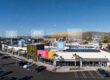
Nestled in the heart of Orange County, California, Westside Costa Mesa is a neighborhood that pulses with creativity and reinvention. Bounded roughly by the Santa Ana River to the east, Newport Boulevard to the east, the Pacific Coast Highway to the south, and extending northward toward the 55 Freeway, this area was once the industrial backbone of the city—home to warehouses, garages, and factories that fueled mid-20th-century growth. Today, it’s a burgeoning hub of street art, craft breweries, and indie shops, where graffiti-covered walls meet farm-to-table eateries. But beneath this trendy facade lies a rich tapestry of history, woven into the very fabric of its streets and structures.
The historic districts of Westside Costa Mesa aren’t just relics; they’re living testaments to the area’s evolution from Spanish ranchos and agricultural outposts to a modern coastal enclave. While Costa Mesa as a whole boasts a Local Register of Historic Resources with over two dozen designated properties, Westside’s contributions stand out for their diversity. Here, you’ll find the adobe-walled echoes of early California missions, Craftsman bungalows from the early 1900s, and repurposed industrial buildings that whisper tales of post-WWII boomtown ambition.
These districts—primarily clustered around Old Town along Newport Boulevard, Estancia Park, and the Fairview area—offer a portal to the past, preserved through dedicated city ordinances and community passion. In this deep dive, we’ll explore their stories, significance, and how you can experience them today. Whether you’re a history buff, an architecture enthusiast, or just curious about the roots of your favorite Westside coffee spot, this guide will transport you back in time while celebrating the neighborhood’s forward momentum.
The Roots of Westside: From Rancho Lands to Boomtown
To understand Westside Costa Mesa’s historic districts, we must first trace the threads of its origins. The land that now forms this vibrant neighborhood was part of the vast Rancho Santiago de Santa Ana, a 63,000-acre Spanish land grant awarded in 1810 to José Antonio Yorba II and Juan Pablo Peralta. This sprawling estate, stretching from present-day Orange to Newport Beach, was a hub for cattle ranching under the influence of Mission San Juan Capistrano. By the mid-1800s, after California’s secularization from Mexican rule, the rancho fragmented into smaller parcels, setting the stage for American settlement.
Fast-forward to the late 19th century: The arrival of the Santa Fe Railroad in 1887 sparked a brief boom in Fairview, a short-lived town near what is now Westside’s northern edge. Centered around natural hot springs (long since capped for safety), Fairview drew health seekers and speculators, complete with a hotel, school, and even a newspaper. But drought and economic woes in the 1890s led to its decline, leaving behind only whispers in local lore.
By the early 1900s, Swedish and Danish immigrants like the Segerstrom family transformed the area into fertile farmland, growing celery, beans, and strawberries on the rich alluvial soil near the Santa Ana River. The real pivot came post-World War I. In 1920, the community of Harper—named after early settler James Harper—rebranded as Costa Mesa, meaning “coastal mesa” in Spanish, to evoke its elevated plateau overlooking Newport Bay. Westside emerged as the practical core: a place for lumber yards, creameries, and garages supporting the growing population.
The 1920s saw a construction surge, with Craftsman and Spanish Revival homes dotting the landscape. Then, World War II accelerated industrialization; the area became a manufacturing center for aircraft parts and war materials, drawing workers who built modest bungalows nearby. By the 1950s, as Costa Mesa was incorporated in 1953, Westside’s industrial grit defined it—think oil refineries along the river and auto shops on every corner. Yet, amid this mechanized hum, pockets of history endured: old adobes, family farms, and community halls that anchored the neighborhood’s identity.
Today, these elements form the backbone of Westside’s three primary historic districts: Old Town (the commercial cradle), Estancia (the mission-era outpost), and Fairview (the agricultural legacy). Together, they illustrate a narrative of resilience, from vaquero trails to vintage revivals.
Old Town Costa Mesa: The Commercial Heartbeat of Westside
At the eastern fringe of Westside, where Newport Boulevard meets the 17th Street corridor, lies Old Town Costa Mesa—the neighborhood’s oldest commercial district and a treasure trove of early 20th-century Americana. This loosely defined area, spanning from roughly 17th to 22nd Streets, isn’t a formally bounded historic district like those in Pasadena or Santa Barbara. Instead, it’s a vibrant linear strip preserved through 11 bronze historical site markers installed by the Costa Mesa Historical Preservation Committee in the 1980s. These plaques, embedded in sidewalks, tell micro-stories of bootstrapped businesses that turned a dusty outpost into a thriving hamlet.
Stroll Newport Boulevard today, and you’ll pass hip taquerias and tattoo parlors, but pause at 1740 Newport Blvd., site of the Hi-Way Garage (1924). Founded by locals Ray Wallace and O.E. Hixon, this full-service station dispensed gas, tires, and tune-ups while offering loaner cars—a novelty in horse-and-buggy days. By 1930, it added a tow truck for 24-hour service and even housed the volunteer fire department’s truck from 1935 to 1938. Sold in 1939, the building’s sturdy brick facade still evokes the roar of Model T engines.
Next door at 1757 Newport Blvd. stands the Greener Furniture Shop (1923), a two-story emporium owned by Emil Greener. Beyond selling lamps and rugs, it doubled as a community hall for dances and meetings after a 1929 expansion. Greener, a civic pillar, retired in 1930 but continued championing local causes. Imagine Friday nights alive with polka and potlucks in this unassuming storefront, now a boutique echoing its multifunctional past.
Further south, 1796 Newport Blvd. marks the Red & White Grocery (1929), part of a national chain run by Albert Dudek. With separate meat and produce sections, it fed families through the Great Depression before relocating in 1936. The original spot later became a Ben Franklin dime store and a doctor’s office—versatile spaces that highlight Old Town’s adaptive spirit.
No exploration is complete without the Friday Afternoon Club Clubhouse at 1785 Newport Blvd. (1923). Born as a 1908 sewing circle, this $3,500 gem—built on donated land—hosted baby clinics, English classes, and orchestra rehearsals. Renamed the Costa Mesa Women’s Club in 1962, it remains a social anchor, its stucco walls whispering of women’s pivotal role in early community building.
Here is a table summarizing key Old Town historical markers:
| Address | Site Name | Year | Significance |
|---|---|---|---|
| 1740 Newport Blvd. | Hi-Way Garage | 1924 | Full-service auto hub; temporary fire station host |
| 1757 Newport Blvd. | Greener Furniture Shop | 1923 | Furniture sales and a community hall for dances and meetings |
| 1796 Newport Blvd. | Red & White Grocery | 1929 | Chain store serving Depression-era families |
| 1785 Newport Blvd. | Friday Afternoon Club | 1923 | Women’s civic center for education, clinics, and social events |
| Newport Blvd./17th St. | Costa Mesa Lumber Co. | 1922 | Building materials supplier; financed local homes |
| 19th St./Newport Blvd. | Costa Mesa Grammar School | 1923 | Early education hub; rebuilt after the 1933 earthquake |
| 1704 Flower St. | Bay View Ice Co. | 1936 | Early refrigeration and ice delivery pioneer |
| 2060 Newport Blvd. | Costa Mesa Bird & Game Farm | 1924 | An aviary attraction featuring exotic birds and animals |
| 2184 Newport Blvd. | Opps Bulb Farm | 1924 | 15-acre flower and bulb grower; exhibited at the 1939 World’s Fair |
| 22nd St./Santa Ana | Newport Creamery | 1927 | Dairy processing for local milk, butter, and ice cream |
| 121 Rochester St. | Costa Mesa Fire Station | 1938 | Volunteer firehouse until city incorporation in 1953 |
This constellation of sites paints Old Town as Westside’s entrepreneurial soul. From lumber yards fueling the 1920s housing boom to bulb farms showcasing at the 1939 New York World’s Fair, these buildings embody self-reliance. Preservation here is grassroots: The city’s 1999 Historic Ordinance safeguards them from demolition, requiring reviews for alterations. Modern twists abound—think the lumber yard’s site now a craft distillery—but the markers ensure the past isn’t paved over.
Estancia Park: Echoes of Spanish California
Venturing westward from Old Town, Estancia Park emerges as Westside’s crown jewel—a 20-acre oasis cradling the Diego Sepulveda Adobe, the neighborhood’s oldest structure and a cornerstone of its historic fabric. Built between 1817 and 1823 as a shelter for Mission San Juan Capistrano herdsmen, this low-slung adobe (California Historical Landmark #227) predates most Orange County buildings by decades. Originally part of the Santa Ana Estancia, it served as a waystation on El Camino Real, where vaqueros tended thousands of cattle amid oak groves and river willows.
By the 1840s, after secularization, the site became headquarters for Diego Sepulveda, a grandson of the rancho’s original grantee. Sepulveda raised horses and hosted travelers, but tragedy struck in 1874 when he was murdered nearby during a land dispute—his ghost, locals say, still haunts the grounds. The adobe fell into disrepair until the 1960s, when the Costa Mesa Historical Society spearheaded restoration, transforming it into a museum.
Today, the single-room structure—thick adobe walls, beehive oven, and wooden vigas—transports visitors to 1820s Alta California. Docents in period garb demonstrate tortilla-making and weaving, while exhibits detail Tongva-Gabrielino roots (the land’s indigenous stewards). Surrounding the adobe, Estancia Park blends history with nature: interpretive trails wind through native plant gardens, and the annual Adobe Fiesta features mariachi music and artisan markets. Recently reopened after seismic upgrades in 2022, it’s a serene counterpoint to Westside’s urban buzz.
This district underscores Westside’s layered heritage: Spanish colonial over indigenous foundations, preserved amid suburban sprawl. Nearby, the park’s equestrian center nods to Sepulveda’s horse legacy, making Estancia a must for families seeking shaded picnics with a historical chaser.
The Segerstrom Legacy: Farming to Philanthropy in Fairview
Deeper into Westside’s northern reaches, the Fairview area—once a 1887 boomtown—hosts the Segerstrom House and Barn at 3315 Fairview Road, a National Register-eligible duo symbolizing immigrant grit. Swedish émigré Charles John Segerstrom arrived in 1900, leasing 40 acres for a dairy before purchasing the land outright. The 1908 barn, a massive redwood structure, stored hay and housed cows; the 1915 Craftsman bungalow, with its wide porches and gabled roof, served as family quarters.
The Segerstroms’ Home Ranch grew into a celery empire, employing hundreds during the “White Gold Rush” of the 1920s. Post-WWII, sons Henry and John pivoted to development, seeding South Coast Plaza—the nation’s premier mall—and the Segerstrom Center for the Arts. Though privately held, the site opens for tours via the Historical Society, offering glimpses of vintage farm tools and family photos. This pocket district highlights Westside’s agricultural pivot to commerce, with the barn’s silhouette a reminder of fields now fringed by townhomes.
(Word count so far: ~1,680)
Preservation in Action: Safeguarding Westside’s Soul
Westside’s historic districts thrive thanks to proactive stewardship. The city’s 1999 ordinance designates 29 key properties, mandating design reviews to balance progress with patrimony. The now-disbanded Historical Preservation Committee mapped resources, while the Costa Mesa Historical Society (founded 1966) curates artifacts at its museum near Estancia. Challenges persist—industrial rezoning threatens adaptive reuse—but incentives like tax credits encourage owners to maintain facades. Community events, like the annual Historic Homes Tour, foster pride, ensuring these districts evolve without erasure.
A Visitor’s Guide: Tracing History on Foot (or Bike)
Ready to explore? Start in Old Town with a self-guided marker walk—download the society’s app for audio tales. Bike to Estancia Park (free entry; adobe tours $5, Thursdays-Sundays). End at Fairview for Segerstrom tours (by appointment). Pro tip: Pair with Westside’s food scene—a craft beer at the old garage site. Spring’s Adobe Days or fall’s farm festivals amplify the vibe. Parking’s ample, but rideshares keep it green.
Timeless Allure: Why Westside’s History Endures
Westside Costa Mesa’s historic districts aren’t frozen in amber; they’re dynamic dialogues between yesterday and tomorrow. From adobe hearths to barn lofts, they remind us that progress honors its origins. As the neighborhood innovates—warehouses into galleries, fields into plazas—its past provides the grounding force. Visit, linger, and let these stories inspire your own chapter in Costa Mesa’s ongoing saga