

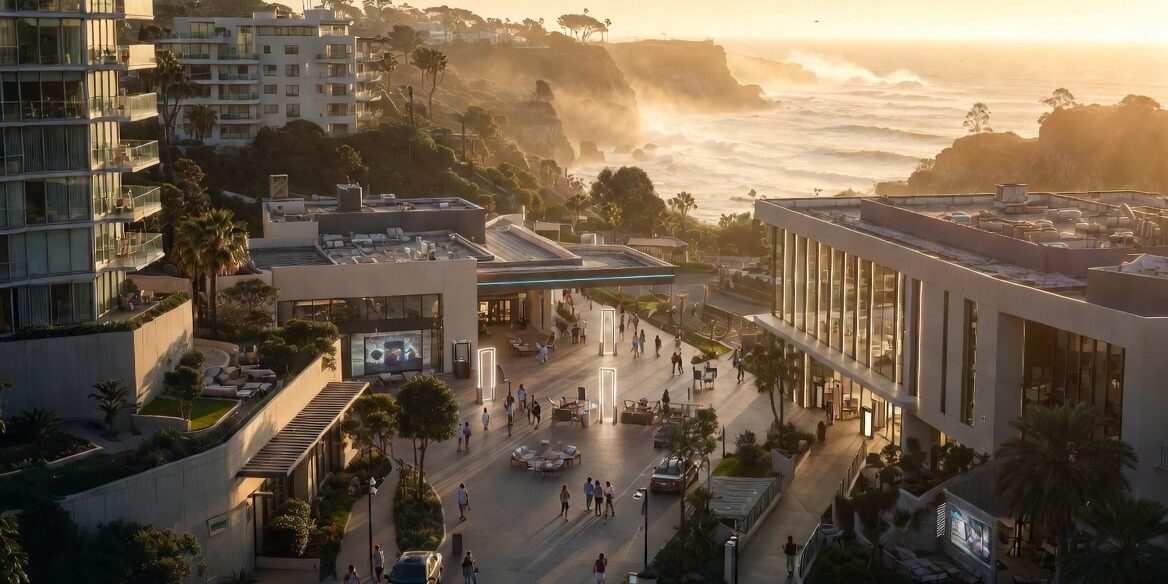
As coastal communities in Southern California evolve to meet growing demands for vibrant, sustainable living spaces, mixed-use developments are becoming central to urban planning in places like Laguna Beach. These projects blend residential, commercial, retail, hospitality, and recreational elements into cohesive environments that promote walkability, reduce vehicle dependency, and foster community interaction. In Laguna Beach—a picturesque city known for its art galleries, beaches, and hillside neighborhoods—mixed-use developments align with broader goals outlined in the city’s Housing Element (2021-2029) and Safety Element, which emphasize diverse land uses, hazard preparedness, and infrastructure resilience.
Laguna Beach already boasts enviable safety statistics. In 2024, the city reported just 37 violent crimes and 210 property crimes for a population of approximately 22,000, earning it the title of the safest coastal city in Orange County for violent crime and second-lowest for property crime. Overall crime has declined significantly in recent years, with a 23% drop in FBI Part 1 crimes from 2023 to 2024, including 40% fewer auto thefts and 28% fewer burglaries. These figures reflect proactive policing, community engagement, and a strong emphasis on prevention amid high tourist volumes exceeding six million visitors annually.
Yet, as mixed-use projects gain momentum—driven by state housing mandates, adaptive reuse of commercial spaces, and local policies encouraging infill development—the security landscape must adapt. Future trends will integrate advanced technology, holistic risk management, and community-centric design to address unique challenges in Laguna Beach, such as wildfire risks on hillsides, coastal erosion and sea-level rise, seismic activity, and the complexities of high-traffic environments blending residents, shoppers, tourists, and workers.
Understanding Mixed-Use Developments in Laguna Beach and Orange County
Mixed-use developments combine multiple functions under one roof or within a compact area, such as ground-floor retail with upper-level residences or integrated office and hospitality spaces. In California, including Orange County, these projects respond to housing shortages, post-pandemic shifts in work patterns, and sustainability imperatives. Orange County’s zoning supports mixed-use through overlays like MX (Mixed Use) and RP (Residential-Professional) districts, facilitating higher-density housing near transit or commercial corridors.
In Laguna Beach, the Housing Element promotes mixed-use in commercial zones to provide lower-cost housing options while reducing traffic. Policies encourage ground-floor commercial uses alongside residential components, consistent with the Local Coastal Program and Safety Element considerations for fire hazards and coastal bluffs. Although Laguna Beach has no massive-scale projects announced like Anaheim’s OC Vibe, smaller infill, adaptive reuse, and accessory dwelling unit (ADU)-integrated developments are expanding. Proposals for affordable housing on sites like the Neighborhood Congregational Church highlight the push for mixed-income, multi-purpose spaces.
These environments introduce layered security needs: protecting private residences from commercial foot traffic, securing retail inventory, managing shared amenities, and ensuring safe evacuation during emergencies. Traditional perimeter fencing or basic locks fall short; future measures emphasize layered, intelligent systems that balance openness with protection.
Current Security Challenges in Laguna Beach Mixed-Use Contexts
Laguna Beach’s topography—steep hillsides, limited egress routes in some neighborhoods, and proximity to open space and the Pacific—amplifies risks. The Safety Element identifies impaired access roadways, single-ingress/egress residential areas, and the need for two means of access where possible. Wildfire preparedness remains paramount, with policies requiring fuel modification, sprinklers, and evacuation planning. Coastal hazards, including bluff erosion, demand resilient infrastructure.
In mixed-use settings, challenges multiply:
- Diverse Users: Residents seek privacy and quiet; tourists and shoppers bring higher foot traffic, increasing theft or loitering risks.
- Shared Spaces: Common areas like plazas, parking garages, or lobbies require seamless access control without creating bottlenecks.
- Tourism Impact: High visitor numbers of strain resources, potentially elevating property crimes like larceny, though overall rates remain low.
- Emergency Response: Limited roadways necessitate designs that prioritize rapid evacuation and fire access, as mandated by policies limiting development on single-access sites.
Orange County-wide trends, including office-to-mixed-use conversions, add layers of complexity, such as integrating legacy buildings with modern security retrofits.
Emerging Trends in Security Measures for Mixed-Use Developments
Security in 2025–2030 and beyond is shifting from reactive to predictive, data-driven, and integrated approaches. Key trends draw from broader real estate and technology advancements, tailored to Laguna Beach’s coastal, hazard-prone setting.
1. AI-Powered Surveillance and Video Analytics
Artificial intelligence is revolutionizing monitoring. Traditional CCTV records footage for later review; AI systems analyze feeds in real-time for anomalies like unauthorized access, loitering, abandoned objects, or suspicious behavior. In mixed-use environments, cameras with edge computing can detect tailgating at entry points or crowd density in retail plazas, alerting security proactively.
For Laguna Beach, AI can integrate with wildfire detection—identifying smoke or heat signatures early—or monitor coastal paths for erosion-related hazards. Privacy-focused implementations use anonymized analytics, avoiding unnecessary data storage. Integration with existing infrastructure minimizes costs for smaller developments. By 2026, expect widespread adoption of AI that reduces false alarms and enables “smart” responses, such as automated lighting or lockdown protocols.
2. Smart and Touchless Access Control Systems
Biometric and mobile-based access (facial recognition, smartphone apps, or wearables) is replacing keys and cards. Touchless entry reduces physical contact points, enhancing hygiene and convenience in high-traffic mixed-use spaces. Systems integrate with building management for zoned access: residents enter residential towers seamlessly, while commercial tenants have tailored permissions.
In Orange County projects, these systems converge with IoT for holistic control—linking doors to HVAC, lighting, and elevators. For Laguna Beach, adaptive features could include emergency overrides for evacuation or temporary visitor management during festivals. Future iterations incorporate quantum-resistant encryption to counter cyber threats, ensuring data security in interconnected environments.
3. Integrated Smart Building and IoT Ecosystems
Mixed-use developments are evolving into “smart buildings” where security fuses with operations. IoT sensors monitor everything from occupancy to environmental conditions, feeding data into centralized platforms. Security becomes part of a unified system: a detected intrusion could trigger alarms, notify authorities, adjust access, and even guide occupants via digital wayfinding during emergencies.
Sustainability merges with security—energy-efficient designs that include solar-powered cameras or sensors supporting green certifications while bolstering resilience against power outages common in wildfire or seismic events. In Laguna Beach, this aligns with Safety Element updates for hazard mitigation and the push for climate-adaptive infrastructure.
4. Cybersecurity Convergence with Physical Security
As systems digitize, cyber risks rise. A hacked access control network could compromise an entire development. Future trends emphasize “converged” security where IT and physical teams collaborate, using zero-trust architectures and regular vulnerability assessments. Blockchain may enhance transaction security for property management or visitor logs.
For mixed-use sites handling sensitive resident data or commercial operations, robust protocols prevent breaches that could lead to physical vulnerabilities. Orange County developments increasingly require such measures in planning approvals.
5. Predictive Analytics, Risk Assessment, and Community Integration
Data analytics will drive proactive security. Platforms aggregate crime statistics, weather data, traffic patterns, and user behavior to forecast risks—e.g., heightened theft during peak tourist seasons or evacuation bottlenecks during Santa Ana winds.
Community-oriented designs incorporate “Crime Prevention Through Environmental Design” (CPTED) principles: natural surveillance via open layouts, minimized hiding spots, and well-lit pathways. In Laguna Beach, this could mean pedestrian-friendly promenades (like ongoing downtown initiatives) with embedded sensors. Partnerships with the Laguna Beach Police Department for shared data platforms or on-site substations (as seen in larger Orange County projects) enhance response times.
Mobile and temporary solutions, such as deployable surveillance towers, suit construction phases or event-heavy areas. Biometric wearables or drone monitoring may supplement ground systems for hillside or coastal coverage.
6. Resilience Against Natural Hazards
Security in Laguna Beach must prioritize all-hazards preparedness. Developments will incorporate redundant power for security systems, automated evacuation alerts integrated with building apps, and designs meeting updated Fire Safe Regulations. Dual-access requirements and fuel modification zones extend to mixed-use footprints.
Sea-level rise planning, per California Coastal Commission guidance, may include elevated infrastructure with integrated monitoring. Post-disaster recovery frameworks in the Emergency Operations Plan will influence security retrofits.
7. Privacy, Ethics, and Regulatory Compliance
Increased surveillance raises privacy concerns. Future systems will prioritize ethical AI—detecting threats without broad facial recognition databases—and comply with evolving California laws on data protection. Transparent policies, resident opt-ins for smart home integrations, and regular audits build trust in mixed-income communities.
Zoning and permitting in Laguna Beach, including design review and coastal development permits, increasingly evaluate security features for compatibility and risk minimization.
Implementation Strategies for Laguna Beach Developers and Planners
Developers should:
- Conduct site-specific risk assessments incorporating local crime data, topography, and hazards.
- Engage early with the Laguna Beach Police Department, Orange County Fire Authority, and planning staff.
- Budget for scalable systems that allow phased upgrades as technology advances.
- Incorporate CPTED in architectural reviews, aligning with objective design standards under discussion.
- Explore incentives for sustainable and resilient features that double as security enhancements.
Municipal policies could streamline approvals for projects demonstrating advanced security, similar to density bonuses for affordable housing. Public-private partnerships, like community land trusts for artist live/work spaces, offer opportunities to embed security in equitable developments.
Benefits and Broader Impacts
Advanced security measures will elevate property values, attract tenants and visitors, and reinforce Laguna Beach’s reputation as a safe, desirable destination. Reduced incidents lower insurance costs and liability. Enhanced resilience minimizes downtime during emergencies, supporting economic vitality in tourism and retail components.
On a societal level, these trends promote inclusive, vibrant communities where safety enables greater social interaction—key to mixed-use success. Lower crime through design and technology complements the city’s ongoing reductions, creating a model for coastal Orange County.
Conclusion: A Secure, Sustainable Vision for Laguna Beach
The future of security in Laguna Beach mixed-use developments lies at the intersection of innovation, resilience, and community values. AI-driven systems, smart integration, predictive analytics, and hazard-focused design will transform potential vulnerabilities into strengths. As the city advances housing goals and downtown revitalization while safeguarding its natural beauty, security measures must evolve proactively.
Stakeholders—planners, developers, residents, and officials—have an opportunity to lead by example. By investing in forward-thinking solutions today, Laguna Beach can ensure its mixed-use future remains not only dynamic and prosperous but also exceptionally safe for generations to come. With continued low crime rates as a foundation and technology as an accelerator, the city is well-positioned to set a benchmark for coastal communities nationwide.
This comprehensive approach—blending local context with global trends—will require ongoing collaboration, but the payoff is a thriving, secure Laguna Beach where mixed-use developments enhance rather than complicate quality of life.