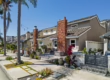
South Huntington Beach, often celebrated as the southern gateway to “Surf City USA,” embodies the quintessential California coastal lifestyle. With its pristine beaches, vibrant pier, and endless waves, this area attracts surfers, families, and professionals alike. For real estate investors, South Huntington Beach represents a golden opportunity in one of Orange County’s most desirable submarkets. As of August 2025, the rental market here is buzzing with activity, driven by high demand and limited supply. But investing in rentals isn’t just about the sun and surf—it’s about understanding the numbers, trends, and risks that shape profitability.
This comprehensive analysis dives deep into the rental landscape of South Huntington Beach, tailored specifically for investors eyeing long-term holds, vacation rentals, or multifamily developments. We’ll explore current trends, demand drivers, supply dynamics, pricing, yields, opportunities, challenges, and future projections. Drawing from the latest data, including market reports and local insights, this guide aims to equip you with the knowledge to make informed decisions. Whether you’re a seasoned investor or new to the game, South Huntington Beach’s rental market offers robust potential—but only if you navigate it wisely.
The area’s allure stems from its proximity to major employment hubs like Boeing and tech firms in nearby Irvine, combined with recreational amenities that boost rental appeal. Home values have surged, with median prices around $1.3 million, up 3.5% year-over-year, making rentals an attractive alternative for residents who can’t afford to buy. Rents have followed suit, with modest increases reflecting sustained demand. As we unpack the details, you’ll see why this market could yield strong returns for savvy investors.
Overview of South Huntington Beach
South Huntington Beach, encompassing neighborhoods like Southeast Huntington Beach, is a coastal enclave in Orange County, California. Bordered by the Pacific Ocean to the west and extending inland toward major freeways like the 405, this area spans about 27 square miles and is home to roughly 200,000 residents. Demographics skew toward a mix of young professionals, families, and retirees, with a median household income of around $100,000—higher than the national average but reflective of California’s cost of living.
What sets South Huntington Beach apart for investors is its lifestyle-driven appeal. The beaches here are world-renowned, hosting events like the US Open of Surfing, which draws millions of visitors annually. Neighborhoods such as Southeast Huntington Beach feature a blend of single-family homes, condos, and apartments, many with ocean views or easy beach access. The area’s walkability, with spots like Pacific City for shopping and dining, enhances its desirability.
Economically, South Huntington Beach benefits from Orange County’s diverse job market. Key industries include aerospace (e.g., Boeing’s facilities), tourism, healthcare, and emerging tech sectors spilling over from Silicon Beach. Unemployment rates hover around 3-4%, below the state average, supporting stable rental demand. For investors, this translates to a resilient tenant base—think remote workers from LA or families relocating for better schools.
Infrastructure plays a role too. The area boasts excellent public transportation links via Amtrak and Metrolink, plus proximity to John Wayne Airport. Recent developments, like the mixed-use project on the former Magnolia Oil Fields, add to the supply but also signal growth potential. However, environmental concerns from past industrial sites remind investors to conduct due diligence on properties.
In terms of rental composition, South Huntington Beach leans toward single-family homes and condos, with a growing presence of multifamily units. About 44% of households are renters, occupying over 34,000 units, underscoring a substantial market for investment properties. This overview sets the stage: a vibrant, high-demand area where rentals can thrive amid California’s housing crunch.
Current Rental Market Trends
As of mid-2025, the rental market in South Huntington Beach is characterized by steady growth and low vacancy rates, making it a hotspot for investors. Average rents have climbed modestly, with a year-over-year increase of about 2-3%, outpacing national averages but cooling from post-pandemic peaks. The median rent for all property types stands at approximately $3,200-$3,400, which is 60-70% higher than the U.S. median, reflecting the premium coastal location.
Breaking it down by property type:
- Studios: Average around $2,159-$2,195 per month. These are popular among young professionals and surfers seeking affordable beach access.
- One-Bedroom Units: Ranging from $2,168 to $2,492, these see high turnover due to demand from singles and couples. In Southeast Huntington Beach, prices are slightly higher at about $2,357.
- Two-Bedroom Units: The sweet spot for families, averaging $2,892-$3,395. These command premiums in waterfront areas like Huntington Harbour.
- Three-Bedroom and Larger: Up to $4,347 or more, ideal for larger households or vacation rentals. Single-family homes in South Huntington Beach can fetch $5,000+ monthly.
Vacancy rates remain tight at 2-3%, driven by limited new construction and high in-migration. This low vacancy supports rent stability and quick lease-ups—properties often rent within days. Market temperature is “warm,” with renter demand exceeding national averages.
Neighborhood variations add nuance. More affordable areas like Seabridge see one-bedrooms at $1,675, while premium spots like Downtown Huntington Beach hit $4,259. South-specific trends mirror the broader city, with home prices up 4.9% in Southeast Huntington Beach, indirectly pushing more people into rentals.
Economic occupancy hovers around 70-75% for some portfolios, but high-end rentals achieve better. Investors should note seasonal fluctuations: Summer tourism boosts short-term rents, while winter sees slight dips. Overall, trends point to a resilient market, with rents projected to rise another 2.5% by year-end amid Orange County’s rent hikes.
Demand Drivers
Demand for rentals in South Huntington Beach is fueled by a potent mix of lifestyle, economic, and demographic factors. First and foremost is the beach lifestyle—residents crave the surf, sunsets, and outdoor activities that define “Surf City.” Tourism amplifies this, with events like the Huntington Beach Airshow drawing crowds who often extend stays via short-term rentals.
Employment is a key driver. Proximity to major employers in aerospace (Boeing), tech (Irvine), and healthcare keeps demand steady. The area’s low unemployment and high median income support premium rents. Remote work trends have also brought in LA commuters seeking affordable alternatives to city living, though “affordable” is relative—rents here are 55% above national averages.
Demographics play a role: 44% of households rent, with many in the 25-34 age group (23%) favoring flexible leases. Families occupy 54% of rentals, drawn to top-rated schools and parks. In-migration from pricier areas like LA adds pressure, as does the housing shortage—California mandates over 13,000 new homes in Huntington Beach by 2030.
Short-term rentals thrive on platforms like Airbnb, especially near the beach, where units can generate $7,200+ monthly from multiple tenants. However, regulations limit some areas, so investors must check local ordinances. Overall, these drivers create a high-demand environment, with minimal slowdown expected.
Supply Analysis
Supply in South Huntington Beach remains constrained, contributing to low vacancies and rising rents. Current inventory includes about 490 active rentals, dominated by two-bedroom units (45% of the market). New developments are trickling in, like the Magnolia Tank Farm project adding 200 residences and 50 affordable units, but these are offset by zoning hurdles and environmental reviews.
Most rentals were built between 1960-1989, with older stock requiring updates to command top dollar. Multifamily additions are limited by coastal commission approvals, keeping supply tight. Investors can capitalize on this by focusing on value-add properties—renovating older homes for higher yields.
Investment Opportunities and Yields
For investors, South Huntington Beach offers compelling yields, typically 4-6% cap rates for well-managed properties. Rental income potential is strong: A $1.8M four-plex could generate $7,200 monthly, covering mortgages with room for profit. Strategies include house hacking (live in one unit, rent others) or short-term rentals for 25%+ ROI.
Long-term holds benefit from appreciation—home values up 11.5% in 2024. Multifamily developments, like adding units to existing lots, provide scalability. Upgrades like smart home features can boost rents by 10-15%. With economic occupancy at 74%, steady cash flow is achievable.
Risks and Challenges
Despite opportunities, risks abound. High entry costs ($1.3M median home) require substantial capital, and rising interest rates squeeze margins. Regulations, including rent control for mobility-impaired tenants and housing mandates, add complexity. Economic downturns could soften tourism-driven demand, while environmental issues from sites like Magnolia pose hazards.
Market saturation in premium areas and competition from new listings (11% relisted) demand careful pricing. Investors should mitigate with thorough due diligence and diversified portfolios.
Future Outlook
Looking to 2026 and beyond, South Huntington Beach’s rental market is poised for continued growth. Rents may rise 2-3% annually, supported by job growth and tourism recovery. New mandates for 13,000+ homes could ease supply slightly, but demand will likely outpace it. Sustainability trends, like energy-efficient upgrades, will become key differentiators.
Potential headwinds include economic recessions or stricter short-term rental bans. However, with home prices forecasted to reach $1.4M+, rentals will remain vital. Investors positioning now could see strong appreciation and yields.
Conclusion
South Huntington Beach’s rental market offers a blend of lifestyle appeal and financial upside for investors. With high demand, low vacancies, and solid trends, it’s a market worth exploring. Consult professionals and act strategically to capitalize on this coastal gem.