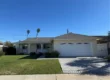
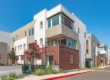
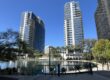
South Coast Metro, located in the heart of Orange County, California, represents one of the most consistently appealing real estate investment markets in Southern California. Straddling portions of Santa Ana and Costa Mesa, this area benefits from its central position near world-class shopping at South Coast Plaza, proximity to John Wayne Airport, easy freeway access, and a blend of urban amenities with suburban livability. For real estate investors—whether focused on residential rentals, multifamily properties, commercial spaces, or long-term appreciation—South Coast Metro continues to deliver competitive returns in an environment marked by economic stability, strong employment fundamentals, and persistent housing demand.
In this detailed exploration, we’ll examine the key drivers of investment performance in South Coast Metro as of 2026, review historical trends, analyze current market conditions, break down realistic return expectations across property types, and outline strategies to optimize outcomes. The goal is to provide a clear, numbers-driven picture of what investors can reasonably anticipate in this market today.
Why South Coast Metro Remains Attractive for Investors
The fundamental strength of South Coast Metro lies in its location and economic ecosystem. Positioned between major employment centers in Irvine, Newport Beach, and the emerging tech and healthcare corridors of Orange County, the area attracts a diverse resident base: young professionals drawn to cultural venues and dining, families seeking good schools and parks, and service-industry workers supporting the massive retail economy centered around South Coast Plaza.
Orange County as a whole maintains one of the lowest unemployment rates in California, typically hovering between 3.2% and 3.8% in recent years. Major employment sectors—technology, healthcare, finance, tourism, and logistics—provide consistent job creation and income stability. This economic resilience translates directly into reliable tenant pools for residential and commercial properties alike.
Additionally, the area benefits from limited new construction compared to inland Orange County submarkets. Zoning restrictions, high land costs, and community preservation priorities have kept housing supply constrained, supporting both rental rates and property values even during periods of broader market softening.
Historical Investment Performance (2020–2025)
Looking back provides context for current expectations. From 2020 to 2022, South Coast Metro experienced one of its strongest appreciation cycles in decades. Median home prices rose approximately 35–42% during that window, driven by historically low interest rates, pandemic-era migration patterns, and intense competition for limited inventory. Rental rates followed a similar trajectory, with annual increases averaging 6–9% in multifamily and single-family rental segments.
The 2023–2024 period brought a sharp correction as mortgage rates climbed above 7%. Home price appreciation slowed dramatically—some submarkets recorded flat or slightly negative growth—and transaction volume dropped significantly. However, rental demand remained remarkably resilient. Multifamily occupancy rates stayed above 94–96%, and effective rents continued to rise, albeit at a more modest 2–4% annually.
By late 2024 and into 2025, the market found a new equilibrium. Home prices stabilized, inventory levels increased modestly, and days on market lengthened, creating more balanced conditions. Investors who entered during the higher-rate environment benefited from better entry pricing and stronger cash-on-cash returns compared to the low-rate frenzy of 2021–2022.
Over the full 2020–2025 cycle, well-positioned investments in South Coast Metro typically delivered total returns (appreciation plus net operating income) in the 7–11% annualized range, depending on leverage, property type, and management quality. Multifamily and retail properties anchored by national or regional credit tenants often performed at the higher end of that spectrum.
Current Market Conditions in Early 2026
As of January 2026, several key indicators point to a maturing but fundamentally healthy real estate environment in South Coast Metro:
- Residential pricing: Median sale prices for single-family homes and condos/townhomes generally range between $460,000 and $520,000, depending on size, condition, and exact location. Price-per-square-foot metrics sit in the $480–$540 range for most properties.
- Inventory and market time: Active listings have increased compared to the 2021–2022 lows, creating more negotiating leverage for buyers. Average days on market now fall between 45 and 65 days for well-priced properties.
- Interest rates: Conventional 30-year fixed mortgage rates are stabilizing in the 5.9–6.3% range, a meaningful improvement from 2023–2024 peaks and supportive of both purchase activity and refinance opportunities.
- Rental market: Average monthly rents for one-bedroom apartments hover around $2,400–$2,700, while two-bedroom units typically lease between $2,900 and $3,400. Vacancy rates remain low, generally 3–5% in professionally managed buildings.
- Commercial fundamentals: Retail centers tied to South Coast Plaza and surrounding areas maintain high occupancy (often above 95%). Office vacancy is higher in some Class B and C buildings but improving in well-located, amenity-rich properties. Industrial space near the airport corridor continues to see strong demand.
These conditions create a favorable backdrop for investors seeking cash flow stability with moderate appreciation potential.
Realistic Return Expectations by Property Type
Single-Family and Small Multifamily (2–4 Units)
- Gross rental yield: 5.8–7.2%
- Net operating income yield (after operating expenses but before debt service): 4.2–5.8%
- Cash-on-cash return (with 70–75% loan-to-value financing at current rates): 5.5–8.1%
- Expected annual appreciation: 2.5–4.5%
- Total expected return: 7.5–11%
These properties appeal to investors seeking hands-on management or those using the BRRRR (Buy, Rehab, Rent, Refinance, Repeat) strategy. Cash flow is solid, especially when purchased below replacement cost or with value-add components.
Larger Multifamily (5+ Units)
- Cap rates: 4.3–5.1% (depending on age, location, and condition)
- Net operating income growth: 2.5–4.5% annually
- Levered IRR (over 5–7 year hold period): 9–13%
- Cash-on-cash return: 5–8.5%
Multifamily remains the strongest institutional play in South Coast Metro due to persistent undersupply of rental housing across Orange County. Properties built in the 1980s–2000s with renovation potential often deliver the highest risk-adjusted returns.
Retail and Mixed-Use Commercial
- Cap rates: 4.8–6.2% for stabilized assets
- Triple-net lease yields: 5.5–7.8% for credit tenants
- Total return expectations: 8–12% (including moderate appreciation)
Retail centers and street-front properties near South Coast Plaza benefit from exceptionally strong foot traffic and tenant quality. Long-term net leases to national brands provide some of the lowest-risk cash flows available in the region.
Key Factors That Will Drive Returns Moving Forward
Several structural and cyclical forces will shape performance over the next 3–7 years:
- Housing shortage: Orange County continues to suffer from a severe supply-demand imbalance. Even with increased construction in surrounding areas, South Coast Metro’s central location and amenities ensure it captures a disproportionate share of rental demand.
- Interest rate trajectory: If rates settle into the mid-5% to low-6% range long-term, cap rate compression becomes possible, boosting property values.
- Job and population growth: Continued expansion in healthcare, technology, and logistics sectors supports both employment and household formation.
- Rent control and regulatory environment: California’s statewide rent control (capping annual increases at roughly 5% + CPI, with a ceiling around 10%) limits aggressive rent growth but also provides predictability for long-term holders.
- Inflation and expense management: Property taxes, insurance, and utilities remain significant cost drivers. Disciplined expense control separates top-performing investments from average ones.
Risk Considerations and Mitigation Approaches
Every market carries risks. In South Coast Metro, the primary concerns include:
- Potential economic slowdown affecting white-collar employment
- Natural disaster exposure (earthquake, wildfire smoke)
- Rising insurance premiums and property tax reassessments
- Regulatory changes impacting short-term rentals or eviction processes
Mitigation strategies include maintaining conservative leverage (65–75% LTV), building strong cash reserves, purchasing comprehensive insurance, diversifying across property types, and focusing on locations with proven tenant demand.
Strategic Recommendations for 2026 Investors
- Prioritize cash flow over speculation: In the current environment, properties that deliver immediate positive cash flow after debt service offer the best risk-adjusted returns.
- Focus on value-add opportunities: Properties needing cosmetic or functional upgrades can generate outsized returns through rent increases and higher exit cap rates.
- Target locations with strong walkability and amenities: Proximity to South Coast Plaza, cultural venues, dining, and transit corridors supports both occupancy and long-term appreciation.
- Leverage professional management: Especially for multifamily and commercial assets, experienced third-party management often improves net operating income by 10–20% compared to self-management.
- Plan for 5–10 year hold periods: Short-term flipping is less attractive in today’s market; patient capital focused on cash flow and moderate appreciation tends to outperform.
Final Thoughts
South Coast Metro in 2026 offers investors a balanced opportunity: meaningful cash flow, moderate but reliable appreciation potential, and strong underlying fundamentals rooted in location, employment, and constrained supply. While explosive price gains of the early 2020s are unlikely to repeat in the near term, the area continues to deliver total returns in the 7–11% range for disciplined investors—competitive with or superior to many other major U.S. markets when risk is considered.
For those willing to underwrite conservatively, manage expenses tightly, and hold for the medium to long term, South Coast Metro remains one of Orange County’s most dependable real estate investment submarkets.