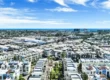
Downtown Huntington Beach, often called the heart of “Surf City USA,” remains one of Southern California’s most iconic coastal commercial districts. Centered around the historic Huntington Beach Pier, Main Street, and Pacific Coast Highway, this vibrant area blends tourism-driven retail, hospitality, dining, and limited office spaces with the laid-back surf culture that defines the city. As we move through early 2026, the commercial real estate landscape here reflects broader Orange County and coastal California trends: resilience in tourism-oriented sectors, persistent challenges in traditional office space, and a push toward mixed-use and sustainable developments.
The area’s appeal stems from its prime location—direct beach access, high foot traffic from millions of annual visitors, events like the U.S. Open of Surfing, and proximity to major highways. These factors continue to drive demand for retail and hospitality properties, even as national economic uncertainties and hybrid work models influence other segments.
Retail Sector: Strong and Tourism-Fueled
Retail remains the standout performer in Downtown Huntington Beach’s commercial market. The district’s walkable streets, pier proximity, and beachfront vibe create consistent high foot traffic, supporting boutiques, restaurants, surf shops, and experiential businesses.
Properties like Pierside Pavilion (around 90,000 square feet near 300 Pacific Coast Hwy) exemplify this strength, benefiting from tourist influx and local shoppers. Retail vacancy rates in Huntington Beach overall stay low—often below national averages—with Orange County retail showing resilience at around 3.2% vacancy in recent periods, well under historical averages. This trend holds in downtown areas, where coastal allure sustains demand.
In 2025-2026, lower interest rates (compared to peak pandemic highs) spur investor activity and modest new construction or renovations. Tourism recovery, boosted by events and potential boosts like the 2026 FIFA World Cup’s regional impact, supports RevPAR growth in nearby hospitality, indirectly benefiting ground-floor retail. Experts anticipate balanced growth, with cap rates for strong retail assets compressing slightly (e.g., around 4.84% for premium Class A properties in Huntington Beach).
Challenges include competition from online retail and short-term rental impacts on leisure spending, but downtown’s experiential focus—dining with ocean views, surf gear, and entertainment—helps it outperform inland areas.
Office Market: High Vacancy and Adaptation
The office segment faces headwinds, mirroring broader trends in Huntington Beach and Orange County. Citywide office vacancy hovered around 24-28% in recent data (e.g., 24.59% market-wide in 2024, with some submarkets higher), driven by persistent remote and hybrid work post-pandemic.
Downtown Huntington Beach has limited large-scale office inventory compared to retail or mixed-use, but available spaces often struggle with absorption. Average asking rents sit around $23-25 per square foot annually, with slight declines in some periods due to oversupply.
Businesses adapt by seeking flexible, smaller spaces or coworking options near the beach for lifestyle appeal. Some conversions to residential or mixed-use gain traction amid uncertainty over long-term office needs. Regulatory constraints and high construction costs limit new office builds, keeping supply tight but not solving vacancy issues.
For investors, opportunistic buys in well-located properties with adaptive reuse potential (e.g., ground-floor retail with upper-level office) offer value, especially as rates stabilize.
Hospitality and Mixed-Use Developments
Hospitality thrives downtown, capitalizing on beach tourism. Orange County’s hotel metrics show occupancy around 70-71% in 2025, with average daily rates near $199 and RevPAR growth projected at 2-3% annually through 2028, partly from major events.
Downtown’s pier-area hotels, restaurants, and short-term rentals benefit, though competition from vacation rentals softens some demand. Mixed-use projects—combining retail, dining, residential, and entertainment—represent a key trend. These developments enhance walkability and appeal to both residents and visitors.
Historical context includes the Pier Plaza area, an outdoor amphitheater and public space at the pier’s base, hosting events and supporting adjacent commercial vitality. While major new high-rises face zoning hurdles (e.g., past controversies over beachside development), smaller revitalizations and adaptive projects continue.
Sustainability emerges as a priority: new or renovated properties incorporate energy-efficient designs, solar features, and eco-friendly elements to attract tenants and meet evolving regulations.
Investment Outlook and Opportunities
As of early 2026, Downtown Huntington Beach’s commercial real estate offers nuanced opportunities. Limited inventory, coastal desirability, and tourism strength support moderated growth in values and rents. Multifamily (often treated as commercial) remains stable due to housing demand, with spillover benefits for nearby retail.
Investors target:
- Retail and hospitality assets with strong locations and tourism ties.
- Value-add opportunities in underperforming office spaces for repositioning.
- Mixed-use sites aligning with lifestyle trends.
Risks include economic slowdowns affecting tourism, regulatory/environmental constraints (Huntington Beach faces mandates for new housing that could compete for land), and interest rate fluctuations.
Overall, the market shows resilience. While not explosive like pre-2020 peaks, steady demand from the area’s lifestyle appeal positions downtown for positive momentum into 2026 and beyond. For buyers, sellers, or tenants, focusing on prime pier/Main Street locations with adaptive, sustainable features will likely yield the best returns.
Downtown Huntington Beach’s commercial scene captures the essence of coastal California living—where business thrives alongside sun, surf, and community. As trends evolve, this iconic district continues to attract those seeking a blend of opportunity and quality of life.