

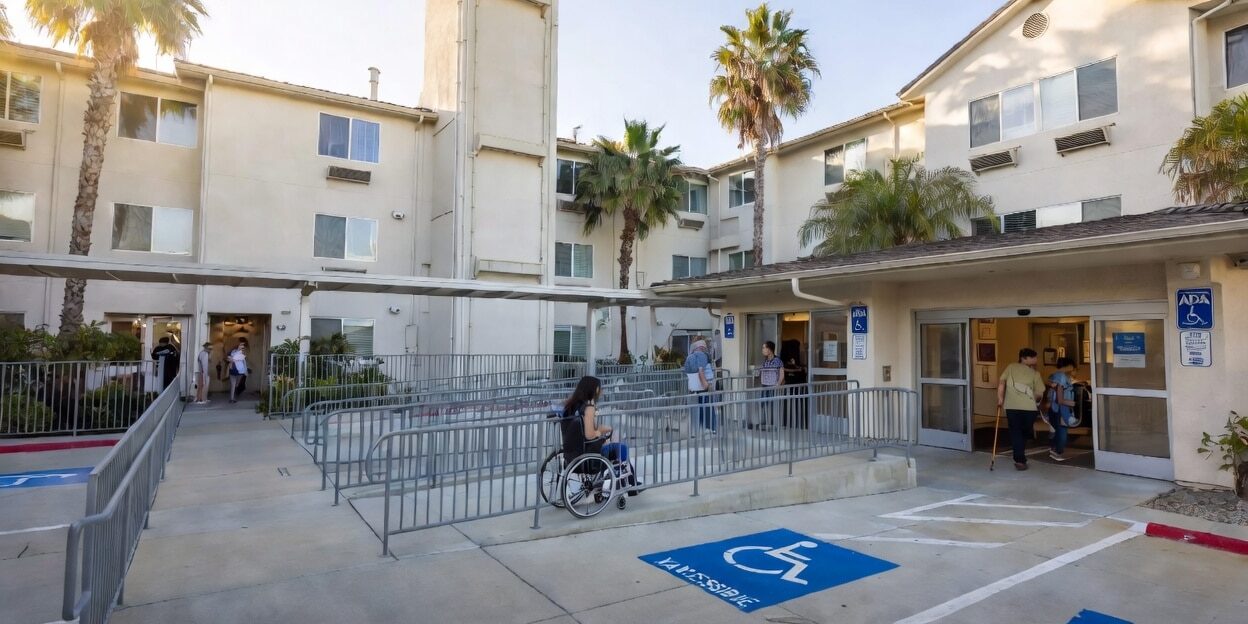
Fullerton, in the heart of Orange County, California, stands out as a dynamic hub for multifamily housing. With its strategic location near California State University Fullerton, easy access to the 5 and 91 freeways, and a mix of established neighborhoods and revitalized downtown districts, the city hosts thousands of apartment units catering to students, young professionals, families, seniors, and working-class residents. From older garden-style complexes built in the 1970s and 1980s to modern mid-rise developments along Harbor Boulevard and nearby transit corridors, Fullerton’s rental market reflects the broader Orange County trend of high demand amid limited supply.
Accessibility compliance in these apartment complexes is not merely a regulatory checkbox—it is a fundamental aspect of fair housing, tenant retention, and risk management. California’s stringent laws, combined with federal requirements, mandate that properties provide equal access for individuals with disabilities. Non-compliance can lead to costly lawsuits, reputational damage, and lost revenue. In a city like Fullerton, where approximately 20-25% of residents report some form of disability (aligning with statewide averages), and where student and senior populations drive much of the rental demand, proactive accessibility measures enhance property value and community inclusivity.
This blog post examines real-world case studies of accessibility compliance in Fullerton apartment complexes. Drawing from patterns observed across Orange County, these anonymized yet representative examples illustrate common challenges, successful remediation strategies, and actionable lessons. They highlight how owners and managers have navigated the intersection of the Fair Housing Act (FHA), Americans with Disabilities Act (ADA), California Building Code (CBC) Title 24, and local ordinances to achieve compliance while improving resident experiences.
Regulatory Framework in Fullerton and California
Accessibility standards for multifamily housing stem from multiple overlapping laws. Federally, the FHA (effective for buildings first occupied after March 13, 1991) requires seven key design features in “covered” multifamily dwellings (four or more units): an accessible building entrance on an accessible route, adaptable interior routes, usable doors, accessible routes into and through units, reinforced bathroom walls for grab bars, usable kitchens and bathrooms, and light switches, electrical outlets, and environmental controls in accessible locations.
The ADA applies primarily to common areas and public accommodations, such as leasing offices, pools, clubhouses, parking lots, and paths of travel. Title III of the ADA prohibits discrimination in places of public accommodation, requiring barrier removal when “readily achievable.” For properties receiving federal funding, Section 504 of the Rehabilitation Act adds further obligations.
California amplifies these standards. The CBC (Title 24, Part 2, Chapter 11A for privately funded housing) mandates that in new construction or substantial alterations, at least 5% of units must be fully accessible for mobility impairments, with an additional 2% designed for hearing and vision impairments. Accessible parking requires a minimum of 2% of total spaces (or more based on unit count), with van-accessible stalls featuring wider dimensions and access aisles. The Unruh Civil Rights Act and Disabled Persons Act impose strict liability for violations, allowing plaintiffs to recover statutory damages of $4,000 per violation plus attorney fees—creating a potent incentive for litigation.
Locally, Fullerton’s Municipal Code Chapter 15.65 establishes a formal reasonable accommodation process for zoning and land-use requests related to disabilities. The city’s building permit process requires compliance certifications, and applicants for business licenses receive notices emphasizing disability access responsibilities. Orange County fair housing organizations often assist with complaints, mediation, and education. Recent trends show increased enforcement through private lawsuits, HUD complaints, and proactive California Accessibility Specialist (CASp) inspections.
Non-compliance risks range from six-figure settlements to mandatory retrofits and civil penalties. Conversely, early compliance yields benefits: higher occupancy rates, eligibility for tax credits or incentives, and stronger tenant loyalty.
Case Study 1: Retrofits in an Older Garden-Style Complex Near Cal State Fullerton
Consider “Campus View Apartments,” a 120-unit garden-style property built in 1982 along a major arterial road within walking distance of the university. In 2022, a tenant with mobility impairments filed a complaint under the FHA and Unruh Act, alleging inaccessible parking and pathways. Only 1% of spaces were designated accessible (versus the required 2%), with no van-accessible options, and uneven sidewalks created steep slopes exceeding 1:12 ratios. The leasing office entrance lacked a ramp, forcing wheelchair users to navigate curbs.
Management engaged a CASp inspector immediately. The assessment revealed additional issues: narrow doorways (under 32 inches clear width) in common areas and non-compliant pool access without a lift. Rather than litigate, the owner opted for voluntary remediation to preserve goodwill in a competitive student-heavy submarket.
Retrofits included: repaving and restriping the lot to add four accessible spaces (including two van-accessible with 96-inch aisles and “No Parking” zones), installing concrete ramps with handrails at entrances and pathways, widening select doorways, and adding a portable pool lift. Total cost: approximately $185,000, offset partially by insurance and tax deductions. The property also implemented a reasonable accommodation policy for future modifications, such as lowered peepholes or grab bar installations at tenant expense (with structural changes funded by the owner).
Outcome: The complaint was withdrawn, occupancy rose 8% within six months (particularly among students with disabilities), and the complex earned positive reviews for inclusivity. Lesson: Older properties benefit from proactive CASp inspections every 3-5 years, turning potential liabilities into marketing advantages in university-adjacent locations.
Case Study 2: Design and Construction Defects in a New Mid-Rise Development Downtown
“Harbor Lofts,” a 180-unit mid-rise built in 2019 in Fullerton’s revitalized downtown area, faced a class-action-style HUD complaint in 2021 from multiple tenants and a disability advocacy group. Despite being post-1991 construction, the property failed multiple FHA and CBC requirements. Kitchens in 10% of units had insufficient clear floor space (under 30×48 inches) for wheelchair maneuvering, bathroom vanities blocked knee clearance, and reinforced walls for future grab bars were omitted. Common-area elevators lacked audible and visual signals compliant with CBC standards, and the fitness room had no accessible equipment routes.
The developer and general contractor were named defendants alongside the property manager. Discovery revealed that architectural plans had been value-engineered without accessibility consultant review, leading to deviations during construction.
Resolution involved a mediated settlement: $275,000 in damages and fees, plus full retrofits. Changes included removing base cabinets for knee space, installing removable vanities, retrofitting elevator controls, and adding accessible routes and equipment in amenity spaces. The owner also trained staff on FHA reasonable modification requests and partnered with local fair housing groups for annual audits.
Outcome: After 14 months of construction disruption (phased to minimize tenant impact), the property achieved full compliance and received certification. Rents stabilized, and the complex attracted more families with disabled members. Lesson: Involving a CASp or accessibility consultant during schematic design prevents costly post-occupancy fixes—potentially saving 5-10 times the upfront investment.
Case Study 3: Common Area and Amenities Compliance at a Family-Oriented Complex
“Orchard Gardens,” a 250-unit family-focused property constructed in phases between 2005 and 2018 near the 91 freeway, encountered an ADA Title III lawsuit in 2023 from a visitor with a service animal. The complaint highlighted multiple barriers: the clubhouse and leasing office had thresholds over ½ inch high, the playground lacked accessible routes and transfer systems, and the swimming pool had no compliant entry (no sloped entry or lift). Accessible parking was properly striped but frequently blocked by delivery vehicles, and signage lacked Braille or proper mounting heights.
The owner, experienced in multifamily operations, responded swiftly by hiring an Orange County-based ADA consultant. Rather than contesting “readily achievable” defenses, they implemented a barrier removal plan prioritizing high-impact areas. Upgrades included automatic door openers, ramped playground access with engineered wood fiber surfacing, installation of a fixed pool lift with proper deck space, and enforcement of no-blocking zones via signage and towing policies.
Additional measures: updated website and marketing materials to disclose accessibility features accurately (avoiding Unruh Act advertising violations) and creation of an internal accessibility coordinator role.
Outcome: The case settled out of court for under $50,000 (mostly attorney fees), with retrofits completed in under nine months. Tenant surveys showed improved satisfaction scores, and the property qualified for green and accessibility incentives in future refinancing. Lesson: Common areas often trigger ADA claims because they serve the public; regular self-audits and clear policies on service animals and blocking prevent escalation.
Case Study 4: Reasonable Accommodation and Policy Implementation in an Affordable Housing Community
“Fullerton Heights Residences,” an affordable 80-unit complex with some Section 8 and tax-credit units, received a Fair Housing Council complaint in 2024 regarding denial of a reasonable accommodation. A resident with severe vision impairment requested audio announcements for the elevator and installation of high-contrast signage throughout common areas. Management initially denied the request, citing cost and existing code compliance, triggering allegations under FHA, FEHA, and Fullerton’s Chapter 15.65 ordinance.
Upon legal review, the owner recognized the request as reasonable and not fundamentally altering the property. They implemented the changes—adding elevator voice annunciators and tactile/Braille signage—and developed a comprehensive reasonable accommodation policy. This included a dedicated online portal for requests, staff training on interactive processes, and documentation protocols to demonstrate good-faith efforts.
The policy extended to other common requests, such as reserved parking near units or assistance animal exceptions to no-pets rules. The complex also added 2% sensory-accessible units during a recent minor renovation.
Outcome: The complaint was resolved amicably with no damages paid beyond minor retrofits (under $15,000). The property maintained full occupancy and strengthened partnerships with local disability service providers. Lesson: Formal reasonable accommodation procedures, aligned with Fullerton’s municipal code, reduce litigation risk and foster trust—especially in affordable developments serving vulnerable populations.
Key Lessons and Best Practices Derived from These Cases
Across these Fullerton examples, several best practices emerge. First, conduct baseline CASp inspections early and periodically; they provide legal “safe harbor” benefits in California and identify issues before complaints arise. Second, integrate accessibility into every phase—design, construction, operations, and marketing. Third, train staff annually on FHA interactive dialogue requirements and ADA barrier removal priorities. Fourth, budget for ongoing compliance: allocate 1-2% of annual operating expenses for accessibility upgrades. Finally, document everything—policies, requests, and remediation efforts—to demonstrate compliance in any investigation.
Properties that exceed minimums (e.g., providing more than 5% accessible units or universal design features like lever handles and wide corridors) report higher resident retention and fewer vacancies.
Challenges Specific to Fullerton Apartment Operators
Fullerton’s older housing stock (many pre-1991 buildings) presents retrofit hurdles amid rising construction costs and supply chain issues. High student turnover near the university can complicate enforcement of policies, while traffic congestion on major corridors increases demand for accessible parking. Affordable complexes face added scrutiny due to federal funding ties, and evolving case law on website accessibility (digital access for leasing) adds new layers. Local density and revitalization efforts offer opportunities but require coordination with city planners on reasonable accommodation approvals.
Despite these challenges, Fullerton’s supportive fair housing ecosystem—through city resources and county partners—provides education and mediation pathways that proactive owners can leverage.
Conclusion
Accessibility compliance in Fullerton apartment complexes is both a legal imperative and a business opportunity. The case studies above demonstrate that whether addressing legacy barriers in older properties, correcting new-construction oversights, upgrading amenities, or refining accommodation policies, thoughtful action yields compliance, risk reduction, and enhanced community value. As California continues to prioritize inclusive housing through updated CBC standards and fair housing enforcement, Fullerton operators who embrace these practices position their properties as leaders in equitable multifamily living.
By investing in expert assessments, staff education, and resident-centered design, apartment owners not only avoid the financial and reputational pitfalls of non-compliance but also contribute to a more accessible, vibrant Fullerton. In a market where housing demand intersects with demographic shifts toward aging residents and inclusive education, these forward-thinking approaches ensure long-term success and align with the city’s commitment to fair housing for all.