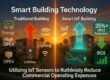

In the highly reactive, top-line-obsessed arena of commercial real estate syndication, the amateur investor navigates the closing table with a fatal misunderstanding of “passive income.” They execute a massive, multi-million-dollar acquisition, celebrate the successful escrow, and then immediately commit a mathematically catastrophic error: they hand the keys to a generic, third-party “off-site” property management firm. They blindly assume that a $50-a-month software subscription and an out-of-state call center will seamlessly guard their eight-figure asset. Six months later, the Net Operating Income (NOI) begins to bleed, preventative maintenance is ignored, the highest-yielding tenants default, and the Cap Rate multiplier violently reverses against the owner.
This is a complete, systemic failure of operational underwriting.
In the apex tiers of institutional capital, we do not view property management as an administrative afterthought; we view it as the central nervous system of the commercial matrix. A commercial building is not a static bond; it is a violently degrading physical machine that requires relentless, localized governance. Outsourcing this governance to an unaligned, volume-driven generic manager is the financial equivalent of selling an unhedged, naked put option on a collapsing ticker—you are assuming 100% of the localized risk while completely surrendering the operational controls to a third party.
At The Malakai Sparks Group, backed by the institutional framework of L3 Property Management, we do not outsource sovereignty; we mandate absolute localized dominance. Operating in the trenches for 14 years demands the uncompromising physical and mental stamina of an Ironman. You do not survive the daily logistical warfare of Orange County commercial real estate by dialing it in from a distance; you engineer your portfolio with the relentless, compounding structural momentum of a heavy 48KG kettlebell progression—every single mechanical movement must be strictly governed to endure the weight of the market. Just as we relentlessly canvas every microscopic demographic shift across our exact 2,500-home farming route in the Numbered Streets of Huntington Beach to unearth unyielding equity before it hits the MLS, we execute property management with absolute forensic precision. We are currently managing the total operational transition of massive residential and commercial units directly into a highly secure, mathematically transparent new management portal. Here is the definitive, institutional-grade guide to decoding the off-site management trap, surviving the CapEx bleed, and mathematically defending your commercial yield.
1. The Mathematics of Operational Bleed
To successfully defend a commercial asset, an investor must completely dismantle the generic management business model.
Volume-driven, off-site property managers do not make their margins by optimizing your building; they make their margins by minimizing their own labor. They operate strictly on a reactive basis. They wait for a catastrophic failure, dispatch a severely over-priced vendor, and frequently charge a hidden percentage markup on the invoice.
-
The Preventative Collapse: The institutional operator understands that a preventative roof sweep in October mathematically prevents a catastrophic interior water intrusion in December. The generic manager will not execute the sweep because it requires localized, physical oversight. They wait for the roof to collapse, bill you for the emergency extraction, and mathematically slaughter your operating expense ratio (OER).
2. The Board-Level Fiduciary Standard and Aesthetic Preservation
The fatal flaw of generic management is most violently exposed when governing highly stylized, experiential assets.
-
The Curated Canvas: When executing heavy adaptive-reuse projects within the hyper-experiential retail grids of Costa Mesa: The Creative Office & High-Volume Experiential Retail Corridor or navigating the fiercely guarded historic preservation overlays of San Juan Capistrano: Historic Professional Office & Boutique Retail Arbitrage, the asset’s entire valuation is tied to absolute aesthetic perfection.
-
The Fiduciary Mandate: An off-site call center cannot manage this gravity. Maintaining a premium commercial corridor requires the exact same ruthless, fiduciary discipline deployed when steering a massive homeowners association board through complex community maintenance projects. Elite management demands intense, localized oversight of specialized painting contracts, strict tree and landscaping preservation, and massive CapEx executions like full parking lot or tennis court resurfacing. A generic manager lets the paint peel and the landscaping die, instantly vaporizing the boutique retail premium you spent millions to entitle.
3. High-Density Commuter Arteries and Portal Integration
The operational warfare of generic management transitions from aesthetic failure to outright mechanical collapse in the high-friction residential sectors.
-
The Turnover Slaughter: When operating massive residential complexes within the transit-oriented commuter grids of Santa Ana: High-Density Multi-Family & The Urban Redevelopment Core or the student-heavy logistical networks of Fullerton: The Northern Logistical & Academic Support Hub, the velocity of unit turnover is brutal. A generic manager will let a vacant unit sit empty for 30 days while fumbling the vendor scheduling for paint and flooring.
-
The Institutional Portal: Every day a unit is offline is pure, unrecoverable NOI bleed. Institutional operators deploy ruthlessly efficient management portals. By fully integrating secure, digitized rental agreements, instant tenant communication, and automated maintenance dispatch into a single secure platform, the unit turnover time is mathematically compressed from 30 days down to 5 days. The elite portal completely bypasses the friction of human error.
4. The NNN Illusion in Heavy Industrial
The most dangerous myth perpetuated by off-site managers is that Triple-Net (NNN) industrial leases require zero management.
-
The Compliance Trap: When acquiring massive distribution hubs within Anaheim: The Industrial Heart of Orange County or specialized, marine-layer-resistant terminal logistics centers in Huntington Beach: Coastal Industrial & The Aerospace/Defense Pivot, the lease dictates that the tenant maintains the building. The amateur landlord hires a generic manager to simply “collect the rent.”
-
The Terminal Degradation: The tenant is highly incentivized to execute the absolute bare minimum maintenance required to keep their operation running. If they fail to service the massive 3-phase power grids or neglect the heavy-duty HVAC systems, the infrastructure rots. Elite management physically audits NNN tenants quarterly. We legally mandate proof of vendor service contracts. We force the tenant to physically maintain the institutional baseline, ensuring the building is not returned as a hollow, degraded shell at the end of the 10-year term.
5. Shielding the Clinical and Corporate Moats
Institutional capital deploys elite, hyper-localized management to mathematically lock down the multi-generational value of absolute corporate credit.
-
The Medical Baseline: If you are securing advanced biomedical footprints within Fountain Valley: The Corporate Flex Corridor & Institutional Healthcare Fortress or entitling corporately backed clinical engines in Orange: The Institutional Healthcare & Medical Office Epicenter, a generic property manager is a massive liability. Medical facilities require compliance with strict bio-hazard disposal access, hospital-grade air filtration servicing, and unyielding HIPAA-compliant security perimeters. An off-site manager’s failure to secure a vendor instantly breaches the medical tenant’s lease covenants.
-
The Corporate Juggernaut: This same absolute physical alignment is required within the towering corporate bastions of Irvine: The Master-Planned Corporate Juggernaut and the heavily restricted suburban fortresses of Mission Viejo: South County Suburban Retail & High-Yield Healthcare Centers. You do not trust a $$15-an-hour virtual assistant to interface with a Fortune 500 company’s facilities director. Elite management mandates localized, executive-level communication to permanently insulate the corporate relationship.
6. The Sovereign Exit: The “Clean” T-12 Ledger
The ultimate consequence of generic, off-site management is violently exposed when the landlord attempts to sell the asset to an institutional buyer.
-
The Valuation Audit: When transitioning multi-generational equity into the absolute sovereign wealth vaults of Newport Beach: The Wealth Management & Coastal Capital Center, the institutional buyer executes a forensic audit of the Trailing Twelve Months (T-12) operating statement.
-
The Frictionless Mandate: If the T-12 is riddled with erratic, overpriced emergency repairs, undocumented tenant disputes, and massive CAM (Common Area Maintenance) reconciliation errors caused by generic management software, the buyer will instantly slash the purchase price or kill the deal entirely. Elite, portal-driven management ensures a mathematically pristine ledger. The income is verified, the CapEx is efficiently tracked, and the localized maintenance is flawless. The institutional management architecture is the exact mechanism that justifies the premium exit valuation.
Conclusion: You Do Not Outsource Sovereignty, You Internalize Control
In the highly capitalized, completely unforgiving arena of Southern California commercial real estate, relying on an outsourced call center to govern an eight-figure asset is an unforced error of massive proportions.
Amateur commercial brokers sell the acquisition and ignore the operational reality. They push the landlord to hire the cheapest generic manager to optimize the pro forma, completely ignore the catastrophic physical degradation that follows, and trap their clients inside a rapidly depreciating liability that mathematically consumes its own cash flow.
Elite commercial advisors are operational architects and localized operators. We mandate the secure management portals. We execute the board-level fiduciary oversight. We mathematically force the preventative maintenance schedules before the ink on the deed ever dries. At The Malakai Sparks Group and L3 Property Management, we ensure that when your wealth is deployed into a commercial asset, your operational controls are not outsourced; they are mathematically bulletproof, institutionally executed, and engineered to permanently secure your legacy.