

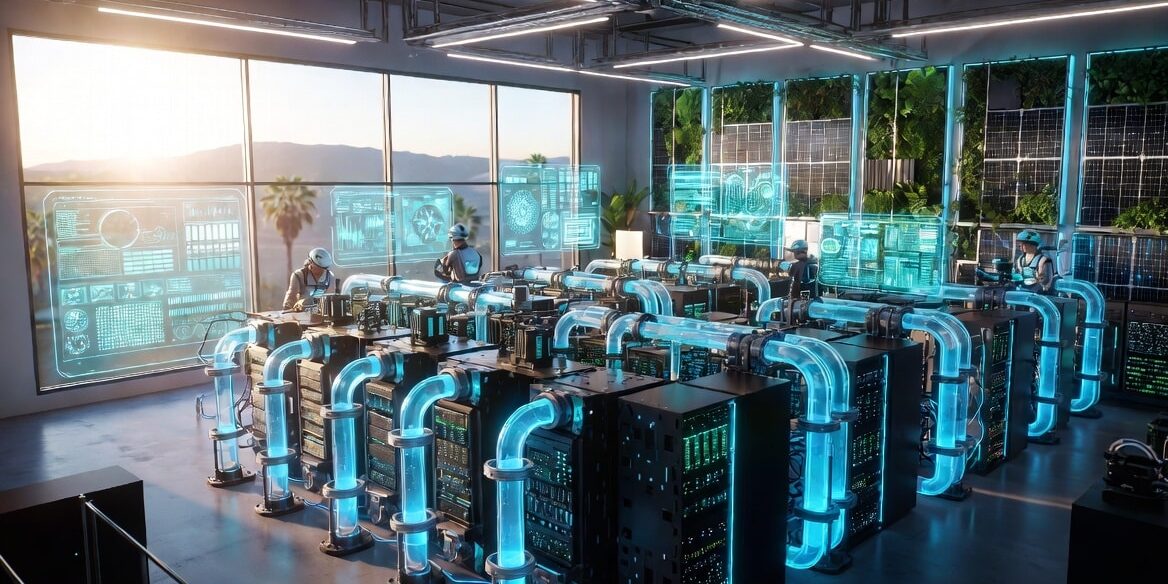
In the heart of Southern California’s thriving tech and business landscape, Brea, California, stands out as a strategic location for data center operations. Nestled in Orange County, Brea offers proximity to major transportation corridors, a skilled workforce, and access to robust infrastructure that supports high-tech industries. While Orange County hosts several data center facilities in nearby cities like Irvine, Santa Ana, and Tustin, Brea’s manufacturing, logistics, and commercial sectors create growing demand for reliable, high-performance computing environments.
As artificial intelligence (AI), edge computing, and data-intensive applications surge, existing data centers face pressure to modernize without the massive costs and disruptions of full-scale new builds. Renovation—often called retrofitting or adaptive reuse—emerges as a smart, sustainable path forward. Creative technology integrations during renovations can dramatically boost efficiency, capacity, and resilience while aligning with California’s stringent energy and environmental goals.
This comprehensive guide explores innovative renovation ideas tailored for data centers in or serving the Brea and broader Orange County area. From advanced cooling systems to AI-optimized power management and modular expansions, these strategies help operators future-proof their facilities amid rising AI workloads that demand higher power densities and lower Power Usage Effectiveness (PUE) metrics.
Why Renovate Data Centers in Brea and Orange County?
Data centers consume enormous energy, with cooling alone often accounting for 40% or more of total power usage. In California, where grid constraints, sustainability mandates, and community concerns about energy and water use are prominent, renovations offer a way to comply while cutting operational expenses.
Brea’s location benefits from Orange County’s relatively stable infrastructure compared to denser urban cores, yet facilities must contend with seismic considerations, wildfire risks, and increasing electricity demands from AI. Renovating legacy sites allows operators to integrate cutting-edge technologies without starting from scratch. Benefits include:
- Cost Efficiency: Retrofitting can deliver 20-40% energy savings through targeted upgrades rather than greenfield construction.
- Sustainability: Meeting California’s goals for reduced emissions and renewable integration.
- Scalability for AI: Supporting rack densities exceeding 50-100 kW, far beyond traditional air-cooled limits.
- Minimal Downtime: Phased implementations keep critical operations running.
- Adaptive Reuse Potential: Repurposing underutilized industrial or commercial spaces in the region for edge or modular data halls.
Local discussions around data center growth, including potential pauses on large-scale projects, underscore the need for efficient, low-impact renovations that enhance existing assets.
1. Implementing Advanced Liquid Cooling Systems
Traditional air cooling struggles with the heat generated by modern GPUs and AI accelerators. Creative renovation ideas center on retrofitting for liquid cooling technologies, which can reduce cooling energy by up to 40-95% depending on the approach.
Direct-to-Chip (DLC) Liquid Cooling: Install cold plates directly on high-heat components like CPUs and GPUs. During renovation, technicians can upgrade server racks with compatible manifolds and coolant distribution units (CDUs) without replacing entire infrastructure. This hybrid setup maintains air cooling for less demanding equipment while targeting hotspots.
Rear Door Heat Exchangers (RDHx): A modular retrofit-friendly option. Attach heat exchangers to the back of existing racks to capture and remove heat via liquid loops. RDHx systems are ideal for brownfield sites in Brea, offering up to 66% better cooling efficiency and easy integration with legacy layouts.
Immersion Cooling: For higher-density renovations, submerge servers in dielectric fluids. While more invasive, containerized or cabinet-level immersion modules allow phased deployment. Benefits include near-silent operation, higher server densities, and potential waste heat reuse for nearby industrial processes in Orange County’s manufacturing hubs.
Creative Twist for Brea: Integrate free cooling or district cooling where ambient Southern California nights allow economizers to reduce chiller reliance. Pair with rooftop or waste-heat systems to warm adjacent facilities or greenhouses, turning a liability into a community asset. AI-driven controls, inspired by systems like Google’s DeepMind, can optimize these setups in real-time, learning from workload patterns to minimize energy spikes.
Renovation tip: Raise ceiling heights or reinforce raised floors during upgrades to accommodate piping and taller racks, ensuring future-proofing for evolving hardware.
2. AI-Powered Energy Management and Optimization
Renovations provide the perfect opportunity to embed intelligence into operations. Deploy AI and machine learning platforms for predictive maintenance, dynamic power allocation, and thermal orchestration.
- Install smart Power Distribution Units (PDUs) with real-time monitoring at the rack level.
- Integrate digital twins—virtual replicas of the facility—that simulate upgrades before physical changes, reducing risks in seismic-prone California.
- Use AI to orchestrate hybrid cooling (liquid + air) and adjust based on demand, potentially cutting cooling costs by double digits.
In Brea facilities, where logistics and manufacturing data flows are critical, these systems can prioritize low-latency workloads while shifting non-urgent tasks to off-peak hours when renewable energy (solar, common in Orange County rooftops) is abundant.
Battery Energy Storage Systems (BESS): Add modular battery banks during power renovations for peak shaving and backup. This smooths variable AI loads and supports demand response programs with local utilities, enhancing reliability without oversized generators.
Creative idea: Combine BESS with on-site solar integration for “behind-the-meter” renewable setups, helping meet California’s sustainability targets and potentially qualifying for incentives.
3. Modular and Scalable Infrastructure Upgrades
Modular design is one of the most transformative renovation trends. Instead of rigid overhauls, incorporate prefabricated components that “plug in” to existing shells.
- Modular Data Halls or Pods: Deploy self-contained units for high-density AI compute. These factory-built modules include integrated power, cooling, and networking, allowing rapid capacity expansion in Brea’s industrial zones with minimal site disruption.
- Flexible Layout Reconfigurations: Rearrange racks into optimized hot/cold aisle containment. Raise servers off floors or modify layouts to improve airflow—simple changes that yield significant efficiency gains without full retrofits.
- Edge Computing Micro Data Centers: Convert portions of larger facilities into edge nodes. Ideal for Orange County’s distributed businesses, these support low-latency applications like autonomous logistics or smart manufacturing with compact, liquid-cooled cabinets.
Modular approaches accelerate deployment from years to months, crucial in a competitive market. They also embrace “design for second life” principles, using circular materials that allow easy reconfiguration as technology evolves.
4. Power Infrastructure Enhancements
AI workloads can double or triple power demands. Renovations must creatively address electrical systems:
- Upgrade transformers, switchgear, and busways to handle higher loads.
- Install redundant, high-efficiency standby power with natural gas or hybrid generators compliant with local emissions rules.
- Implement smart grid integration for better load balancing.
Creative renovation: Use prefabricated electrical modules or containerized power blocks. In Brea, leverage proximity to existing substations while adding microgrid elements for islanding during outages—vital in wildfire-prone seasons.
Explore waste heat-to-power technologies or fuel cells for cleaner backups, aligning with Orange County’s push for greener operations.
5. Sustainability and Heat Reuse Innovations
Data centers generate vast waste heat. Forward-thinking renovations turn this into an opportunity:
- Heat Recovery Systems: Capture exhaust to heat water for nearby facilities, support district heating, or drive absorption chillers. In industrial Brea, this could benefit manufacturing processes or agriculture.
- Phase Change Materials (PCMs) and Advanced Storage: Integrate thermal storage to shift cooling loads.
- Water-Efficient Designs: Shift away from evaporative cooling toward closed-loop liquid systems or air-side economizers to conserve resources in drought-conscious California.
Additional green ideas: Incorporate low-VOC materials, daylighting in support areas, and LEED-aligned finishes during interior renovations. On-site renewables and greywater reuse further reduce environmental footprint.
Adaptive reuse of older buildings—whether former offices, warehouses, or industrial sites—preserves historic elements where possible while embedding modern tech like liquid cooling and modular pods. This approach supports heritage while meeting digital demands.
6. Security, Monitoring, and Operational Resilience
Technology renovations aren’t complete without robust oversight:
- Deploy advanced biometric and AI-video surveillance.
- Integrate comprehensive DCIM (Data Center Infrastructure Management) software for unified monitoring of power, cooling, and IT assets.
- Enhance fire suppression with clean agents compatible with liquid systems.
- Ensure seismic bracing and redundant pathways for cabling and cooling lines.
Creative element: Use IoT sensors and predictive analytics to forecast failures, enabling proactive rather than reactive maintenance—reducing downtime in mission-critical environments serving Southern California businesses.
Implementation Roadmap for Brea Data Center Renovations
- Assessment Phase: Conduct energy audits, thermal mapping, and structural evaluations tailored to local codes and Orange County regulations.
- Phased Planning: Prioritize high-impact areas like cooling and power. Use BIM (Building Information Modeling) for clash-free designs.
- Technology Integration: Pilot liquid cooling or AI controls in one section before full rollout.
- Testing and Commissioning: Verify PUE improvements, redundancy, and compliance.
- Ongoing Optimization: Leverage AI for continuous tuning and plan for future modular additions.
Budget considerations: While initial investments vary, ROI often materializes within 2-5 years through energy savings and increased capacity. Partner with local experts familiar with California’s permitting processes.
Challenges and Considerations Specific to Orange County
- Regulatory Landscape: Navigate energy efficiency standards, potential moratorium discussions, and incentives for sustainable tech. Bills supporting ELDP certification for green data centers could accelerate compliant projects.
- Power Availability: Grid constraints make on-site generation and storage essential.
- Community Impact: Emphasize low-noise, low-water designs and heat reuse to build local support.
- Supply Chain: Modular and prefabricated solutions mitigate delays.
Operators in Brea can draw from successful adaptive reuse projects elsewhere, such as converting retail or office spaces with careful structural reinforcements and modern cooling retrofits.
The Future of Data Centers in Brea and Beyond
As we move into 2026 and beyond, data center renovations will increasingly blend creativity with technology. Liquid cooling, modular scalability, AI optimization, and heat reuse aren’t just enhancements—they’re necessities for handling AI’s exponential demands while honoring sustainability imperatives.
For facilities in Brea, Orange County, these ideas offer a pathway to remain competitive, efficient, and responsible. Whether upgrading an existing colocation site, expanding for local enterprises, or supporting broader Southern California digital infrastructure, thoughtful renovations transform challenges into opportunities.
Businesses and operators considering such projects should consult specialized engineers and contractors experienced in California data centers. With the right technology integrations, renovated facilities can deliver superior performance, lower costs, and a smaller environmental footprint—positioning Brea as a smarter hub in the region’s tech ecosystem.
In summary, creative renovation isn’t about patching old systems; it’s about reimagining them with intelligent, adaptable technologies that meet today’s AI-driven needs and tomorrow’s uncertainties. By embracing these strategies, data centers in Brea and Orange County can thrive sustainably for decades to come.






