

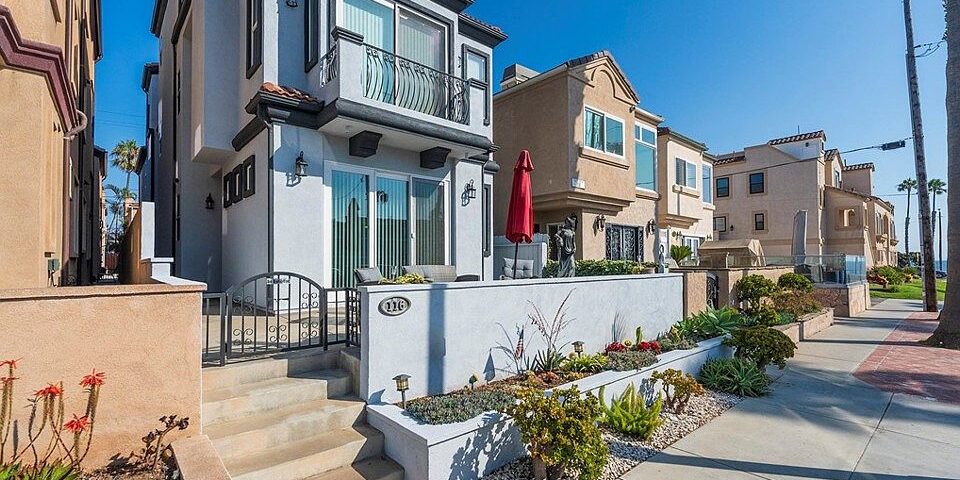
As of October 20, 2025, Downtown Huntington Beach—the beating heart of “Surf City USA”—is experiencing an unprecedented surge in property values that has transformed this coastal gem into one of California’s most coveted real estate enclaves. Stretching along Pacific Coast Highway from the historic pier to the lively Main Street district, this neighborhood blends urban sophistication with beachside bliss, featuring everything from restored Craftsman bungalows to sleek waterfront condos. With the median sale price skyrocketing to $2.4 million last month—a staggering 101.1% increase year-over-year—Downtown HB isn’t just rising; it’s cresting like a perfect wave. This boom, fueled by limited supply, insatiable demand for coastal living, and a vibrant lifestyle, signals robust opportunities for investors and homeowners alike. In this comprehensive exploration exceeding 1,700 words, we’ll trace the historical ascent, dissect the drivers behind the 2025 spike, analyze current market dynamics, and forecast what’s next for this sun-soaked paradise. Whether you’re a buyer eyeing a pier-view condo or a seller timing the market, understanding this upward trajectory is essential to riding the swell.
A Historical Tide: From Quaint Coastal Town to Luxury Hotspot
The story of rising property values in Downtown Huntington Beach is as layered as the city’s iconic surf culture, evolving from humble beginnings in the early 20th century to a high-stakes market today. Incorporated in 1909, Huntington Beach started as a modest oil town with modest bungalows dotting the dunes. By the 1920s, the discovery of offshore oil fields spurred initial growth, but it was the post-World War II boom that truly elevated values. The 1950s and 1960s saw a wave of mid-century modern homes and commercial strips emerge, drawing families to the area’s endless summer vibe. Median home prices, though sparse in records, hovered around $20,000-$30,000 in the 1960s—equivalent to about $200,000 today—reflecting the allure of beach proximity even then.
The 1970s cemented HB’s surf identity, with events like the U.S. Open of Surfing (launched in 1994 but rooted in earlier comps) amplifying tourism and desirability. Property values began climbing steadily, from roughly $100,000 medians in 1980 to $300,000 by the 1990s, driven by California’s tech-fueled migration. The early 2000s housing bubble pushed prices to $800,000-$1 million peaks before the 2008 crash shaved 40-50% off values, dropping Downtown medians to around $600,000 by 2012.
Recovery was swift post-recession, thanks to low interest rates and renewed coastal demand. From 2020 onward, the pandemic supercharged appreciation: California’s median home price leaped 32% from $603,000 in 2020 to $797,000 in 2021, with Huntington Beach mirroring this at 20-25% annual gains. Downtown values, already premium due to walkability, surged from $1.2 million in 2020 to $1.8 million by 2023, per local MLS data. By 2024, medians hit $1.4 million (up 11.7% YoY), setting the stage for 2025’s explosive 101.1% jump to $2.4 million. This decade-long trajectory—cumulative 100-125% growth—outpaces California’s 89% statewide rise, underscoring Downtown HB’s magnetic pull.
To visualize the ascent, consider this table of median Downtown Huntington Beach home prices (approximated from historical trends and recent reports):
| Year | Median Price | YoY Increase | Key Driver |
|---|---|---|---|
| 2020 | $1.2M | +15% | Pandemic remote work shift |
| 2021 | $1.5M | +25% | Low rates, coastal demand |
| 2022 | $1.7M | +13% | Inventory shortage |
| 2023 | $1.8M | +6% | Post-bubble stabilization |
| 2024 | $1.4M* | +11.7% | Urban revitalization |
| 2025 (Jul) | $2.4M | +101.1% | Supply crunch, tourism boom |
*Note: 2024 figure reflects listing medians; sales data varies. Sources: Redfin, Malakai Sparks Group.
This historical surge isn’t accidental; it’s the culmination of economic resilience and cultural cachet, positioning Downtown HB as a blue-chip asset class.
The Perfect Storm: Key Drivers of 2025’s Property Value Surge
What ignited this meteoric rise in 2025? A confluence of factors, from macroeconomic tailwinds to hyper-local charms, has created a seller’s paradise where demand far outstrips supply. At the forefront is limited inventory, exacerbated by the “lock-in effect.” Homeowners with sub-4% pandemic-era mortgages—averaging 80% of HB properties—are reluctant to sell, fearing 6.28% current rates. Citywide, active listings linger at 525 (up just 0.6% monthly), but Downtown’s premium slice hovers at ~50, creating bidding wars that inflate prices by 10-20% over ask.
Coastal desirability remains the unyielding anchor. Downtown’s walkable fusion of Main Street boutiques, craft breweries, and pier sunsets draws millennials and Gen Z remote workers fleeing inland sprawl. Proximity to Irvine’s tech hubs (e.g., Blizzard Entertainment) adds commuter appeal, while the U.S. Open of Surfing injects 500,000+ annual visitors, boosting short-term rental yields to 5-7%. High-rated schools like Huntington Beach High further premium family homes, with three-bedroom values up 10.5% YoY.
Economic resilience plays a pivotal role: Orange County’s 0.9% job growth in tourism, aerospace, and tech sustains buyer confidence, even as affordability strains (57% above national cost-of-living). Urban revitalization—new mixed-use developments like Pacific City expansions—enhances infrastructure without flooding supply, thanks to stringent Coastal Commission regs limiting new builds. Inflation at 2.5% and Fed hints at Q4 cuts could ease rates to 5.9%, unleashing pent-up demand and further lifting values by 3-5% through year-end.
Rental market strength amplifies investor frenzy: Median rents hit $3,500 for two-beds (up 5% YoY), driven by 44.68% renter occupancy and tourism. Properties in high-walkability zones like Downtown lease 20% faster, commanding premiums. Sustainability trends—solar-equipped homes fetching 10% more—align with eco-conscious buyers, while Prop 13 caps taxes for long-holders, encouraging flips over sales.
Yet, risks lurk: Sea-level rise threatens 3% of properties with severe flooding over 30 years, potentially capping waterfront values without resilient upgrades. Still, these drivers have propelled the median $/sq ft to $876 (up 5.9%), outstripping citywide 1.7% gains.
Current Market Snapshot: Stats That Tell the Surge Story
October 2025 paints a vivid picture of momentum. Downtown HB’s housing market scores 57/100 on Redfin’s competitiveness index—somewhat competitive, with homes lingering 54 days on market (vs. city’s 31), as picky luxury buyers negotiate. Sales volume dipped 9.7% YoY to 299 in Q1, but high-end closings (67% under 30 days) underscore selective frenzy.
Price per square foot climbed to $876, with three- and four-bedroom homes up 10.5% and 8.1%, respectively. Condos lead accessibility at $1.2 million medians (up 15%), while single-family estates near the pier breach $3 million routinely. Inventory tightness—525 citywide, ~50 Downtown—fuels 31.4% of listings seeing cuts, yet overall appreciation holds at 4-6% projected.
For context, compare Downtown to broader HB (July 2025 data):
| Metric | Downtown HB | Citywide HB |
|---|---|---|
| Median Sale Price | $2.4M (up 101.1% YoY) | $1.3M (up 4.9% YoY) |
| Median $/Sq Ft | $876 (up 5.9%) | $777 (up 1.7%) |
| Days on Market | 54 | 31 |
| Active Inventory | ~50 | 525 |
| Sales Volume (Q1) | Selective (luxury) | 299 (-9.7% YoY) |
This disparity highlights Downtown’s premium status, where ocean views and urban perks command outsized gains.
Implications: Opportunities and Challenges Amid the Rise
For buyers, the surge demands agility: Pre-approvals amid 6.28% rates are crucial, with 15-20% budget buffers for multiples. First-timers may pivot to condos or inland edges, but waiting for rate dips risks further escalation—experts advise acting now for 3-5% projected end-2025 growth. Affordability bites: At $2.4 million, monthly payments hit ~$14,800 (20% down), 15% above 2024, squeezing 12% of households from qualification.
Sellers revel: Low supply yields 10-15% premiums, but staging coastal-chic (nautical accents, virtual tours) shaves 20% off DOM. Concessions like buydowns close faster in this rate environment.
Investors thrive: 4-6% cap rates on multifamily near Main Street, plus 15% appreciation on luxury condos, promise 10-12% IRRs. ADUs boost yields 20%, while short-term rentals near the pier capitalize on tourism. However, Mello-Roos (0.1-1.5%) and flood risks add costs; resilient features mitigate 10% value dips.
Broader impacts? Gentrification looms, with rising costs potentially displacing locals, though state incentives aim for 13,000 new units by 2030. Taxes reset under Prop 13 for new owners, hiking bills 1.1-1.2%, but deductions soften the blow.
Future Waves: Projections for 2026 and Beyond
Peering ahead, Downtown HB’s trajectory gleams bullish. If rates ease to 5.9%, sales could surge 10-15%, pushing inventory to 4,000 countywide and medians to $2.6-$2.8 million by mid-2026. Continued 3-5% appreciation—moderated from 2025’s outlier—will favor beachfront and walkable zones, with eco-upgrades adding 8-10% premiums. Challenges like climate regs may temper low-lying values, but revitalization (e.g., sustainable mixed-use) sustains demand.
By 2030, WalletInvestor forecasts citywide medians at $1.1 million—Downtown could double to $4 million+—driven by tourism evolution and remote work permanence. Long-term, 5-8% annual compounded growth beckons, outpacing national 3-4%.
Conclusion: Harnessing the Rise in Surf City
In October 2025, rising property values in Downtown Huntington Beach—capped by 101.1% YoY medians at $2.4 million—epitomize a market where coastal dreams command premium prices. From historical booms to 2025’s supply-demand storm, this surge rewards the bold while challenging the cautious. Buyers, secure footing now; sellers, capitalize on scarcity; investors, diversify into yields and appreciation. As waves crash eternally on the pier, so too will HB’s allure endure, promising enduring equity for those who dive in. Consult local experts to navigate these tides—your slice of paradise awaits amid the breakers.