

In the heart of Orange County, California, Brea stands as a bustling hub for industrial activity. Known for its strategic location near major highways like the 57 and 91 freeways, Brea offers a prime environment for warehouses and distribution centers that support everything from manufacturing to e-commerce logistics. As the industrial sector evolves, so does the need for sophisticated property maintenance strategies. Advanced property maintenance, particularly when integrated with cutting-edge technology, is no longer a luxury but a necessity for ensuring operational efficiency, safety, and longevity of these facilities.
This blog post delves into the world of advanced property maintenance tailored for technology use in industrial warehouses in Brea. We’ll explore how technologies like AI, IoT, and predictive analytics are transforming maintenance practices, the unique aspects of Brea’s industrial landscape, and the benefits and challenges of implementation. By leveraging these innovations, warehouse operators can minimize downtime, reduce costs, and adapt to the demands of a fast-paced economy. Whether you’re a property manager, warehouse owner, or industry professional, understanding these advancements can help you stay ahead in Orange County’s competitive market.
Brea’s industrial warehouses are diverse, ranging from small flex spaces to large distribution centers spanning over 100,000 square feet. With an average asking rent hovering around $18.85 per square foot, the pressure to maintain these properties efficiently is high. Technology plays a pivotal role here, enabling proactive rather than reactive maintenance, which is crucial in an area where space is at a premium, and disruptions can lead to significant financial losses.
The Industrial Warehouse Landscape in Brea
Brea, nestled in northern Orange County, has long been a magnet for industrial development due to its proximity to Los Angeles and major ports like Long Beach. The city’s industrial zones feature a mix of older buildings from the 1980s and newer constructions designed for modern logistics. Properties like the Imperial Distribution Center, with spaces up to 126,681 square feet available for lease at around $18.60 per square foot, exemplify the scale and potential of these warehouses. Other notable sites include the Brea Central Business Park and locations along West Central Avenue, offering flexible industrial spaces starting from 2,745 square feet.
These warehouses serve various industries, including manufacturing, distribution, and e-commerce fulfillment. The demand for space in Brea is evident from the 60+ industrial listings available for lease, with options for manufacturing, warehousing, and even showroom integrations. However, maintaining these vast facilities presents unique challenges. High ceilings, heavy machinery, extensive HVAC systems, and constant foot and vehicle traffic mean that wear and tear is accelerated. Traditional maintenance methods—relying on scheduled inspections and manual repairs—often fall short, leading to unexpected breakdowns and costly interruptions.
Enter advanced property maintenance: a tech-driven approach that uses data and automation to predict, prevent, and optimize upkeep. In Brea, where warehouses must comply with California’s stringent environmental and safety regulations, technology ensures compliance while enhancing efficiency. For instance, local companies like Brea Networks provide IT support for manufacturing firms, highlighting the growing intersection of tech and industrial operations.
Defining Advanced Property Maintenance in the Context of Technology
Advanced property maintenance goes beyond fixing what’s broken; it’s about using technology to foresee issues and streamline processes. At its core, it involves integrating software, sensors, and analytics into daily operations. For industrial warehouses, this means monitoring everything from structural integrity to equipment performance in real-time.
Key components include Computerized Maintenance Management Systems (CMMS), which centralize work orders, asset tracking, and scheduling. According to industry insights, tools like WorkTrek enable property managers to track repairs, schedule maintenance, and predict issues before they escalate. AI-powered platforms take this further by analyzing data from sensors to automate preventive maintenance and extend asset lifecycles. In Brea’s warehouses, where space utilization is critical, these systems help maintain optimal conditions for storage and operations, reducing energy waste and improving tenant satisfaction.
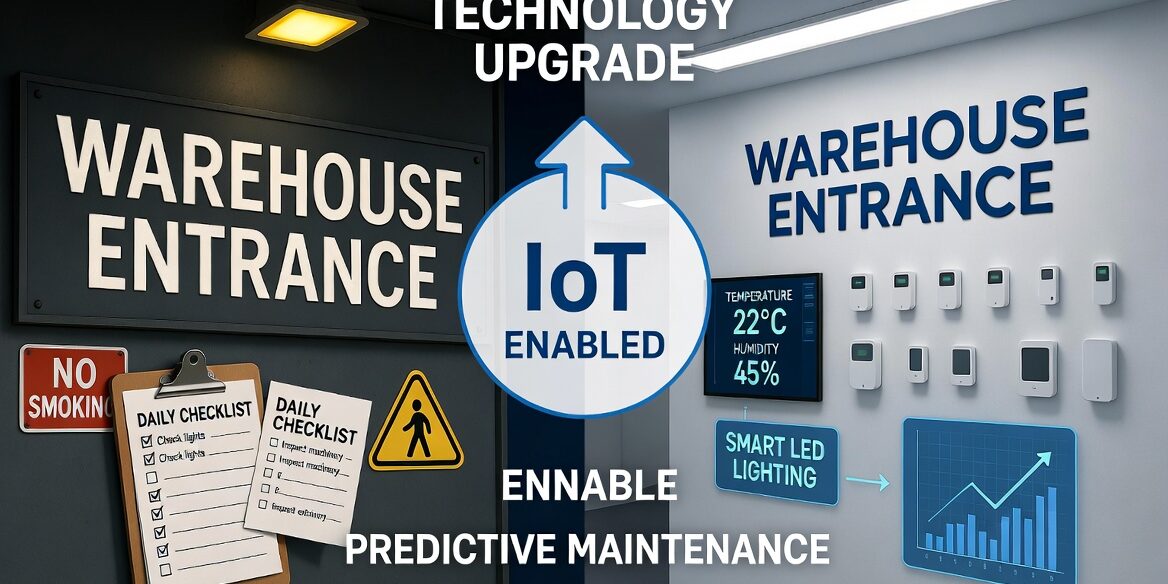
Technology use in maintenance also encompasses IoT devices—sensors embedded in roofs, floors, HVAC units, and machinery—that collect data on temperature, vibration, humidity, and more. This data feeds into cloud-based platforms for analysis, allowing managers to address potential failures proactively. For example, in a warehouse handling sensitive goods like electronics or perishables, maintaining precise environmental controls is essential, and tech ensures deviations are caught early.
Key Technologies Revolutionizing Warehouse Maintenance
Several technologies are at the forefront of advanced property maintenance in industrial settings. Let’s break them down:
- AI and Predictive Maintenance: AI algorithms process vast amounts of data to predict when equipment might fail. In commercial buildings, AI has been shown to reduce unplanned shutdowns by 45% and cut repair costs significantly. For Brea warehouses, this could mean forecasting HVAC breakdowns during hot Orange County summers, preventing spoilage or operational halts.
- IoT and Sensor Networks: IoT devices provide real-time monitoring. In industrial warehouses, sensors on conveyor belts, forklifts, and structural elements detect anomalies like excessive vibrations or leaks. Companies like ATS offer comprehensive industrial maintenance services that incorporate such tech to improve uptime and productivity.
- CMMS and Automation Software: Platforms like NetVendor digitize inspections and automate scheduling, tracking performance from a single dashboard. Essential features include centralized lease management, automated maintenance systems, and asset tracking. In Brea, where warehouses often house multiple tenants, these tools ensure seamless coordination.
- Robotics and Automation: Warehouse robotics, as supplied by firms like Raymond West in nearby areas, extends to maintenance tasks. Robots can inspect hard-to-reach areas, clean floors, or even perform minor repairs, reducing human risk in large facilities.
- Building Information Modeling (BIM) and Drones: For structural maintenance, BIM software creates digital twins of warehouses, while drones conduct aerial inspections of roofs and exteriors. This is particularly useful in Brea’s sprawling industrial parks.
- Energy Management Systems: With California’s focus on sustainability, tech like smart lighting and HVAC controls optimizes energy use, lowering utility bills and complying with green building standards.
Local services, such as those from Industrial Technical Services in nearby La Mirada, provide VFD (Variable Frequency Drive) repairs and field services, integrating tech for motor and equipment maintenance in warehouses.
Benefits for Industrial Warehouses in Brea
Implementing advanced tech in property maintenance yields numerous advantages. First, cost savings: Predictive maintenance can reduce repair expenses by up to $180,000 annually per 100,000 square feet. In Brea, with high rental rates, this directly impacts ROI for owners.
Second, enhanced safety: Real-time monitoring prevents accidents, such as structural failures or equipment malfunctions, crucial in busy warehouses with heavy machinery.
Third, operational efficiency: Minimized downtime means warehouses can handle more throughput, vital for e-commerce giants relying on just-in-time delivery. Tenant retention improves as well, with faster response times to issues.
Environmentally, tech supports sustainability goals. Orange County’s push for green practices aligns with energy-efficient systems that reduce carbon footprints.
Finally, data-driven decisions: Analytics from CMMS provide insights into asset performance, helping managers plan upgrades or expansions in Brea’s growing market.
Challenges and Solutions in Implementation
Despite the benefits, adopting these technologies isn’t without hurdles. Initial costs can be high, especially for retrofitting older warehouses in Brea, many built in the 1980s. Solution: Start small with pilot programs, like installing IoT sensors in high-priority areas, and scale up.
Integration with existing systems poses another challenge. Warehouses may have legacy equipment incompatible with new tech. Partnering with local experts, such as Emerald Technologies for maintenance roles, or Bastian Solutions for automation, can bridge this gap.
Data security is a concern, given the sensitive information collected. Robust cybersecurity measures, compliant with California’s data laws, are essential.
Training staff is key; resistance to change can slow adoption. Offering workshops and demonstrating quick wins, like reduced work orders, helps.
In Brea, regulatory compliance adds complexity, but tech like automated reporting simplifies adherence to building codes.
Future Trends in Warehouse Maintenance Technology
Looking ahead, the integration of 5G will enhance IoT responsiveness, enabling even faster data transmission in large warehouses. Augmented Reality (AR) for remote troubleshooting—where technicians use AR glasses to guide repairs—will become standard.
Blockchain could secure supply chains within maintenance, tracking parts authenticity. Sustainability tech, like solar-integrated roofs monitored by AI, aligns with Orange County’s eco-initiatives.
In Brea, as e-commerce booms, warehouses will increasingly adopt full automation, with maintenance bots handling routine tasks. Companies like Logistics Plus and Buske offer advanced WMS with real-time inventory, paving the way for integrated maintenance.
Conclusion
Advanced property maintenance for technology use in industrial warehouses in Brea, Orange County, represents a shift toward smarter, more resilient operations. By embracing AI, IoT, CMMS, and robotics, warehouse managers can tackle the unique demands of this vibrant area, from high rents to regulatory pressures. The result? Reduced costs, improved efficiency, and a competitive edge in California’s industrial heartland.
As Brea continues to grow—with new listings and developments—staying tech-savvy in maintenance isn’t optional; it’s imperative. Whether retrofitting an existing space or designing a new one, the fusion of technology and maintenance promises a brighter, more efficient future for industrial warehouses here.






