

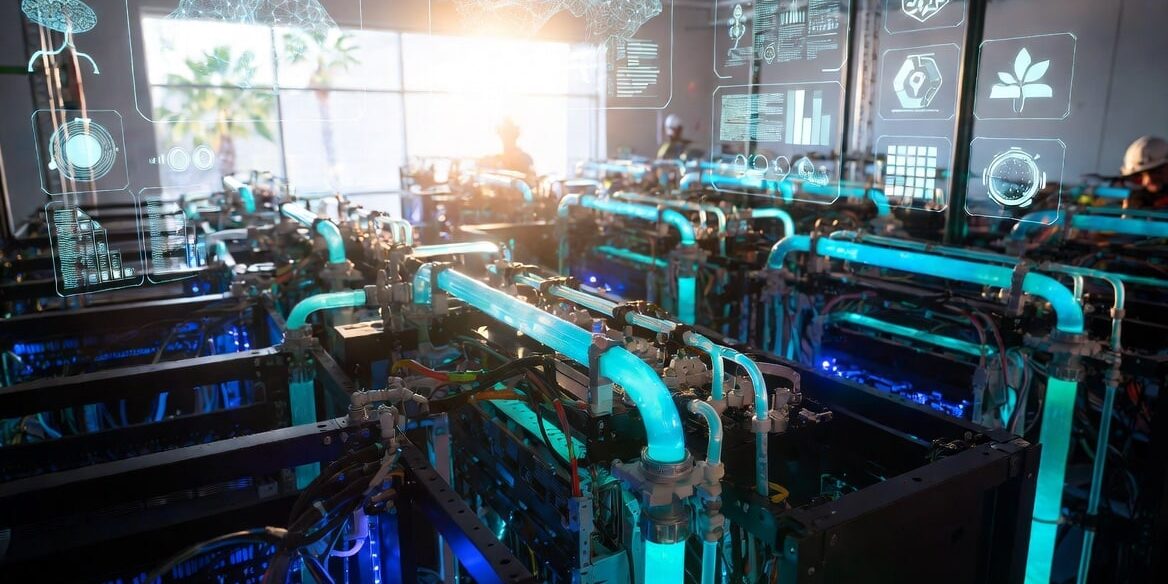
In the heart of Southern California’s tech ecosystem, Tustin in Orange County stands as a strategic hub for data center operations. With its proximity to major fiber optic networks, including the trans-Pacific and US backbones, and established facilities like the Lumen (formerly Level 3) Tustin data center at 14452 Franklin Avenue, the area benefits from seismic resilience, carrier diversity, and access to Southern California’s vibrant technology, biotech, and logistics sectors.
As of 2026, the global data center market is experiencing explosive growth, projected to expand at a compound annual growth rate (CAGR) of around 11-14% through 2030-2035, driven primarily by artificial intelligence (AI), cloud computing, hyperscale demands, and digital transformation. North America, including California, continues to dominate with significant capacity additions. Globally, nearly 100 GW of new capacity is expected between 2025 and 2030, effectively doubling the sector, while the U.S. construction market alone is forecasted to grow from approximately $84 billion in 2025 to over $154 billion by 2031 at a 10.7% CAGR.
AI workloads are a primary catalyst, with expectations that AI-related capacity could nearly triple in the coming years. This surge demands higher power densities, advanced cooling, and greater efficiency, pushing operators to rethink existing infrastructure rather than relying solely on greenfield builds, which face delays from permitting, power procurement, and grid constraints. In regions like Orange County, where local leaders have even considered moratoriums on large-scale new projects due to infrastructure pressures, renovation and retrofitting of brownfield sites emerge as smarter, faster, and more sustainable paths forward.
Renovating existing data centers in Tustin offers unique advantages: faster deployment timelines (often 30-50% shorter than new construction), utilization of pre-existing permits and power infrastructure, reduced capital outlay compared to building from scratch, and the ability to minimize community impact in a densely populated area. Creative renovation strategies can align legacy facilities with 2026 market trends—AI optimization, liquid cooling adoption, sustainability mandates, modular flexibility, and energy resilience—while unlocking additional IT capacity in space-constrained Southern California.
1. Transitioning to Liquid Cooling Systems for High-Density AI Workloads
One of the most transformative renovation ideas is retrofitting air-cooled halls with liquid cooling technologies. Traditional computer room air conditioning (CRAC) or computer room air handler (CRAH) systems struggle with the heat loads from GPU-heavy AI servers, which can exceed 100 kW per rack. Liquid cooling—whether direct-to-chip, rear-door heat exchangers (RDHx), or full immersion—can reduce energy consumption for cooling by 30-60% and handle much higher densities without massive infrastructure overhauls.
In a Tustin facility, operators could start with a phased approach: install cold plates on existing racks for direct liquid cooling while maintaining hybrid air-liquid systems during transition. This minimizes downtime. Raising IT inlet fluid temperatures and using air-cooled chillers with economizer modes further cuts water usage, addressing California’s ongoing concerns about resource strain. Creative twists include integrating closed-loop systems that recycle water internally, aiming for zero-water evaporation designs similar to those piloted by major hyperscalers.
For Tustin’s seismic Zone 4 compliance, liquid cooling retrofits can incorporate flexible piping and reinforced containment to maintain structural integrity. The payoff? Higher Power Usage Effectiveness (PUE) improvements (potentially dropping by 0.2-0.4 points) and the ability to support inferencing workloads, which experts predict will dominate future demand over training. AI-powered adaptive cooling controls can dynamically adjust based on real-time workloads, optimizing for cost, power allocation, or maximum IT utilization.
2. Modular and Prefabricated Upgrades for Rapid Scalability
Modular construction isn’t just for new builds—it’s a powerful renovation tool. Existing Tustin data centers can incorporate prefabricated data halls, power skids, cooling modules, and rack systems fabricated off-site and integrated during minimal-disruption windows. This “plug-and-play” approach compresses renovation timelines significantly, crucial in a market where delivery delays affect 30-50% of pipelines.
Creative ideas include deploying containerized or skid-mounted high-density pods within legacy white space. These modules can be pre-tested for compatibility with existing electrical and mechanical systems, supporting N+1 or 2N redundancy. In Orange County, where labor shortages and supply chain pressures are acute, off-site fabrication reduces on-site workforce needs and accelerates ROI.
Hybrid strategies shine here: combine legacy chilled-water systems with new rear-door heat exchangers and coolant distribution units (CDUs). Standardized platform designs allow future-proofing for evolving hardware generations without full rip-and-replace. Digital twins—virtual replicas powered by AI—enable simulation of renovations beforehand, identifying bottlenecks in power distribution or airflow and optimizing layouts for Tustin’s specific climate and seismic requirements.
3. Enhancing Power Infrastructure and Energy Resilience
Power is the biggest constraint in 2026 data centers. Renovations should prioritize upgrading electrical systems to handle higher densities, integrating advanced uninterruptible power supplies (UPS), and exploring on-site generation or storage. Creative approaches include microgrid integrations with battery energy storage systems (BESS) or supercapacitors for peak shaving, especially useful during California’s variable grid conditions.
For Tustin facilities, retrofitting could involve replacing older generators with more efficient models, adding redundant pathways, and incorporating renewable-ready infrastructure like solar-ready rooftops or fuel cell backups. Heat reuse is another innovative angle: capture waste heat from liquid-cooled systems for nearby district heating, industrial processes, or even absorption chillers, turning a liability into an asset and improving overall sustainability metrics.
AI-driven power management software can forecast demand, balance IT versus cooling allocation, and maximize revenue by freeing up more power for compute rather than overhead. In a region with high electricity costs and potential ratepayer impacts from data center growth, these upgrades demonstrate responsible stewardship while aligning with corporate ESG goals.
4. Sustainable and Circular Design Principles in Retrofits
Sustainability is no longer optional. Renovation projects in Tustin can adopt circular economy models: refurbish and upgrade individual components (servers, power supplies, memory) instead of full replacements, reducing e-waste. Use low-carbon materials for any structural or interior upgrades, and prioritize low-global-warming-potential (GWP) refrigerants in cooling retrofits.
Innovative ideas include adaptive reuse strategies for underutilized spaces within existing buildings—converting office or storage areas into high-density compute zones after confirming power availability. Implement AI for lifecycle visibility, enabling predictive maintenance that extends equipment life. Procure energy-efficient hardware through sustainable guidelines, and integrate renewable energy procurement or on-site generation to lower Scope 2 emissions.
Water conservation is critical in drought-prone California; shift toward air-side economizers or closed-loop liquid systems that minimize or eliminate evaporative losses. Certifications like LEED or ENERGY STAR for renovated facilities can attract tenants seeking green infrastructure. These measures not only comply with potential regulations but also future-proof against rising societal and investor expectations for decarbonization.
5. Integrating AI and Digital Tools for Operational Excellence
Renovations provide the perfect opportunity to embed intelligence. Deploy AI-optimized building management systems (BMS) that learn from historical data to fine-tune cooling, power, and security. Digital twins allow ongoing scenario planning for workload shifts, such as moving from AI training to edge inferencing.
Creative security enhancements include AI-driven surveillance, biometric access layered with existing systems, and zero-trust architectures for the network layer. Higher-density optics and connectors should be factored into networking upgrades to support faster data movement.
For Tustin operators, edge computing modules can be added to serve local Orange County businesses in biotech, manufacturing, and finance, reducing latency while leveraging the area’s central location between Los Angeles and San Diego.
6. Adaptive Reuse and Hybrid Cloud Optimization
Beyond core infrastructure, think holistically. Renovate for hybrid cloud readiness by creating flexible colocation suites that support multi-tenant environments with robust connectivity. Existing Tustin sites, already boasting carrier-neutral features, can enhance dark fiber and metro Ethernet offerings.
Adaptive reuse extends to non-traditional spaces if power and structural assessments pass. In Orange County, where tech growth drives demand but new builds face scrutiny, renovating delivers capacity faster while addressing skills gaps through automated operations that reduce staffing needs.
Local Context and Implementation Considerations for Tustin and Orange County
Tustin’s data centers, including the 53,000 sq ft Lumen facility with raised floor space and N+1 configurations, are well-positioned for these upgrades due to existing fiber connectivity and seismic design. Orange County’s proximity to hyperscale activity in Southern California makes it ideal for supporting AI and cloud workloads without the extreme distances of more remote markets.
Challenges include grid constraints and potential local pauses on large projects, making renovation even more appealing. Early engagement with utilities for power upgrades, leveraging incentives for energy efficiency, and partnering with modular specialists can streamline efforts. Budget for 5-15% construction cost inflation in 2026, but factor in long-term savings from efficiency gains.
Phased implementation is key: assess current PUE and heat loads, prioritize high-impact areas like cooling, then scale to power and modularity. Engage experienced contractors familiar with California regulations and seismic standards.
Conclusion: Renovation as a Strategic Imperative
The data center market in 2026 is defined by urgency—AI demand is surging, but traditional expansion is bottlenecked by power, water, labor, and regulatory hurdles. For Tustin and Orange County, creative renovation ideas offer a pragmatic, innovative response: transforming legacy assets into high-performance, sustainable facilities that support hyperscale, colocation, and edge needs.
By embracing liquid cooling, modular retrofits, intelligent power systems, circular practices, and AI integration, operators can achieve lower PUE, higher density, faster time-to-market, and stronger ESG performance. These strategies not only capture the massive economic opportunity—trillions in projected investments—but also position Tustin as a resilient node in California’s digital infrastructure.
As the sector shifts toward inferencing, sustainability, and managed growth, proactive renovation will separate leaders from laggards. Facility owners and developers in Orange County should conduct feasibility studies now, modeling scenarios with digital tools to prioritize investments that deliver both immediate capacity gains and long-term adaptability.
In an era where data centers are central to economic competitiveness and technological progress, creative renovation isn’t just maintenance—it’s the smartest way to build the future, one efficient, sustainable upgrade at a time.






