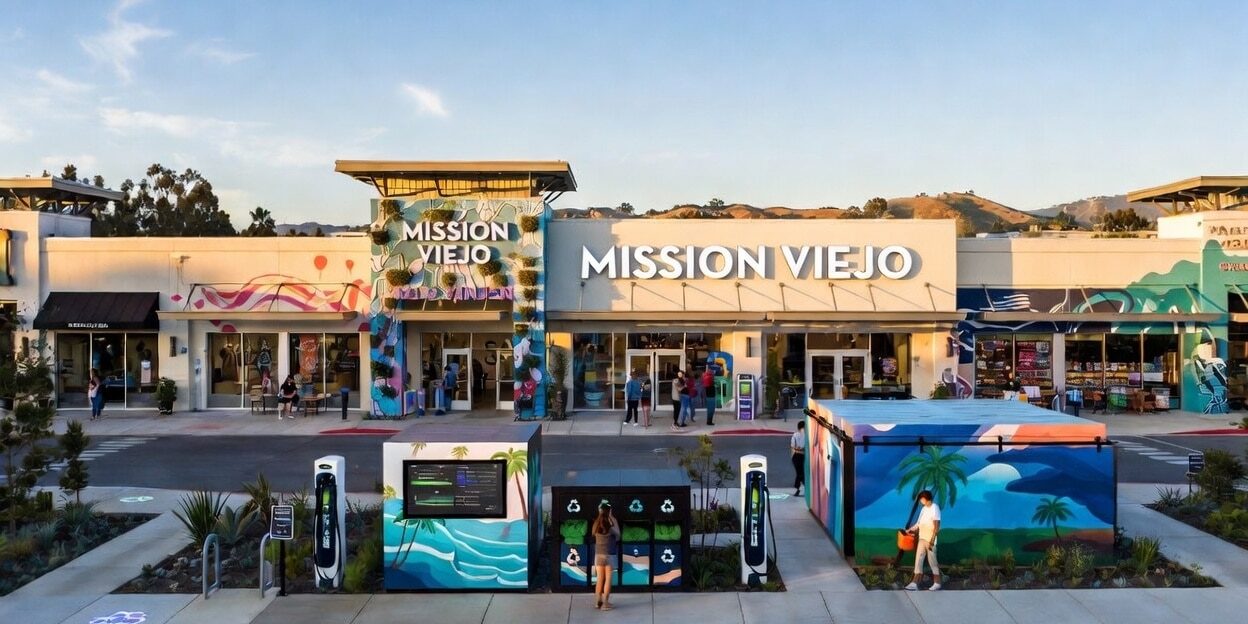
Strip malls in Mission Viejo, Orange County, represent quintessential suburban commercial landscapes—clusters of retail spaces, restaurants, and services lining major thoroughfares like Marguerite Parkway or Crown Valley Parkway. These properties, often built in the 1980s and 1990s, generate significant waste from packaging, food scraps, cardboard, plastics, and occasional construction debris during minor tenant improvements. With California’s stringent regulations like SB 1383 (mandating organics recycling to cut methane emissions) and AB 341 (requiring commercial recycling), property owners and managers face both challenges and opportunities.
Mission Viejo partners with Waste Management (WM) of Orange County for commercial services, offering reduced-cost recycling programs, waste audits for multi-family and business properties, and support for organics collection. The city emphasizes reduce-reuse-recycle initiatives, including curbside mixed recyclables and green waste/organics carts for residents, with parallel commercial options. Yet strip malls often struggle with inconsistent tenant compliance, limited back-of-house space, high foot traffic producing mixed waste, and aging infrastructure ill-suited for modern diversion goals. Landfill diversion rates in similar Orange County retail settings hover around 30% or higher in proactive centers, but many strip malls lag due to outdated bin setups and lack of integrated systems.
Creative renovation transforms these liabilities into assets. By integrating smart design, technology, circular economy principles, and community-focused features during upgrades, strip mall owners can achieve higher diversion (targeting 75%+ per state goals), lower hauling costs, attract eco-conscious tenants and shoppers, and enhance property value. These ideas blend practical retrofits with innovative approaches tailored to Mission Viejo’s suburban context, Mediterranean climate, and proximity to Orange County landfills and composting facilities.
1. Integrated On-Site Organics and Composting Infrastructure
Food waste from restaurants, cafes, and grocery tenants constitutes a major stream in strip malls—often 30-50% of total waste. SB 1383 requires separation of organics (food scraps, yard waste) to reduce landfill methane, with Mission Viejo enforcing compliance for businesses generating above certain thresholds.
Renovation Idea: During facade or parking lot upgrades, install centralized or decentralized composting hubs. Retrofit underutilized loading dock areas or former storage rooms into climate-controlled composting stations using aerated in-vessel systems or worm bins scaled for commercial volumes. For larger properties, partner with WM or local haulers for on-site pre-processing before transport to Orange County facilities.
Creative twist: Incorporate edible landscaping or community gardens in reconfigured green spaces. Diverted organics compost can fertilize native plantings (drought-tolerant species suited to Mission Viejo’s dry summers), creating a closed-loop system. Add tenant incentives like discounted rent for high-diversion participants or shared revenue from compost sales to local nurseries.
Benefits include reduced disposal fees (organics hauling often cheaper), odor control via modern enclosed systems, and educational signage turning the feature into a community asset. In similar Orange County retail settings, composting stations in food courts have boosted diversion while educating shoppers. Expect 20-40% organics diversion gains with proper tenant training.
2. Smart Bin Systems and Sensor-Driven Waste Monitoring
Traditional dumpsters in strip mall alleys overflow, attract pests, and lead to contamination—issues exacerbated in Mission Viejo’s warm climate.
Renovation Idea: Upgrade to solar-powered smart compactors and sensor-equipped bins. Embed IoT sensors that monitor fill levels, contamination (via basic AI cameras or weight analysis), and temperature in real-time. Data feeds into a dashboard for property managers, optimizing collection routes—potentially reducing pickups by 30-50% and associated truck traffic/emissions.
Creative integration: During renovation, redesign service corridors with pneumatic waste collection pipes (PWCS) connecting tenant back doors to centralized collection points. This hidden system, popular in modern malls, eliminates visible dumpsters, frees up space for additional parking or green areas, improves hygiene, and cuts manual labor. Envac-style systems transport waste via air pressure through underground or concealed pipes, ideal for retrofitting linear strip layouts.
In Mission Viejo, pair with WM’s commercial program for seamless data sharing. Add app-based alerts for tenants and QR codes on public-facing bins linking to recycling guides, fostering compliance. Cost savings from fewer hauls and higher-quality recyclables (less contamination) often offset initial investment within 2-3 years.
3. Adaptive Reuse of Underutilized Spaces for Circular Economy Hubs
Many Mission Viejo strip malls have vacant units or oversized parking lots (common in auto-oriented designs). Renovations offer chances to repurpose these for waste innovation.
Renovation Idea: Convert a vacant storefront or end-cap into a zero-waste resource center. This could house repair cafes, textile/fashion upcycling stations, or e-waste drop-off points. Partner with local nonprofits for workshops where shoppers repair electronics, repurpose clothing scraps into bags or art, or exchange reusable containers.
Creative elements: Install refill stations for bulk goods (soaps, grains) in a former retail space, reducing packaging waste upstream. For construction debris during renovation itself, implement on-site sorting with mobile crushers or balers to divert 75%+ of materials (concrete, wood, metals) into reuse for pathways or tenant improvements—aligning with CALGreen standards.
Draw from adaptive reuse trends: Transform parking lots into mixed-use plazas with permeable pavers, bioswales for stormwater (capturing runoff that might carry litter), and EV charging integrated with solar canopies. Reduced impervious surfaces mitigate heat islands while creating space for community events promoting sustainability.
Such hubs not only manage waste but generate foot traffic, supporting remaining retailers and differentiating the property in a competitive Orange County market.
4. Tenant Engagement and Take-Back Programs with Visual Design Cues
Success hinges on tenant buy-in. Strip malls often have diverse small businesses (nail salons, fast food, boutiques) with varying waste profiles.
Renovation Idea: Embed color-coded, clearly labeled bin stations throughout common areas and loading zones during cosmetic refreshes. Use intuitive icons, multilingual signage (English/Spanish prominent in the area), and gamified elements like digital leaderboards tracking diversion rates per tenant.
Creative incentives: Launch take-back programs—retailers accept packaging or old products for recycling/upcycling. For example, electronics stores handle e-waste, apparel shops collect textiles. Renovate shared walls or corridors with art installations made from recycled mall waste (e.g., plastic bottle mosaics or cardboard sculptures) to visually reinforce the message.
During major upgrades, offer “green lease” clauses with waste reduction targets, shared savings from lower fees, and technical assistance via WM audits. Education campaigns, including workshops on proper sorting (avoiding plastic bag contamination, a noted issue in WM materials), ensure compliance with Mission Viejo’s enforcement starting 2024.
5. Advanced Technologies: AI Sorting, Waste-to-Energy Pilots, and Data Analytics
Leverage emerging tools for forward-thinking renovations.
Renovation Idea: Integrate AI-powered sorting robots at a centralized materials recovery point if scaling to multiple malls or partnering regionally. For smaller strips, use compact AI-assisted bins that guide users via voice or app prompts.
Explore bio-digesters for high-organic tenants (restaurants), converting food waste to biogas for on-site energy (heating water or electricity). Solar-powered compactors pair naturally with rooftop solar additions during roof renovations, creating energy-positive waste management.
Implement property-wide waste tracking software (like ENERGY STAR Portfolio Manager extensions or specialized platforms) to monitor 29+ waste streams, generating reports for compliance and marketing “sustainable strip mall” branding. In Orange County, where landfills innovate with methane capture and composting, aligning with these systems maximizes diversion.
Creative visualization: During renovation, add transparent “waste walls” or viewing windows into processing areas (safely) to demystify recycling and build public trust.
6. Landscape and Stormwater Integration for Broader Sustainability
Waste management intersects with water and green infrastructure in drought-prone Southern California.
Renovation Idea: Replace portions of asphalt parking with permeable surfaces, rain gardens, and bioswales that filter runoff while incorporating waste elements—like crushed recycled glass or concrete in base layers. Native, low-water plants reduce maintenance waste (less clippings).
Creative feature: Rooftop or podium gardens on renovated flat-roof buildings, using compost from on-site organics. These provide insulation (lowering energy use and indirect waste from power generation), biodiversity habitats, and pleasant outdoor seating that encourages longer visits.
In adaptive reuse scenarios, converting excess parking to housing or mixed-use (a growing Orange County trend) inherently reduces overall waste intensity per square foot while adding residential organics streams manageable via shared systems.
Implementation Roadmap for Mission Viejo Strip Malls
- Audit and Plan: Start with a free or low-cost WM waste audit to baseline streams. Engage architects familiar with CALGreen and local codes.
- Phased Renovation: Prioritize low-disruption changes (bin upgrades, signage) before structural (pneumatic systems, composting rooms). Budget 5-15% of total renovation costs for waste features, offset by grants, tax incentives for green building, or utility rebates.
- Partnerships: Collaborate with the City of Mission Viejo Public Works, WM, Orange County Waste & Recycling, and nonprofits. Explore joint funding for demonstration projects.
- Measurement and Marketing: Track metrics (diversion rate, cost savings, tenant retention). Promote via websites, social media, and on-site tours as “Mission Viejo’s Green Strip Mall Network.”
- Challenges and Solutions: Address space constraints with vertical or underground solutions; combat contamination through education; navigate costs via phased ROI-focused investments (compactors often pay back quickly).
Long-Term Benefits and Community Impact
These creative renovations position Mission Viejo strip malls as leaders in suburban sustainability. Reduced landfill contributions support Orange County’s methane-slashing efforts and state climate goals. Property values rise with “green” certifications, attracting quality tenants and shoppers who favor sustainable destinations. Lower operational costs (hauling, cleanup) improve profitability, while enhanced aesthetics and community spaces foster neighborhood pride.
In a region facing housing pressures and environmental challenges, repurposing strip elements for mixed-use or green infrastructure adds resilience. Shoppers enjoy cleaner, more engaging environments; businesses benefit from shared efficiencies; the city advances its reduce-reuse-recycle mission.
Mission Viejo’s strip malls, once symbols of car-centric sprawl, can evolve into models of circular, community-oriented commerce. By embracing these renovation ideas—smart tech, closed-loop organics, adaptive spaces, and engaged design—owners not only manage waste creatively but contribute to a greener Orange County future. Property managers ready to innovate will find supportive local resources and a market increasingly rewarding sustainability.