

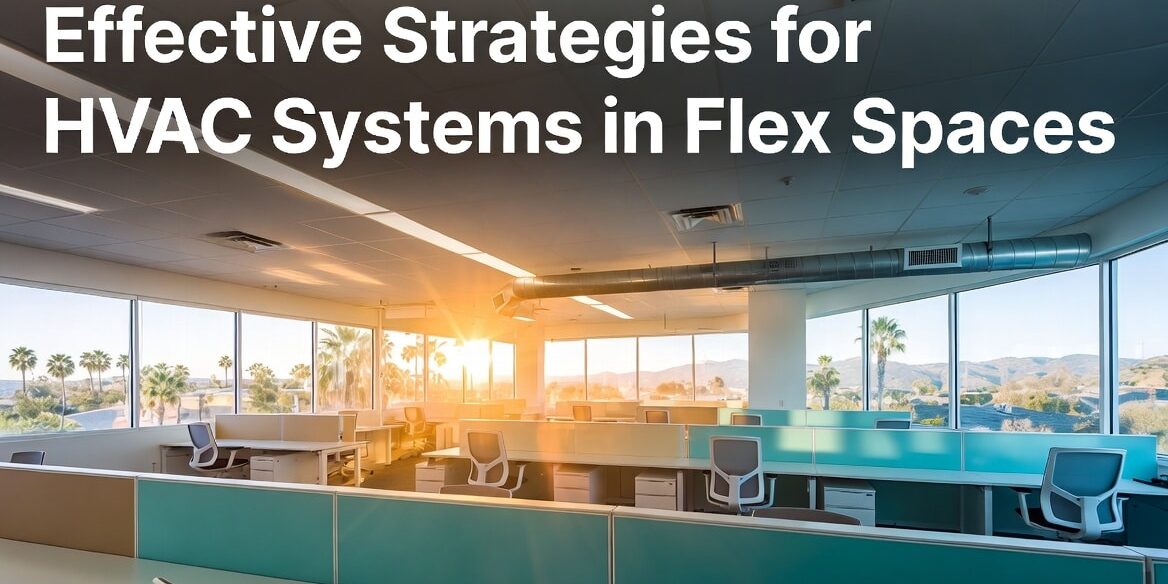
Flex spaces—versatile commercial properties that blend office, light industrial, warehouse, showroom, and retail functions—are booming in Brea and throughout Orange County. These adaptive environments allow tenants to reconfigure layouts quickly to meet evolving business needs, from tech startups needing quiet collaboration zones to logistics firms requiring temperature-controlled storage. However, this flexibility presents unique challenges for HVAC (Heating, Ventilation, and Air Conditioning) systems. Unlike traditional single-use buildings, flex spaces demand adaptable, energy-efficient climate control that can handle varying occupancy loads, diverse space uses, and California’s strict energy codes without driving up operational costs.
Brea, located in northern Orange County, enjoys a Mediterranean climate with warm, dry summers (often reaching the mid-80s°F) and mild winters (rarely dipping below 45°F at night). This climate favors cooling-dominant systems but still requires reliable heating for cooler evenings and early mornings. With rising energy prices and the 2025 California Building Standards Code (Title 24) now in full effect as of January 2026, property owners and facility managers in Brea must prioritize HVAC strategies that deliver comfort, indoor air quality (IAQ), and efficiency while supporting rapid tenant improvements.
This comprehensive guide explores effective HVAC strategies tailored to flex spaces in Brea. Whether you’re a developer planning new construction, a property manager handling tenant fit-outs, or a business owner leasing flex space, these approaches will help optimize performance, reduce utility bills, and ensure compliance.
Understanding Flex Spaces and Their HVAC Demands in Brea
Flex spaces typically feature a mix of high-ceiling warehouse areas, finished office suites, and adaptable zones separated by demountable walls or movable partitions. Occupancy can fluctuate dramatically: a quiet office day might shift to a busy event space or production area with higher heat loads from equipment or people.
Key HVAC challenges include:
- Variable thermal loads: Warehouse sections with high ceilings suffer from thermal stratification (hot air rising), while office areas need precise temperature control for productivity.
- Zoning needs: Different parts of the same building may require simultaneous heating and cooling (e.g., a sunny showroom versus a shaded storage room).
- Ventilation and IAQ: Higher occupancy or manufacturing activities demand robust fresh air exchange, especially post-pandemic and with California’s emphasis on healthy indoor environments.
- Energy efficiency mandates: Title 24 requires proper equipment sizing, high-efficiency components, and controls that minimize energy use. Nonresidential buildings must often use heat pumps in many climate zones, with strict limits on oversizing.
- Future-proofing: Systems must accommodate tenant changes without major retrofits.
In Brea’s competitive commercial market, inefficient HVAC can deter tenants who prioritize sustainability and low operating costs. Effective strategies focus on modularity, smart technology, and integration with the building envelope.
Strategy 1: Implement Advanced Zoning and Variable Capacity Systems
Zoning is the cornerstone of HVAC success in flex spaces. Divide the building into independent climate-controlled zones corresponding to office, warehouse, and hybrid areas. This prevents over-conditioning unoccupied sections and allows tenants to customize comfort.
Recommended technologies:
- Variable Refrigerant Flow (VRF) systems: These allow simultaneous heating and cooling in different zones using a single outdoor unit. VRF is highly efficient for mixed-use flex buildings because it modulates capacity precisely, reducing energy waste. In Orange County installations, VRF has proven effective for multi-tenant properties with varying schedules.
- Variable Air Volume (VAV) systems with terminal units: Ideal for larger ducted setups, VAV adjusts airflow based on demand, pairing well with rooftop units common in Brea’s industrial-flex parks.
- Ductless mini-split systems: Perfect for smaller office pods or added zones during tenant improvements. They offer quiet operation and zoned control without extensive ductwork modifications.
Implementation tip for Brea: Conduct detailed load calculations using ASHRAE methods or approved software, accounting for Brea’s climate zone (typically Climate Zone 9 or similar in OC). Oversizing is restricted under Title 24 to avoid inefficiency—equipment must be the smallest size that meets design loads.
Zoning can yield 20-30% energy savings by matching HVAC output to real-time needs, especially when combined with occupancy sensors.
Strategy 2: Prioritize Energy-Efficient Equipment and Heat Pumps
California’s Title 24 pushes commercial spaces toward electrification and high-efficiency solutions. For flex spaces in Brea:
- Heat pumps (air-source or water-source): Excellent for Orange County’s mild climate. They provide both heating and cooling with high Seasonal Energy Efficiency Ratios (SEER2) and Heating Seasonal Performance Factors (HSPF2). In office portions of warehouses, heat pumps are often mandated or strongly preferred.
- High-efficiency rooftop units (RTUs): Common in flex industrial buildings. Look for models with variable-speed compressors and advanced economizers that use free outdoor air for cooling when conditions allow.
- Chilled beam or fan coil systems: Suitable for mixed-use areas, offering quiet, efficient temperature control with lower fan energy.
Additional efficiency measures:
- Energy Recovery Ventilators (ERVs) or Heat Recovery Ventilators (HRVs): These recapture energy from exhaust air to precondition incoming fresh air, crucial for maintaining ventilation without spiking energy use.
- Demand-Controlled Ventilation (DCV): CO2 sensors adjust outdoor air intake based on actual occupancy, preventing unnecessary ventilation in low-use warehouse zones.
In Brea, where summer cooling loads dominate, selecting ENERGY STAR-rated or Title 24-compliant equipment helps lower peak demand charges from Southern California Edison.
Strategy 3: Integrate Smart Controls and Building Automation Systems (BAS)
Manual thermostats fail in dynamic flex environments. Smart controls enable centralized yet flexible management.
- Smart thermostats and building management systems (BMS/BAS): Platforms integrate HVAC with lighting, shades, and security. Schedule adjustments for after-hours or partial occupancy, and use AI-driven predictive controls to anticipate loads.
- Zoning via apps: Tenants can control their sub-zones remotely while the property manager oversees whole-building efficiency.
- Integration with IoT sensors: Monitor temperature, humidity, occupancy, and IAQ in real time. For example, radiant heating in high-ceiling warehouses can target people and objects directly rather than wasting energy heating air.
Benefits: Studies and practical implementations show smart controls can reduce energy consumption by 15-25% in commercial flex settings. In Orange County multi-family and commercial projects, customized controls have improved tenant satisfaction while cutting utility costs.
For compliance, ensure controls support Title 24 mandatory requirements for automatic setbacks and demand response readiness.
Strategy 4: Focus on Indoor Air Quality and Ventilation Best Practices
Flex spaces often involve higher dust, equipment emissions, or variable people density. Robust IAQ strategies are non-negotiable for tenant retention and health.
- High-MERV filtration: Use MERV 13+ filters where system static pressure allows. Upgrade during maintenance to capture particulates common in Brea’s dry air or wildfire smoke seasons.
- Increased ventilation rates: Follow ASHRAE 62.1 standards, enhanced by post-pandemic guidance. Use economizer modes to introduce more outdoor air when temperatures permit.
- Dedicated Outdoor Air Systems (DOAS): Decouple ventilation from temperature control for better humidity management and efficiency.
- Regular duct cleaning and sealing: Prevent leaks that waste energy and degrade air quality. In flex buildings with frequent reconfiguration, design ductwork with easy access points.
Humidity control is important in Brea’s climate to avoid mold in office areas while preventing dryness in warehouses.
Strategy 5: Design for Maintainability, Scalability, and Compliance
- Proper sizing and commissioning: Always base designs on accurate load calculations considering insulation, windows, internal gains, and Brea’s solar exposure. Commission systems post-installation to verify performance.
- Maintenance planning: Schedule proactive tune-ups, filter changes, and coil cleaning. In flex spaces, include provisions for easy equipment replacement during tenant turnover.
- Code compliance in Brea: Adhere to the 2025 California Mechanical Code, Title 24 Part 6 (Energy Code), and CALGreen. New tenant improvements or alterations require permits from the Brea Building & Safety Division. Incorporate energy-efficient features early to streamline approvals.
- Sustainability additions: Consider solar-ready designs or pairing HVAC with building envelope improvements like better insulation and high-performance glazing.
For adaptive reuse projects common in older Brea industrial areas, evaluate existing ducts for reuse while adding zoning and controls to modernize without full replacement.
Strategy 6: Address Specific Flex Space Configurations
- Warehouse-office hybrids: Use radiant heating or high-volume low-speed (HVLS) fans in warehouses to destratify air. Pair with VAV or mini-splits for offices.
- High-occupancy event or showroom areas: Design for peak loads with boost modes and enhanced ventilation.
- Multi-tenant setups: Sub-metering and individual tenant controls prevent disputes over shared utility costs.
Long-Term Benefits and ROI
Implementing these strategies delivers multiple returns:
- Cost savings: Energy-efficient HVAC can reduce bills by 20-40% over time through lower consumption and demand charges.
- Tenant attraction: Modern, comfortable, and healthy spaces command higher rents and longer leases in Brea’s market.
- Resilience: Systems ready for climate variations and regulatory changes (e.g., future electrification pushes).
- Environmental impact: Lower carbon footprint aligns with Orange County’s sustainability goals.
Property owners report faster leasing and fewer complaints when HVAC supports true flexibility rather than constraining it.
Conclusion: Partnering for Success in Brea’s Flex Space Market
Effective HVAC strategies for flex spaces in Brea, Orange County, revolve around adaptability, efficiency, and intelligence. By embracing zoning with VRF or VAV systems, heat pump technology, smart BAS controls, robust IAQ measures, and strict Title 24 compliance, stakeholders can create environments that flex with tenant needs while controlling costs and enhancing comfort.
As Brea continues to grow as a hub for innovative businesses, investing in forward-thinking HVAC is not just a technical requirement—it’s a competitive advantage. Consult local licensed HVAC professionals familiar with Orange County installations and California codes early in the planning or retrofit process. They can perform site-specific assessments, recommend tailored solutions, and ensure seamless integration.
Whether upgrading an existing flex property or designing new construction, these strategies will help deliver reliable performance today and scalability for tomorrow. Prioritize energy efficiency, occupant well-being, and regulatory adherence to maximize the value of your Brea flex space investment.