
In the heart of Orange County, Huntington Beach stands out as a vibrant coastal city blending surf culture, tech-savvy professionals, and a growing entrepreneurial scene. With its prime location along the Pacific Coast Highway and proximity to major employment hubs in Irvine and Costa Mesa, the city has seen a surge in flexible workspaces—often called flex spaces or coworking environments. These dynamic setups offer month-to-month memberships, hot desks, private offices, and shared amenities, catering to freelancers, startups, remote workers, and satellite teams from larger corporations.
However, the rise of these adaptable spaces brings unique challenges in meeting accessibility compliance. Operators must navigate the Americans with Disabilities Act (ADA), California’s stricter Title 24 Building Standards (including Chapter 11B for accessibility), and local Orange County regulations. Compliance is not just a legal requirement; it is a strategic imperative that enhances user experience, broadens the talent pool, boosts member retention, and mitigates costly lawsuits or retrofits.
This comprehensive guide explores innovative approaches to accessibility in Huntington Beach flex spaces, moving beyond minimum standards toward truly inclusive, future-ready environments. Whether you operate a space like Premier Workspaces on Beach Boulevard or are planning a new flex facility near the pier, these strategies can help create workspaces where everyone thrives.
Understanding Flex Spaces and Accessibility Imperatives in Huntington Beach
Flex spaces differ from traditional offices by their modular layouts, high turnover of users, and shared resources. In Huntington Beach, popular options include executive suites with ocean views, collaborative lounges, and conference rooms that reconfigure for events. Local providers emphasize flexibility: day passes, dedicated desks, or private offices with terms as short as a month.
Accessibility compliance covers physical, digital, sensory, and cognitive needs. Key regulations include:
- ADA Title III — Applies to public accommodations, requiring accessible routes, parking, entrances, restrooms, and workstations.
- California Title 24, Chapter 11B — Often exceeds federal standards with requirements for van-accessible parking (one per 25 spaces plus additional features), tactile signage, and automatic doors in common areas.
- Fair Employment and Housing Act (FEHA) — Protects employees and extends to reasonable accommodations in workplaces.
Non-compliance risks significant penalties. In nearby Orange County cases, operators faced complaints leading to $185,000+ retrofits for issues like steep ramps or non-compliant grab bars. Proactive audits and inclusive design prevent such outcomes while signaling commitment to diversity.
Huntington Beach’s coastal environment adds layers: high foot traffic from tourists, variable weather impacting outdoor transitions, and a demographic that includes aging professionals and neurodiverse workers drawn to the relaxed vibe.
Core Accessibility Requirements for Flex Workspaces
Every flex space must prioritize these foundational elements:
- Accessible Parking and Arrival — Provide van-accessible stalls with proper signage, aisles, and routes to entrances. In shared parking scenarios common in Beach Boulevard buildings, calculate ratios carefully (e.g., 1 accessible space per 25 total).
- Step-Free Access and Pathways — Ensure wide doorways (minimum 32 inches clear), automatic or low-effort doors, and obstacle-free routes. Elevators or ramps are essential in multi-story buildings like those in Point Break Tower.
- Restrooms and Common Areas — Install grab bars, lowered sinks, and sufficient knee/toe clearance. At least one accessible restroom per sex (or unisex options) with compliant hardware.
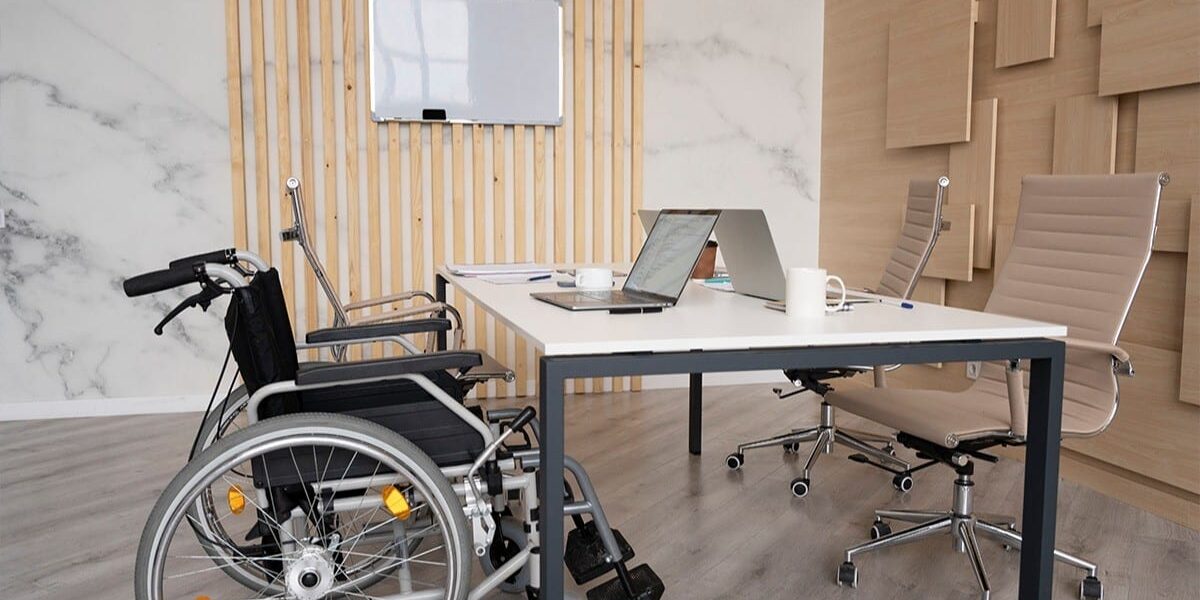
- Workstations and Seating — Offer height-adjustable desks, ergonomic chairs, and clear floor space (60-inch turning circles or T-shaped turns) under desks. Modular furniture allows reconfiguration for different users.
- Digital and Sensory Accessibility — Websites, booking apps, and reservation systems must meet WCAG 2.1 AA standards for screen readers, keyboard navigation, and color contrast.
These basics form the foundation, but innovative operators in Orange County go further to differentiate their spaces.
Innovative Physical Design Approaches
Modern flex spaces in Huntington Beach leverage universal design principles—creating environments usable by the widest range of people without adaptation.
- Modular and Reconfigurable Layouts — Use movable walls, height-adjustable desks, and lightweight furniture on wheels. This allows quick adjustments for wheelchair users, parents with strollers, or teams needing varied setups. In open-plan coworking areas, incorporate acoustic zoning: quiet pods for focus, collaborative zones with sound-dampening panels, and decompression areas with softer lighting.
- Smart Sensory Integration — Install IoT-enabled sensors for automatic lighting and temperature adjustments based on occupancy or user preferences. Voice-activated controls reduce physical barriers for those with mobility or dexterity limitations. Tactile wayfinding maps paired with audio beacons help visually impaired members navigate.
- Biophilic and Neuro-Inclusive Elements — Bring in natural light, plants, and views of the Pacific to reduce sensory overload. Create quiet rooms or phone booths with customizable lighting and sound levels—ideal for neurodivergent users who may experience overstimulation in bustling flex environments. Adjustable workstations with footrests, monitor arms, and alternative input devices (trackballs, ergonomic keyboards) support diverse physical needs.
- Accessible Private Pods and Booths — Emerging solutions include ADA-compliant privacy pods with sufficient maneuvering space, knee clearance, and power outlets at reachable heights. These provide focused work options while maintaining inclusivity.
Operators in nearby Brea and Costa Mesa have successfully implemented step-free common areas, automatic doors, and assistive listening systems in meeting rooms—practices easily adaptable to Huntington Beach’s surf-inspired aesthetic.
Technological Innovations Enhancing Accessibility
Technology transforms compliance from a checkbox into a seamless experience.
- AI-Powered Booking and Personalization — Reservation apps use AI to suggest accessible workstations based on user profiles (with privacy safeguards). Features like real-time availability of adjustable desks or quiet zones improve equity.
- Touchless and Smart Access Systems — Smartphone-based keyless entry via Bluetooth or NFC eliminates fiddly keys or cards. Facial recognition or voice commands further enhance usability for those with limited hand mobility. Integrated systems can automatically grant temporary access to specific rooms while logging compliance data.
- Assistive Tech Readiness — Stock spaces with noise-canceling headphones, speech-to-text tools (e.g., Otter.ai integrations), screen readers, and magnification software. Ensure compatibility with common devices. Meeting rooms can feature real-time captioning and assistive listening devices.
- IoT and Automation — Sensors monitor air quality, lighting, and occupancy to maintain comfortable, healthy environments. Automated HVAC and lighting reduce the need for manual adjustments. VR/AR tools for virtual tours allow prospective members with mobility challenges to preview spaces remotely.
- Digital Accessibility Tools — Beyond WCAG-compliant websites, use automated testing platforms (e.g., axe or Lighthouse) to maintain app and portal accessibility. Cloud-based collaboration tools with built-in accessibility features support hybrid users.
These innovations not only meet standards but elevate the member experience, making flex spaces in Huntington Beach competitive with those in tech-forward areas like Irvine.
Best Practices for Implementation and Ongoing Compliance
Success requires a proactive, iterative approach:
- Conduct Certified Audits Early — Partner with a Certified Access Specialist (CASp) for thorough evaluations before opening or major renovations. In California, providing CASp reports in leases builds transparency and can offer legal protections.
- Train Staff and Foster Culture — Educate team members on accessibility etiquette, reasonable accommodations, and how to assist without assuming needs. Normalize assistive tools as standard offerings.
- Budget for Continuous Improvement — Allocate funds for “readily achievable” barrier removal in existing spaces. In alterations, prioritize accessible entrances, paths of travel, restrooms, phones, and fountains (up to 20% of project cost if hardship applies).
- Leverage Local Resources — Consult Huntington Beach’s accessibility resources and Orange County building departments. Network with operators in Premier Workspaces or Coast Huntington for shared learnings.
- Measure and Iterate — Gather anonymous feedback from members with disabilities. Track usage of accessible features and adjust accordingly. Integrate compliance metrics into management software.
Case studies from Orange County show that addressing complaints swiftly—through widened doors, re-striped parking, and added workstations—leads to recovered occupancy and stronger marketing to inclusive companies.
Benefits Beyond Compliance: Economic and Social Gains
Investing in innovative accessibility yields measurable returns:
- Broader Market Reach — Attract aging professionals, veterans, neurodiverse talent, and companies with DEI commitments. In diverse Orange County, this expands the user base significantly.
- Enhanced Productivity and Retention — Inclusive spaces reduce barriers, leading to higher satisfaction and longer memberships.
- Risk Mitigation — Avoid lawsuits, fines, and negative publicity. Proactive design often costs less than reactive retrofits.
- Competitive Edge — Market your space as “future-proof and welcoming,” highlighting features like adjustable desks or smart tech. In Huntington Beach’s competitive coworking scene, this differentiates properties with coastal charm and genuine inclusivity.
- Community Impact — Contribute to a more equitable Huntington Beach, aligning with the city’s values of accessibility and opportunity.
Looking Ahead: The Future of Accessible Flex Spaces in Orange County
As hybrid work evolves, flex spaces will increasingly blend physical and digital worlds. Emerging trends include AI-driven adaptive environments that learn user preferences, blockchain for secure yet accessible booking, and sustainable materials that also enhance tactile experiences.
In Huntington Beach, operators can lead by integrating smart coastal adaptations—weather-resistant outdoor accessible areas or apps that account for tide schedules for waterfront-adjacent spaces.
Ultimately, innovative accessibility is about more than ramps and grab bars. It is about designing experiences where every professional—regardless of ability—can focus on creativity, collaboration, and growth amid the inspiring backdrop of Huntington Beach waves.
For flex space operators, the message is clear: compliance is the baseline, but innovation in design, technology, and culture creates thriving, resilient communities. By embracing these approaches, Huntington Beach can position itself as a model for inclusive flexible workspaces in Orange County and beyond.
This evolving landscape rewards those who prioritize people first. Whether updating an existing suite on Beach Boulevard or launching a new concept near the Pacific, forward-thinking accessibility strategies will define success in the years ahead.