Newport Beach, nestled along the stunning coastline of Orange County, California, enjoys a Mediterranean climate characterized by mild temperatures, ocean breezes, and occasional humidity from the Pacific. This environment presents unique opportunities and challenges for heating, ventilation, and air conditioning (HVAC) systems in apartment complexes. With rising energy costs, stringent California building codes, and a growing emphasis on sustainability, property managers and developers are turning to innovative HVAC solutions that enhance tenant comfort, reduce operational expenses, and minimize environmental impact.
Traditional centralized HVAC systems, often reliant on gas furnaces and ducted air conditioners, struggle in multi-family settings due to inefficiencies from duct leaks, uneven temperature distribution, and high maintenance needs. In coastal areas like Newport Beach, salt air corrosion accelerates equipment wear, while varying occupancy patterns in apartments demand flexible zoning. Innovative approaches address these issues through advanced technologies like variable refrigerant flow (VRF) systems, heat pumps, smart controls, and energy recovery solutions. These not only comply with evolving Title 24 energy standards but also future-proof properties against California’s push toward electrification and decarbonization.
The Unique HVAC Challenges in Newport Beach Apartment Complexes
Newport Beach’s climate falls into California Energy Code Zone 6, where mild ocean influences keep heating and cooling loads relatively balanced year-round but introduce humidity and salt exposure. Apartment complexes here range from low-rise garden-style buildings to high-rise luxury towers, each with distinct needs. Older buildings often feature outdated ducted systems prone to energy loss, while new constructions must navigate seismic requirements, coastal building codes, and resident demands for individualized comfort.
High tenant turnover and diverse lifestyles mean some units run cooling during “June Gloom” marine layer days, while others seek warmth in evenings. Shared walls and limited roof space complicate central plant installations. Moreover, California’s 2025 Building Energy Efficiency Standards (effective January 1, 2026) strongly encourage heat pumps for space conditioning and water heating in multifamily projects, alongside improved ventilation and electric-ready infrastructure. These codes prioritize energy budgets that favor efficient electric systems, making innovation not just beneficial but often necessary for compliance and cost savings.
Property owners face additional pressures: rising utility rates, tenant expectations for premium indoor air quality (IAQ), and incentives from programs like TECH Clean California for heat pump upgrades in multifamily housing. Innovative HVAC retrofits can deliver 30-45% energy reductions while boosting tenant satisfaction and property values.
Variable Refrigerant Flow (VRF) Systems: Precision Zoning for Multi-Unit Efficiency
One of the most impactful innovations for apartment complexes is Variable Refrigerant Flow (VRF) technology. VRF systems use a single outdoor unit connected to multiple indoor units via refrigerant lines, allowing independent temperature control in each apartment or zone without extensive ductwork.
In Newport Beach, where space is premium and retrofits must minimize disruption, ductless or minimally ducted VRF setups shine. Brands like LG and Carrier offer systems capable of serving up to 64 indoor units from one outdoor condenser, ideal for mid- to high-rise complexes. These systems provide simultaneous heating and cooling—essential for buildings with south-facing units that overheat while north-side residents need warmth.
A notable example is the upgrade at Marriott’s Lido House resort in Newport Beach, which implemented LG Multi V5 and Multi V S VRF systems to handle wide temperature swings from ocean breezes. The technology delivered exceptional energy efficiency and design flexibility for guest rooms and common areas. Similar applications in apartment settings yield quiet operation (as low as 18-25 decibels indoors) and reduced maintenance compared to traditional rooftop units.
VRF’s inverter-driven compressors adjust output precisely to demand, cutting energy use by 20-40% versus conventional systems. In Orange County retrofits, hybrid VRF setups have reported up to 45% energy savings in 120-unit complexes, with improved tenant scores. Installation in coastal environments requires corrosion-resistant coatings, but the payoff includes lower utility bills passed partially to residents via submetering and compliance with seismic bracing under the California Building Code.
For new developments, VRF integrates seamlessly with building management systems, enabling centralized monitoring while preserving individual unit autonomy—a key selling point for luxury Newport Beach rentals.
Heat Pump Technologies: Electrification and Hybrid Solutions
Heat pumps represent a cornerstone of California’s decarbonization efforts, and they are particularly well-suited to Newport Beach’s mild climate. Air-source heat pumps (ASHP) and ductless mini-split systems extract heat from outdoor air (even on cooler days) for efficient space heating and cooling, eliminating the need for separate gas furnaces.
In multifamily applications, high-static ducted mini-splits or multi-zone systems serve multiple rooms per apartment while maintaining high efficiency ratings (measured in SEER2 and HSPF2). California’s 2025 Energy Code pushes these through performance-based budgets, making heat pumps the path of least resistance for new multifamily projects. For low-rise buildings (three or fewer habitable floors), heat pump water heaters are also encouraged where units have individual systems.
Hybrid geothermal-air source heat pump configurations take efficiency further. Orange County’s stable ground temperatures (around 60-65°F) make geothermal loops viable, even in coastal zones. These systems pair ground-source stability with air-source flexibility, achieving coefficients of performance (COP) often exceeding 4.0—meaning four units of heating or cooling per unit of electricity. A reported Irvine complex retrofit combining hybrid VRF-geothermal achieved 45% energy reduction.
For retrofits in existing Newport Beach apartments, all-electric packages like the Villara AquaThermAire (a 3-in-1 heat pump for space conditioning and hot water) or paired high-static ducted mini-splits with heat pump water heaters offer scalable solutions. These address electrical capacity constraints common in older buildings while qualifying for TECH Clean California incentives.
Duct sealing and insulation upgrades amplify benefits; Aeroseal-style sealing can reduce HVAC energy use by over 30% before equipment replacement, allowing smaller, more affordable systems.
Smart IoT-Enabled HVAC and Predictive Maintenance
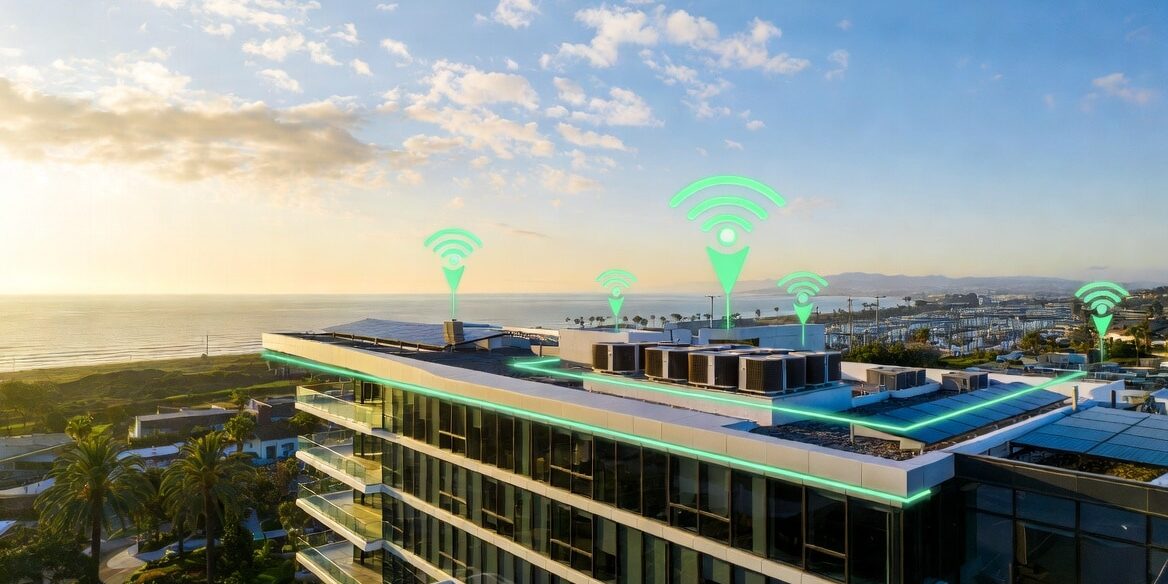
Smart technology transforms HVAC from reactive to proactive. IoT-enabled systems with sensors, cloud connectivity, and AI-driven analytics allow real-time monitoring of temperature, humidity, and energy consumption across an entire apartment complex.
In Newport Beach rentals, smart thermostats integrate with mobile apps for tenant control and remote management by property teams. Predictive maintenance algorithms analyze performance data to forecast failures—preventing costly downtime in salt-laden air that corrodes components. Community energy-sharing features can optimize load across buildings, reducing peak demand charges.
Integration with broader smart home platforms enhances IAQ through automated ventilation and air purification. Energy recovery ventilators (ERVs) and dedicated outdoor air systems (DOAS) bring fresh air while recovering up to 80% of exhaust energy, combating stale air and CO2 buildup in tightly sealed modern units. California’s updated ventilation standards in the 2025 Energy Code mandate balanced or supply systems (no longer allowing exhaust-only) and compartmentalization testing for better airtightness.
For multifamily operators, dashboards provide oversight of submetered usage, supporting green certifications and attracting eco-conscious tenants. In coastal settings, sensors detecting high humidity trigger dehumidification modes, preventing mold—a common issue near the ocean.
Indoor Air Quality Enhancements and Ventilation Innovations
Coastal humidity and urban pollutants make IAQ a priority. Innovative HVAC incorporates advanced filtration, UV lights, and bipolar ionization to neutralize pathogens and allergens. ERVs ensure continuous fresh air exchange without energy penalties, improving resident health and reducing complaints.
In apartment complexes, centralized DOAS paired with in-unit mini-splits decouples ventilation from temperature control, optimizing both. This approach aligns with Title 24 requirements for stronger ventilation and supports healthier living environments, particularly valuable in high-occupancy buildings.
Sustainability, Incentives, and Long-Term Benefits
Adopting these innovations delivers multifaceted returns. Energy savings lower common-area expenses and can be shared with tenants. Electrification reduces reliance on natural gas, aligning with state goals and qualifying for rebates under programs targeting multifamily decarbonization.
Property values rise with modern, efficient systems; luxury Newport Beach complexes market “smart, sustainable living” to command premium rents. Maintenance costs drop due to fewer moving parts in heat pumps and VRF versus traditional equipment. Tenant retention improves through consistent comfort and control.
Challenges include upfront costs and electrical upgrades, but incentives from utilities, state programs like REALIZE-CA for affordable housing retrofits, and federal tax credits mitigate these. Pilot projects demonstrate that off-the-shelf technologies, combined with proper design, achieve scale without exotic prefab solutions.
Implementation Considerations for Newport Beach Property Owners
Successful deployment starts with a professional energy audit assessing current systems, building envelope, and electrical capacity. Collaboration with local HVAC experts familiar with coastal corrosion, seismic standards, and Title 24 compliance is essential. Contractors in Orange County offer expertise in VRF, mini-splits, and heat pumps tailored to the region.
For retrofits, phased approaches minimize tenant disruption: begin with duct sealing and smart controls, then upgrade to heat pumps or VRF. New constructions integrate these from the design phase, incorporating electric-ready infrastructure for future flexibility.
Seismic bracing, corrosion protection, and noise considerations (critical in dense complexes) must inform selections. Working with experienced installers ensures systems meet or exceed code while delivering optimal performance in Newport Beach’s microclimate.
The Future of HVAC in Orange County Apartments
As California advances its 2025 Energy Code and broader decarbonization initiatives, innovative HVAC will become standard rather than exceptional. Emerging trends include AI-optimized community microgrids, advanced phase-change materials for thermal storage, and deeper integration with solar PV and battery systems—common in forward-thinking Newport Beach developments.
Property managers embracing these technologies position their complexes as leaders in sustainable, tenant-centric living. In a competitive rental market along the Orange County coast, efficient, comfortable, and smart HVAC differentiates properties while contributing to California’s clean energy future.
Ultimately, innovative HVAC approaches in Newport Beach apartment complexes balance immediate comfort with long-term resilience. By leveraging VRF precision, heat pump efficiency, smart connectivity, and enhanced ventilation, owners can create healthier, more affordable, and environmentally responsible living spaces. As codes tighten and technology advances, early adopters will reap the greatest rewards in energy savings, tenant loyalty, and property performance.
Investing in these solutions today ensures apartment complexes in Newport Beach remain competitive and compliant well into the future, harmonizing luxury coastal living with responsible innovation.