South Coast Metro, the vibrant district in Costa Mesa, Orange County, California, combines urban accessibility—close to South Coast Plaza, John Wayne Airport, and nearby beaches—with residential appeal. Many homes here feature compact yards typical of metropolitan living: front yards designed for strong curb appeal, backyards serving as private retreats for year-round outdoor use, and narrow side spaces common in townhomes or condos. The local Mediterranean climate requires careful landscaping choices. Winters are mild with rare freezes, summers are warm and dry, coastal fog moderates temperatures, and occasional salt-laden breezes arrive from the Pacific. Annual rainfall averages only 12–13 inches, mostly between December and March.
The area falls in USDA Hardiness Zone 10b, supporting a broad range of plants, yet strict water conservation rules apply due to persistent drought risk and regulations enforced by Mesa Water District and the City of Costa Mesa. These include restrictions on watering schedules, prohibitions on runoff onto streets or sidewalks, and compliance with California’s Model Water Efficient Landscape Ordinance (MWELO). Well-designed landscaping in this region increases property value, creates enjoyable outdoor living spaces, supports pollinators and birds, lowers water bills, reduces maintenance demands, and meets local ordinances while working with the area’s typically sandy coastal soils (which drain quickly but hold few nutrients and can erode) or occasional clay pockets.
Understanding South Coast Metro’s Climate, Soil, and Challenges
Costa Mesa enjoys average highs around 76°F and lows around 56°F, with infrequent extremes (below 38°F or above 93°F) and a Köppen classification showing cold semi-arid influences despite its coastal position. Morning fog often keeps summer mornings cool, while afternoon sea breezes provide relief from heat. Santa Ana winds occasionally bring hot, dry conditions that increase fire risk and drying stress on plants. Precipitation is heavily winter-focused, leaving summers extremely dry—a pattern expected to intensify with ongoing climate trends.
Sandy soils predominate in most coastal yards, offering excellent drainage that prevents root rot but requiring regular additions of organic matter (such as compost) to improve water and nutrient retention. In spots with heavier clay, soil can become compacted when dry and crack, or stay overly wet during rare heavy rains; raised beds, gypsum amendments, or strategic grading help in those cases. Wind exposure and salt spray call for resilient species, while heat waves and prolonged dry periods favor deep-rooted, drought-adapted plants. The upside is near-perfect year-round usability for patios, dining areas, fire features, and gardens, plus the chance to create meaningful habitat in an urban environment.
Core Principles: Xeriscaping and Water-Wise Design
Xeriscaping—also called water-wise or drought-tolerant landscaping—forms the foundation of successful yards here. The seven guiding principles include thoughtful planning and design, soil improvement, selection of climate-appropriate plants, efficient irrigation, heavy mulching, reduced or eliminated turfgrass, and proper ongoing maintenance.
In South Coast Metro, aim for plant coverage of 50–70% or more, using mulch, gravel, decomposed granite, or rock to fill remaining space and dramatically reduce water needs (often 60–75% less than traditional lawns once plants establish). Drip irrigation outperforms sprinklers for precision and efficiency; pair it with smart controllers that adjust based on weather data and rain sensors. Replace large lawns with native meadows, gravel fields, permeable hardscapes, or—if regulations and homeowner association rules allow—synthetic turf options eligible for rebates.
Incorporate hardscaping elements such as decomposed granite pathways, flagstone stepping stones, concrete or paver patios, large boulders, and raised planter beds to add structure, prevent erosion, and lower maintenance. Design with hydrozoning in mind: group plants with similar water needs together, placing higher-water-use plants (if any) closer to the house and low-water species farther out. Always follow local rules—no visible runoff, prompt leak repairs, and hand-watering allowed for establishing new plants.
Recommended Plants: Drought-Tolerant, Salt-Resistant, and Pollinator-Friendly Choices
Select California natives and Mediterranean-climate-adapted plants that thrive in Zone 10b with deep, infrequent watering after the first one to two years of establishment.
Trees
- Olive (Olea europaea): Silvery foliage, excellent drought and salt tolerance, moderate size suitable for screens or focal points, with some varieties producing edible fruit.
- Coast Live Oak (Quercus agrifolia): Classic native evergreen providing broad shade and wildlife value through acorns; plant in larger yards where it can reach 40+ feet.
- Toyon (Heteromeles arbutifolia): Native evergreen shrub or small tree featuring bright red winter berries that attract birds; fire-resistant and adaptable to full sun or partial shade.
Shrubs
- California Brittlebush (Encelia californica): Gray-green mounds 3–5 feet tall with cheerful yellow spring daisies; thrives in hot, dry, sandy conditions and draws pollinators.
- California Buckwheat (Eriogonum fasciculatum): 2–5 feet tall with white-to-pink flower clusters that age to rusty tones; blooms spring through fall, supports butterflies, and handles extreme drought.
- California Lilac (Ceanothus spp., such as ‘Concha’ or ‘Diamond Heights’): Fast-growing with vivid blue or purple spring flowers; improves soil nitrogen, resists deer, and tolerates coastal conditions.
- Westringia fruticosa (Coast Rosemary): Dense, fine-textured evergreen with small white or lavender blooms; outstanding salt, wind, and drought tolerance—ideal for hedges or screens.
- Pride of Madeira (Echium candicans): Striking 5–6 foot spikes of purple-blue flowers; loves coastal exposure and sandy soil, though it is relatively short-lived.
Perennials and Groundcovers
- Yarrow (Achillea millefolium): Fern-like foliage and flat clusters of white or pink flowers; spreads readily, attracts beneficial insects, and withstands tough conditions.
- Salvia ‘Bee’s Bliss’: Fragrant lavender-blue flower spikes; excellent hummingbird attractant with very low water needs.
- Creeping Rosemary (Rosmarinus officinalis prostratus): Aromatic, trailing groundcover with blue blooms; useful for erosion control, edible uses, and scent.
- California Poppy (Eschscholzia californica): Iconic bright orange blooms; reseeds naturally and handles full sun and dry soil.
Succulents and Cacti
- Agave ‘Blue Glow’ or Agave americana: Dramatic architectural rosettes with striking form and color; highly salt-tolerant.
- Golden Barrel Cactus (Echinocactus grusonii): Rounded golden-spined spheres that serve as bold focal points.
- Aeoniums, Sedums, and Dudleyas: Rosette-forming succulents adding texture and subtle color in rock gardens or containers.
Grasses and Ornamentals
- Deer Grass (Muhlenbergia rigens): Clumping native grass with airy summer plumes; excellent for erosion control and habitat.
- Kangaroo Paw (Anigozanthos): Unusual fuzzy tubular flowers in red, yellow, or green tones; Australian native that performs well here and attracts hummingbirds.
Combine varying heights, textures, and bloom times for year-round interest. Grouping by water needs (hydrozoning) simplifies care and conserves resources. Native plants generally require fewer pesticides and support local wildlife far better than non-native alternatives.
Front Yard Ideas for Curb Appeal and Compliance
Front yards should deliver a strong visual impact while staying low-maintenance and water-efficient. Replace traditional lawns with gravel or decomposed granite mulch in neutral tones, accented by large boulders, flagstone paths, and grouped plantings. Use tall focal plants such as agaves or olives, mid-height shrubs like buckwheat, ceanothus, or encelia for seasonal color, and low-growing yarrow, creeping rosemary, or succulents to cover soil and prevent weeds. Low native hedges (westringia or select ceanothus) provide definition and privacy without dominating sightlines. Strategic lighting highlights key features at night, and containers near the entry can hold seasonal interest with drought-tolerant herbs or succulents. These designs comply with water restrictions, control erosion, attract pollinators, and often qualify for turf-replacement rebates.
Backyard Oasis: Outdoor Living and Entertainment Spaces
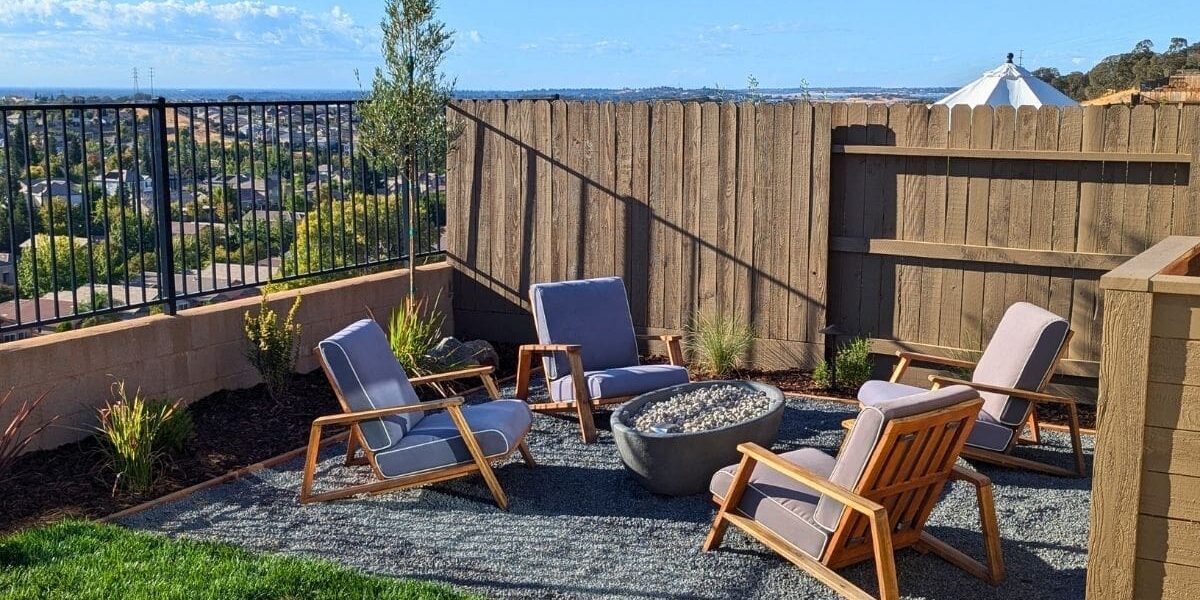
Backyards become true extensions of indoor living. Create defined zones using permeable hardscaping: concrete, paver, or decomposed granite patios for dining and seating; composite or wood decks if elevation is needed. Install a gas fire pit or fire bowl surrounded by gravel seating areas and low ornamental grasses or succulents. Add pergolas or shade sails draped with drought-tolerant vines (such as hardenbergia or select bougainvillea) for cooling and structure. Small recirculating water features—bubbling rocks or wall fountains—deliver soothing sound with minimal water use. Privacy comes from tall deer grass, hopseed bush (Dodonaea viscosa), or olive hedges. For families, include play areas with native meadow patches or artificial turf sections. Low-voltage or solar LED lighting extends usability into evenings. A Mediterranean-inspired palette—olives, lavender, rosemary, and gravel—feels timeless and appropriate for the region.
Creative Solutions for Small or Challenging Spaces
Narrow side yards, condo patios, or sloped lots require inventive approaches. Vertical elements such as trellises, wall-mounted planters, or pocket systems support succulents, herbs, or compact shrubs like Westringia. Containers (terra cotta or glazed ceramic) on hard surfaces hold agaves, rosemary, or dwarf olives. On slopes, raised beds or terracing prevent erosion while creating usable planting levels. Stepping-stone paths through mulch beds maximize circulation without sacrificing greenery. For balconies or tiny decks, lightweight pots with kangaroo paw, salvias, or trailing succulents bring color and life with minimal footprint and water demand.
Sustainable Practices, Irrigation, and Maintenance
Install zoned drip irrigation to deliver water directly to roots, paired with 2–4 inches of mulch (organic wood chips near plants, inorganic gravel in open areas) to retain moisture, moderate soil temperature, and suppress weeds. Amend sandy soil annually with compost to build structure and fertility. Use weather-based smart controllers to avoid overwatering. Practice integrated pest management—healthy native plants resist most problems; treat issues with neem oil or beneficial insects when necessary. Maintenance includes light pruning after spring bloom for many shrubs, deep infrequent watering (every 2–4 weeks in summer once established), and minimal fertilization with low-nitrogen, native-friendly products. On-site composting of yard trimmings and kitchen scraps improves soil over time and reduces waste.
These habits significantly lower water bills, prevent polluted runoff into Newport Bay, and create healthier, more resilient landscapes.
Budget, Implementation, and Getting Started
Start small with DIY projects: sheet-mulch to smother existing lawn, amend soil, and plant from local nurseries (check California Native Plant Society sales, Roger’s Gardens, or similar sources). Professional installation ensures proper grading, irrigation design, and compliance—costs typically range from $10–30 per square foot, depending on materials and complexity. Explore rebates through the Mesa Water District or the Metropolitan Water District for lawn conversions. Begin with one bed or zone to gain confidence, then expand. Long-term savings on water, mowing, and plant replacement quickly offset the initial investment.
In conclusion, landscaping in South Coast Metro turns environmental challenges into opportunities for stunning, sustainable, low-maintenance yards that enhance daily living, increase home value, and contribute positively to the local ecosystem. By embracing xeriscaping principles, selecting resilient natives and adapted plants, installing efficient systems, and incorporating thoughtful hardscaping, homeowners can enjoy beautiful outdoor spaces every day of the year. Evaluate your yard’s sun exposure, soil type, and intended uses, consult local resources such as UC Master Gardeners or licensed landscapers for tailored advice, and begin creating a water-wise landscape that thrives in Southern California’s coastal climate.