

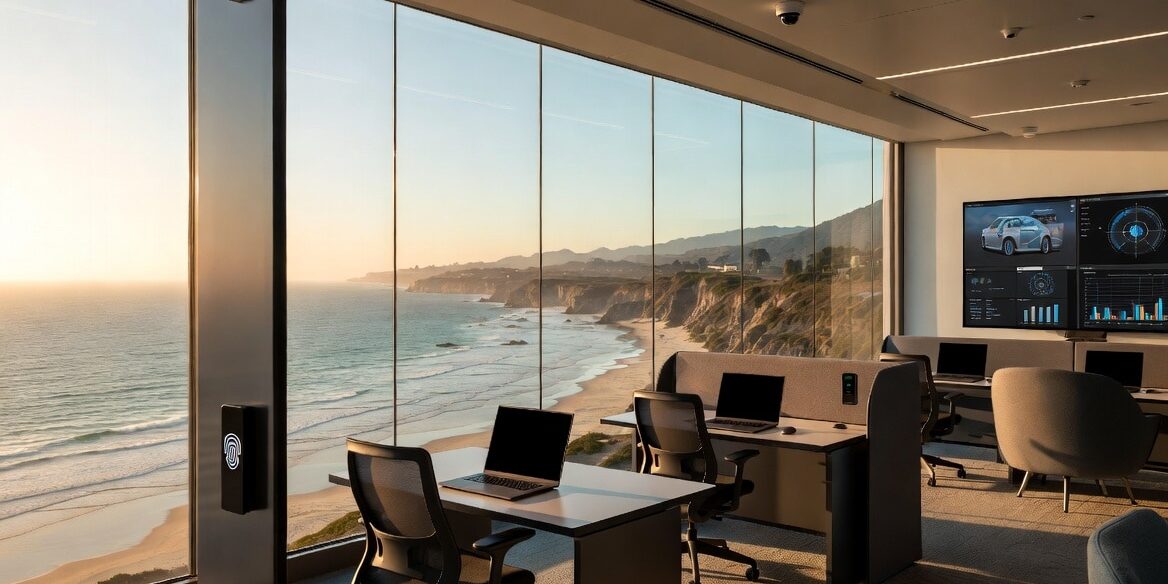
In the scenic coastal enclave of Laguna Beach, Orange County, California, flexible workspaces—often called flex spaces—are gaining significant traction among freelancers, startups, remote workers, and small businesses. These spaces blend coworking desks, private offices, meeting rooms, and adaptable areas that support hybrid work models. With stunning ocean views, a vibrant arts community, and proximity to major business hubs like Irvine and Newport Beach, Laguna Beach offers an inspiring backdrop for productivity. However, in shared environments where multiple users come and go, robust security measures are not just a nice-to-have—they are a strategic investment that directly boosts return on investment (ROI) for operators, property owners, and tenants alike.
This comprehensive guide explores how implementing advanced physical, digital, and operational security in flex spaces in Laguna Beach and broader Orange County can reduce risks, enhance tenant satisfaction, command premium pricing, improve retention, and ultimately maximize financial returns. We’ll dive into the local market context, key security challenges, proven strategies, real-world benefits, implementation steps, and long-term ROI calculations.
The Rise of Flex Spaces in Laguna Beach and Orange County
Laguna Beach, with its ZIP code 92651, features a mix of flex spaces available for lease or hourly rental through platforms like Peerspace, LiquidSpace, and local providers such as Cove Laguna. These include creative studios, meeting venues, and dedicated coworking spots with 24/7 access, high-speed Wi-Fi, and ocean-inspired designs. Nearby areas like Laguna Hills, Laguna Niguel, and Aliso Viejo host larger operators, including Carr Workplaces and WeWork locations in Orange County, offering scalable options from hot desks to private suites.
Orange County’s flex market benefits from strong demand driven by hybrid work trends persisting into 2026. Professionals seek hyper-local, wellness-oriented spaces with amenities like fast Wi-Fi, conference rooms, and community events. Flex spaces allow property owners to optimize underutilized commercial real estate, attracting diverse tenants—from tech freelancers to creative agencies—while generating higher occupancy rates compared to traditional long-term leases.
Yet, the shared nature of these spaces introduces unique vulnerabilities. High foot traffic, varying user access levels, and reliance on digital infrastructure amplify risks of theft, data breaches, unauthorized entry, and liability issues. Investing in security transforms these potential weaknesses into competitive advantages, helping operators in Laguna Beach differentiate their offerings in a market where aesthetics and location alone are no longer enough.
Understanding ROI in the Context of Flex Spaces
ROI in flex spaces is calculated as (Net Returns – Investment Costs) / Investment Costs × 100. For operators, this includes rental income, membership fees, ancillary services (e.g., event hosting), minus operational expenses like utilities, maintenance, and security.
Security investments—whether in CCTV, access control systems, or cybersecurity tools—yield both direct and indirect returns:
- Direct ROI: Reduced losses from theft, vandalism, or breaches; lower insurance premiums; ability to charge 10-20% premium rates for “secure premium” memberships.
- Indirect ROI: Higher tenant retention (reducing vacancy and marketing costs), positive reviews driving new bookings, enhanced property value, and compliance that avoids fines.
In Orange County’s competitive landscape, where flex spaces compete with traditional offices and home setups, security becomes a key differentiator that supports higher utilization rates—often exceeding 70-80% in well-managed facilities.
Key Security Challenges in Laguna Beach Flex Spaces
Laguna Beach’s relaxed, tourist-heavy vibe and coastal location bring specific risks:
- Physical Security Threats: Theft of laptops, equipment, or personal items in open desks or shared lounges. Unauthorized access during peak tourist seasons or events.
- Cybersecurity Vulnerabilities: Shared Wi-Fi networks expose users to man-in-the-middle attacks, malware, or data interception. Remote workers handling sensitive client data (e.g., in finance, legal, or creative IP) face heightened risks.
- Access Management Issues: High turnover of day-pass users, members, and guests complicates tracking who enters sensitive areas like private offices or storage.
- Liability and Compliance: Data protection under California’s CCPA/CPRA, potential for incidents involving high-value creative assets (Laguna’s art community), and general safety in a seismically active region.
- Operational Risks: Vandalism, after-hours incidents, or disputes in multi-user environments that could damage reputation.
Statistics underscore the urgency: The average cost of a data breach globally hovers around $4.4-4.88 million, with U.S. figures significantly higher (up to $10 million+ in some reports). Even smaller incidents—like equipment theft or minor breaches—can cost thousands in recovery, lost productivity, and reputational harm. In shared workspaces, over 20% of organizations report breaches linked to remote or hybrid setups.
Without strong measures, these risks erode ROI through downtime, legal fees, insurance hikes, and churn.
Strategic Security Measures to Maximize ROI
Smart operators in Laguna Beach flex spaces integrate layered security—often called “defense in depth”—to mitigate threats while enhancing user experience. Here’s how specific measures drive returns:
1. Advanced Access Control Systems
Implement keyless entry via RFID cards, mobile apps, biometrics (fingerprint or facial recognition), or PIN codes tailored to membership levels. Systems from providers like those used in modern coworking allow granular permissions: day-pass users limited to common areas, while premium members access private suites 24/7.
ROI Impact: Reduces unauthorized entry incidents by up to 80-90%. Enables dynamic scaling—add users instantly without rekeying. Lowers staffing needs for reception while improving audit trails for liability protection. In Orange County spaces like those in Laguna Niguel, 24/7 secure access is a marketed feature that justifies higher rates.
2. Comprehensive Video Surveillance and Monitoring
Deploy high-resolution CCTV with AI-powered analytics for motion detection, facial recognition (privacy-compliant), and real-time alerts. Cover entrances, common areas, parking, and high-value zones without invading private desk privacy.
ROI Impact: Deters crime (studies show visible cameras reduce theft by 50%+), aids quick incident resolution, and provides evidence for insurance claims. Integrates with access systems for smarter monitoring. Operators report fewer false claims and faster recovery, preserving revenue streams.
3. Robust Cybersecurity Protocols
- Segregated, encrypted Wi-Fi networks (guest vs. member-only with WPA3).
- Mandatory VPN recommendations or provided secure tunnels.
- Endpoint protection, regular security audits, firewalls, and multi-factor authentication (MFA) for shared printers, booking systems, and portals.
- Staff training on phishing and data handling.
ROI Impact: Prevents costly breaches. With breach costs averaging millions, even avoiding one incident delivers massive ROI. Secure networks build trust, attracting data-sensitive professionals (e.g., attorneys, consultants) who pay premiums for compliant spaces. Compliance with California privacy laws avoids fines up to $7,500 per violation.
4. Physical and Environmental Safeguards
- Secure lockers or storage for valuables.
- Well-lit exteriors, reinforced doors/windows, and alarm systems linked to local monitoring (important in coastal areas prone to occasional storms or seismic activity).
- Integration with building management for fire, flood, or intrusion alerts.
- On-site or contracted security personnel for high-traffic periods.
ROI Impact: Minimizes property damage and insurance deductibles. Enhances perceived safety, boosting occupancy—tenants in secure environments report higher satisfaction and longer stays.
5. Operational and Community-Driven Security
- Background-checked staff and clear policies for guests.
- Incident response plans, regular drills, and community guidelines.
- Smart sensors for occupancy and anomaly detection.
- Partnerships with local law enforcement in Laguna Beach for rapid response.
These measures foster a culture of safety that turns users into advocates, driving organic growth through referrals.
Quantifying the ROI: Numbers That Matter
Consider a mid-sized flex space in Laguna Beach with 5,000 sq ft, targeting 60-70% average occupancy at $300-600/month per dedicated desk or hourly rates via Peerspace.
- Investment Example: $50,000-$150,000 initial outlay for access control, CCTV, cybersecurity upgrades, and training (scalable based on size).
- Annual Savings/Avoided Losses:
- Theft prevention: $5,000-$20,000/year.
- Breach avoidance: Potentially $100,000+ (even partial incidents).
- Insurance premium reductions: 10-25% ($2,000-$10,000/year).
- Revenue Uplift:
- Premium pricing: +15% for “secure” tiers → additional $20,000-$50,000/year.
- Higher retention: 20-30% reduction in churn → lower marketing costs ($10,000+ savings).
- Increased occupancy: From 65% to 85% via trust and marketing → tens of thousands in extra income.
Net ROI often materializes within 12-24 months, with ongoing benefits compounding through higher property valuations (secure assets command better cap rates). In flex industrial or office contexts, modern amenities including security directly correlate with tenant attraction and stable cash flow.
Broader industry data supports this: Flexible workspaces emphasizing security and wellness see stronger post-pandemic recovery, with operators leveraging these features for experiential management that creates additional revenue from events and partnerships.
Implementation Roadmap for Laguna Beach Operators
- Assessment Phase: Conduct a risk audit with local security consultants familiar with Orange County regulations. Evaluate current infrastructure against threats.
- Prioritization: Start with high-impact, low-disruption measures like access control and Wi-Fi segmentation.
- Technology Integration: Choose scalable, cloud-based systems that integrate (e.g., access + CCTV + alerts) for efficiency.
- User Education: Offer workshops on best practices to empower tenants—turning them into active participants in security.
- Monitoring and Iteration: Use analytics to measure effectiveness (e.g., incident reduction, satisfaction scores) and adjust. Budget 5-10% of operational costs annually for maintenance/upgrades.
- Marketing the Investment: Highlight security in listings on LoopNet, LiquidSpace, or local sites—position as “premium secure flex space with ocean views and enterprise-grade protection.”
Local considerations: Leverage Orange County’s tech ecosystem for affordable integrations. Ensure ADA compliance and aesthetic harmony with Laguna’s artistic, coastal vibe—security shouldn’t feel intrusive.
Potential Challenges and Mitigation
- Cost Concerns: Phase implementations or seek grants/loans for smart building tech.
- Privacy Balance: Use anonymized data and transparent policies to comply with CCPA while maintaining trust.
- User Adoption: Educate rather than enforce; frame security as enhancing the premium experience.
- Evolving Threats: Stay updated with 2026 trends like AI-driven security and wellness-integrated safety features.
In a market shifting toward hospitality-style coworking with wellness elements (plant walls, saunas, etc.), security complements these by creating truly safe sanctuaries for focused work.
Long-Term Benefits and Future Outlook
Beyond immediate ROI, strong security measures future-proof flex spaces in Laguna Beach. As hybrid work solidifies into 2026 and beyond, demand for trusted, flexible environments will grow. Secure spaces attract higher-quality tenants, support community events without risk, and increase overall asset resilience.
Property owners converting traditional offices to flex models in Orange County can see compounded returns: higher NOI (net operating income), better tenant diversification, and elevated market positioning. In Laguna Beach specifically, where lifestyle meets work, security ensures the “work by the beach” dream remains safe and sustainable.
Operators who view security as a revenue driver—not an expense—position themselves for success. Whether managing a small Cove-style space or larger regional flex facilities, layering physical, digital, and procedural protections delivers measurable financial gains while fostering a thriving community.
Conclusion: Security as a Smart Business Strategy
In Laguna Beach’s dynamic flex space market, maximizing ROI requires more than prime location and stylish design. Strategic security measures—access control, surveillance, cybersecurity, and proactive operations—directly reduce risks, elevate user trust, enable premium pricing, and drive retention and occupancy.
For property owners, managers, and tenants in Orange County, investing in these areas yields strong, compounding returns. In an era where data breaches cost millions and physical safety underpins productivity, security isn’t optional—it’s essential for sustainable growth.
Businesses and operators in Laguna Beach should audit their current setups today and explore tailored solutions. By prioritizing security, flex spaces can thrive as secure, inspiring hubs that deliver exceptional value to users and superior financial performance to stakeholders.
This approach not only protects assets but unlocks the full potential of flexible work in one of Southern California’s most desirable coastal communities. Embrace security as a cornerstone of your flex space strategy, and watch your ROI soar.