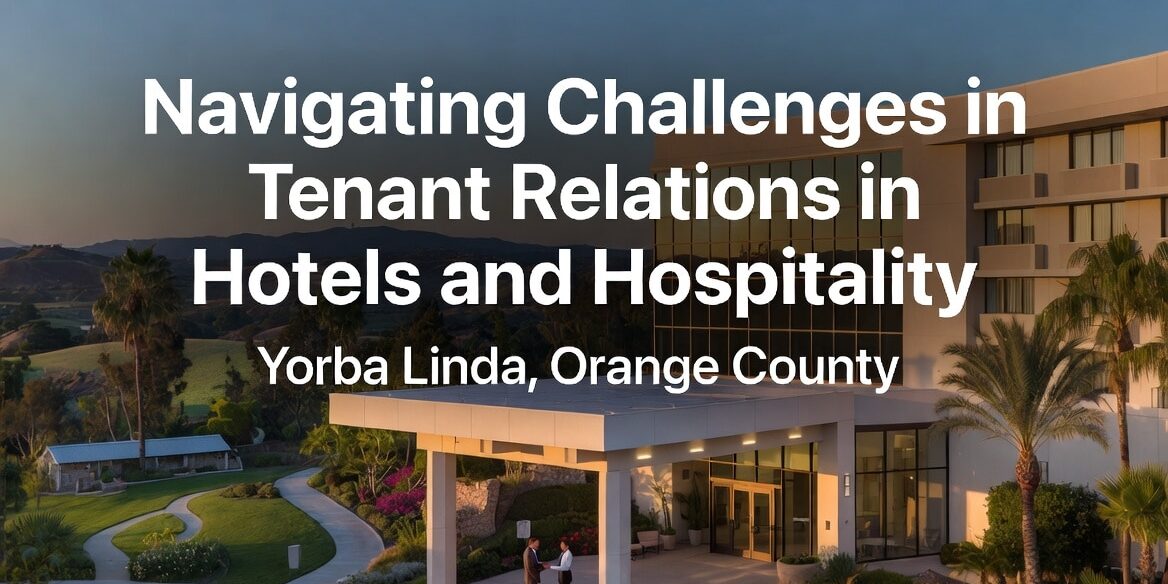
Yorba Linda, nestled in the heart of Orange County, California, is renowned for its suburban charm, family-friendly atmosphere, and proximity to major attractions like Disneyland and the beaches of Southern California. While the city itself maintains a quiet, residential character with strict regulations on short-term rentals—which are outright prohibited under the Yorba Linda Municipal Code—its hospitality sector plays a vital supporting role in the broader Orange County tourism ecosystem. Hotels and hospitality businesses in and around Yorba Linda often cater to visitors exploring the region, business travelers, or those seeking extended stays near corporate hubs in nearby Irvine or Anaheim.
However, managing “tenant relations” in this context presents unique complexities. In the hospitality industry, the term “tenant” blurs the line between traditional short-term guests and long-term occupants who may transition into tenant-like status under California law. This distinction creates significant operational, legal, and relational hurdles for hotel operators. This comprehensive guide explores the key challenges in navigating tenant relations within Yorba Linda’s hotels and the wider Orange County hospitality landscape, offering practical strategies, legal insights, and forward-looking recommendations to foster better outcomes for operators, staff, and occupants alike.
Understanding the Hospitality Landscape in Yorba Linda and Orange County
Yorba Linda boasts a limited number of lodging options compared to bustling neighbors like Anaheim or Newport Beach, focusing instead on boutique properties, extended-stay hotels, and partnerships with regional chains. Orange County’s hospitality sector contributes substantially to the local economy, with tourism drawing millions annually through theme parks, beaches, and business opportunities. In 2026, forecasts suggest steady but moderated growth in room revenue, influenced by events like the FIFA World Cup spillover effects, though challenges such as labor shortages and rising costs persist.
Hospitality businesses here face a dual market: transient guests seeking short stays and a growing segment of extended occupants—sometimes called “long-term guests” or “residential hotel” users—who treat the property as a primary or semi-permanent residence. This shift is driven by housing affordability pressures in Orange County, where high living costs push some individuals toward hotel-based solutions when traditional apartments are unavailable or unaffordable.
California law draws a critical line at approximately 30 days of continuous occupancy. Guests staying 30 days or less, especially those subject to the Transient Occupancy Tax (TOT), are generally classified as transient guests with fewer protections. Once a stay exceeds 30 consecutive days—or in cases involving residential hotels—occupants may gain tenant rights under the California Civil Code, including protections against arbitrary eviction, requirements for just cause, and habitability standards.
In Yorba Linda, where short-term rentals (STRs) like Airbnb are banned to preserve community character and prevent neighborhood disruptions, hotels become de facto alternatives for flexible lodging. This prohibition funnels demand toward legitimate hospitality venues but amplifies the risk of long-term stays turning contentious.
Core Challenges in Tenant Relations
Hotel operators in Yorba Linda and Orange County encounter several interconnected challenges when managing relations with occupants who straddle the guest-tenant divide.
1. Legal Ambiguities: The Guest-to-Tenant Transition
One of the most pervasive issues is the “30-day rule.” California Civil Code Section 1940 and related provisions stipulate that after 30 days, occupants in hotels or motels often acquire tenant status, particularly if the property functions as their primary residence. Hotels attempting to circumvent this through periodic “28-day shuffles”—requiring guests to check out and re-register—risk violating Civil Code Section 1940.1, which prohibits such practices to evade tenant protections and imposes penalties of up to $500 per incident.
For Yorba Linda operators, this creates operational headaches. Extended-stay properties may unintentionally create landlord-tenant relationships, triggering requirements for formal unlawful detainer proceedings in court rather than simple lockouts or refusals of service. Disputes over non-payment, noise, or property damage then escalate from internal resolutions to costly legal battles in Orange County Superior Court.
Broader California tenant laws, including the Tenant Protection Act of 2019 (limiting rent increases to 5% plus local inflation, with just-cause eviction requirements in many cases), further complicate matters for long-term hotel occupants. While pure transient hotels may be exempt in certain scenarios, residential hotels or mixed-use properties face heightened scrutiny.
Fair housing considerations add another layer. Orange County properties must comply with federal and state laws prohibiting discrimination based on disability, race, familial status, and other protected classes. Requests for reasonable accommodations—such as modified policies for guests with disabilities—must be handled carefully, or operators risk complaints through the Fair Housing Council of Orange County or legal action.
2. Habitability and Maintenance Disputes
Hotels must maintain habitable conditions, especially for longer-staying occupants. Issues like pest infestations, plumbing failures, inadequate heating/cooling, or security concerns can lead to claims of breach of the implied warranty of habitability under Civil Code Section 1941.1. In extreme cases, landlords (or hotel operators acting in that capacity) may even be required to cover temporary relocation costs, such as alternative hotel stays, if the unit becomes uninhabitable.
In Yorba Linda’s suburban setting, where properties border residential neighborhoods, maintenance delays can spark complaints not only from occupants but also from neighbors regarding noise, parking overflow, or visual impacts. Orange County Code Enforcement and the Sheriff’s Department may get involved in spillover issues, straining community relations.
Labor shortages exacerbate these problems. Hospitality staffing challenges persist statewide, with many hotels reporting understaffing that delays repairs and reduces service quality. Rising wages, benefits demands, and competition for workers in a high-cost area like Orange County intensify margin pressures.
3. Payment, Eviction, and Dispute Resolution
Non-payment scenarios highlight the stark differences between guest and tenant handling. Transient guests can often be removed more swiftly for unpaid charges, potentially treated as trespass under Penal Code provisions if they refuse to leave after short stays. However, once tenant status applies, operators must pursue formal eviction through unlawful detainer actions—a process that can take weeks or months and incur significant legal fees.
Disputes over security deposits, damage, or early departures are common. Extended guests may expect apartment-like rights, including notice periods for entry or policy changes, while operators prioritize flexibility for turnover. In Orange County, economic uncertainties—fluctuating tourism post-pandemic, inflation, and housing cost burdens—can lead to higher vacancy risks or occupants overstaying due to limited alternatives.
4. Regulatory and Community Pressures
Yorba Linda’s strict stance against STRs reflects broader community priorities: preserving quiet neighborhoods and controlling tourism impacts. Hotels must navigate local zoning, TOT collection (treated similarly to hotel operations), and sustainability mandates. County-wide, issues like fair housing impediments, including high cost burdens disproportionately affecting Hispanic and other minority households, influence how properties market and manage occupancy.
Development challenges, including high construction costs and regulatory hurdles, limit new hotel supply, intensifying competition and pressure on existing properties to maximize occupancy without alienating long-term occupants or neighbors.
5. Economic and Operational Realities in 2026
Current forecasts for Orange County hospitality indicate modest RevPAR growth, tempered by labor shortages, insurance cost hikes, energy expenses, and softening demand in some segments. International travel recovery remains sluggish, while domestic leisure and business travel provide steadier but not explosive support. Events like major sports tournaments offer opportunities but also strain resources.
Staffing remains a top concern, with over half of hotels reporting understaffing. This directly impacts guest (and tenant) satisfaction, leading to more complaints and relational friction.
Strategies for Effective Navigation
Successfully managing tenant relations requires proactive, multifaceted approaches tailored to Yorba Linda’s unique environment.
Clear Policies and Communication from Day One
Draft detailed occupancy agreements that explicitly address stay lengths, potential transition to tenant status, house rules (quiet hours, guest policies, pet restrictions), and maintenance responsibilities. Use plain language and provide copies in multiple formats. Regular check-ins with long-term occupants build rapport and allow early identification of issues.
Implement technology solutions, such as guest portals for maintenance requests, billing, and communication, to reduce misunderstandings and speed resolutions.
Legal Compliance and Risk Mitigation
Consult local counsel familiar with Orange County and California hospitality law. Screen extended-stay applicants thoroughly while complying with fair housing rules. For properties anticipating long-term occupancy, consider structuring as residential hotels with clear tenant agreements from the outset, or maintain strict policies to cap stays below the 30-day threshold where feasible.
Train staff on recognizing tenant rights triggers and de-escalation techniques. Partner with organizations like the Fair Housing Council of Orange County for training on discrimination prevention and accommodation requests.
Proactive Maintenance and Habitability Programs
Establish preventive maintenance schedules and rapid-response protocols. Document all repairs and communications to defend against habitability claims. In cases of major disruptions, have contingency plans for temporary relocations that minimize disputes.
Community and Stakeholder Engagement
Build positive relations with Yorba Linda residents and city officials by addressing parking, noise, and traffic concerns transparently. Participate in local chambers or hospitality associations to stay informed on regulatory changes.
Dispute Resolution Mechanisms
Incorporate mediation clauses in agreements and offer internal escalation paths before legal action. For tenant-status cases, understand unlawful detainer processes thoroughly to act efficiently when necessary.
Staff Training and Retention
Invest in competitive compensation, professional development, and wellness programs to combat labor shortages. Empowered, well-trained staff deliver better service, reducing occupant dissatisfaction that fuels relational challenges.
Case Studies and Lessons from Orange County
While specific Yorba Linda hotel disputes are not widely publicized, regional patterns offer insights. Disability accommodation delays in corporate-managed properties have led to public complaints and legal risks, underscoring the need for timely responses. Labor actions in Los Angeles and Orange County hotels highlight how workforce issues can disrupt operations and guest experiences. Extended-stay conflicts often revolve around eviction attempts, payment disputes, or habitability, with courts emphasizing procedural fairness.
In nearby cities with more permissive STR policies, spillover effects influence hotel demand, but Yorba Linda’s ban keeps focus squarely on traditional hospitality management.
Future Outlook and Recommendations
As Orange County hospitality evolves in 2026 and beyond, several trends will shape tenant relations:
- Technological Integration: AI-driven personalization, smart room controls, and data analytics for occupancy patterns can improve satisfaction and predict issues.
- Hybrid Models: Properties blending hotel services with apartment-like amenities may appeal to long-term occupants while maintaining operational flexibility.
- Sustainability and Resilience: Addressing climate-related concerns (e.g., wildfire preparedness) and energy efficiency builds goodwill.
- Policy Advocacy: Hotel operators should engage with local government on balanced regulations that support tourism without overburdening residential areas.
Recommendations for Yorba Linda and Orange County hospitality leaders include:
- Conduct regular legal audits of occupancy policies.
- Develop comprehensive tenant/guest handbooks.
- Foster partnerships with local legal aid, fair housing groups, and code enforcement for collaborative problem-solving.
- Monitor economic indicators and adjust pricing, services, and staffing accordingly.
- Prioritize empathy and relationship-building—treating long-term occupants with respect often prevents escalation.
By viewing challenges as opportunities for innovation, hotels in Yorba Linda can strengthen their position in Orange County’s competitive hospitality market. Effective tenant relations not only minimize legal risks and operational disruptions but also enhance reputation, encourage repeat business, and contribute to a vibrant local economy.
In conclusion, navigating tenant relations in Yorba Linda’s hotels demands a delicate balance of legal acumen, operational excellence, and human-centered management. California’s robust tenant protections, combined with local community values and broader economic pressures, create a complex environment. Yet, with proactive strategies, clear communication, and a commitment to fairness, hospitality providers can turn potential conflicts into lasting partnerships. As the industry adapts to 2026 realities—labor constraints, moderated growth, and evolving guest expectations—those who invest in strong relations will thrive.
This in-depth exploration underscores that success in hospitality extends far beyond occupancy rates; it lies in thoughtfully managing the human dynamics at the heart of every stay. Operators who embrace these challenges with diligence and creativity will not only comply with the law but also elevate the guest—and tenant—experience in one of Southern California’s most desirable regions.