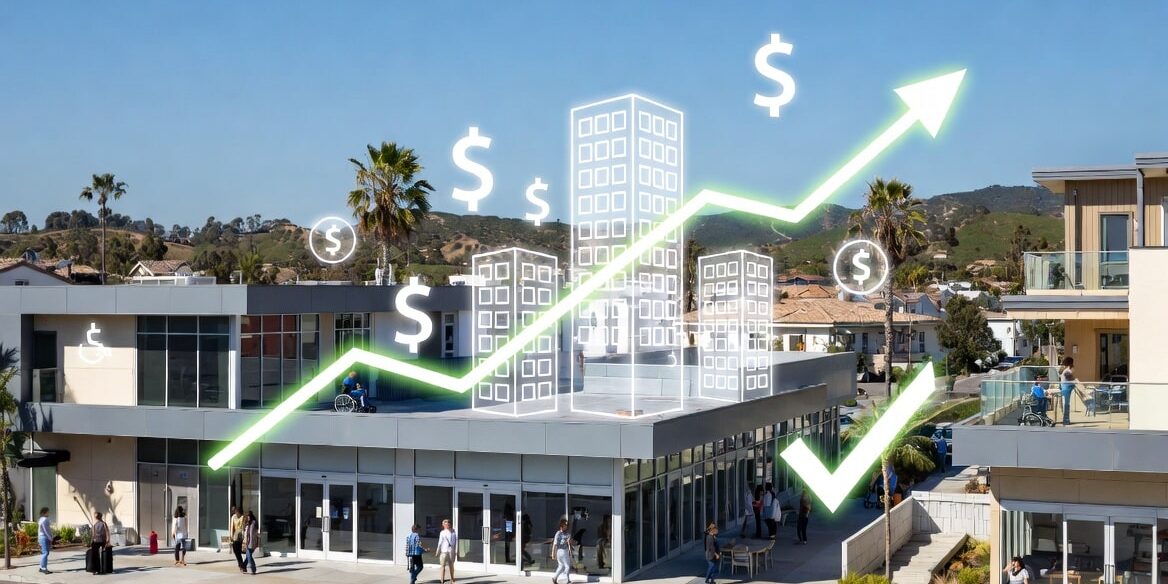
In the heart of Orange County, Yorba Linda stands as a vibrant suburban community known for its family-friendly neighborhoods, scenic parks, and commitment to balanced growth. As the city implements its 2021-2029 Housing Element—the first in Orange County to receive state approval—developers are increasingly turning to mixed-use developments to meet regional housing needs while revitalizing commercial corridors. These projects, which seamlessly blend residential, retail, office, and public spaces, offer tremendous economic potential but also present unique challenges in accessibility compliance.
Accessibility is not merely a legal checkbox; it is a cornerstone of inclusive urban planning that directly impacts financial performance. In Yorba Linda, where new housing targets include over 2,400 units and initiatives like the Mixed-Use Overlay (MUO) zone encourage higher-density residential components atop community-serving retail, optimizing financial management around accessibility compliance can mean the difference between profitable, future-proof investments and costly liabilities. This blog post explores practical strategies for developers, property managers, and investors to integrate accessibility requirements efficiently, minimize expenses, leverage incentives, and maximize return on investment (ROI) in Yorba Linda’s evolving landscape.
The Regulatory Framework Governing Accessibility in Yorba Linda Mixed-Use Projects
California maintains some of the nation’s most rigorous accessibility standards, combining federal Americans with Disabilities Act (ADA) requirements with state-specific regulations under the California Building Code (CBC), particularly Chapter 11B. These standards apply to both new construction and alterations in mixed-use developments. For commercial portions open to the public—such as ground-floor retail or community amenities—full ADA compliance is mandatory from the outset, covering accessible routes, parking, entrances, restrooms, and signage.
Residential components fall under the Fair Housing Act (FHA) and California’s Fair Employment and Housing Act (FEHA), which impose additional “covered multifamily dwelling” rules for buildings with three or more units. In Yorba Linda’s MUO zone, which permits up to 35 dwelling units per acre and structures up to four stories on qualifying sites, developers must ensure seamless integration of these standards across horizontal or vertical mixed-use configurations. Local enforcement occurs through the City’s Building Division, which references CBC thresholds for path-of-travel upgrades during alterations.
For projects involving alterations or additions where the adjusted construction cost does not exceed the annual valuation threshold (approximately $209,208 in 2026), the cost of providing an accessible path of travel is capped at 20 percent of that adjusted cost. Priority is given to key elements in a specific order: an accessible entrance, an accessible route to the altered area, at least one accessible restroom per sex, telephones, drinking fountains, and additional features like parking or alarms. This structured approach helps contain expenses but requires meticulous planning to avoid disproportionate spending.
Non-compliance carries severe financial risks. Under the Unruh Civil Rights Act, which incorporates ADA violations, plaintiffs in California can seek statutory damages of $4,000 per violation—potentially multiplied across multiple incidents or plaintiffs—plus attorney fees. Federal ADA enforcement adds civil penalties of up to $75,000 for a first violation and $150,000 for subsequent ones. In a litigious environment like Orange County, these exposures can quickly erode project margins. Proactive compliance, therefore, is not an expense but a strategic financial safeguard.
Understanding the Financial Costs and Risks in Mixed-Use Contexts
The financial implications of accessibility compliance vary significantly between new construction and retrofits. In new mixed-use developments in Yorba Linda, incorporating accessible design from the conceptual stage typically adds less than 1 percent to overall project costs. Features such as wider doorways, lever hardware, accessible parking ratios, and universal-design elements like zero-threshold entries can be engineered efficiently when integrated early.
Retrofits or alterations in existing buildings, however, are far more expensive—often five times the cost of new construction equivalents. Common upgrades in mixed-use settings include installing ramps or lifts (typically $2,000 to $3,500), renovating restrooms to meet fixture and maneuvering clearances (up to $12,000 per facility in Orange County’s higher labor market), and ensuring compliant paths of travel across shared plazas or corridors. Parking modifications, signage, and elevator upgrades further compound expenses, especially when residential and commercial zones share infrastructure.
Beyond direct construction costs, non-compliance introduces indirect financial burdens. Lawsuits can trigger not only damages and legal fees but also reputational harm that deters tenants and buyers. Insurance premiums may rise, and financing institutions increasingly scrutinize accessibility risk in loan underwriting. In Yorba Linda’s competitive market—where projects like the City Ventures townhomes near Jessamyn West Park and senior housing expansions at Altrudy Lane are underway—delays from compliance disputes can inflate holding costs and miss market timing.
Conversely, well-managed accessibility enhances asset value. Inclusive designs broaden the tenant pool, particularly in a community with growing senior and family demographics. Properties that exceed minimum standards often command premium rents, achieve higher occupancy rates, and appreciate faster due to reduced vacancy risk and stronger marketability to institutional investors who prioritize ESG (environmental, social, and governance) criteria.
Strategic Approaches to Optimize Financial Management
Effective financial management begins with embedding accessibility into the project pro forma from day one. Developers should allocate a dedicated contingency line item—typically 2 to 5 percent of hard costs—for accessibility-specific elements, adjusting based on site conditions and MUO requirements. Early engagement of a Certified Access Specialist (CASp) is one of the highest-ROI investments available. A CASp inspection, costing roughly $2,500 to $7,000 in Orange County, provides a detailed report that not only identifies barriers but also qualifies the property for “qualified defendant” status in California lawsuits. This status reduces potential damages to $1,000 per occurrence, grants a 90-day stay of proceedings, and allows early evaluation conferences—dramatically lowering litigation risk and defense costs.
Tax incentives further sweeten the financial equation. The federal Disabled Access Credit under Internal Revenue Code Section 44 offers small businesses (30 or fewer employees or $1 million or less in revenue) a credit equal to 50 percent of eligible accessibility expenditures between $250 and $10,250, for a maximum annual benefit of $5,000. This can offset costs for consultant fees, equipment, or barrier removal. Complementing this is the Section 190 Barrier Removal Deduction, which allows up to $15,000 annually for any size business removing architectural barriers. California provides parallel incentives, enabling layered savings when applied strategically across multiple tax years for phased projects.
In mixed-use developments, developers can optimize by adopting universal design principles—features that benefit all users while satisfying code. For example, designing shared accessible routes that serve both retail patrons and residential tenants eliminates redundant construction. Phased implementation in larger projects aligns compliance spending with cash flow: prioritize high-impact, low-cost items first (such as signage and door hardware) before tackling structural changes. Partnering with accessibility-focused architects and contractors experienced in Yorba Linda’s zoning environment ensures designs meet both MUO aesthetic guidelines (visible retail frontage, identifiable entrances) and CBC standards without expensive redesign loops.
Financial modeling tools play a critical role. Incorporate sensitivity analyses in pro formas that test scenarios for compliance costs, incentive capture, and potential penalty avoidance. Green or accessibility-linked financing products—such as those from the California Housing Finance Agency or private lenders offering favorable terms for inclusive developments—can reduce borrowing costs. Insurance policies with accessibility endorsements or risk-mitigation riders further protect against unforeseen liabilities.
Technology enhances ongoing financial efficiency. Compliance management software tracks inspection schedules, maintenance logs, and certification renewals, preventing small issues from escalating into costly violations. For property managers in Yorba Linda’s mixed-use assets, regular self-audits combined with annual CASp reviews create a defensible compliance record that reassures lenders and buyers.
Local Context and Demonstrated Benefits in Yorba Linda
Yorba Linda’s policy environment actively supports these strategies. The MUO zone explicitly aims to spur revitalization and reduce vehicular dependency by allowing residential development atop retail uses, provided designs maintain street-level vitality. Projects rezoned under this framework, such as the proposed 62-unit townhome community at 19081 Yorba Linda Boulevard or expansions at existing retail centers like Home Ranch Commons, illustrate how accessibility integration can align with city goals for affordable and market-rate housing.
Senior-focused developments like Altrudy Lane Phase II benefit particularly from proactive accessibility, as universal design features appeal to aging-in-place residents and qualify for additional funding streams under affirmatively furthering fair housing (AFFH) priorities. By budgeting for compliance early, these projects avoid the 20 percent path-of-travel caps becoming constraints and instead transform accessibility into a marketing advantage.
Quantifiable ROI emerges clearly. Studies of similar Orange County mixed-use assets show that fully accessible properties achieve 5 to 15 percent higher occupancy and command rent premiums of $50 to $200 per unit monthly. Reduced turnover from satisfied tenants lowers marketing and unit preparation expenses. Moreover, compliance strengthens eligibility for density bonuses, fee reductions, and streamlined permitting under Yorba Linda’s housing incentive programs—accelerating project timelines and preserving capital.
Future Trends and Actionable Recommendations
Looking ahead, Yorba Linda’s continued growth under state housing mandates will amplify the importance of smart financial management in accessibility. Emerging trends include “smart accessibility” technologies—such as app-controlled doors or sensor-based wayfinding—that future-proof buildings while qualifying as eligible expenditures under tax incentives. Universal design will evolve from compliance to competitive differentiator as consumer expectations rise.
For developers and owners operating in Yorba Linda:
- Engage a CASp and accessibility consultant during schematic design.
- Build comprehensive budgets with phased contingencies and incentive tracking.
- Integrate universal design to minimize long-term retrofit needs.
- Leverage MUO incentives alongside tax credits for layered financial advantages.
- Maintain detailed compliance documentation as a living asset for due diligence and risk management.
- Monitor annual CBC valuation thresholds and adjust alteration strategies accordingly.
By treating accessibility compliance as a core financial discipline rather than a peripheral regulatory burden, stakeholders in Yorba Linda’s mixed-use developments can achieve not only legal peace of mind but also superior economic outcomes. Inclusive design drives broader market appeal, stronger community relations, and resilient asset performance in a dynamic real estate market.
In conclusion, optimizing financial management in accessibility compliance is essential for sustainable success in Yorba Linda’s mixed-use landscape. With thoughtful planning, strategic use of incentives, and expert guidance, developers can turn what might appear as a cost center into a powerful value driver. As the city advances its housing and revitalization goals, those who master this balance will lead the way in creating thriving, accessible, and profitable communities for all residents.