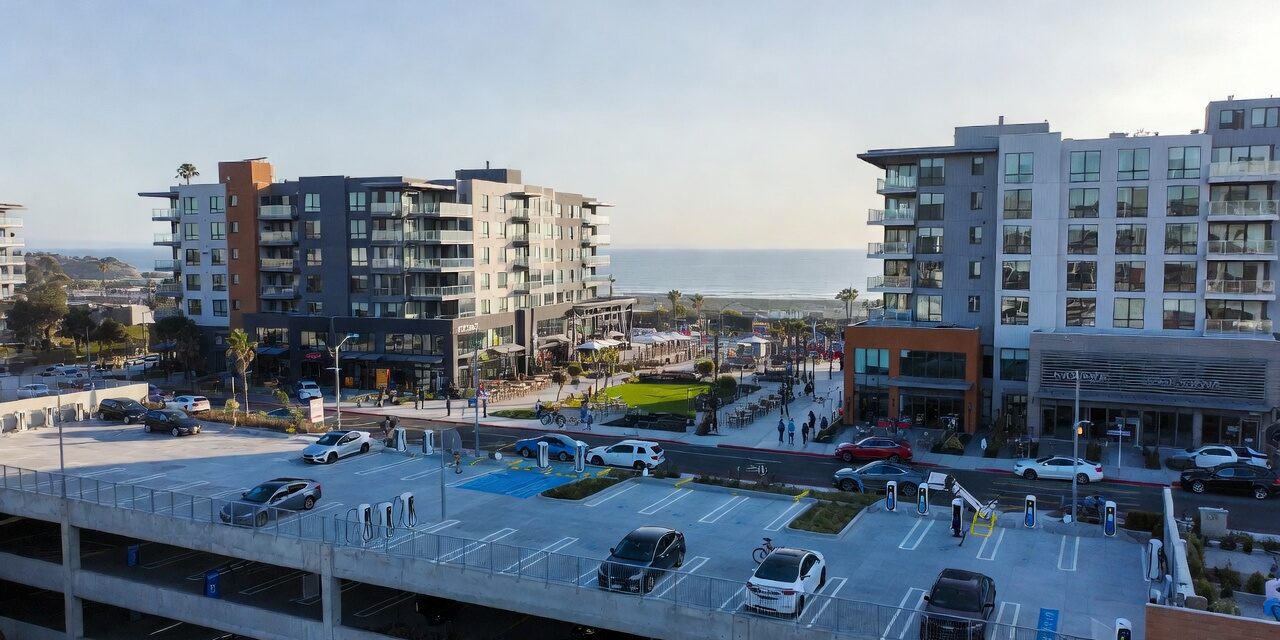
In the picturesque coastal city of San Clemente, Orange County, known as the “Spanish Village by the Sea,” mixed-use developments are increasingly shaping the urban landscape. These projects integrate residential, retail, office, and recreational spaces to create vibrant, walkable communities that align with the city’s vision of sustainable growth, reduced vehicle miles traveled, and enhanced public access to beaches and amenities. However, effective parking management remains a critical challenge in these dense, multifunctional environments. Advanced property maintenance—combining proactive upkeep, smart technologies, and strategic policies—plays a pivotal role in addressing these issues while preserving San Clemente’s unique charm and coastal environment.
This comprehensive exploration examines the current state of mixed-use developments in San Clemente, the specific parking hurdles they face, innovative technologies and maintenance strategies, real-world applications, and forward-looking trends. With over 1,500 words, this post provides actionable insights for property managers, developers, residents, and city planners navigating this evolving field.
The Evolution of Mixed-Use Developments in San Clemente
San Clemente’s growth emphasizes infill and transit-oriented development along key corridors like El Camino Real, Avenida Pico, and coastal areas. The city’s Vision Plan, developed with the Southern California Association of Governments (SCAG), promotes mixed-use zones to foster “authentic main street” experiences, reduce greenhouse gas emissions, and support economic vitality. Projects often feature retail at ground level, offices or residences above, and amenities like open spaces or trolley access.
Recent examples include the Luminar Business Park in the Rancho San Clemente Business Park—a 20-acre development with 11 coastal-inspired buildings offering 74 business suites (2,000–20,000 sq ft), ocean views, EV charging, drought-tolerant landscaping, and pedestrian trails. Approved by the Planning Commission, it highlights amenity-rich commercial spaces with on-site parking management. Other initiatives focus on rezoning for mixed-use along El Camino Real and infill near outlets or train stations, where surface parking lots are targeted for redevelopment into wrapped structures combining retail, housing, and parking.
The city’s ongoing Parking and Transportation Demand Management Plan (funded by a Coastal Commission grant) analyzes parking ratios, seasonal shifts (especially in coastal zones), and policies for commercial/visitor areas. It recommends updates to off-street requirements, paid parking zones, in-lieu fees, and incentives for bicycle/NEV facilities or trolley-adjacent sites—aiming for completion around mid-2025 with integration into the Local Coastal Program (LCP).
Zoning codes (e.g., Chapter 17.40 for mixed-use zones) require buildings along streets with parking behind or to the side, promoting pedestrian-friendly designs. Shared parking, reduced requirements for transit-proximate projects, and alternatives like in-lieu fees facilitate denser development without excessive surface lots.
Core Challenges in Parking for Mixed-Use Settings
Mixed-use parking in San Clemente involves balancing diverse demands: residents need overnight/secure spots, retail visitors seek short-term convenience, and seasonal beach/tourism surges create peaks. Without optimization, this leads to underutilization off-peak and overflows during high usage.
Key issues include:
- Demand Fluctuations and Spillover: Residential peaks evenings/weekends; commercial midday. Coastal visitor-serving areas see massive seasonal shifts. Insufficient allocation causes street parking spillover, impacting neighborhoods.
- Land and Environmental Constraints: Hilly terrain, coastal protections, and limited space restrict new lots. Salt air, UV exposure, rain, and vehicle fluids accelerate surface degradation in structures.
- Regulatory Framework: No comprehensive Parking Management Plan existed until recent efforts (standards largely unchanged since 1996). On-street metered parking, commercial vehicle limits (e.g., 2-hour restrictions), and oversized vehicle rules apply. The city explores paid parking, trolley enhancements, and reductions for mixed-use with shared facilities.
- Structural Wear and Safety: Parking areas face corrosion, cracking, and pooling. Maintenance must address these proactively to prevent hazards and costly repairs.
- Revenue and Efficiency: Inefficient enforcement or unauthorized use reduces income for property owners/operators serving multiple user groups.
These challenges demand advanced maintenance to ensure durability, efficiency, and compliance.
Cutting-Edge Technologies for Smarter Parking Management
Technologies transform parking from static lots to dynamic systems, especially valuable in San Clemente’s space-constrained mixed-use projects.
- Smart Sensors and IoT: Real-time occupancy detection via ground sensors or cameras guides users to spots, cutting search time and congestion. Dynamic allocation reserves resident spots overnight while opening to visitors during the day.
- License Plate Recognition (LPR) and Enforcement: Automates access, duration tracking, and payments. Ideal for hybrid enforcement in mixed-use zones.
- AI-Driven Demand Prediction: Analyzes patterns (weather, events, seasons) to adjust rates/reservations. Coastal surges can trigger surge pricing or alerts.
- Mobile Apps and Reservations: Enable pre-booking, payments, and EV charging scheduling. Unbundled/shared parking (separating spots from rent/leases) reduces ownership and supports car-sharing.
- Automated/Mechanical Systems: Puzzle lifts, stackers, or robotic valet systems maximize density (e.g., 30–50% more capacity). California examples (Arts District LA, UCLA) show integration with autonomous vehicles and EV charging.
- EV Infrastructure: Mandatory in new developments; smart systems schedule charging to avoid grid strain.
These reduce circling (up to 25% less), emissions, and maintenance needs through predictive monitoring (e.g., detecting structural issues early).
Proactive Maintenance Strategies Tailored to Parking Areas
Advanced property maintenance ensures longevity and performance in San Clemente’s harsh coastal conditions.
- Preventive Inspections and Repairs: Regular structural assessments (cracks, corrosion, drainage) prevent escalation. Sealants/coatings protect against salt/UV; pressure washing removes fluids/debris.
- Sustainable Practices: Drought-tolerant landscaping around lots reduces irrigation; permeable pavements manage runoff. Green infrastructure integrates with parking for stormwater benefits.
- Integrated Tech Maintenance: Sensors monitor wear (e.g., water pooling, surface integrity). Predictive analytics schedules interventions, minimizing downtime.
- Shared Parking Optimization: Zone allocation (resident vs. visitor) with signage/tech enforcement. In-lieu fees fund public improvements.
- Security and Aesthetics: Lighting, cameras, and landscaping enhance safety/appeal. Regular sweeping/power washing maintains cleanliness.
- Compliance and Upgrades: Align with evolving codes (e.g., TDM measures, reduced minimums near transit). Retrofit older lots with smart tech.
These strategies lower long-term costs, boost user satisfaction, and support sustainability goals.
Case Studies and Local Applications
San Clemente’s Parking Demand Management Plan emphasizes shared/reduced parking for mixed-use with bicycle/NEV incentives. Luminar Business Park demonstrates on-site management with EV charging and trail access.
Broader California trends—in LA Arts District (automated systems with AV integration), San Jose (unbundled/shared parking), and Bay Area reforms (eliminated minimums, TDM)—offer models. San Clemente could adopt a similar approach for coastal zones, using in-lieu fees for trolley enhancements.
Future Outlook and Recommendations
As San Clemente finalizes its Parking Plan, expect incentives for smart tech, shared systems, and reduced requirements in mixed-use/transit areas. Climate goals will prioritize EV-ready, low-emission parking.
Recommendations:
- Adopt dynamic pricing/shared models.
- Invest in preventive coastal-specific maintenance.
- Integrate AI/sensors for efficiency.
- Partner with operators for enforcement/tech.
- Monitor seasonal data for adaptive policies.
Advanced maintenance isn’t just upkeep—it’s strategic asset management enabling vibrant, sustainable mixed-use living in San Clemente. By embracing innovation, the city can balance growth, accessibility, and its beloved coastal character for years to come.