

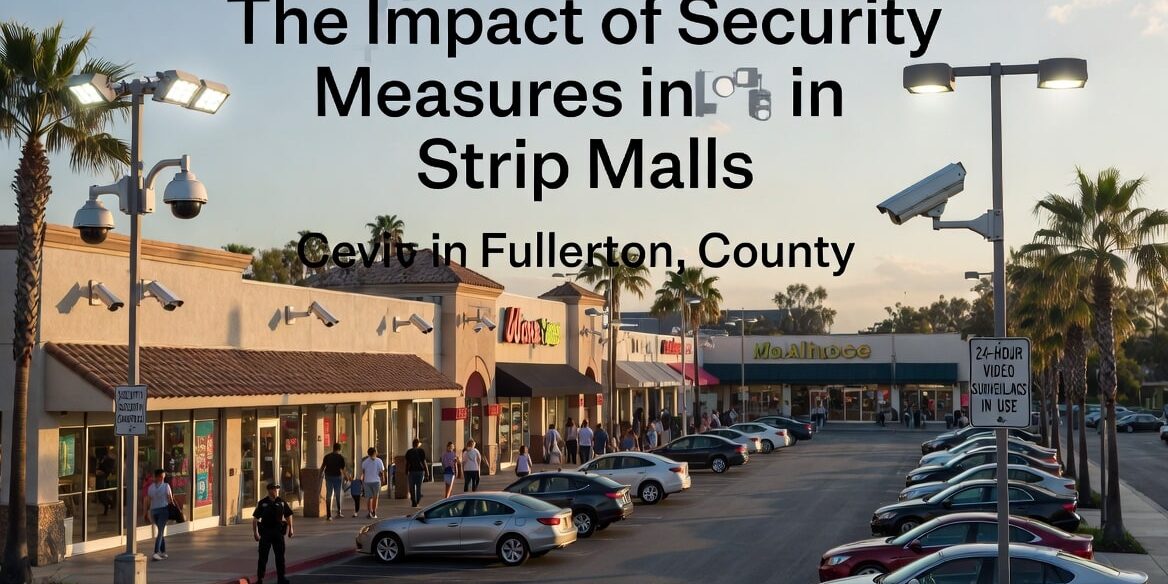
Strip malls are the unsung heroes of suburban American commerce. In Fullerton, Orange County, these clusters of retail stores, restaurants, and service businesses serve as daily hubs for residents seeking convenience, affordability, and community interaction. From the bustling plazas along Harbor Boulevard to the quieter centers near Chapman Avenue and Euclid Street, Fullerton’s strip malls host everything from mom-and-pop eateries and nail salons to major chains like Starbucks, CVS, and grocery anchors. Yet, like many commercial areas across Southern California, these open-air shopping destinations face persistent challenges related to theft, vandalism, loitering, homelessness, and occasional violent incidents.
In recent years, property owners, business associations, and local authorities in Fullerton have invested heavily in various security measures. These range from basic surveillance cameras and improved lighting to more advanced private security patrols, license plate recognition systems, and even physical barriers. This blog post explores the multifaceted impact of these security enhancements on Fullerton’s strip malls. We will examine their effects on crime rates, business performance, customer behavior, community relations, economic vitality, and potential drawbacks. Drawing from local trends, Orange County data, and broader retail security studies, the analysis reveals both successes and ongoing complexities in balancing safety with accessibility.
Understanding Fullerton’s Strip Malls: Context and Vulnerabilities
Fullerton, with a population of approximately 143,000, sits in the heart of Orange County, a region known for its mix of suburban tranquility and urban pressures. The city’s strip malls developed primarily in the post-World War II boom and expanded during the 1980s and 1990s. Many are “power centers” or neighborhood plazas characterized by large parking lots, single-story buildings, and easy vehicular access—features that once symbolized convenience but now present security vulnerabilities.
Common issues in Fullerton strip malls have included:
- Retail theft and shoplifting: Especially in pharmacies, electronics stores, and apparel outlets.
- Property crime: Vehicle break-ins, graffiti, and smashed windows.
- Quality-of-life crimes: Loitering, public intoxication, and transient encampments in parking areas.
- Organized retail crime (ORC): Groups targeting multiple stores in coordinated thefts, a growing concern across California.
According to Orange County Sheriff’s Department reports and Fullerton Police Department data from the past decade, commercial burglary and theft incidents in retail corridors have fluctuated but remain a priority. The COVID-19 pandemic exacerbated these problems, with reduced foot traffic, staffing shortages, and shifting social dynamics leading to spikes in certain crimes. In response, many strip mall owners—often limited liability companies or real estate investment trusts—began implementing layered security strategies starting around 2020-2022.
These measures did not emerge in isolation. They reflect statewide trends influenced by Proposition 47 (which reclassified many thefts as misdemeanors), debates over policing practices, and the economic recovery efforts following the pandemic. In Fullerton specifically, city initiatives like the Public Safety Master Plan and partnerships with business improvement districts (BIDs) have encouraged collaborative security approaches.
Types of Security Measures Implemented in Fullerton Strip Malls
Security upgrades in Fullerton’s strip malls vary by location, ownership, and budget, but several common strategies have become widespread:
- Surveillance and Monitoring Systems High-definition CCTV cameras with night vision and motion detection are now standard. Many properties have upgraded to AI-powered systems capable of facial recognition or anomaly detection (e.g., identifying loitering patterns). License Plate Recognition (LPR) cameras at entrances help track vehicles involved in smash-and-grab incidents or repeat offenders. Some malls partner with apps that allow real-time sharing of footage with Fullerton Police.
- Physical Deterrents Bollards, reinforced glass, and anti-ram barriers protect storefronts from vehicle ramming attacks, which gained notoriety in broader California retail crime waves. Roll-down metal shutters or security grilles are common after hours. Parking lot redesigns include better-defined spaces, speed bumps, and limited access points to reduce unauthorized loitering.
- Lighting and Environmental Design LED lighting upgrades with motion sensors illuminate dark corners and parking areas. Crime Prevention Through Environmental Design (CPTED) principles—such as trimming overgrown landscaping, removing hiding spots, and improving sightlines—are increasingly applied during renovations.
- Private Security Personnel Armed or unarmed guards from local firms patrol high-traffic malls, especially during peak evening hours. Some locations employ “loss prevention” specialists inside stores, while larger plazas contract for roving patrols. In certain cases, off-duty Fullerton police officers provide supplemental security through paid details.
- Technological and Community Integration Alarm systems linked directly to police dispatch, panic buttons for employees, and digital signage warning of surveillance. Some malls participate in neighborhood watch-style programs or use social media to report suspicious activity. Integration with Orange County’s regional crime databases helps identify patterns across jurisdictions.
- Policy and Operational Changes Stores have adopted stricter return policies, locked high-value merchandise cabinets, and employee training programs. Hours of operation adjustments and coordinated closing times reduce vulnerability windows.
These investments often cost tens of thousands to hundreds of thousands of dollars per property, depending on scale. Smaller independent owners sometimes struggle with the expense, leading to disparities in security levels across different strip malls.
Positive Impacts on Crime Reduction and Safety
The implementation of enhanced security measures has yielded measurable benefits in many Fullerton strip malls. Local police reports and business testimonials suggest declines in certain crime categories:
- Reduced Property Crime: Properties with comprehensive camera systems and private patrols report 20-40% drops in vehicle break-ins and burglaries, aligning with national retail security studies from organizations like the National Retail Federation (NRF). In one notable Fullerton plaza near the 57 freeway, LPR technology helped police identify and apprehend a ring responsible for multiple thefts across Orange County.
- Deterrence Effect: Visible cameras, bright lighting, and security guards create a psychological deterrent. Potential offenders are more likely to avoid well-monitored locations, displacing some crime to less-secured areas—a phenomenon known as crime displacement, which requires ongoing regional coordination.
- Improved Incident Response: Real-time monitoring allows faster intervention. In several documented cases, security footage provided clear evidence leading to arrests, increasing clearance rates for commercial crimes in Fullerton.
- Employee and Customer Safety Perception: Surveys conducted by local chambers of commerce indicate higher confidence among workers and shoppers. Reduced fear of crime correlates with longer dwell times and more frequent visits, particularly among families and elderly residents who frequent pharmacies and grocery-anchored centers.
Broader Orange County data supports these findings. While California as a whole has faced criticism for retail theft trends, targeted security investments in suburban areas like Fullerton have helped stabilize commercial districts. Fullerton Police Department’s annual reports often highlight successful partnerships with private security firms in mitigating organized retail crime.
Economic and Business Performance Benefits
Security measures extend beyond crime statistics to influence the bottom line:
- Tenant Retention and Attraction: Secure malls experience lower vacancy rates. National studies show that properties perceived as safe command higher rents—up to 10-15% premiums in competitive markets. In Fullerton, renovated and secured strip malls have attracted new tenants, including national brands wary of high-crime locations.
- Increased Sales and Foot Traffic: Customers who feel safe spend more and visit more often. A well-lit, patrolled plaza encourages evening dining and weekend shopping, boosting revenue for restaurants and service businesses. One Fullerton business owner reported a 25% sales increase after security upgrades, attributing it to restored customer confidence post-pandemic.
- Insurance and Liability Reductions: Properties with robust security documentation often qualify for lower insurance premiums. Fewer incidents also reduce legal risks and maintenance costs associated with vandalism repairs.
- Property Value Appreciation: Enhanced security contributes to overall asset value. Real estate analyses in Orange County indicate that secured retail centers outperform unsecured ones in resale or refinancing scenarios.
For small businesses in Fullerton—many family-owned and operating on thin margins—these benefits are critical. A stable, safe environment allows owners to focus on customer service rather than constant loss prevention.
Effects on Customer Behavior and Community Relations
Security enhancements shape how people interact with strip malls:
- Positive Shifts: Families and regular shoppers report feeling more comfortable, leading to increased community use. Events like farmer’s markets or holiday pop-ups become viable again in safer environments. Diverse demographics in Fullerton, including large Hispanic, Asian, and student populations from nearby Cal State Fullerton, benefit from accessible, secure retail options.
- Accessibility Considerations: While most measures improve safety, some can inadvertently create barriers. Excessive bollards or restricted parking might inconvenience disabled patrons or delivery drivers. Overly aggressive private security has occasionally led to complaints about profiling or heavy-handed interactions, particularly affecting minority communities or the homeless population.
- Community Pushback and Adaptation: In some Fullerton neighborhoods, residents have voiced concerns over “fortress-like” aesthetics that clash with the city’s family-friendly image. However, many accept trade-offs when crime decreases. Public forums and city council meetings have featured discussions on balancing security with inclusivity, with calls for more social services alongside enforcement.
Overall, data from similar suburban retail environments suggests that well-designed security fosters positive community engagement rather than alienation, provided measures are transparent and community-informed.
Challenges, Criticisms, and Unintended Consequences
No security strategy is without drawbacks:
- Cost Burden: Smaller strip mall owners face financial strain, sometimes passing costs to tenants via higher CAM (common area maintenance) fees. This can squeeze independent businesses already challenged by inflation, online competition, and minimum wage increases.
- Crime Displacement: Security in one mall may push problems to neighboring properties or residential areas, requiring city-wide strategies rather than isolated fixes.
- Privacy Concerns: Expanded surveillance raises questions about data storage, facial recognition ethics, and potential misuse. California’s strict privacy laws (CCPA and CPRA) add compliance complexity for mall operators.
- Over-Reliance on Technology: Cameras and AI are tools, not panaceas. Human factors—such as undertrained guards or delayed police response due to staffing shortages—can undermine effectiveness. Fullerton, like many cities, has faced budget pressures on public policing.
- Social Equity Issues: Heightened security can exacerbate tensions with unhoused individuals, who sometimes seek shelter in parking lots. Critics argue for “housing-first” approaches combined with enforcement, rather than purely punitive measures.
- Aesthetic and Experiential Impact: Some residents lament the shift from open, welcoming plazas to more controlled environments, potentially diminishing the casual, community-oriented feel of traditional strip malls.
These challenges highlight the need for holistic solutions involving city government, businesses, nonprofits, and residents.
Broader Implications for Orange County and Beyond
Fullerton’s experiences mirror trends across Orange County cities like Anaheim, Santa Ana, and Huntington Beach, as well as Southern California at large. As retail evolves with e-commerce growth and shifting consumer habits, physical security becomes a key differentiator for brick-and-mortar survival.
State-level policy debates—around retail theft penalties, police funding, and homelessness—directly influence local outcomes. Fullerton’s proactive security investments demonstrate how municipalities can mitigate impacts of broader systemic issues through public-private partnerships.
Looking ahead, emerging technologies like drone patrols, advanced analytics, and integrated smart-city platforms could further enhance security. However, sustainable success depends on addressing root causes: economic opportunity, mental health services, and effective criminal justice responses.
Recommendations for Stakeholders
To maximize positive impacts while minimizing downsides:
- Collaborative Approaches: Expand business improvement districts and formal partnerships between Fullerton Police, private security, and property owners for shared intelligence and resources.
- Balanced Design: Incorporate CPTED principles with community input to maintain welcoming aesthetics.
- Data-Driven Decisions: Regularly analyze crime statistics, customer feedback, and economic metrics to refine strategies.
- Support for Small Businesses: Explore grants, tax incentives, or shared security cooperatives to ease financial burdens on independent operators.
- Integrated Social Strategies: Pair security with outreach programs addressing homelessness, addiction, and poverty in coordination with Orange County social services.
- Transparency and Accountability: Public reporting on security effectiveness and incident data can build trust.
- Investment in Prevention: Focus on youth programs, education, and economic development to reduce long-term crime drivers.
Conclusion: Security as a Foundation for Vibrant Communities
Security measures in Fullerton’s strip malls have produced tangible benefits: lower crime in targeted areas, stronger business performance, and greater peace of mind for shoppers and employees. These enhancements have helped preserve the vital role of strip malls as accessible commercial and social spaces in a rapidly changing Orange County landscape.
Yet, security is not a standalone solution. Its true impact depends on thoughtful implementation that respects community values, adapts to evolving threats, and addresses underlying societal challenges. As Fullerton continues to grow—benefiting from its proximity to employment centers, universities, and cultural attractions—maintaining safe, vibrant strip malls will remain essential to the city’s quality of life and economic health.
Property owners, city leaders, and residents must continue collaborating to ensure that security investments enhance rather than restrict the open, convenient character that makes Fullerton’s strip malls special. In doing so, they can model a balanced approach for other suburban retail environments facing similar pressures.
The future of these everyday shopping destinations hinges not just on cameras and guards, but on a shared commitment to safety, prosperity, and community. With prudent measures and ongoing dialogue, Fullerton’s strip malls can thrive as secure anchors of local life for years to come.