

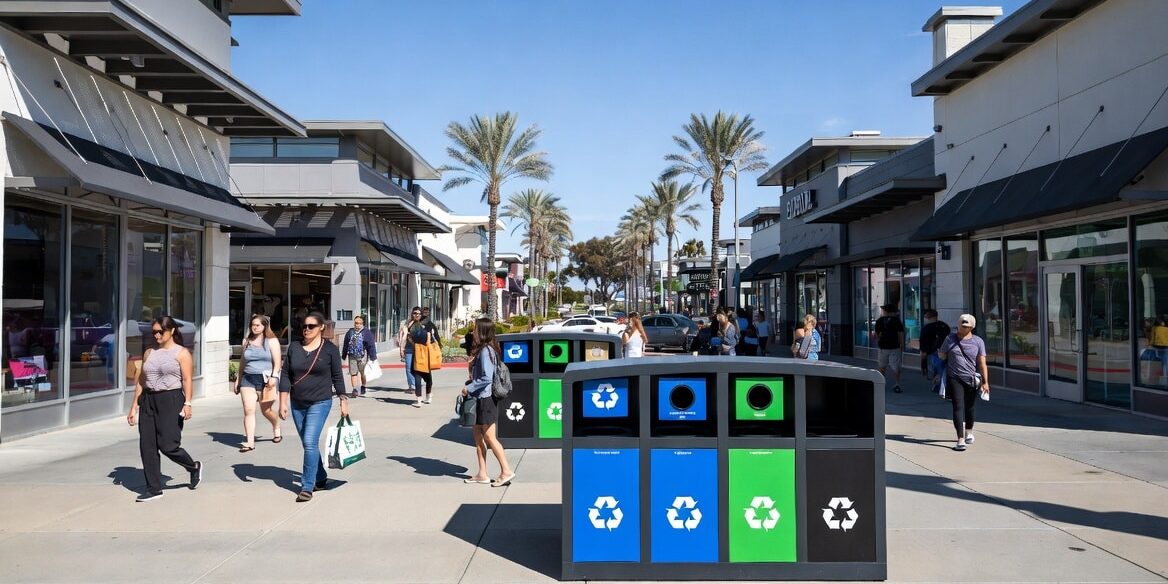
Tustin, a vibrant city in the heart of Orange County, California, boasts a population of approximately 79,000 residents and serves as a bustling hub for retail activity. With its mix of modern shopping centers, big-box stores, and entertainment venues like The District at Tustin Legacy, the city generates significant commercial waste from retail operations. Retail spaces in Tustin—including grocery stores, restaurants, department stores, and specialty shops—produce vast quantities of packaging materials, food scraps, plastic waste, cardboard, and other disposables daily. Effective waste management in these spaces is not merely an operational necessity; it carries profound environmental, economic, and social implications that affect the local community, the broader Orange County region, and California’s sustainability goals.
Waste management encompasses the collection, sorting, recycling, composting, and disposal of materials generated by retail activities. In Tustin, as in the rest of Orange County, retail waste streams are influenced by high consumer traffic, food service operations, and packaging-heavy merchandise. Poor practices can lead to overflowing landfills, increased greenhouse gas emissions, and higher operational costs for businesses. Conversely, robust systems promote resource conservation, compliance with stringent state laws, and enhanced community well-being. This blog post explores the multifaceted impacts of waste management in Tustin’s retail spaces, drawing on local regulations, regional initiatives, and broader industry insights to highlight challenges and opportunities.
The Retail Landscape in Tustin and Orange County
Tustin’s retail sector is a key economic driver, with total retail sales exceeding $3.6 billion in recent years. Major destinations like The District at Tustin Legacy feature anchors such as Costco, Target, Whole Foods, and numerous restaurants, drawing shoppers from across Orange County. This concentration of retail activity translates to substantial waste generation: packaging from goods, food waste from dining options, and single-use items from customer interactions.
Orange County as a whole supports a thriving retail environment, but it also faces pressure from limited landfill capacity and growing environmental concerns. Commercial entities, including retail spaces, contribute significantly to the county’s solid waste stream. Waste haulers like Waste Management (WM) and CR&R Environmental Services handle collections for businesses in Tustin, providing trash, recycling, and organics services. However, the volume of waste from retail—often dominated by organics (food scraps and soiled paper) and recyclables (cardboard and plastics)—demands tailored approaches to prevent overburdening local infrastructure.
In Tustin specifically, businesses must navigate city-specific programs alongside countywide efforts managed by the Orange County Waste & Recycling (OCWR) department. Retail properties, whether standalone stores or multi-tenant centers, generate waste that reflects consumer behaviors: high packaging use in e-commerce-influenced shopping and food-related disposables in dining areas. Without proper management, this waste contributes to broader regional challenges, including the need to extend landfill lifespans and reduce reliance on disposal sites like those in the unincorporated areas of Orange County.
Regulatory Framework Governing Waste Management
California leads the nation in progressive waste reduction policies, and Tustin’s retail spaces operate under a robust framework designed to divert materials from landfills. Key laws include:
- AB 341 (Mandatory Commercial Recycling): Requires businesses generating four or more cubic yards of waste per week to arrange for recycling services. This applies to most retail operations in Tustin, mandating separation of non-organic recyclables like bottles, cans, and cardboard.
- AB 1826 (Mandatory Commercial Organics Recycling): Focuses on diverting organic waste, including food scraps and green waste, which is particularly relevant for Tustin’s grocery stores and restaurants.
- SB 1383 (Short-Lived Climate Pollutant Reduction Strategy): This landmark law aims for a 75% reduction in organic waste disposal by 2025 compared to 2014 levels. Effective since 2022, it requires all businesses, including retail, to separate organics into dedicated containers. In Tustin, property managers must provide three-bin systems (trash, recycling, and organics) for tenants and employees. Food service businesses must also prioritize edible food recovery for donation to address food insecurity.
Tustin enforces these through partnerships with haulers like CR&R, which offers cost-effective recycling and organics programs. Non-compliance can result in fines, while adherence unlocks benefits such as lower hauling fees. Orange County businesses may also face additional requirements under AB 827 for on-site food consumption, mandating visible, labeled bins for customers.
These regulations stem from broader goals to reduce methane emissions—a potent greenhouse gas—from landfills and to promote a circular economy. For Tustin retailers, compliance is not optional; it integrates into daily operations, from back-of-house sorting in stores to customer-facing bin placement in malls.
Environmental Impacts of Waste Management Practices
Effective waste management in Tustin’s retail spaces yields significant environmental benefits, while lapses exacerbate pressing issues.
Positive Impacts and Diversion Successes: Proper sorting and diversion reduce landfill use, conserving space and minimizing environmental degradation. Orange County’s composting initiatives at landfills, such as windrow and Covered Aerated Static Pile (CASP) methods, have diverted over 64,000 tons of organic waste, preventing the equivalent of 12,400 metric tons of CO2 emissions—comparable to removing thousands of cars from roads. In retail contexts, organics diversion from grocery and food outlets directly cuts methane production, as decomposing food in landfills generates this gas.
Recycling programs recover valuable materials: cardboard from packaging, plastics from consumer goods, and metals from displays. In Tustin, businesses participating in source separation see higher diversion rates, conserving natural resources like trees and water used in virgin material production. Technology integrations, such as smart bins and data analytics for waste audits, further enhance efficiency, with some Orange County retail settings reporting 20-40% waste reductions through optimized collection.
E-waste from electronics retailers and hazardous materials (e.g., batteries, cleaning products) require specialized handling to prevent soil and groundwater contamination. Tustin’s programs, supported by services like TechWaste, promote responsible recycling, reducing toxic leachate risks.
Negative Impacts of Inadequate Management: Poor practices lead to contamination, where recyclables mixed with trash render batches unprocessable, increasing landfill dependency. Retail waste often includes single-use plastics and polystyrene (banned in many food service contexts in Orange County), contributing to ocean pollution via stormwater runoff—a concern given Tustin’s proximity to coastal ecosystems.
Methane emissions from organics in landfills accelerate climate change. Nationally, retail contributes to substantial greenhouse gases through waste; locally, unchecked disposal strains Orange County’s landfills, which handle the majority of commercial waste via haulers. Improper hazardous waste disposal can leach toxins, harming wildlife and local biodiversity in areas surrounding Tustin.
Broader effects include resource depletion: producing new packaging instead of recycling existing materials increases energy use and emissions. In Tustin, where retail drives economic activity, inefficient waste systems amplify the city’s carbon footprint, countering California’s ambitious climate targets.
Economic Implications for Retail Businesses
Waste management directly influences retail profitability in Tustin. Hauling and disposal costs can be substantial, but diversion programs often reduce them. For instance, separating organics and recyclables frequently lowers trash service levels, with some businesses reporting up to 50% reductions in collection frequency and associated savings.
Compliance with SB 1383 and related laws avoids penalties while qualifying for rebates from material recovery facilities (MRFs). Retailers adopting audits and customized programs—such as tiered bin services—optimize costs. In Orange County examples, technology-driven waste tracking has cut expenses by thousands annually while boosting recycling revenues.
On the flip side, contamination or non-compliance inflates costs through higher fees and lost opportunities. Retail spaces investing in employee training and customer education see long-term gains: lower operational expenses, eligibility for green certifications (e.g., LEED), and enhanced tenant retention in multi-tenant centers. Sustainable practices also attract eco-conscious consumers, potentially increasing foot traffic and sales in Tustin’s competitive market.
Broader economic ripple effects include job creation in recycling and composting sectors, supporting Orange County’s green economy. For small retailers, partnerships with haulers like WM provide scalable solutions, turning waste management from a cost center into a strategic advantage.
Social and Community Benefits
Beyond environmental and economic dimensions, effective waste management fosters social good in Tustin and Orange County.
Edible food recovery under SB 1383 addresses food insecurity by directing surplus from grocery stores and restaurants to nonprofits. This not only reduces waste but strengthens community resilience, particularly benefiting vulnerable populations in a diverse city like Tustin.
Clean, well-managed retail spaces improve quality of life: reduced odors, litter, and visual blight enhance shopping experiences and neighborhood aesthetics. Public education campaigns—promoted by Tustin and county entities—raise awareness, encouraging residents and visitors to participate in recycling.
Social equity considerations arise too. Disadvantaged communities near waste facilities may face disproportionate impacts from pollution; equitable waste systems mitigate this. Moreover, businesses demonstrating sustainability build customer loyalty, as shoppers increasingly favor environmentally responsible brands. In Tustin, where retail hubs serve as community gathering spots, strong waste practices reinforce a culture of stewardship.
Challenges persist, including educating diverse workforces and customers on proper sorting, but successful programs yield measurable social returns through cleaner environments and stronger community ties.
Challenges Faced by Retail Spaces in Tustin
Despite progress, Tustin retailers encounter hurdles:
- High Waste Volumes and Contamination: Busy shopping centers generate mixed streams, with customer errors leading to contamination rates that undermine diversion.
- Infrastructure Limitations: Not all older retail properties have space for three-bin systems or composting facilities. Multi-tenant malls require coordinated efforts among property managers and tenants.
- Cost and Compliance Burdens: Smaller businesses may struggle with upfront investments in bins, training, or audits, especially amid economic pressures.
- Behavioral Factors: Staff turnover and inconsistent customer habits hinder consistent sorting. Retail returns and e-commerce packaging add complexity.
- Regulatory Evolution: Keeping pace with updates to SB 1383 and local enforcement demands ongoing attention.
Orange County-wide issues, such as fluctuating recycling markets and landfill capacity, compound these for Tustin operations.
Best Practices and Innovative Solutions
Tustin and Orange County retailers can adopt proven strategies:
- Comprehensive Waste Audits: Assess streams to customize programs, identifying high-organics areas like food courts for targeted composting.
- Three-Bin Systems and Education: Provide clearly labeled, accessible bins with multilingual signage. Train staff and engage customers through campaigns.
- Technology Integration: Smart sensors for bin fill levels, data analytics for optimization, and dehydrators for organics reduction. Some Orange County sites have achieved 25%+ recycling increases and significant cost savings.
- Partnerships: Collaborate with haulers like CR&R or WM for audits, training, and compliant services. Explore self-hauling for certain recyclables.
- Circular Approaches: Minimize packaging at source, promote reusable options, and participate in food donation networks.
- Composting and Diversion: Leverage OCWR’s facilities for organics, turning waste into community compost giveaways.
Examples from nearby areas show success: retail centers achieving higher diversion through MRFs and source separation, with measurable GHG reductions.
Property managers in Tustin can enhance tenant retention by offering efficient waste services, creating shared sustainability goals.
Conclusion: Toward a Sustainable Future in Tustin Retail
Waste management in Tustin’s retail spaces profoundly shapes environmental health, economic vitality, and social fabric. From complying with SB 1383 to embracing innovative technologies, retailers have the power to transform waste from a liability into an asset—diverting materials, cutting costs, reducing emissions, and supporting the community.
As Tustin continues to grow as a retail destination, prioritizing sustainable practices will ensure long-term resilience amid climate challenges and regulatory demands. Businesses, property owners, and local government must collaborate: conduct audits, invest in education, and innovate. Consumers, too, play a role by choosing eco-friendly options and sorting correctly.
The impact is clear—responsible waste management preserves Orange County’s resources, mitigates climate risks, and builds a thriving, sustainable Tustin. Retail leaders who act now will not only meet today’s mandates but pioneer a greener tomorrow for the region. By committing to reduction, reuse, recycling, and recovery, Tustin’s retail sector can set a model for balanced growth that benefits people, planet, and prosperity.