

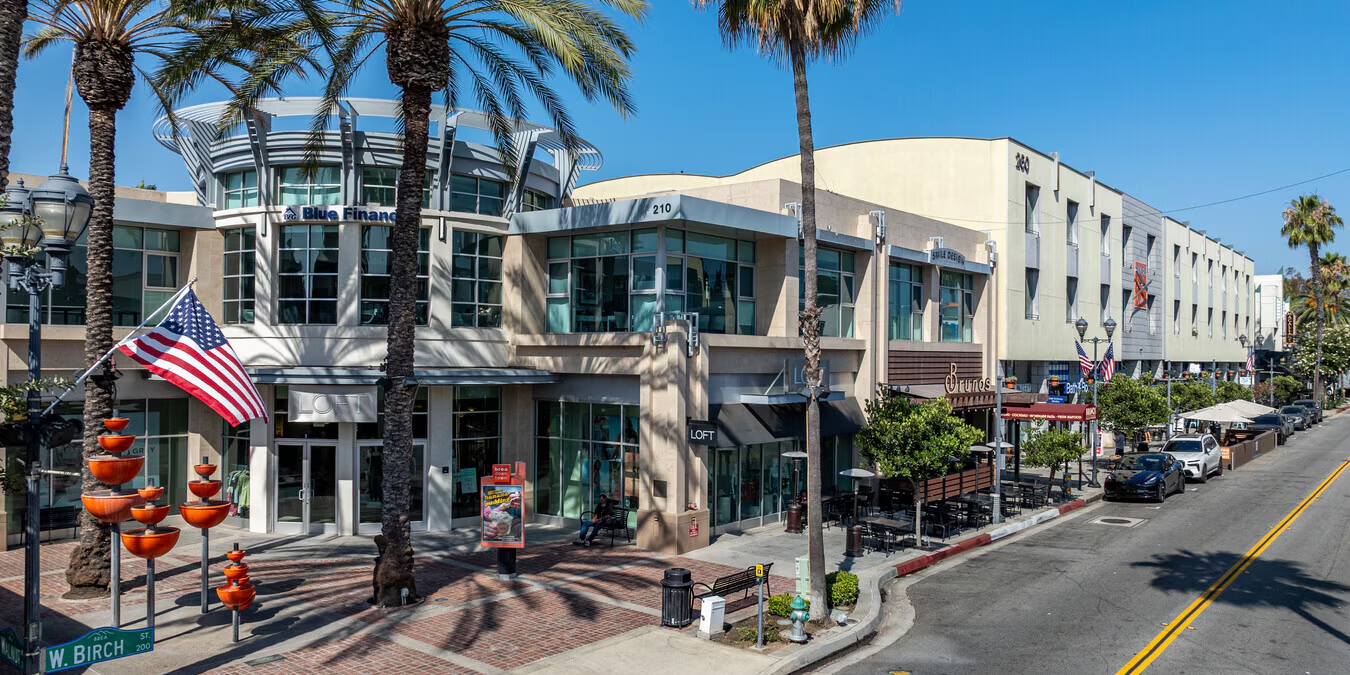
Strategically positioned at the northernmost edge of Orange County, Brea acts as the vital economic bridge to Los Angeles County. It is a city defined by massive commercial volume. Long known as a retail powerhouse—anchored by the massive Brea Mall and the wildly successful Birch Street Promenade—Brea also conceals a sprawling, highly lucrative industrial and logistics sector.
For commercial property investors in 2026, Brea represents a unique “border town” advantage. Countless businesses actively relocate from Los Angeles County just across the Brea border to escape LA’s aggressive tax structures and municipal red tape, driving intense demand for Brea’s commercial and industrial dirt.
However, managing an asset here requires navigating a city that is rapidly urbanizing. Brea is currently executing massive Mixed-Use (MU) zoning transformations to meet state housing mandates, fundamentally altering traffic patterns and property valuations. Whether you own an experiential restaurant in Brea Downtown, an aging retail strip on Imperial Highway, or a logistics warehouse on Lambert Road, here is your definitive guide to maximizing your Net Operating Income (NOI) in Brea.
Understanding Brea Commercial Zoning (Title 20)
Brea’s zoning code is designed to protect its massive retail tax base while accommodating the intense logistics demands of the Southern California supply chain.
-
The Mixed-Use (MU-I, MU-II, MU-III) Evolution: In recent years, Brea has aggressively overhauled its zoning to allow for high-density, mixed-use development, specifically along the Brea Boulevard and Imperial Highway corridors. If you own legacy, single-story commercial retail in these MU zones, the city is actively incentivizing you to redevelop the parcel to include upper-floor residential housing, drastically increasing your land’s underlying value.
-
C-G (General Commercial) & C-C (Community Commercial): These zones govern the traditional auto-centric retail plazas. Property managers must carefully monitor tenant mixes here to ensure parking ratios comply with the city’s strict municipal code, especially as fast-casual dining concepts increase in density.
-
M-1 (Light Industrial) & M-2 (Heavy Industrial): Located primarily in the western and southern edges of the city, these zones absorb the massive overflow of manufacturing and distribution operations fleeing Los Angeles. They protect heavy 24/7 operations from residential noise complaints.
The Core Commercial Districts of Brea
Brea’s commercial landscape is distinctly segmented. A property manager must deploy entirely different operational playbooks depending on the district.
1. Brea Downtown (The Birch Street Promenade)
-
The Vibe: The gold standard for suburban downtown revitalization. It is a highly walkable, densely packed entertainment district featuring movie theaters, comedy clubs, and high-volume dining.
-
Management Focus: Navigating the nighttime economy. Managing property here means dealing with intense parking logistics (coordinating with the massive city-owned parking structures), managing heavy grease-trap pumping schedules for restaurants, and strictly enforcing noise and alcohol Conditional Use Permits (CUPs).
-
2026 Outlook: Birch Street remains the premier dining destination in North OC. Landlords hold immense pricing power, but tenant curation is critical. The city expects a high-end, experiential retail mix; generic concepts will struggle to survive the high CAM costs and intense local competition.
2. The Brea Mall Corridor & “Brea Village”
-
The Vibe: A regional shopping juggernaut that draws millions of annual visitors from both Orange and LA counties.
-
Management Focus: Capturing the “halo effect.” Commercial properties located on the perimeter of the mall (along State College Blvd and Imperial Hwy) must execute flawless aesthetic maintenance to compete with the institutional capital flowing into the center.
-
2026 Outlook: The defining event of 2026 is the ongoing construction of “Brea Village”—Simon Property Group’s massive redevelopment of the former Sears auto center into a 380-unit luxury apartment complex wrapped in 119,000 square feet of new outdoor, experiential retail. If you own commercial property near this epicenter, you are about to see a historic spike in localized foot traffic.
3. The Industrial Corridors (Lambert Rd & Valencia Ave)
-
The Vibe: Highly functional, expansive, and incredibly lucrative. This sector supports everything from advanced aerospace parts to e-commerce fulfillment.
-
Management Focus: Heavy infrastructure and logistics. Property managers must oversee 3-phase power grid capacities, manage the intense wear-and-tear of 18-wheeler truck traffic, and ensure ESFR fire suppression systems meet updated 2026 code requirements.
-
2026 Outlook: Industrial vacancy in Brea is razor-thin. Savvy landlords are acquiring aging Class B and C warehouses, polishing the floors, installing high-end creative office suites in the front, and leasing them as premium “Flex” spaces to tech and engineering firms at massive rent premiums.
2026 Market Trends: The “Border Advantage”
Brea’s geographical location is its greatest commercial asset, driving trends that inland cities cannot replicate.
| The Catalyst | Impact for Commercial Owners |
| The LA County Exodus | With LA County implementing “Mansion Taxes” (ULA) and stricter commercial regulations, businesses are crossing the county line into Brea. Commercial landlords in Brea can push rents higher because the total cost of doing business in OC is still vastly cheaper for these migrating tenants. |
| Experiential Retail Infill | To combat the rise of e-commerce, legacy Brea strip centers are ripping out dry cleaners and outdated apparel stores, replacing them with boutique fitness (Pilates, boxing), med-spas, and specialized culinary concepts. |
| State Housing Mandates (RHNA) | Brea is required by the state to plan for thousands of new housing units. Commercial landlords on Brea Blvd should actively review the city’s updated Housing Element; your commercial dirt may have just been up-zoned “by-right” for high-density residential development. |
Compliance: Navigating Brea City Hall
Brea is a business-friendly city, but it strictly enforces its aesthetic and operational standards to protect its affluent residential base.
-
Signage and Awning Ordinances: Brea actively polices commercial aesthetics. If a tenant wants to install new illuminated channel letters or a branded awning on Birch Street or Imperial Highway, the property manager must submit detailed architectural renderings to the city for approval. Unpermitted signage is flagged almost immediately by code enforcement.
-
Environmental Compliance in Industrial Zones: Because Brea has a long history of oil extraction and heavy manufacturing, properties in the M-1 and M-2 zones are subject to strict environmental oversight. Property managers must ensure tenants are properly disposing of hazardous materials and complying with regional stormwater runoff regulations to shield the landlord from devastating EPA liabilities.
Why Local Management in Brea is Non-Negotiable
A property manager based in Downtown LA or South County will fundamentally misunderstand Brea. They will lack the relationships at Brea City Hall to expedite permits, and they will fail to leverage the LA-to-OC migration pipeline.
Partnering with a specialized team like L3 Real Estate ensures:
-
The Brea Vendor Network: We deploy localized contractors who know exactly how to service the specific HVAC needs of Birch Street restaurants and maintain the heavy-duty commercial roll-up doors in the Lambert industrial tracts.
-
CUP & Permitting Agility: We protect your most valuable asset—your legal right to operate. We manage tenant compliance strictly so you never lose a lucrative entertainment or alcohol permit to municipal crackdowns.
-
Strategic Value-Add Alignment: We understand the Brea Village halo effect and the new Mixed-Use zoning codes. We help you strategically position your asset, ensuring you are capturing peak market rents as the city urbanizes.
Protect your industrial assets, capitalize on the massive retail redevelopment, and maximize your cash flow by partnering with a team that truly understands Brea commercial real estate.