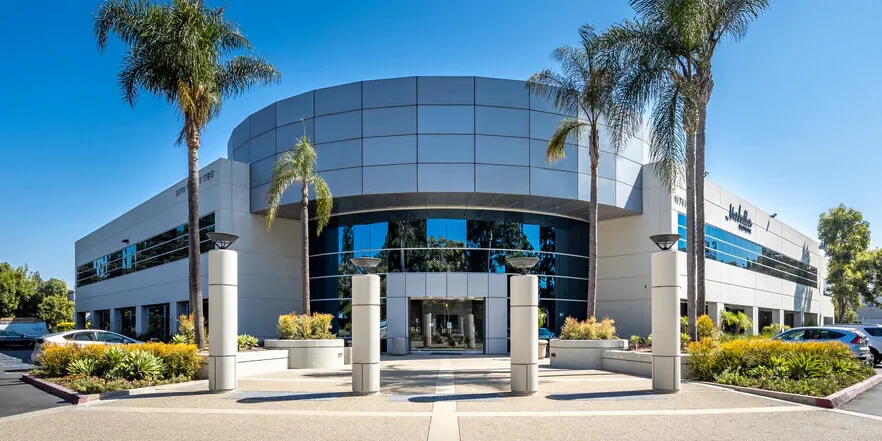
Strategically positioned directly on the Los Angeles and Orange County border, the City of Cypress has long operated as a quiet, heavy-hitting corporate sanctuary. For decades, it has been the chosen home for massive global headquarters (Yamaha, Siemens) and sprawling, highly secure industrial business parks.
However, in 2026, Cypress is undergoing a profound and highly publicized commercial transformation. The city is currently navigating intense State housing mandates (RHNA), requiring nearly 4,000 new residential units. To meet this, voters recently passed “Measure S,” aggressively upzoning legacy commercial dirt to allow for high-density, mixed-use urbanization. Simultaneously, the market is absorbing the shockwaves of the historic 25-acre Yamaha Motor Corporation campus hitting the market for total redevelopment.
For commercial property investors, Cypress offers the ultimate “border town” advantage—capturing massive corporate tenants fleeing Los Angeles County’s aggressive tax structures while offering the stability of Orange County. But managing an asset here requires extreme agility. You must navigate massive Specific Plan overhauls, manage high-voltage industrial infrastructure, and execute complex retail repositioning. Whether you own a logistics warehouse near the Goodman Commerce Center, a retail plaza on Lincoln Avenue, or a corporate suite near Valley View, here is your definitive guide to maximizing your Net Operating Income (NOI) in Cypress.
Understanding Cypress Commercial Zoning & The 2026 Overhauls
Cypress does not rely on a standard, sprawling commercial grid. Its most valuable dirt is locked within highly regulated, heavily negotiated Specific Plans.
-
Cypress Town Center and Commons Specific Plan 3.0 (Measure S): This is the most critical zoning shift in the city. Passed by voters, this updated Specific Plan drastically increased residential density allowances (adding over 600 units) right in the commercial core of the city. For owners of aging retail or office space within this footprint, your land’s “highest and best use” has officially shifted. The city is actively incentivizing developers to tear down obsolete commercial pads and build high-density housing with ground-floor experiential retail.
-
The Lincoln Avenue Specific Plan (LASP): Governing the city’s primary east-west commercial artery, the LASP has been heavily modernized in 2026. The city is pushing this corridor toward a “Main Street” aesthetic, encouraging pedestrian-friendly, mixed-use redevelopment.
-
Planned Commercial/Light Industrial (PCM) & PC-4 (Warland/Cypress Business Center): These massive tracts dominate the western and southern borders of the city. Zoning here protects heavy e-commerce distribution, aerospace manufacturing, and corporate R&D from residential encroachment.
The Core Commercial Districts of Cypress
A property manager cannot rely on a generic playbook in Cypress. The operational demands of a high-clearance logistics center are entirely different from a mixed-use retail plaza on Lincoln Avenue.
1. The Corporate & Industrial Core (West Cypress)
-
The Vibe: Massive, highly functional, and globally connected. This area offers unparalleled access to the 605 and 405 Freeways and is home to the new, LEED-certified Goodman Commerce Center.
-
Management Focus: Navigating the 25-Acre Yamaha Campus Redevelopment. In early 2026, Yamaha’s massive global HQ campus hit the market as a “by-right” industrial redevelopment opportunity. As this massive city block is torn down and rebuilt, neighboring commercial owners must aggressively manage 18-wheeler supply chain rerouting, construction dust mitigation, and noise complaints to keep their own logistics tenants operational.
-
2026 Outlook: Industrial vacancy is incredibly tight. With Los Angeles County enforcing its “Mansion Tax” (Measure ULA) on commercial sales, businesses are actively fleeing across the border into Cypress. Landlords here possess massive pricing power and are successfully pushing aggressive, long-term Triple Net (NNN) lease renewals.
2. Cypress Town Center & The Katella Corridor
-
The Vibe: The rapidly urbanizing, master-planned heart of the city, driven by the new Measure S density approvals.
-
Management Focus: Retail repositioning and construction logistics. With massive residential infill projects breaking ground, existing retail property managers must pivot their tenant mixes. Outdated apparel and dry-goods stores are failing; managers must actively recruit “Med-Tail” (urgent cares, dental spas) and boutique fitness concepts to serve the incoming influx of affluent apartment residents.
-
2026 Outlook: Properties directly adjacent to the new housing developments are experiencing a massive “halo effect.” Landlords who invest CapEx to modernize their facades and upgrade parking lot lighting are capturing premium lease rates from high-end culinary concepts.
3. Lincoln Avenue
-
The Vibe: A legacy, auto-centric retail corridor actively transitioning into a walkable, mixed-use environment.
-
Management Focus: High-frequency CAM (Common Area Maintenance) and code compliance. Plazas here endure massive daily vehicle counts. Property managers must flawlessly execute lot sweeping, landscaping, and immediate graffiti removal to maintain a competitive aesthetic while adhering to the updated LASP design standards.
4. The Cypress College / Valley View District
-
The Vibe: A dense, high-volume corridor driven by the thousands of students and faculty at Cypress College.
-
Management Focus: High-turnover retail and fast-casual dining. Properties here endure heavy daily foot traffic. Management must execute rapid CAM repairs, manage seasonal slumps during summer breaks, and constantly adapt the tenant mix to capture Gen Z consumer trends.
2026 Market Trends: The “LA Exodus”
Cypress’s geographical location is driving highly specific commercial trends that savvy investors are aggressively capitalizing on.
| The Catalyst | Impact for Commercial Owners |
| The Los Angeles County “ULA” Flight | With Los Angeles County heavily taxing commercial property sales and enforcing strict rent controls, businesses are actively crossing the county line into Cypress. Commercial landlords in Cypress can push industrial and office rents higher because the total operating and tax cost is still vastly cheaper for these migrating tenants. |
| The “Flex Space” Industrial Premium | Traditional, low-clearance manufacturing warehouses are obsolete. Landlords in the PCM zones are taking older Class-B industrial shells, polishing the concrete, dropping in new HVAC and glass storefronts, and leasing them as premium “creative flex” spaces to tech and engineering firms at massive rent premiums. |
| Retail Adaptive Reuse | Driven by the Measure S housing mandates, legacy strip centers are being completely reimagined. If you own a struggling retail center, your most profitable exit strategy in 2026 may be a land sale to a high-density residential developer rather than attempting to lease aging space. |
Compliance: Protecting Your Asset in a Specific Plan City
Cypress is highly pro-business, but its reliance on Specific Plans means code enforcement is strict and highly structured.
-
Architectural and Signage Enforcement: The city strictly enforces monument and storefront signage guidelines within the Town Center and Lincoln Avenue Specific Plans to ensure a clean, modern streetscape. A skilled property manager prepares detailed architectural renderings for any new tenant signage; cheap, unpermitted banners or basic light-boxes will be immediately flagged and fined by code enforcement.
-
Environmental Compliance in Industrial Zones: Because Cypress houses massive aerospace and manufacturing operations, properties in the industrial zones are subject to strict environmental oversight. Property managers must conduct regular audits of tenant operations to ensure they are properly disposing of hazardous materials and complying with regional stormwater runoff regulations, shielding the landlord from devastating EPA liabilities.
Why Local Cypress Management is Non-Negotiable
A generic management firm operating out of South County or Los Angeles will fundamentally misunderstand Cypress. They will be paralyzed by the massive zoning shifts of Measure S, they will lack the specialized vendors to manage the heavy industrial tracts, and they will completely miss the strategic advantages of the LA County migration.
Partnering with a specialized team at L3 Real Estate ensures:
-
Specific Plan & Zoning Agility: We actively track the Lincoln Avenue and Town Center Specific Plan updates. We can help you strategically reposition your asset, ensuring you are capturing peak market rents as the city urbanizes and sheds its older retail skin.
-
The Industrial Vendor Network: We deploy localized contractors who know exactly how to maintain heavy-duty commercial roll-up doors, complex HVAC systems, and high-voltage grids in the western industrial tracts, keeping your high-paying corporate tenants fully operational.
-
Strategic Tenant Curation: We know how to attract the exact tenant mix required to capitalize on the massive new residential developments, maximizing your NOI and securing your property’s long-term value.
Protect your industrial assets, capitalize on the massive Specific Plan redevelopments, and maximize your cash flow by partnering with a team that truly understands Cypress commercial real estate.