

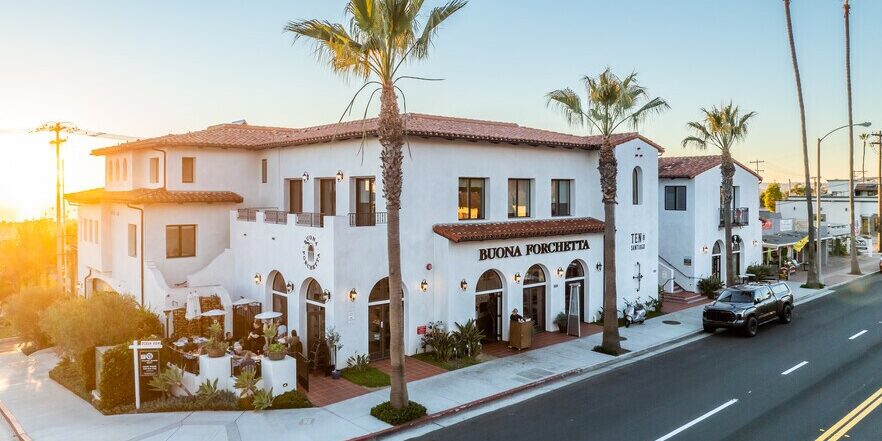
San Clemente is Orange County’s definitive “Spanish Village by the Sea.” Geographically insulated at the southernmost tip of the county, it fiercely protects its laid-back surf culture, historic architecture, and sweeping ocean views.
For commercial real estate investors, San Clemente is a high-barrier, high-reward market. The city intentionally throttles aggressive commercial expansion to preserve its charm, meaning existing commercial assets are incredibly valuable due to sheer scarcity. However, managing these assets in 2026 requires navigating an intensely protective local government, rigorous architectural review boards, and an escalating battle against coastal erosion.
Whether you own a boutique retail storefront on Avenida Del Mar, an industrial surf-shaping warehouse in the Los Molinos district, or a coastal-facing restaurant at North Beach, here is your definitive guide to maximizing your Net Operating Income (NOI) and protecting your San Clemente commercial asset.
Understanding San Clemente Commercial Zoning & Architectural Mandates
If you are acquiring commercial property in San Clemente, the standard zoning codes (Title 17) only tell half the story. The true regulatory power lies in the city’s aesthetic and coastal overlays.
-
The Architectural Overlay (Spanish Colonial Revival): This is the defining feature of San Clemente real estate. The city strictly enforces a Spanish Colonial Revival architectural mandate for almost all commercial buildings. If you are doing an exterior Tenant Improvement (TI), you cannot simply install a modern glass facade. Everything from the pitch of the red-tiled roof to the texture of the white stucco must be approved by the Design Review Subcommittee.
-
Downtown Pier Bowl Specific Plan (DPBSP): This zone governs the highly coveted, hyper-tourist area connecting the downtown core to the San Clemente Pier. Zoning here heavily favors visitor-serving commercial uses (restaurants, boutique lodging) but comes with extreme parking restrictions and Coastal Commission oversight.
-
Mixed-Use (MU) Zones: Concentrated heavily along El Camino Real, these zones are designed to revitalize the city’s historic thoroughfare. In 2026, the city is actively encouraging landlords to utilize these MU zones to add residential units above ground-floor retail, providing a lucrative value-add opportunity for aging commercial strips.
-
Business Park (BP) & Light Industrial (M1): Primarily located inland (such as the Rancho San Clemente Business Park) and in the Los Molinos district, these zones are the economic engines for the region’s massive action sports and manufacturing sectors.
The Core Commercial Districts of San Clemente
San Clemente is not a monolith; its commercial heartbeat is split between highly distinct, fiercely independent micro-markets.
1. Avenida Del Mar (Downtown Core)
-
The Vibe: The quintessential Southern California main street. Sloping down toward the ocean, it is lined with high-end boutiques, local eateries, and historic properties.
-
Management Focus: Navigating zero-lot-line realities. Managing properties here requires highly coordinated trash, delivery, and grease-trap logistics in incredibly tight, shared alleyways. Parking is a premium, and landlords must strictly enforce tenant employee parking rules to keep prime spots open for high-net-worth shoppers.
-
2026 Outlook: Rents on “The Del Mar” are at historic highs. With zero room for new development, landlords hold absolute pricing power, provided they maintain the pristine, historic aesthetic the city demands.
2. Los Molinos (The “Surf Ghetto”)
-
The Vibe: The gritty, authentic soul of the global surf industry. This small industrial pocket is home to world-renowned surfboard shapers, glassing factories, and a booming craft brewery scene.
-
Management Focus: Environmental compliance. Managing industrial spaces that utilize heavy resins, foams, and chemicals requires strict oversight of ventilation, hazardous waste disposal, and fire code compliance.
-
2026 Outlook: Los Molinos is rapidly gentrifying. Investors are buying older industrial shells and converting them into high-end “maker spaces” and experiential retail. Property managers must carefully balance this modernization without driving out the legacy surf tenants that give the district its cultural value.
3. Rancho San Clemente Business Park
-
The Vibe: Located inland, high on the ridgeline with spectacular ocean views. It is a massive, highly functional corporate and industrial park.
-
Management Focus: Managing sophisticated corporate tenants, heavy shipping logistics, and maintaining large-scale industrial roofing and HVAC systems.
-
2026 Outlook: Because it sits entirely outside the Coastal Zone, this park offers a rare haven from Coastal Commission red tape. Vacancy rates here are exceptionally low as companies seek functional OC industrial space without coastal regulatory headaches.
4. North Beach
-
The Vibe: A historic transit hub undergoing a multi-year revitalization, anchored by the Metrolink station, the historic Casino building, and beachfront dining.
-
Management Focus: Severe coastal maintenance. Properties here take the absolute brunt of the marine layer and saltwater corrosion.
2026 Market Trends: The Coastal Infrastructure Crisis
The most critical factor impacting San Clemente commercial real estate in 2026 is the battle against the ocean.
| 2026 Catalyst | Impact for Commercial Owners |
| The LOSSAN Rail Corridor Relocation | After years of devastating landslides shutting down the coastal train tracks, 2026 marks the aggressive push by OCTA and state agencies to study moving the tracks inland. Commercial properties in North Beach and the Pier Bowl are highly sensitive to this. Relocation could free up massive waterfront acreage for future commercial use, or drastically alter foot traffic from the transit station. |
| Managed Retreat & Coastal Armoring | If you own commercial property west of the I-5 freeway, the Coastal Commission’s evolving stance on “managed retreat” (letting the ocean reclaim land) versus sea-wall armoring dictates your property’s long-term viability. Leases for oceanfront commercial spaces must strictly define who bears the cost of emergency coastal mitigation. |
| Aggressive STR Enforcement | The city has clamped down aggressively on Short-Term Rentals (STRs). If you own a mixed-use building, you must ensure your residential tenants are not illegally subleasing on Airbnb, as the city will levy massive fines directly against the property owner, effectively destroying your NOI. |
Why Local San Clemente Management is Non-Negotiable
San Clemente operates like a small town, but its real estate values require institutional-grade precision. An out-of-town management firm will inevitably stumble over the city’s unique architectural rules and aggressive coastal realities.
Partnering with a local Orange County commercial property manager provides:
-
The Spanish Colonial Blueprint: Immediate access to specialized contractors who know how to source the exact terracotta tiles, specific stucco finishes, and approved paint palettes required by the city’s Design Review Subcommittee.
-
Coastal Commission Agility: The expertise to navigate De Minimis waivers for your waterfront retail and restaurant spaces, keeping your tenant improvements (TIs) on schedule and out of regulatory purgatory.
-
Hyper-Local Tenant Curation: Understanding the delicate balance of San Clemente’s culture—knowing how to attract premium regional brands while preserving the “local only” vibe that drives the city’s economy.
Protect your asset from the salt air, navigate the stringent historic regulations, and maximize your cash flow by partnering with a team that truly understands San Clemente commercial real estate.






