

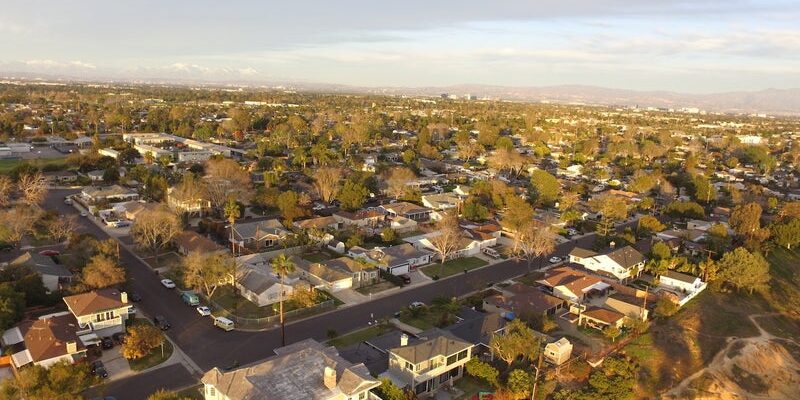
Welcome to the sun-soaked streets of Westside Costa Mesa, where the salty ocean breeze meets the buzz of urban coastal living. Nestled in the heart of Orange County, California, this vibrant neighborhood is a magnet for young professionals, families, and investors alike. With its proximity to world-class beaches like Huntington and Newport, trendy shopping at South Coast Plaza, and a thriving arts scene, Westside Costa Mesa boasts a real estate market that’s as dynamic as it is desirable. As of early 2026, the median home price in Westside Costa Mesa stands at around $1.3 million, with overall Costa Mesa medians reaching $1.5 million, reflecting modest year-over-year increases of 2-2.7%. Homes are selling after about 42-50 days on the market, a sign of steady demand in a post-pandemic landscape where remote work has amplified the appeal of walkable, beach-adjacent communities.
But amid the excitement of snagging that mid-century modern bungalow or fixer-upper condo, one unavoidable reality looms large: property taxes. In California, where housing costs are already sky-high, property taxes can add thousands to your annual expenses—potentially 1-1.3% of your home’s value. For Westside Costa Mesa residents, understanding these taxes isn’t just smart; it’s essential for budgeting, investing, and even negotiating deals. In this in-depth guide, we’ll break down everything from the basics of Proposition 13 to local exemptions, payment deadlines, and tips for minimizing your bill. Whether you’re a first-time buyer eyeing a charming Craftsman on 19th Street or a seasoned investor flipping properties near Mesa Verde Country Club, this 2026 update has you covered. Let’s dive in.
The Westside Costa Mesa Real Estate Landscape: Why Taxes Matter Here
Before we crunch the numbers, let’s set the scene. Westside Costa Mesa—often simply called “Westside”—spans the western edge of Costa Mesa, bounded roughly by the San Diego Freeway (I-405) to the east, 19th Street to the north, and the Santa Ana River to the south. It’s a mosaic of single-family homes, townhomes, and apartments, with architectural styles ranging from 1950s ranch houses to sleek contemporary builds. The neighborhood’s allure lies in its balance: quiet residential pockets like College Park rub shoulders with lively spots like The Lab Anti-Mall, a hub for streetwear and indie shops.
In 2026, the local market is showing resilience. Costa Mesa’s overall median sale price hit $1.5 million in January, up 2.5% from the previous year, with Westside properties at $1.3 million due to a higher inventory of starter homes and condos. Buyer competition has eased compared to the frenzied 2021-2023 boom, thanks to stabilizing interest rates and a slight uptick in new listings. Yet, affordability remains a challenge; the area’s appeal to tech workers from nearby Irvine and LA transplants keeps demand robust.
Enter property taxes: They influence everything from monthly mortgage payments to long-term ROI. In a high-value area like Westside, where homes appreciate steadily (projected 3-5% annually through 2027), taxes can erode equity if not managed wisely. For instance, a $1.3 million Westside home might carry an annual tax bill of $13,000-$16,000, factoring in local rates. Misunderstanding exemptions could mean overpaying by hundreds—or even thousands—each year. As we unpack the system, remember: Knowledge is your best defense against surprises at closing.
The Cornerstone of California Property Taxes: Proposition 13 Explained
To grasp Westside Costa Mesa taxes, you must start with California’s Proposition 13, the 1978 ballot measure that’s shaped the state’s fiscal landscape for nearly five decades. Often hailed as a homeowner’s safeguard against skyrocketing assessments, Prop 13 revolutionized property taxation by shifting from annual market-value reappraisals to a more predictable, acquisition-based model.
Under Prop 13, your property’s assessed value is locked in at its purchase price (or construction cost for new builds), plus annual adjustments capped at 2% or the inflation rate, whichever is lower. This “acquisition value” base ensures taxes don’t balloon with market fluctuations—a boon in volatile Orange County, where home values have seen significant growth in recent years. The base tax rate is a flat 1% of that assessed value. But that’s just the starting point; local voter-approved bonds for schools, roads, and public safety add “direct assessments” or “Mello-Roos” fees, pushing total effective rates higher.
Why does this matter for Westside? In a neighborhood where flips and renovations are common, Prop 13 creates a “lock-in effect.” Longtime owners (think empty-nesters who’ve held since the ’90s) pay far less than new buyers on comparable homes. A 1990s purchase assessed at $300,000 (now worth $1.2 million) might yield taxes of around $3,600 annually, versus $13,000+ for a fresh buyer. This disparity fuels debates on equity but stabilizes costs for legacy residents, preserving the neighborhood’s multigenerational vibe.
Critics argue that Prop 13 starves local budgets, leading to reliance on sales and income taxes. Proponents counter it prevents displacement in gentrifying areas like Westside, where young families might otherwise be priced out. As of 2026, no major reforms loom, but ongoing discussions around exemptions and bonds suggest evolution ahead.
Assessment Process in Orange County: How Your Westside Home Gets Valued
Orange County’s Assessor Department handles valuations for all 34 cities, including Costa Mesa. Each January 1 (lien date), properties are assessed at 100% of fair market value if newly sold or significantly altered—otherwise, they get that 2% Prop 13 bump. For Westside homes, this means sales trigger reassessments, but minor cosmetic updates (e.g., kitchen remodels under certain thresholds) often fly under the radar unless they boost market value substantially.
The process is data-driven: Assessors use sales comps from similar Westside properties, cost manuals for improvements, and income approaches for rentals. In 2026, with improved tools aiding appraisals, accuracy has increased, but errors can still occur—especially in eclectic Westside, where ADUs and eco-upgrades complicate comps.
Once assessed, bills are prepared by the Treasurer-Tax Collector. For FY 2025-26 (bills mailed September 2025), expect online access at taxbill.octreasurer.gov. Pro tip: Review your assessment notice carefully; appeals are possible by November 30 if you believe it’s inflated.
Crunching the Numbers: Calculating Property Taxes in Costa Mesa
Ready for the math? California’s property tax formula is straightforward yet layered. Start with the assessed value (AV), multiply by the base rate (1%), then add direct rates from bonds and special districts.
Basic Formula: Annual Tax = (AV × 1%) + Voter-Approved Add-Ons + Special Assessments
In Costa Mesa and Orange County, total effective rates typically range from 1.05% to 1.18% for most areas, though some sources note averages around 1.1%-1.3% when including all add-ons. Orange County’s median effective rate is lower overall (around 0.62%-0.73% in some reports), but residential properties in high-value coastal zones like Westside often fall in the 1.1%+ range due to local bonds.
Example: A $1.3 Million Westside Bungalow
- Purchase Price (AV): $1,300,000
- Base Tax (1%): $13,000
- Local Add-Ons (0.1%-0.18% for Costa Mesa bonds/schools): $1,300-$2,340
- Mello-Roos (if applicable, e.g., for newer developments near Fairview Park): $1,000-$3,000
- Total Annual Tax: ~$15,300-$18,340 (or $1,275-$1,528/month)
This assumes no exemptions. For a 2020 buyer, the AV might now be higher after 2% annual hikes. Tools like SmartAsset’s calculator can help personalize estimates.
Trends show stability: FY 2025-26 rates vary by Tax Rate Area (TRA), with Costa Mesa areas averaging in the 1.1% range per county documents.
Exemptions and Relief: Lightening the Load for Westside Owners
Nobody likes full freight, and California offers carve-outs to ease the burden. The big one? The Homeowners’ Exemption: A $7,000 reduction in AV for owner-occupied primaries, saving roughly $70-$100 yearly depending on the effective rate. File BOE-266 once with the OC Assessor—it’s automatic thereafter, but update on moves.
Seniors and disabled folks get more: The Property Tax Postponement Program defers taxes (with interest) for those 62+ or disabled, if income qualifies. No payment until sale or death, preserving cash flow for fixed-income Westside retirees.
Veterans qualify for exemptions: A basic $4,000 veterans’ exemption applies to eligible properties, though many opt for the larger Homeowners’ Exemption. The Disabled Veterans’ Exemption offers much more significant relief—up to $100,000-$150,000 reductions (or full in some cases) for 100% service-connected disabled veterans or their surviving spouses, with income limits for the higher tier. Recent legislative proposals (like SB 296) aim to expand or clarify these for 2026 onward.
Low-income renters benefit indirectly via the Renter’s Credit, while institutional exemptions shield churches and schools—handy near Westside’s faith communities. For investors, partial exemptions apply to historic rehabs or low-income housing.
| Exemption Type | Eligibility | Savings Estimate (on $1.3M Home) | How to Apply |
|---|---|---|---|
| Homeowners’ | Owner-occupied primary residence | $70-130/year | One-time BOE-266 form to OC Assessor |
| Senior Deferral | 62+, income qualifies, owned/occupied | Full deferral + interest | Annual app via Treasurer-Tax Collector |
| Disabled Veterans | 100% service-connected disability | Up to $1,000-$2,000+/year (or more) | BOE-261-G form |
| Veterans’ Basic | Eligible veterans | ~$40-50/year | BOE-261 form |
These can stack in some cases, potentially slashing bills 5-15%. In diverse Westside, where many residents qualify for age- or service-based relief, tapping these is a no-brainer.
Deadlines and Payments: Staying Penalty-Free in 2026
Timing is everything. For FY 2025-26 secured taxes (most homes), bills dropped September 2025. The two-installment schedule:
- First Installment: Due November 1, 2025; Delinquent December 10, 2025 (10% penalty + fee)
- Second Installment: Due February 1, 2026; Delinquent April 10, 2026 (same penalties)
With the current date being mid-February 2026, the second installment deadline has passed (April 10, 2026, is upcoming in future years—always confirm for your bill year). Unsecured taxes are due annually on August 31.
Options abound: Pay online (free via ACH), mail checks, or drop at branches like the Costa Mesa Civic Center. Escrow handles it for mortgaged homes. Late? Installment plans exist, but penalties accrue.
Taxes in Transactions: Buyer and Seller Strategies
Buying in Westside? Taxes prorate at closing—sellers cover up to the date, buyers the rest. Disclose Mello-Roos; they can surprise with long terms on newer builds. Sellers: Highlight low assessments from long ownership to sweeten offers.
For flips, reassessments hit hard post-sale, so factor 1.1%+ into ARV calcs. Investors: Use 1031 exchanges to defer capital gains, but taxes follow the property.
Pro Tips: Appeals, Audits, and Minimizing Your Bill
Assessed too high? Appeal by November 30 (or July 2 for new buys) via the Assessment Appeals Board—free, with reasonable success if comps support. Document renos that don’t trigger reassessments.
Audit annually: Cross-check bills against comps on platforms like Redfin or Zillow. For eco-upgrades (solar, EV chargers), claim partial exemptions. Consult pros for bulk appeals.
Looking Ahead: 2026 and Beyond in Westside
With OC’s effective rates holding steady, taxes should rise modestly with values (2-3% projected). Watch for bond votes or Prop 13 discussions amid housing shortages. Westside’s market? Poised for growth, with infill projects boosting inventory.
In conclusion, navigating Westside Costa Mesa real estate taxes demands vigilance but rewards with stability. From Prop 13’s protections to exemptions’ savings, armed with this guide, you’re set to thrive. Dreaming of that sunset view? Consult a local agent and run the numbers—your coastal dream awaits, taxes included.