

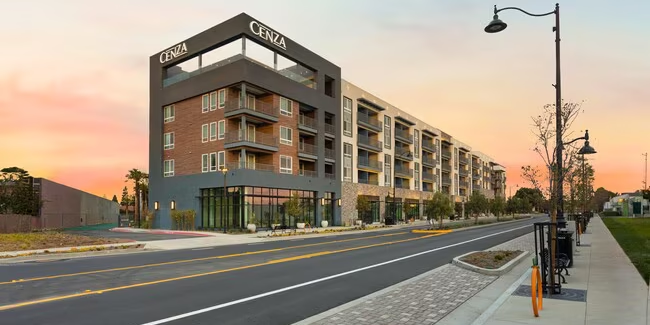
Located in Orange County, California, the scenic city of Yorba Linda provides residents with a pleasant suburban environment while remaining close to major urban centers. Often referred to as the “Land of Gracious Living,” the city is known for its scenic views, equestrian trails, and strong sense of community. Despite its charm, Yorba Linda is also exposed to several natural hazards, making emergency preparedness an essential part of property management.
With a population of roughly 68,000 and an increasing number of multi-family housing developments, apartment complexes must adopt proactive maintenance strategies to protect residents, preserve property investments, and ensure faster recovery during emergencies.
Yorba Linda’s location in Southern California places it at risk for natural disasters such as wildfires, earthquakes, flooding, and extreme weather conditions. Because the city sits near wildland-urban interface areas, wildfire risk is especially significant. Additionally, nearby fault systems—including the Whittier Fault—pose seismic threats. Events like the Blue Ridge Fire, which burned more than 6,600 acres and caused evacuations, highlight the need for thorough emergency planning.
Property managers and building owners must move beyond routine maintenance and implement more advanced approaches. These include structural upgrades, technological tools, and community education programs designed to strengthen resilience. This article explores effective strategies supported by regulations, expert advice, and practical recommendations that can help apartment communities in Yorba Linda better prepare for emergencies.
Understanding the Emergency Risks in Yorba Linda
Effective preparation begins with recognizing the primary hazards affecting the area. Several natural risks influence Yorba Linda’s emergency planning priorities.
Wildfires remain the most prominent threat. Many areas are classified within Moderate to Very High Fire Hazard Severity Zones. Updated fire hazard maps in 2025 expanded affected areas across more than 6,500 acres, prompting updates to the city’s safety planning policies.
Earthquakes also pose a serious concern. Orange County sits in an active seismic region where nearby faults—including the Whittier Fault, Newport-Inglewood Fault, and Elsinore Fault Zone—could produce strong ground shaking. Certain areas in the city are susceptible to liquefaction, which can significantly increase structural damage during an earthquake.
Flooding is less frequent but still possible during periods of intense rainfall. Past incidents such as the 1979–1980 California floods damaged infrastructure and washed out roadways. Additionally, extreme weather events—including heatwaves and storms—can lead to power outages and increased strain on local infrastructure.
According to emergency planning guidelines for Orange County, residents may need to be self-sufficient for several days after a disaster. For apartment complexes, this requirement can be more challenging because of shared spaces, higher population density, and varying resident needs.
Legal Requirements and Emergency Preparedness Regulations
California has strict building regulations designed to support disaster readiness in residential properties. The California Fire Code requires apartment buildings to maintain emergency plans that include fire safety measures and evacuation procedures.
Wildfire prevention is addressed through Wildland-Urban Interface building standards contained in California Building Standards Code Title 24, which mandate ignition-resistant materials and defensible space around structures.
Orange County also promotes preparedness through programs like ReadyOC, encouraging residents to assemble emergency kits, create disaster plans, and subscribe to alert systems.
In Yorba Linda, residents are advised to prepare for at least three days without access to utilities. Apartment managers are also encouraged to participate in evacuation awareness campaigns such as Know Your Way, which outlines designated evacuation zones during wildfire emergencies.
For earthquake preparedness, property owners may participate in the Earthquake Multi-Unit Retrofit Program, which offers financial assistance for upgrading vulnerable apartment structures.
Compliance with these regulations not only improves resident safety but can also increase property value and reduce insurance costs.
Strengthening Buildings for Earthquake Safety
Seismic activity remains a major structural risk for apartment complexes in Yorba Linda. Many older buildings include “soft-story” designs—ground floors with open parking areas that are structurally weaker during earthquakes.
Seismic retrofitting can significantly reduce this vulnerability. Common improvements include installing steel moment frames, adding shear walls, and incorporating structural bracing to distribute seismic forces more effectively.
Additional improvements may include anchoring buildings to their foundations and reinforcing walls with structural plywood. Although retrofit costs can range from $3,000 to $15,000 per unit, financial incentives and grants can help reduce the expense.
Property managers should also schedule structural inspections every five to ten years, particularly in areas near the Santa Ana River, where liquefaction risk may be higher.
Modern technology can also improve preparedness. Smart structural sensors can detect seismic vibrations and notify building managers immediately, enabling faster response and evacuation if necessary.
Wildfire Preparedness and Defensible Space
Wildfires represent one of the most urgent hazards facing Yorba Linda communities. Creating defensible space around apartment buildings is a key component of wildfire mitigation.
Guidelines from CAL FIRE divide defensible space into three zones.
The first zone—within five feet of buildings—should contain only fire-resistant materials. Property managers should remove combustible debris, install metal mesh vent covers, and avoid flammable landscaping.
The second zone, extending 5 to 30 feet from buildings, should maintain trimmed vegetation, well-spaced trees, and properly maintained lawns.
The outer zone, from 30 to 100 feet, focuses on reducing fuel loads by thinning vegetation and keeping grasses short.
Apartment complexes should also upgrade building materials whenever possible. Fire-resistant roofing, metal fencing, and fire-rated doors can significantly reduce wildfire damage. HVAC systems with proper filtration can help limit smoke intrusion during nearby fires.
Providing tenants with wildfire preparedness information—such as evacuation routes and emergency go-bag recommendations—also improves overall community readiness.
Preparing for Flooding and Severe Weather
Although flooding occurs less frequently in Yorba Linda, heavy rainstorms can still create water damage risks for residential properties.
Apartment managers can reduce vulnerability by elevating electrical systems, sealing foundations, and installing sump pumps. Backflow valves can prevent sewage backups in shared plumbing systems.
Extreme heat events also require preparation. Maintaining air-conditioning systems and designating cooling areas within apartment communities can protect residents during heatwaves.
Backup power systems are another important investment. Emergency generators ensure elevators, lighting, and essential safety systems continue operating during power outages.
Solar panels paired with battery storage systems can further improve energy resilience.
Emergency Communication and Safety Systems
A strong emergency communication system is essential in multi-family housing environments. Modern alarm systems can send notifications directly to residents’ mobile devices while also integrating with local emergency alerts.
Buildings should maintain reliable emergency lighting systems with battery backups, especially in hallways, stairwells, and exits.
Property managers should also create detailed emergency response plans that include evacuation routes, meeting points, and support procedures for residents with special needs.
Regular drills and training sessions help ensure residents understand what to do during an emergency. Shared emergency supply areas stocked with water, food, medical kits, and tools can further improve preparedness.
Best Practices for Property Managers
Property managers in Yorba Linda can improve disaster readiness through several proactive strategies.
Routine inspections should be conducted throughout the year to identify potential hazards. Managers should also engage residents by organizing preparedness workshops or emergency planning events.
Building relationships with local contractors and restoration companies can ensure quicker response times after disasters. Reviewing insurance policies and exploring available disaster mitigation grants can also help offset financial risks.
Sustainable infrastructure improvements—such as permeable pavement for better drainage—can provide additional protection against weather-related hazards.
Some Yorba Linda apartment communities that maintained proper wildfire defensible space following recent fires experienced minimal damage and were able to reopen more quickly.
Building a More Resilient Community
For apartment complexes in Yorba Linda, advanced property maintenance plays a vital role in disaster preparedness. Addressing risks such as wildfires, earthquakes, and flooding through structural upgrades, landscaping improvements, and strong emergency planning can greatly reduce potential damage.
While these efforts require investment and planning, the long-term benefits include safer living environments, lower recovery costs, and greater peace of mind for both residents and property owners.
By conducting preparedness assessments, consulting experts, and promoting a culture of readiness, property managers can ensure that Yorba Linda continues to live up to its reputation as a community built on safety, resilience, and gracious living.