

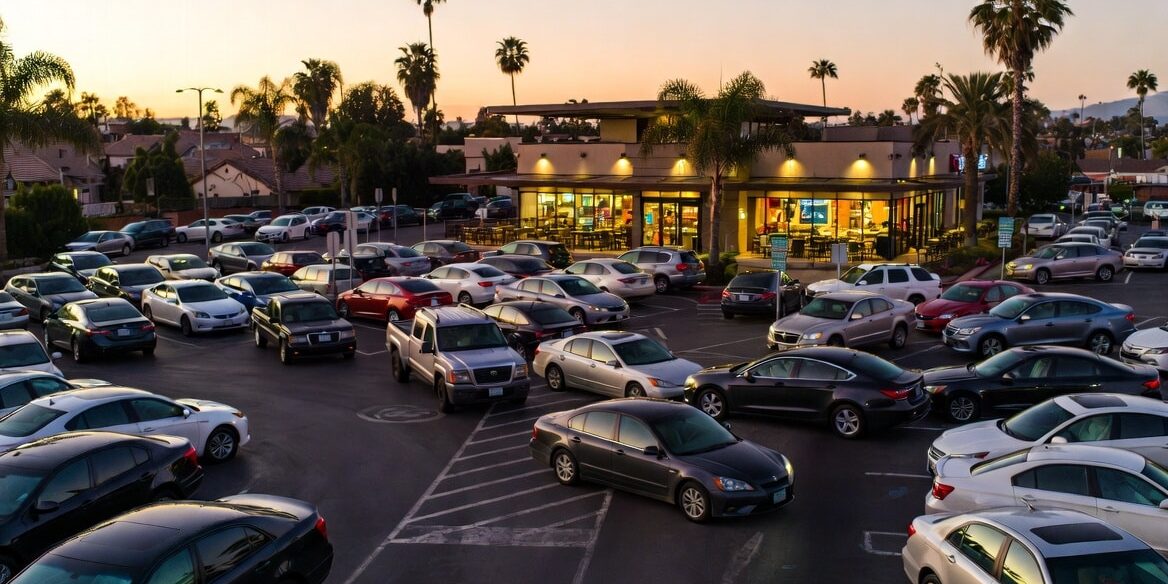
Tustin, California, sits at the crossroads of Orange County’s dynamic growth story. Once defined by the massive former Marine Corps Air Station, today’s Tustin blends historic Old Town charm with modern power centers like The District at Tustin Legacy and Tustin Marketplace. The city’s thriving restaurant and food-service scene—ranging from casual eateries along Newport Avenue to upscale dining at The District and quick-service spots near the 5 and 55 freeways—attracts locals, Irvine commuters, and weekend visitors seeking everything from pho and tacos to craft beer and farm-to-table fare. Yet for many operators, parking management remains the silent killer of customer satisfaction and profitability.
A single bad parking experience can tank a five-star Yelp review before the first bite is served. In Tustin, where car culture reigns and public transit options remain limited, parking is not just a convenience—it is the make-or-break first impression. Unfortunately, many restaurants and food-service businesses fall into the same preventable traps year after year. These mistakes lead to lost revenue, neighbor complaints, code violations, higher insurance premiums, and even forced closures during peak seasons. This in-depth guide examines the most common parking management pitfalls specific to Tustin’s regulatory environment, drawing on local zoning realities, post-pandemic outdoor-dining rules, and real-world examples from The District, Old Town, and surrounding commercial corridors. Understanding and avoiding these errors can transform parking from a headache into a competitive advantage.
Mistake #1: Miscalculating Required Parking Spaces Under Tustin’s Zoning Code
The foundation of every parking disaster in Tustin begins with incorrect math. Tustin City Code Section 9263, Table 1 (Parking Requirements by Land Use), mandates that eating and drinking establishments—including full-service restaurants, cafes, cafeterias, and lounges—provide one off-street parking space for every 100 square feet of gross floor area. This is in addition to minimums that often start at seven spaces for smaller operations. Outdoor seating areas were historically treated separately, but the explosion of patio dining after COVID-19 changed everything.
Many operators still calculate only indoor square footage, completely ignoring how Ordinance No. 1526 (2022) affects the equation. When restaurants convert parking stalls into permanent Outdoor Dining Areas, those lost spaces must typically be replaced—unless the property qualifies for exceptions. In large commercial centers exceeding 30,000 square feet (think Tustin Marketplace or The District), up to three parking spaces can be repurposed for outdoor dining without replacement. Anything beyond that requires a Conditional Use Permit and Zoning Administrator review. Restaurants that skip this step suddenly find themselves non-compliant during busy Friday nights, triggering citations or stop-work orders on new patios.
Even worse is the failure to account for ancillary uses. A restaurant with a bar, take-out counter, or banquet room must often calculate parking using multiple formulas simultaneously—per-square-foot for dining plus per-seat for lounges. Operators who rely on outdated building permits or “what worked at our last location in Irvine” end up short 10–20 spaces during dinner rushes, forcing customers to circle endlessly or park illegally.
Mistake #2: Ignoring or Misusing Tustin’s Outdoor Dining Parking Exceptions
Ordinance 1526 was designed to support restaurants after the pandemic, but it has become a trap for the unprepared. The rule explicitly states that outdoor dining furnishings do not count toward floor-area calculations for parking requirements—yet only if the conversion follows strict guidelines. Permanent Outdoor Dining Areas require Community Development Department design review and approval. Portable Outdoor Seating Areas need no permit but must still leave required parking intact.
The most frequent blunder? Assuming the “up to three spaces” exception in qualifying commercial centers is automatic or unlimited. It is not. Exceeding three spaces without a CUP can invalidate the entire outdoor setup and trigger parking deficiency notices. In Old Town Tustin, operators often lean on the Parking Exception Program established under earlier ordinances (such as No. 1416 and 1418). This program allows businesses to pay an annual in-lieu fee instead of providing all on-site spaces. However, many forget to renew the fee or assume the exception covers expanded outdoor areas—leading to surprise violations during annual inspections.
Restaurants at The District have been especially hard-hit. The mixed-use development’s tight layout and high occupancy rates mean that even the three-space allowance quickly evaporates when multiple tenants expand patios simultaneously. Operators who converted spaces without documenting compliance now face neighbor complaints and Sheriff’s Department enforcement when customers overflow into adjacent residential streets.
Mistake #3: Allowing Spillover Parking into Residential Neighborhoods
Tustin’s neighborhoods bordering commercial zones—particularly around The District, Newport Avenue, and areas near Tustin Legacy—have implemented preferential parking permit programs to protect residents. Vehicles without permits can be cited or towed after short grace periods, and the city enforces a general 72-hour limit on street parking for any vehicle. Despite these clear rules, countless restaurants fail to communicate parking restrictions to guests or staff.
The result is predictable: dinner patrons park on quiet side streets, block driveways, or leave cars for hours while enjoying long meals. Residents flood 311 and City Council meetings with complaints. Enforcement falls to the Orange County Sheriff’s Department, which issues warnings then citations—often at the restaurant’s doorstep, damaging reputation. Savvy operators avoid this by posting clear signage at entrances (“All parking must be on-site—street parking prohibited for guests”), offering validated valet during peaks, or partnering with nearby lots. Those who ignore the issue watch their Google reviews fill with “parking nightmare” comments and eventually face pressure from the city to add more on-site capacity.
Mistake #4: Skimping on Parking Lot Design, Landscaping, and Circulation Standards
Tustin’s code is strict on parking design. At least 5% of the interior parking lot area must be permanently landscaped, with perimeter buffers and shade trees required to reduce heat and improve aesthetics. Spaces must be fully usable, independently accessible, and properly striped with international symbols for accessible stalls. Yet many older restaurants operate lots built before these standards, never retrofitting during tenant improvements.
Common design disasters include:
- Narrow aisles that prevent easy maneuvering for SUVs common in Orange County families.
- Dead-end rows with no turnaround space, causing gridlock during Sunday brunch.
- Inadequate lighting, violating both city code and liability standards.
- Poorly placed accessible spaces that force wheelchair users to navigate traffic lanes.
At The District, where lots serve multiple restaurants, shared circulation problems multiply. Drivers searching for spots block fire lanes or restaurant entrances, creating safety hazards and traffic backups onto Tustin Ranch Road. Operators who treat parking lot maintenance as an afterthought—faded lines, potholes, broken lights—pay the price in higher slip-and-fall claims and lower repeat business.
Mistake #5: Neglecting Technology and Reservation Systems
In 2026, relying on “first-come, first-served” parking is inexcusable. Yet many Tustin restaurants still operate without license-plate recognition, sensor-guided systems, or mobile reservations. Guests arriving for 7 p.m. reservations spend 15–20 minutes circling, then leave negative reviews before even tasting the food.
Modern tools—cloud-based parking management platforms, app-based reservations, and dynamic signage—can increase turnover by 30–40% and generate data on peak patterns. Restaurants that fail to integrate parking with their reservation systems (OpenTable, Resy) miss opportunities to offer “guaranteed parking” as a premium upsell. During holiday seasons or when The District hosts events, the lack of real-time inventory tracking turns potential revenue into frustration.
Mistake #6: Overlooking Accessibility, EV Charging, and Sustainability Requirements
California Title 24 and ADA standards require a sliding scale of accessible spaces (one for every 25 total spaces, increasing thereafter), located on the shortest route to entrances with proper signage and slopes. Many Tustin restaurants built before recent updates fall short. Even compliant properties often place accessible spaces far from entrances or fail to maintain level pathways.
Electric-vehicle charging is another missed opportunity. While not yet strictly mandated for existing restaurants, Orange County’s push toward sustainability and state CALGreen standards make EV stations a smart investment. Diners arriving in Teslas or other EVs expect charging while they eat. Restaurants that ignore this demographic lose younger, affluent customers who factor charging availability into dining decisions.
Stormwater management is equally overlooked. Older asphalt lots without bioswales or permeable sections violate newer environmental rules, risking fines during heavy rains. Forward-thinking operators install solar canopies over parking that double as shade and power sources for EV chargers—turning a compliance cost into a marketing win.
Mistake #7: Inadequate Security, Lighting, and Valet Operations
Poorly lit parking lots become liability magnets. Motion-sensor cameras, emergency call boxes, and regular security patrols are minimum standards, yet many food-service businesses cut corners on overnight lighting to save on electricity. Incidents of theft or vandalism spike around closing time, especially at late-night spots near the freeways.
Valet services, when offered, are often poorly managed—uninsured attendants, no digital key tracking, or long retrieval times. Guests expect the same professionalism in parking as they receive at the table. Restaurants that treat valet as an afterthought end up with horror stories of damaged vehicles or lost keys dominating online reviews.
Mistake #8: Failing to Plan for Peak Demand and Shared Parking Opportunities
Restaurants rarely experience steady demand. Brunch crowds, happy-hour surges, and weekend dinner peaks create massive spikes. Operators who size parking only for average occupancy find themselves short 30–50% during true rush periods. Shared parking agreements with neighboring offices, gyms, or cinemas can dramatically reduce required spaces, but only if documented properly through traffic studies and conditional-use approvals.
Tustin’s mixed-use developments encourage shared parking, yet many independent restaurants never pursue these partnerships. Instead, they overbuild expensive surface lots or pay unnecessary in-lieu fees.
Mistake #9: Poor Signage, Wayfinding, and Guest Communication
Even perfectly sized lots fail when guests cannot find them. Faded or missing directional signs, confusing entry points, and no mention of parking rules on websites or reservation confirmations create chaos. International tourists and first-time visitors to Old Town or The District are especially vulnerable. Simple solutions—illuminated entrance signs, QR codes linking to real-time parking maps, and clear instructions in confirmation emails—prevent 80% of complaints.
Mistake #10: Treating Parking as an Expense Instead of a Revenue Center
The most costly mindset is viewing parking solely as a cost. Dynamic pricing, valet fees, validation partnerships with nearby businesses, and even reserved “premium” spots for loyal customers can turn parking into a profit generator. Restaurants that bundle validated parking with dinner packages or offer loyalty discounts for using on-site lots see measurable increases in occupancy and average check size.
The Path to Correction: An Implementation Roadmap for Tustin Restaurants
Avoiding these mistakes starts with a professional parking audit. Engage a traffic engineer to recalculate requirements under current code, including outdoor dining impacts. Update site plans, pursue shared-parking agreements or the Old Town fee program where applicable, and budget for technology upgrades. Staff training on guest communication, regular lot maintenance, and seasonal demand forecasting complete the picture.
Restaurants that invest in smart, compliant, guest-friendly parking report higher satisfaction scores, fewer complaints, stronger community relations, and—most importantly—better bottom lines. In Tustin’s competitive dining market, where new concepts open monthly at The District and along historic streets, superior parking management separates thriving establishments from those struggling to survive.
The lesson is clear: parking is not an afterthought. It is an integral part of the guest experience, a regulatory necessity, and a potential revenue stream. By recognizing and correcting these ten common mistakes, Tustin’s restaurants and food-service businesses can turn a frequent source of frustration into a cornerstone of long-term success—ensuring every visitor arrives relaxed, parks easily, and leaves eager to return.