
In the heart of Orange County, California, Lake Forest stands as a thriving hub for technology and innovation. With its strategic location, excellent infrastructure, and proximity to major business centers like Irvine and Newport Beach, Lake Forest has become an attractive destination for data center operations. As the demand for digital services surges, data centers in this area are expanding rapidly. However, this growth brings a significant challenge: managing the massive amounts of waste generated by these facilities. From electronic waste (e-waste) and server components to packaging materials, cooling system byproducts, and construction debris during renovations, data centers produce diverse waste streams that require intelligent, sustainable handling.
This comprehensive guide explores creative renovation ideas for waste management in data centers specifically tailored to the unique context of Lake Forest, Orange County. Whether you’re a data center operator, facility manager, architect, or sustainability consultant planning a renovation project, these ideas blend innovation, regulatory compliance, cost-efficiency, and environmental responsibility. By rethinking waste management during renovations, data centers in Lake Forest can not only reduce their ecological footprint but also achieve long-term operational savings, enhance their corporate image, and align with California’s ambitious climate goals.
The Growing Need for Sustainable Waste Management in Lake Forest Data Centers
Data centers are the backbone of the modern digital economy, powering everything from cloud computing and AI applications to streaming services and financial transactions. In Orange County, the technology sector continues to boom, driven by companies seeking reliable, secure, and energy-efficient infrastructure. Lake Forest, with its master-planned communities, business parks, and access to major highways like the I-5 and SR-241, offers an ideal environment for data center development and upgrades.
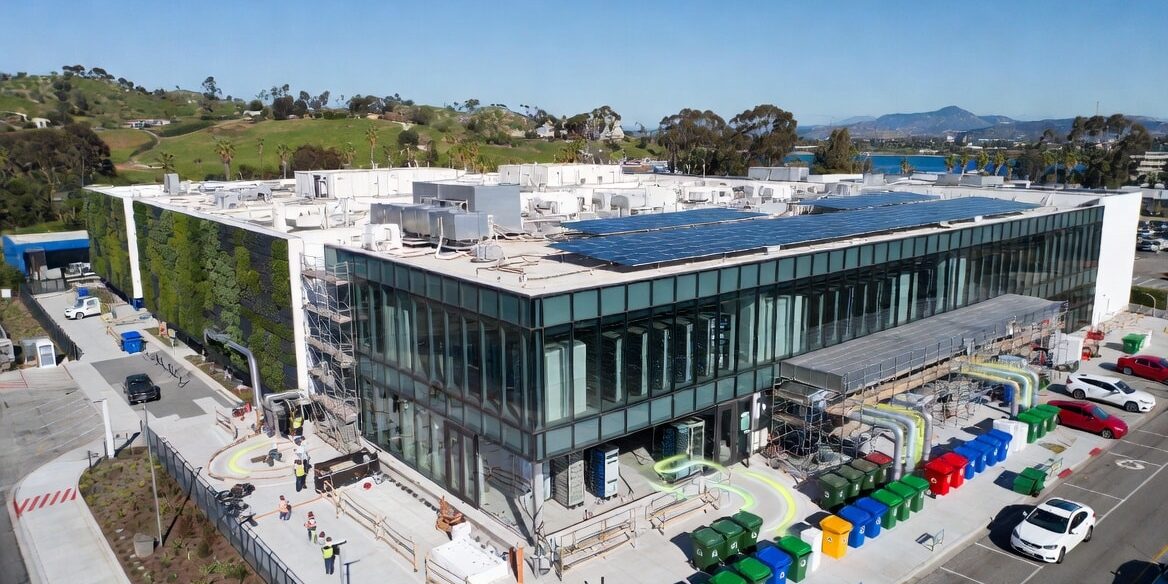
However, the environmental impact cannot be ignored. A typical data center renovation can generate tons of waste, including:
- E-waste: Discarded servers, hard drives, cables, and networking equipment containing hazardous materials like lead, mercury, and cadmium.
- Construction and Demolition (C&D) debris: Concrete, drywall, metal framing, and insulation from building modifications.
- Packaging waste: Cardboard, plastics, and foam from new equipment deliveries.
- Cooling system waste: Filters, refrigerants, and water treatment byproducts from HVAC and liquid cooling upgrades.
- Office and operational waste: Batteries, toner cartridges, and general facility maintenance items.
According to industry reports, data centers globally contribute significantly to landfill waste and carbon emissions if not managed properly. In California, strict regulations under the Department of Resources Recycling and Recovery (CalRecycle) and local Orange County ordinances demand high diversion rates from landfills—often targeting 75% or more. Lake Forest, as part of the Orange County Waste & Recycling program, encourages businesses to adopt zero-waste strategies through incentives and partnerships.
Renovating data centers with creative waste management in mind isn’t just about compliance; it’s about future-proofing operations. Innovative approaches can turn waste into resources, reduce costs by up to 30-40% in disposal fees, and even generate revenue through material recovery and recycling programs.
Understanding Local Context: Why Lake Forest, Orange County Matters
Lake Forest’s data centers benefit from the region’s progressive environmental policies. Orange County has invested heavily in sustainable infrastructure, including advanced recycling facilities and green building standards. The city’s commitment to sustainability aligns with broader California initiatives like Senate Bill 1383, which aims to reduce organic waste and promote composting, and the state’s aggressive renewable energy targets.
Data centers in Lake Forest often operate in industrial zones near the Irvine Spectrum or along major corridors, where space for traditional waste handling might be limited. Renovations must account for minimal downtime, high security requirements, and 24/7 operations. Creative solutions must therefore be modular, scalable, and integrable into existing Tier III or Tier IV facilities without compromising uptime or data security.
Key local factors influencing waste management renovations include:
- Climate considerations: Southern California’s Mediterranean climate with dry summers and mild winters affects cooling system designs and waste handling logistics.
- Water scarcity: Efficient water use in cooling towers and recycling of wastewater is critical.
- Proximity to ports and logistics hubs: Easy access to recycling partners in Los Angeles and Long Beach ports facilitates material export for specialized processing.
- Community expectations: Residents in Lake Forest and surrounding areas prioritize eco-friendly businesses, making sustainable practices a competitive advantage.
By tailoring renovation ideas to these conditions, data center operators can create facilities that are not only efficient but also exemplary models of circular economy principles.
Creative Renovation Idea 1: Modular E-Waste Processing Stations Integrated into Facility Design
One of the most innovative approaches during data center renovations is the incorporation of on-site modular e-waste processing stations. Instead of shipping all decommissioned servers and components off-site immediately, renovations can include dedicated, secure zones equipped with automated sorting systems, de-manufacturing tools, and data destruction capabilities.
Implementation Steps:
- During the planning phase, allocate 500-1,000 square feet in a secure, climate-controlled area for e-waste handling.
- Install shredders, magnetic separators, and optical sorters that recover precious metals like gold, silver, and copper from circuit boards.
- Integrate secure data wiping and physical destruction stations compliant with NIST 800-88 standards to protect sensitive information.
- Partner with certified recyclers such as those in the R2 or e-Stewards programs, many of which have facilities accessible from Lake Forest via short drives to Anaheim or Santa Ana.
Benefits for Lake Forest Data Centers:
- Reduces transportation emissions and costs.
- Allows real-time material recovery, potentially generating revenue from recovered metals.
- Minimizes disruption to operations since processing happens within the facility footprint.
- Supports California’s e-waste recycling laws by achieving higher recovery rates.
Case studies from similar tech hubs show that such stations can divert over 90% of e-waste from landfills. In a renovation project, this could involve retrofitting existing loading docks or utility rooms with soundproofed enclosures to maintain the quiet environment required for data center operations.
Creative Renovation Idea 2: Closed-Loop Cooling System Upgrades with Waste Heat Recovery and Water Recycling
Data centers consume enormous amounts of energy for cooling, and renovations often involve upgrading HVAC or implementing liquid cooling. A creative waste management angle is to design closed-loop systems that treat cooling waste as a resource.
Key Innovations:
- Install advanced filtration and treatment systems that recycle water from cooling towers, reducing freshwater intake by 50-70%.
- Incorporate waste heat recovery units that capture heat from servers and repurpose it for adjacent office spaces, pre-heating water, or even selling excess thermal energy to nearby facilities in Lake Forest’s business parks.
- Use biodegradable or low-toxicity coolants that are easier to recycle or regenerate on-site.
- During renovation, integrate greywater systems that handle condensate from air handlers, routing it to irrigation for on-site landscaping or toilet flushing, aligning with Orange County’s water conservation mandates.
Renovation Considerations:
- Work with mechanical engineers to map existing piping and retrofit with modular, leak-proof components.
- Include monitoring sensors for real-time water quality and flow data, feeding into building management systems (BMS).
- Ensure compliance with South Coast Air Quality Management District (SCAQMD) regulations for any emissions from heat recovery equipment.
This approach not only manages waste but transforms it into an energy efficiency asset, potentially qualifying for utility rebates from Southern California Edison (SCE) or local green incentives in Orange County.
Creative Renovation Idea 3: Upcycled Construction Materials in Data Center Interiors and Exteriors
Renovations generate substantial C&D waste, but creative thinking turns this into an opportunity for material upcycling.
Ideas to Incorporate:
- Crush and reuse concrete from demolished walls or floors as aggregate in new foundations or access flooring supports.
- Repurpose metal framing and server racks into custom cable management systems or security barriers.
- Convert old raised-floor panels into acoustic treatments or workstation surfaces in control rooms.
- Use recycled drywall and insulation in non-critical areas, or partner with manufacturers that accept clean C&D waste for new product creation.
- Install “waste walls” or art installations made from decommissioned circuit boards and cables in public-facing areas to showcase sustainability efforts.
In Lake Forest, where aesthetic appeal matters for corporate campuses, these upcycled elements can create unique, industrial-chic designs that impress clients and employees while diverting waste.
Practical Renovation Tips:
- Conduct a pre-demolition audit to catalog materials and identify reuse opportunities.
- Collaborate with local salvage yards or organizations like Habitat for Humanity ReStores in Orange County for donation of usable items.
- Aim for LEED or TRUE Zero Waste certification by documenting diversion rates.
This strategy can reduce new material purchases by 20-30%, lowering both costs and embodied carbon in the renovation.
Creative Renovation Idea 4: Smart Waste Tracking and AI-Powered Sorting Systems
Technology is at the core of data centers, so why not apply it to waste management during and after renovations?
Innovative Features:
- Deploy IoT-enabled smart bins throughout the facility that automatically sort waste into categories (e-waste, recyclables, organics, landfill) using sensors and AI cameras.
- Integrate waste data into the existing DCIM (Data Center Infrastructure Management) platform for centralized monitoring and predictive analytics—forecasting waste generation based on renovation phases or equipment refresh cycles.
- Use blockchain for transparent tracking of waste streams from generation to final disposal or recycling, appealing to clients demanding verifiable ESG (Environmental, Social, Governance) reporting.
- During renovation, embed these systems into the building’s IT backbone for seamless operation.
Lake Forest Advantages:
- Proximity to tech talent in Orange County facilitates quick deployment and maintenance of such systems.
- Supports compliance with California’s mandatory reporting requirements for large waste generators.
Pilot programs in other data centers have shown 40% improvements in sorting accuracy and significant reductions in contamination of recycling streams.
Creative Renovation Idea 5: Organic Waste Composting and Bio-Digestion for Facility Cafeterias and Landscaping
While data centers are largely “clean” facilities, employee areas, landscaping, and occasional organic byproducts from maintenance can generate compostable waste.
Creative Approaches:
- Install on-site aerobic composting units or anaerobic digesters sized for a data center’s scale, processing food waste from on-site kitchens or partner vendors.
- Use the resulting compost for enhancing green spaces around the Lake Forest facility, promoting biodiversity and reducing irrigation needs.
- Integrate vermicomposting (worm-based systems) in controlled environments for smaller-scale operations.
- During renovation, design dedicated utility closets or outdoor enclosures for these systems, with odor control and pest management suitable for a high-tech setting.
This aligns perfectly with Senate Bill 1383 and can earn carbon credits or local incentives while creating nutrient-rich soil for xeriscaping common in Southern California.
Creative Renovation Idea 6: Partnership Ecosystems and Circular Economy Hubs
Renovations provide an opportunity to build long-term waste management networks.
Strategies:
- Establish on-site collection points for vendor take-back programs, where equipment manufacturers reclaim their products.
- Create a “Circular Economy Hub” within the renovated data center—a shared space for material exchange with other Lake Forest businesses.
- Collaborate with Orange County-based recyclers, universities like UC Irvine for research partnerships, and non-profits focused on e-waste education.
- Explore industrial symbiosis, where one facility’s waste (e.g., heat or scrap metal) becomes another’s input.
Such ecosystems foster community goodwill and open doors to grants from the California Energy Commission or EPA programs targeting data center sustainability.
Implementation Roadmap for Data Center Renovations in Lake Forest
To successfully integrate these creative ideas, follow a structured approach:
- Assessment Phase: Conduct a comprehensive waste audit and life-cycle analysis with local consultants familiar with Orange County regulations.
- Design Integration: Work with architects and engineers experienced in data center retrofits to embed waste management features without affecting power density or cooling efficiency.
- Phased Execution: Minimize downtime by scheduling waste-related renovations during low-usage periods or in modular sections.
- Technology and Training: Invest in staff training on new systems and partner with local vocational programs in Lake Forest/Irvine for skilled labor.
- Monitoring and Optimization: Use KPIs like diversion rate, cost savings, and carbon reduction to measure success and iterate.
- Certification and Reporting: Pursue certifications such as ISO 14001, LEED, or Zero Waste Facility status to enhance marketability.
Budget considerations: Initial investments in creative systems may range from $500,000 to several million depending on scale, but ROI is typically achieved within 2-5 years through reduced disposal costs, energy savings, and potential revenue streams.
Regulatory and Incentive Landscape in Orange County
Lake Forest data centers must navigate a mix of federal, state, and local rules:
- CalRecycle and DTSC: Oversight for hazardous and e-waste.
- Orange County Waste Management: Franchise haulers and diversion goals.
- SCAQMD: Air quality permits for any processing equipment.
- Building Codes: Title 24 energy efficiency standards during renovations.
Incentives include:
- Utility rebates for energy and water efficiency.
- Tax credits for renewable integrations and recycling equipment.
- Grants for innovative sustainability projects.
Consulting with local experts ensures full compliance while maximizing benefits.
Challenges and Solutions in Implementing Creative Waste Management
Common hurdles include high upfront costs, space constraints, security concerns, and resistance to change. Solutions involve:
- Phased financing through green bonds or ESG-linked loans.
- Compact, high-density modular designs.
- Robust cybersecurity for waste tracking systems.
- Change management programs highlighting employee and community benefits.
With careful planning, these challenges become opportunities for differentiation in the competitive Southern California data center market.
Future Trends: Towards Net-Zero Waste Data Centers in Lake Forest
Looking ahead, data centers in Lake Forest are poised to lead in sustainable practices. Emerging trends include:
- Advanced robotics for automated disassembly of e-waste.
- Bio-based materials in construction and equipment.
- AI-driven predictive waste minimization.
- Integration with broader smart city initiatives in Orange County.
By embracing creative renovation ideas today, facilities can position themselves as pioneers in the transition to a circular economy.
Conclusion: Building a Sustainable Legacy in Lake Forest
Creative renovation ideas for waste management in data centers are not just technical upgrades—they represent a fundamental shift towards responsible innovation. In Lake Forest, Orange County, where technology meets environmental consciousness, these strategies offer a pathway to more efficient, resilient, and respected operations.
Data center leaders who invest in modular e-waste processing, closed-loop cooling, upcycled materials, smart tracking, composting systems, and collaborative ecosystems will reap multifaceted rewards: lower costs, regulatory peace of mind, enhanced reputation, and contribution to a greener planet.
As Lake Forest continues to grow as a tech destination, sustainable waste management during renovations will distinguish forward-thinking facilities. Start with a waste audit today and partner with experienced professionals to transform challenges into opportunities. The future of data centers is not only powerful and efficient but also profoundly sustainable.
For data center operators in Lake Forest seeking to implement these ideas, engaging local sustainability consultants, engineers specializing in high-tech facilities, and certified waste management partners is the recommended next step. With California’s leadership in environmental stewardship, now is the ideal time to renovate with creativity and responsibility at the forefront.