

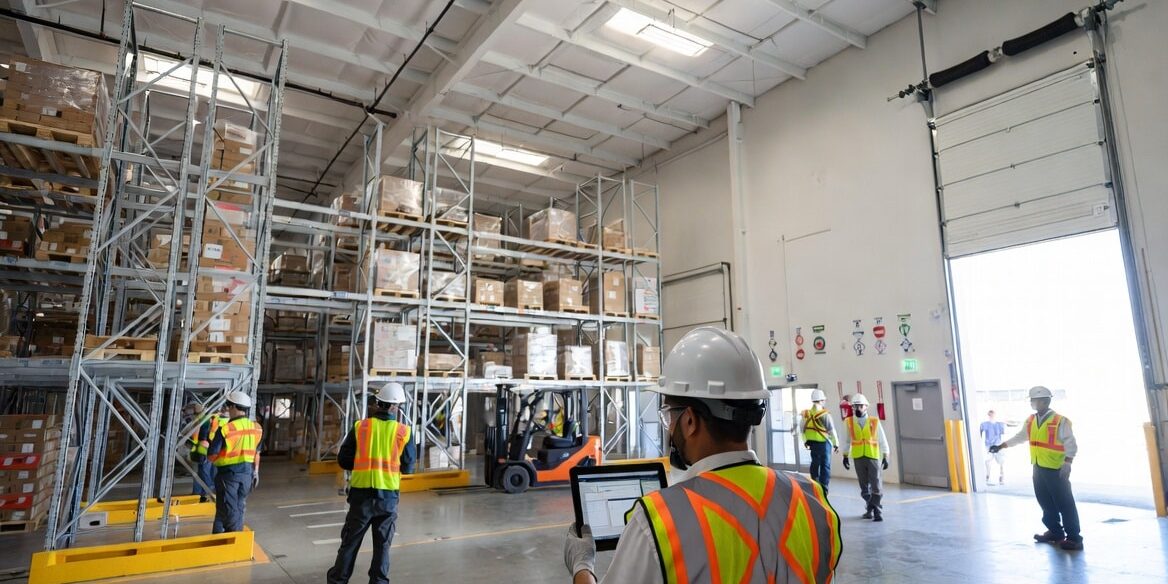
Industrial warehouses in Lake Forest, California, form a vital part of Orange County’s logistics and distribution network. Located in a region with proximity to major ports, highways like the 5 and 405, and growing industrial zones, these facilities handle everything from consumer goods to specialized inventory. However, they face unique challenges due to California’s stringent regulations, seismic activity potential, wildfire risks in surrounding areas, and high operational tempo driven by e-commerce and supply chain demands.
Effective risk management in these warehouses goes beyond basic compliance—it protects workers, inventory, property, and the bottom line. Risks range from slips, trips, and falls to forklift accidents, fires, ergonomic injuries, chemical exposures, and even environmental factors like heat or localized flooding. A proactive approach using the right tools can significantly reduce incidents, lower insurance costs, ensure adherence to Cal/OSHA standards, and maintain operational continuity.
This comprehensive guide explores the essential tools for risk management tailored to industrial warehouses in Lake Forest and broader Orange County. It covers identification, assessment, mitigation, monitoring, and response strategies, drawing on best practices from OSHA, Cal/OSHA, and industry standards.
Understanding Key Risks in Lake Forest Industrial Warehouses
Lake Forest warehouses operate in a dynamic environment. The area experiences occasional seismic concerns, very high fire hazard severity zones in parts of Orange County, and urban-adjacent industrial development that can amplify issues like truck traffic, noise, and air quality concerns from nearby residential areas.
Common risks include:
- Operational Risks: Forklift collisions, falling objects from racking, improper material handling leading to musculoskeletal disorders (MSDs), and equipment failures.
- Fire and Emergency Risks: High storage densities with combustible materials, electrical faults, flammable liquids, or battery charging areas. Warehouses often have higher fire risks due to large open spaces and inventory loads.
- Health and Ergonomic Risks: Repetitive lifting, awkward postures, exposure to heat (especially indoor environments exceeding 82°F under Cal/OSHA indoor heat rules), hazardous chemicals, and poor ventilation.
- Environmental and Compliance Risks: Slips on uneven or cluttered floors, potential flooding or water damage, power outages, and regulatory requirements under Cal/OSHA’s Injury and Illness Prevention Program (IIPP), Hazard Communication Standard, and Process Safety Management for certain chemicals.
- Security and External Risks: Theft, unauthorized access, or supply chain disruptions.
Without proper tools, these risks can lead to injuries, downtime, citations, or catastrophic events. Cal/OSHA data highlights warehousing as a high-hazard industry with elevated days-away, restricted, or transferred (DART) rates.
1. Risk Assessment and Identification Tools
The foundation of any risk management program is a thorough assessment. Start with systematic hazard identification.
- Digital Risk Assessment Software and Checklists: Tools like GoAudits or similar mobile platforms allow teams to conduct customizable inspections for fire risks, racking stability, forklift operations, manual handling, and chemical exposure. These apps enable real-time data capture, photo documentation (even if not embedded here), issue assignment, and automated reporting. Regular assessments help prioritize risks using matrices that score likelihood and severity.
- Hazard Communication (HazCom) Programs: Under OSHA 1910.1200, maintain Safety Data Sheets (SDS) databases, labeling systems, and employee training records. Digital SDS management software ensures quick access during spills or exposures.
- Worksite Evaluations for Ergonomics: Tools for evaluating repetitive motion under Cal/OSHA Section 5110, including workstation redesign checklists and body mapping surveys to identify MSD hotspots.
Conduct assessments quarterly or after any process change, involving employees for ground-level insights. In Lake Forest facilities, factor in local conditions like potential wildfire smoke affecting air quality or seismic bracing requirements for racking.
2. Personal Protective Equipment (PPE) and Individual Protection Tools
PPE serves as the last line of defense but remains essential.
- Standard PPE Kits: Hard hats, safety glasses, high-visibility vests, steel-toe boots (meeting ASTM standards), gloves for chemical or cut resistance, and hearing protection where noise levels are high.
- Specialized Protection: Respiratory masks for dust or chemical fumes, fall protection harnesses for elevated work on racking, and chemical-resistant suits or eyewash stations near battery charging areas (complying with ANSI Z358.1).
- Heat Illness Prevention Tools: In line with Cal/OSHA indoor heat rules (Section 3396), provide access to water, shade or cool-down areas, and monitoring devices like wet-bulb globe temperature (WBGT) meters when temperatures or heat indices hit thresholds.
Train workers on proper fit, maintenance, and use. Maintain an inventory log to ensure PPE is inspected and replaced regularly.
3. Fire Safety and Suppression Tools
Fires rank among the top threats in warehouses due to high fuel loads.
- Fire Suppression Systems: Automatic sprinklers (ceiling and in-rack), fire extinguishers (placed per NFPA guidelines and inspected monthly), and specialized systems for flammable liquids or lithium-ion battery risks in modern electric equipment.
- Detection and Alarm Systems: Smoke/heat detectors, early warning systems, and integration with building management for alerts.
- Fire Safety Plans and Drills: Emergency action plans (OSHA 1910.38), evacuation maps, and designated assembly points. Include pre-fire planning with local Lake Forest fire departments, considering commodity classification for storage.
Regular maintenance of these systems, plus housekeeping to prevent trash accumulation, reduces ignition sources like electrical faults or overheated equipment.
4. Material Handling and Equipment Safety Tools
Powered industrial trucks (PITs) like forklifts, cause many serious incidents.
- Forklift Safety Tools: Operator training programs (OSHA 1910.178), pre-shift inspection checklists, speed limiters, proximity sensors or cameras for blind spots, and load stability indicators. Ensure proper ventilation for propane or battery emissions to prevent carbon monoxide buildup.
- Racking and Storage Systems: Load capacity labels, seismic anchors (critical in California), guardrails, and regular rack inspections for damage. Use safety barriers, bollards, and floor markings to separate pedestrian and vehicle traffic.
- Conveyors and Automation Guards: Machine guarding (OSHA 1910.212) to prevent pinch points or entanglement.
Implement lockout/tagout (LOTO) procedures (1910.147) for maintenance, with dedicated kits containing locks, tags, and hasps.
5. Environmental Monitoring and Control Tools
- Air Quality and Ventilation Monitors: Sensors for carbon monoxide, volatile organic compounds (VOCs), dust, and temperature/humidity—especially important for climate-controlled storage or battery rooms.
- Spill Containment and Hazardous Materials Tools: Absorbent kits, secondary containment pallets, and eyewash/shower stations. For facilities handling chemicals, comply with EPA Risk Management Program (RMP) guidance if thresholds are met.
- Lighting and Housekeeping Aids: Bright, energy-efficient LED lighting to reduce shadows and trips, plus industrial floor markings, signage, and sweepers for clear aisles.
In Lake Forest’s variable climate, tools for monitoring indoor heat and ensuring proper drainage help mitigate water damage risks.
6. Training, Documentation, and Cultural Tools
- Training Platforms: Digital learning management systems for forklift certification, hazard recognition, emergency response, and heat illness prevention. Include refresher courses and records retention.
- Incident Reporting and Investigation Tools: Digital forms for near-misses and accidents, root cause analysis templates (e.g., 5-Why or fishbone diagrams).
- Safety Culture Builders: Daily safety huddles, suggestion programs, and performance metrics tied to leading indicators like inspection completion rates rather than just lagging injury stats.
Cal/OSHA emphasizes a robust IIPP (Section 3203) that includes employee involvement, hazard correction, and training.
7. Technology and Software for Integrated Risk Management
Modern warehouses benefit from digital integration:
- Warehouse Management Systems (WMS): Real-time inventory tracking to prevent overloading racks or misplacement that creates instability. Some include safety modules for compliance alerts.
- EHS (Environment, Health, Safety) Software: Platforms like SafetyCulture, Intelex, or custom solutions for audits, corrective actions, and risk registers. These centralize data for trend analysis and predictive insights.
- IoT Sensors and Predictive Analytics: Connected devices for equipment vibration monitoring (predicting failures), rack load sensors, or environmental alerts that feed into dashboards.
- Security Systems: Access control, CCTV with AI anomaly detection, and inventory tracking to reduce theft or tampering risks.
These tools enable data-driven decisions, such as optimizing layouts to minimize travel distances and ergonomic strain.
8. Insurance, Compliance, and Continuous Improvement Tools
- Risk Transfer Tools: Comprehensive warehouse liability insurance, property coverage with adequate limits for fire and business interruption, and workers’ compensation policies. Work with brokers familiar with Orange County industrial risks.
- Audit and Compliance Checklists: Aligned with Cal/OSHA high-hazard inspections, covering blocked exits, PPE usage, training records, and equipment maintenance.
- Management of Change (MOC) Processes: Formal reviews before introducing new equipment, chemicals, or layouts to assess introduced risks.
Schedule annual third-party audits and after-incident reviews. In Lake Forest, coordinate with local authorities on hazardous materials disclosure ordinances.
Implementing a Holistic Risk Management Program in Lake Forest Warehouses
- Develop a Written Plan: Integrate all tools into a site-specific risk management policy, reviewed annually or after significant changes.
- Assign Responsibilities: Designate a safety coordinator or committee, with clear roles for managers, supervisors, and workers. For dual-employer situations (e.g., temp agencies), align programs per Cal/OSHA guidance.
- Budget and Prioritize: Invest in high-impact tools first—training, basic PPE, fire systems, and digital assessment apps—then scale to advanced tech.
- Measure Success: Track metrics like incident rates, near-miss reports, inspection findings closure time, and insurance premiums. Aim for continuous reduction.
- Local Considerations: Engage with Lake Forest fire and building departments, monitor Orange County air quality or seismic updates, and prepare for supply chain volatility affecting inventory levels.
Benefits of Robust Risk Management
Facilities that invest in these tools see fewer injuries, higher productivity, better employee retention, and stronger compliance. Reduced downtime from accidents or citations directly improves profitability in a competitive logistics market. Proactive risk management also enhances insurability and community relations in growing areas like Lake Forest.
Conclusion
Risk management in industrial warehouses in Lake Forest, Orange County, requires a layered approach combining physical tools, technology, training, and culture. From PPE and fire suppression to digital assessment software and WMS integration, these essential tools form a comprehensive defense against operational, health, fire, and compliance hazards.
Warehouse operators should begin with a baseline risk assessment, prioritize quick wins like improved housekeeping and training, then build toward integrated systems. Compliance with Cal/OSHA and OSHA standards is non-negotiable, but exceeding them through best practices creates a safer, more resilient operation.
By embracing these tools, Lake Forest warehouses can protect their most valuable assets—people and property—while thriving in California’s demanding industrial landscape. Regular review and adaptation to emerging risks, such as those from automation or climate factors, will ensure long-term success.
For tailored advice, consult local safety professionals, Cal/OSHA resources, or risk management experts familiar with Orange County operations. A safe warehouse is an efficient and profitable one.