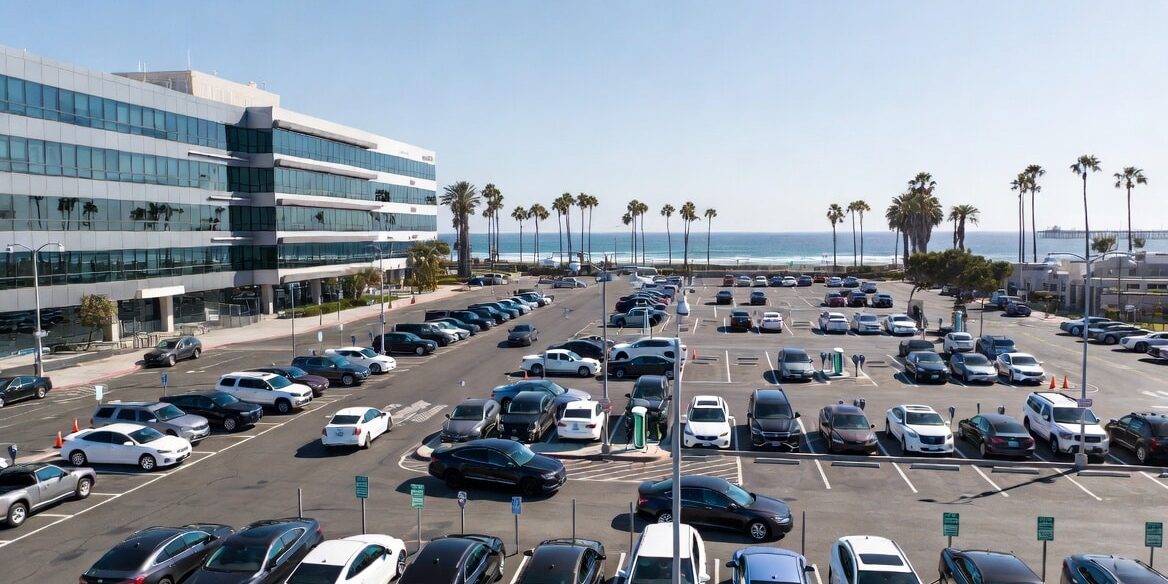
Parking management in office buildings is often an overlooked yet critical component of urban infrastructure, especially in bustling coastal cities like Huntington Beach, California. Nestled in the heart of Orange County, Huntington Beach—affectionately known as “Surf City USA”—boasts a vibrant economy driven by tourism, technology, retail, and professional services. With its pristine beaches, active lifestyle, and proximity to major employment hubs in Irvine and Newport Beach, the city attracts thousands of daily commuters and office workers. However, this growth has brought significant challenges to parking management in office buildings, where efficient vehicle accommodation directly impacts tenant satisfaction, employee productivity, and overall property value.
In this comprehensive guide, we delve deep into the multifaceted issues surrounding parking in Huntington Beach office complexes. From regulatory hurdles and space constraints to technological innovations and sustainable practices, we’ll explore practical strategies for property managers, building owners, and urban planners. Whether you’re a real estate developer, facility manager, or business owner operating in Orange County, understanding these challenges is essential for creating seamless, user-friendly parking experiences in one of Southern California’s most desirable locations.
The Unique Context of Huntington Beach and Orange County Parking Dynamics
Huntington Beach, with a population exceeding 200,000 residents, sits along 8.5 miles of Pacific coastline in northwestern Orange County. The city’s economy has diversified significantly over the past two decades, shifting from traditional oil and manufacturing roots toward high-tech industries, healthcare, education, and creative services. Major office corridors along Beach Boulevard, Warner Avenue, and the Pacific Coast Highway (PCH) host numerous mid-rise and high-rise office buildings that serve as workplaces for professionals in finance, engineering, marketing, and administrative roles.
Orange County as a whole experiences heavy traffic congestion, particularly during peak commute hours. According to regional transportation data, the area ranks among the top congested regions in the United States, with average commute times often exceeding 30 minutes one way. This congestion spills directly into parking demands for office buildings. Many structures built in the 1970s and 1980s were designed with parking ratios based on outdated assumptions—typically 3 to 4 spaces per 1,000 square feet of office space. Today, with rising vehicle ownership rates, remote/hybrid work fluctuations post-pandemic, and increasing delivery vehicle traffic, these ratios frequently prove insufficient.
Huntington Beach’s coastal geography adds another layer of complexity. Limited land availability due to beach preservation zones, wetlands, and residential neighborhoods restricts opportunities for surface lot expansions. Zoning regulations enforced by the City of Huntington Beach and Orange County emphasize environmental protection, historic preservation, and pedestrian-friendly development. As a result, office building owners must navigate strict parking requirements outlined in the city’s Municipal Code, which mandates minimum parking provisions while encouraging alternative transportation modes like biking, walking, and public transit.
The Surf City lifestyle further influences parking patterns. Employees and visitors often combine work with recreational activities—surfing before or after shifts, beach walks during lunch breaks, or weekend events at the Huntington Beach Pier. This creates unpredictable parking surges, especially on sunny weekends or during major events like the U.S. Open of Surfing, which draws massive crowds and indirectly affects nearby office parking availability.
Key Challenges in Parking Management for Huntington Beach Office Buildings
1. Insufficient Parking Supply Amid Growing Demand
One of the most pressing issues is the mismatch between available parking spaces and actual demand. Many office buildings in Huntington Beach, particularly those in older industrial parks or along busy arterials like Bolsa Avenue and Edinger Avenue, were constructed when single-occupancy vehicle (SOV) commuting was the norm. With California’s push toward reducing greenhouse gas emissions under Senate Bill 743 and Assembly Bill 32, there has been a deliberate policy shift away from over-provisioning parking. However, this creates tension for property managers who must accommodate employees who still rely on personal vehicles due to limited public transit options in certain parts of the city.
Data from local transportation studies indicate that peak occupancy in Huntington Beach office parking facilities often reaches 95-110% during midday hours. This leads to “parking spillover,” where employees park in adjacent residential streets, retail lots, or even beach access areas, triggering complaints from residents and enforcement actions by the Huntington Beach Police Department. Shared parking agreements with neighboring properties can help, but negotiating these requires careful legal and operational coordination.
Post-COVID hybrid work models have introduced variability. On any given day, office occupancy might fluctuate between 40% and 80%, making static parking allocations inefficient. Buildings with fixed parking permits often see wasted spaces on low-attendance days while facing shortages during all-hands meetings or peak seasons.
2. Traffic Congestion and Access Issues
Huntington Beach’s road network, dominated by the Pacific Coast Highway (State Route 1), Golden West Street, and Magnolia Street, experiences significant bottlenecks. Office buildings located near these corridors face challenges with vehicle ingress and egress. Poorly designed driveways, inadequate queuing space, and conflicts with pedestrian and bicycle traffic exacerbate delays. During morning and evening rush hours, vehicles backing up onto public streets can violate city traffic codes and create safety hazards.
The integration of electric vehicles (EVs) adds another dimension. While Huntington Beach has been proactive in installing EV charging stations as part of its sustainability goals, many older office buildings lack sufficient infrastructure. Retrofitting parking garages or surface lots for Level 2 chargers or DC fast chargers requires substantial investment and compliance with California Building Standards Code (Title 24) and Americans with Disabilities Act (ADA) requirements for accessible charging spots.
Moreover, delivery and service vehicles—ranging from Amazon vans to food delivery services—compete for the same spaces, further straining capacity. Office buildings with ground-floor retail or food services experience compounded issues, as customer parking often overlaps with employee needs.
3. Regulatory and Compliance Burdens
Parking management in Huntington Beach is governed by a complex web of local, county, and state regulations. The Huntington Beach Zoning Code (Title 230) specifies parking standards based on land use types, with office buildings typically requiring one space per 250-300 square feet of gross floor area, adjusted for factors like transit accessibility. However, recent updates encourage Transportation Demand Management (TDM) strategies, such as providing bike storage, shower facilities, and subsidized transit passes to reduce parking demand by up to 20-30%.
Property owners must also comply with environmental regulations from the California Coastal Commission, given the city’s proximity to sensitive habitats. Any expansion or modification of parking facilities may trigger environmental impact reports (EIRs) under the California Environmental Quality Act (CEQA), leading to lengthy approval processes and added costs.
ADA compliance remains a perpetual challenge. Parking facilities must provide a sufficient number of accessible spaces (typically 2% of total spaces, with van-accessible stalls), proper signage, and pathways. Non-compliance can result in costly lawsuits under the ADA or California’s Unruh Civil Rights Act. In Orange County, several high-profile cases have highlighted the financial risks for building owners who neglect these standards.
Additionally, Huntington Beach’s emphasis on historic preservation in areas like the Downtown and Old World Village means that parking retrofits must respect architectural integrity, often limiting structural modifications.
4. Operational and Security Concerns
Effective parking management extends beyond mere space allocation—it encompasses security, maintenance, and user experience. In Huntington Beach, where tourism brings transient populations, office parking lots can become targets for theft, vandalism, or unauthorized overnight parking by beachgoers. Implementing surveillance systems, access control gates, and license plate recognition (LPR) technology helps, but these solutions come with privacy considerations under California Consumer Privacy Act (CCPA) guidelines.
Maintenance challenges include stormwater management in parking areas, as California’s strict water quality standards (under the National Pollutant Discharge Elimination System) require oil-water separators and permeable pavements in new constructions. Coastal salt air accelerates corrosion of metal structures, railings, and lighting fixtures, increasing long-term operational costs.
Employee and tenant satisfaction hinges on convenience. Long walks from parking spots to building entrances in large surface lots can deter talent, especially in a competitive job market. Wayfinding issues—poor signage, confusing layouts, or inadequate lighting—lead to frustration and lost productivity as workers search for spots.
5. Sustainability and Environmental Pressures
California’s aggressive climate goals, including the state’s commitment to carbon neutrality by 2045, place parking management under scrutiny. Office buildings contribute significantly to urban heat islands through expansive asphalt lots. Huntington Beach encourages green parking initiatives, such as shaded structures with solar panels, bioswales for runoff filtration, and electric vehicle-ready infrastructure.
However, transitioning to sustainable practices involves trade-offs. Reducing parking minimums to promote transit-oriented development (TOD) sounds ideal in theory but can alienate car-dependent commuters in a region where public transit coverage, while improving via OCTA (Orange County Transportation Authority) buses and future Metrolink expansions, remains limited compared to Los Angeles or San Francisco.
Shared mobility options like scooters, e-bikes, and ride-sharing services (Uber, Lyft) offer alternatives, but integrating them into office parking ecosystems requires dedicated drop-off zones and charging infrastructure without compromising core parking capacity.
Strategies for Overcoming Parking Management Challenges
Addressing these challenges demands a holistic, data-driven approach tailored to Huntington Beach’s unique environment.
Implementing Smart Parking Technologies
Modern parking management leverages Internet of Things (IoT) sensors, mobile apps, and AI-powered analytics. Systems like those from ParkMobile or SpotHero allow real-time space availability tracking, reservation capabilities, and dynamic pricing. In Huntington Beach office buildings, deploying sensor-based guidance systems can reduce circling time by 30-50%, lowering emissions and improving user experience.
License plate recognition combined with automated gate systems streamlines entry/exit while generating valuable occupancy data. Cloud-based platforms enable predictive analytics—forecasting demand based on historical patterns, weather data (important for beach-influenced days), and event calendars.
For multi-tenant buildings, integrated tenant apps can facilitate permit management, visitor registration, and EV charging reservations, fostering a sense of community and control.
Optimizing Space Utilization Through Shared and Flexible Models
Unutilized parking during off-peak hours represents lost revenue and inefficiency. Implementing shared parking strategies—partnering with nearby hotels, retail centers, or residential complexes—maximizes utilization. For instance, an office building could lease excess spaces to evening event venues or weekend beach visitors under controlled agreements.
Flexible permitting systems, such as daily or hourly passes instead of monthly allocations, accommodate hybrid work schedules. Valet services or stacker systems in garages can increase capacity by 20-40% in space-constrained sites.
Enhancing Alternative Transportation Infrastructure
To reduce parking pressure, office property managers should invest in robust Transportation Demand Management programs. This includes:
- Secure bicycle parking with e-bike charging stations
- On-site carpool matching programs
- Subsidies for OCTA bus passes or future light rail connections
- Shower and locker facilities for active commuters
- Partnerships with ride-sharing companies for discounted corporate rates
Huntington Beach’s bike-friendly initiatives, including trails along the Santa Ana River and coastal paths, provide excellent opportunities to promote cycling as a viable commute option.
Sustainable Design and Retrofitting Best Practices
For new constructions or major renovations, incorporating green parking design is crucial. Features like:
- Permeable pavers and rain gardens for stormwater management
- Solar carports that generate renewable energy while providing shade
- Native landscaping to reduce irrigation needs and support local biodiversity
- High-efficiency LED lighting with motion sensors
These elements not only comply with regulations but also enhance property appeal and potentially qualify for green building certifications like LEED or ENERGY STAR.
Retrofitting existing facilities can be phased: starting with EV charging installations, followed by digital wayfinding and finally structural expansions where feasible.
Data-Driven Decision Making and Community Engagement
Successful parking management relies on accurate data. Conducting regular parking utilization studies—using manual counts, video analytics, or sensor data—helps calibrate supply to demand. Engaging stakeholders through tenant surveys, community meetings, and coordination with the City of Huntington Beach Planning Department ensures solutions address broader urban goals.
Public-private partnerships can unlock funding for infrastructure improvements, such as grants for EV infrastructure or TDM programs from the Southern California Association of Governments (SCAG).
Legal and Financial Considerations
Property managers should consult with attorneys specializing in California real estate and land-use law to navigate CEQA, ADA, and local zoning intricacies. Budgeting for parking operations should include contingency funds for technology upgrades, maintenance, and potential fines.
Revenue generation opportunities exist through paid visitor parking, premium reserved spots, or advertising on digital signage within garages. However, balancing monetization with tenant goodwill is key in competitive Orange County markets.
Case Studies and Lessons from Orange County
While Huntington Beach has its distinct flavor, lessons from nearby cities in Orange County offer valuable insights. In Irvine, master-planned communities have successfully implemented centralized parking districts with shuttle services, reducing individual building burdens. Newport Beach office towers have pioneered valet and concierge parking models that elevate user experience.
Some Huntington Beach properties have experimented with mobile app-based parking validation for clients, turning potential pain points into competitive advantages. Others have collaborated with local surf shops or restaurants for cross-promotions, creatively managing overflow during peak tourist seasons.
Future Outlook for Parking Management in Huntington Beach
Looking ahead, autonomous vehicles (AVs) and mobility-as-a-service (MaaS) platforms could revolutionize parking needs. Self-parking AVs might reduce the need for wide aisles and maneuvering space, potentially increasing capacity. However, widespread adoption remains years away, necessitating interim solutions.
Continued population growth, combined with state mandates for housing near jobs (via Senate Bill 9 and related bills), will intensify pressure on parking resources. Office buildings that proactively adapt—through technology, sustainability, and innovative management—will thrive, attracting premium tenants and commanding higher rents.
Huntington Beach’s commitment to balancing economic vitality with environmental stewardship positions it well for innovative parking solutions. Initiatives like the city’s Climate Action Plan emphasize reducing vehicle miles traveled (VMT), creating opportunities for forward-thinking property managers to lead by example.
Conclusion: Turning Parking Challenges into Opportunities
Navigating parking management challenges in Huntington Beach office buildings requires a blend of strategic planning, technological adoption, regulatory compliance, and community-oriented thinking. By addressing supply-demand imbalances, enhancing accessibility and security, promoting sustainable practices, and leveraging data analytics, property stakeholders can transform parking from a potential liability into a value-adding asset.
For building owners and managers in Orange County, investing in modern parking solutions not only mitigates daily frustrations but also supports long-term tenant retention, employee wellness, and environmental goals. As Surf City continues to evolve, proactive parking management will play a pivotal role in maintaining its appeal as a premier destination for work, life, and recreation.
Property managers seeking tailored solutions are encouraged to consult with local experts in transportation engineering, urban planning, and parking technology firms familiar with Huntington Beach’s regulatory landscape. With thoughtful implementation, the complexities of parking can be successfully navigated, ensuring smooth operations in one of California’s most dynamic coastal communities.