

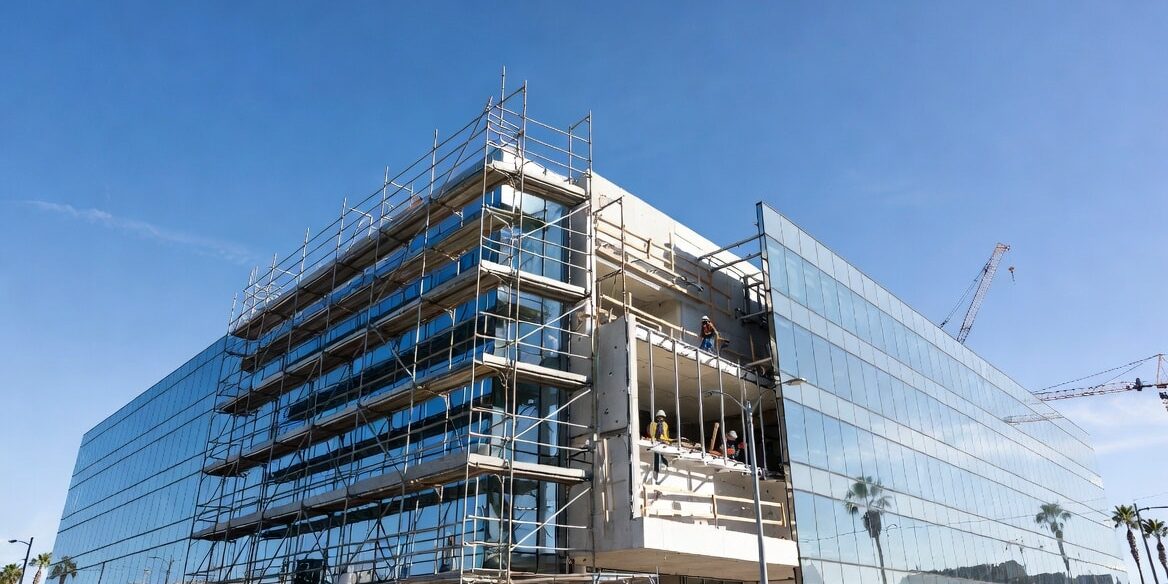
Renovating or upgrading office buildings in Orange, Orange County, California, presents a unique set of opportunities and obstacles. Nestled in the heart of Orange County, the city of Orange offers a blend of historic charm and modern business demands. With its tree-lined streets, preserved Victorian-era homes, and thriving commercial districts, property owners and facility managers face the complex task of balancing preservation with progress when updating office spaces. Whether you’re modernizing a mid-century office block on Tustin Street, retrofitting a professional building near the Orange Circle, or upgrading Class A spaces along the 55 or 57 freeways, successful renovations require careful navigation of regulatory, logistical, financial, and operational hurdles.
The office market in Orange, CA, has evolved significantly in recent years. Post-pandemic shifts toward hybrid work models have increased demand for flexible, tech-enabled workspaces, while rising sustainability standards and tenant expectations for wellness-focused environments push owners to invest in upgrades. However, these projects rarely go smoothly. From permitting delays to unexpected structural issues, renovations in this Southern California city come with distinct local challenges that demand proactive planning and expert guidance.
Understanding the Local Regulatory Landscape
One of the primary challenges in office building renovations in Orange, Orange County, is the stringent regulatory environment. The City of Orange enforces a comprehensive set of building codes, zoning ordinances, and historic preservation guidelines that can significantly impact project timelines and budgets.
The City of Orange Planning and Zoning Division requires detailed plan checks for any major renovation or tenant improvement (TI) projects. Permits for electrical, plumbing, mechanical, and structural work must be obtained through the Building Division, often involving multiple review cycles. For buildings located within the Old Towne Orange Historic District or near designated landmarks, additional layers of approval from the Historic Preservation Commission come into play. These reviews ensure that exterior modifications respect the area’s Spanish Colonial Revival, Craftsman, and Victorian architectural styles, which can limit options for modern facades, window replacements, or signage.
California’s statewide building codes, based on the 2022 California Building Code (CBC), add another layer of complexity. Office renovations must comply with Title 24 energy efficiency standards, ADA accessibility requirements, and seismic retrofitting mandates. In Orange County, seismic Zone 4 considerations mean that even minor structural upgrades often require engineering analysis for earthquake resistance. HVAC upgrades, for instance, frequently trigger full compliance with current energy codes, including high-efficiency systems and advanced controls that increase project costs by 15-30%.
Environmental regulations further complicate matters. The South Coast Air Quality Management District (SCAQMD) oversees air quality permits for demolition and construction activities, while the Orange County Water District and local stormwater management rules demand careful handling of runoff and pollution prevention during renovations. Asbestos and lead-based paint surveys are mandatory for older buildings—many constructed in the 1960s through 1980s in Orange—before any disturbance begins.
Navigating these regulations requires early engagement with local authorities. Many project owners hire experienced expeditors or consultants familiar with Orange’s specific processes to streamline submissions. Delays in plan check approvals can extend timelines by 4-12 weeks, turning a six-month renovation into a nine-month ordeal.
Structural and Technical Challenges
Orange’s office building stock varies widely, from single-story professional suites to multi-story towers. Many structures built during the post-WWII boom now require significant upgrades to meet contemporary standards.
Common structural issues include outdated seismic bracing, corroded rebar in parking structures, and foundation settlement due to expansive soils prevalent in parts of Orange County. Retrofitting for modern load requirements—driven by heavier IT equipment, raised flooring systems, or denser occupancy—often reveals hidden problems. For example, upgrading electrical systems to support high-density server rooms or EV charging stations in parking areas frequently necessitates panel upgrades, transformer replacements, and new subfeeds, all while maintaining business operations.
HVAC and MEP (mechanical, electrical, plumbing) systems present another major hurdle. Older buildings in Orange often rely on inefficient rooftop units or outdated chilled water plants. Upgrading to variable refrigerant flow (VRF) systems, dedicated outdoor air systems (DOAS), or smart building automation can improve energy performance and indoor air quality (IAQ), which has become a priority post-COVID. However, integrating these systems into existing ceiling plenums or shaft spaces requires creative engineering solutions, especially in buildings with limited vertical clearance.
Technology integration adds complexity. Tenants now demand robust fiber optic infrastructure, 5G-ready distributed antenna systems (DAS), and power over Ethernet (PoE) lighting. Installing these during renovations means coordinating with utility providers like Southern California Edison (SCE) and local telecom carriers, often involving trenching or directional boring that disrupts parking and landscaping.
Noise, dust, and vibration control during construction pose operational challenges. Many office buildings in Orange house active tenants, including law firms, medical practices, insurance companies, and tech startups. Phased construction schedules, temporary relocation of tenants, or after-hours work become necessary to minimize disruption. Sound attenuation barriers, negative air pressure containment, and HEPA filtration for dust control are standard but add to costs and scheduling complexity.
Financial and Budgeting Hurdles
Renovation projects in Orange, Orange County, frequently exceed initial budgets due to unforeseen conditions. Inflation in construction materials—steel, lumber, copper, and drywall—has stabilized somewhat but remains volatile. Labor shortages in skilled trades like electricians, HVAC technicians, and drywall finishers further drive costs upward, with prevailing wage requirements under California labor laws applying to many public or larger private projects.
Financing presents its own challenges. Traditional construction loans, SBA 504 loans, or private equity investments require detailed pro formas demonstrating return on investment (ROI) through higher rents, lower vacancy rates, or energy savings. In a competitive Orange County office market, owners must justify upgrades against comparable properties in nearby Irvine, Anaheim, or Santa Ana.
Tax incentives can help offset costs. California’s Proposition 13 limits property tax increases, but substantial renovations may trigger reassessment. On the positive side, federal and state tax credits for historic preservation (if applicable), energy-efficient improvements under the Inflation Reduction Act, or disabled access expenditures provide potential relief. Local Orange County programs or redevelopment incentives may also apply in certain districts.
Cost estimation accuracy is critical. Engaging a qualified cost estimator early, using historical data from similar Orange projects, helps. Contingency allowances of 15-25% are recommended for renovations, higher than new construction, due to the discovery of hidden issues like mold, plumbing leaks, or non-compliant wiring.
Environmental and Sustainability Pressures
Sustainability has moved from a nice-to-have to a must-have in office renovations. Tenants increasingly seek LEED, WELL, or Fitwel-certified spaces, driving demand for green upgrades.
In Orange, challenges include retrofitting for net-zero readiness, installing solar photovoltaic systems on rooftops with structural limitations, or implementing water-efficient landscaping under Orange County’s drought-resistant guidelines. Indoor environmental quality improvements—low-VOC materials, enhanced filtration, and circadian lighting—add value but require careful product selection and certification.
Construction waste diversion targets set by the City of Orange and CalRecycle mandate recycling or reuse of at least 65-75% of debris. Salvaging architectural elements from older buildings not only supports sustainability but can also satisfy historic review requirements.
Climate resilience is another emerging factor. With increasing wildfire smoke events and heat waves in Southern California, upgrades often incorporate better envelope sealing, high-performance glazing, and backup power systems for critical operations.
Tenant and Operational Considerations
Successful office renovations in Orange prioritize minimal disruption to revenue-generating tenants. Communication is key: detailed notices, relocation assistance, and temporary amenity provisions help maintain tenant satisfaction.
Lease structures influence renovation strategies. In gross leases, owners bear more upgrade costs, while net leases may allow pass-through of capital expenses. Negotiating tenant improvement allowances or rent abatements during construction periods requires legal expertise.
Post-renovation, measuring success involves tracking metrics like reduced energy costs, improved occupancy rates, higher tenant retention, and Net Promoter Scores (NPS) from occupants. Modern amenities such as collaborative lounges, fitness centers, mother’s rooms, and outdoor workspaces have become expectations rather than luxuries in Orange’s competitive market.
Best Practices for Overcoming Challenges
To navigate these hurdles effectively:
- Assemble a Strong Team Early: Engage architects, engineers, contractors, and consultants with proven experience in Orange County office renovations. Local knowledge of City of Orange processes, soil conditions, and subcontractor networks is invaluable.
- Conduct Thorough Due Diligence: Perform comprehensive pre-renovation assessments, including Phase I environmental site assessments, geotechnical reports, asbestos/lead surveys, and MEP condition assessments. Drone surveys or 3D laser scanning can reveal hidden issues cost-effectively.
- Develop Realistic Schedules with Buffers: Account for permitting (typically 8-16 weeks for complex projects), material lead times (which can exceed 20 weeks for specialty items like custom glazing or HVAC equipment), and weather-related delays common in Southern California’s variable climate.
- Implement Phased Approaches: Break large renovations into manageable phases—core and shell first, then tenant spaces—to maintain cash flow and occupancy.
- Leverage Technology: Use Building Information Modeling (BIM) for clash detection, project management software for real-time collaboration, and IoT sensors for monitoring construction conditions.
- Prioritize Safety and Compliance: Maintain rigorous jobsite safety protocols compliant with Cal/OSHA, especially in occupied buildings. Document everything for potential insurance or liability issues.
- Budget for the Unexpected: Build in robust contingencies and have contingency plans for scope changes, such as discovering hazardous materials mid-project.
- Focus on Value Engineering: Identify opportunities to achieve project goals through alternative materials or methods without compromising quality or code compliance.
Case Studies from Orange, Orange County
While specific project details are often confidential, several trends emerge from recent office renovations in the area. A mid-1970s medical office building near Chapman Avenue underwent a comprehensive upgrade including new energy-efficient windows, LED lighting retrofits, and modernized lobby spaces. Despite initial permitting delays due to ADA upgrades, the project achieved a 25% reduction in energy consumption and attracted higher-quality tenants at premium rents.
Another example involves a Class B office complex along the Garden Grove Freeway corridor. Owners invested in seismic retrofitting, new rooftop HVAC units, and fiber infrastructure. Challenges included coordinating with SCE for power upgrades and managing tenant move-outs during demolition phases. The result was a repositioned property commanding 15-20% higher lease rates.
In the historic Old Towne area, adaptive reuse projects converting older commercial buildings into creative office spaces have succeeded by preserving facades while completely gutting interiors for open-plan layouts with exposed ductwork and polished concrete floors. These projects required close collaboration with the Historic Preservation Commission but delivered unique spaces that appeal to tech and design-oriented tenants.
Future Outlook and Emerging Trends
Looking ahead, office renovations in Orange, Orange County, will increasingly incorporate smart building technologies, biophilic design elements, and resilience features. The integration of AI-driven facility management systems, electric vehicle infrastructure, and wellness amenities will differentiate properties in a market influenced by remote/hybrid work patterns.
Challenges related to supply chain volatility, skilled labor shortages, and evolving regulations (such as potential updates to California energy codes or new indoor air quality mandates) will persist. However, owners who approach renovations strategically—viewing them as investments in long-term asset value rather than necessary evils—will position their properties for success.
Sustainability certifications, flexible workspace designs, and technology integration are no longer optional. Properties that fail to upgrade risk obsolescence in a market where tenants have abundant choices across Orange County.
Conclusion
Navigating challenges in renovations and upgrades of office buildings in Orange, Orange County, demands expertise, patience, and foresight. From regulatory navigation and structural realities to financial pressures and tenant expectations, each project presents a puzzle unique to the local context—historic character, seismic risks, Mediterranean climate influences, and a competitive business environment.
Success stories demonstrate that with thorough planning, experienced teams, and adaptive strategies, these obstacles can be transformed into opportunities. Modernized office spaces not only command higher rents and attract quality tenants but also contribute to the vibrancy and economic health of the City of Orange.
Property owners and managers considering renovations should begin with comprehensive feasibility studies and assemble multidisciplinary teams familiar with local conditions. By addressing challenges proactively, stakeholders can achieve upgrades that honor the past while embracing the future of work in one of Southern California’s most desirable business locations.