

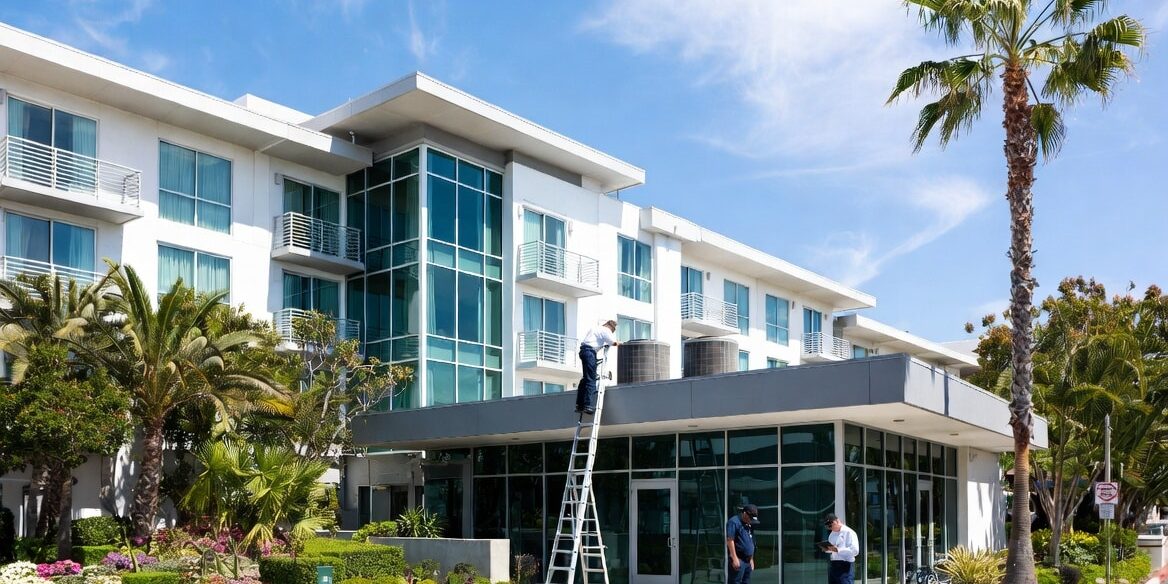
Santa Ana, the vibrant heart of Orange County, California, serves as a key hub for the hospitality industry. With its proximity to John Wayne Airport, major freeways, and attractions like the Discovery Cube and downtown cultural scene, the city hosts a mix of full-service hotels, airport-adjacent properties, boutique accommodations, and extended-stay options. Properties in Santa Ana and surrounding Orange County areas cater to business travelers, tourists, and event attendees, generating significant revenue but also facing unique operational demands. Property maintenance stands at the core of this success, directly influencing guest satisfaction, regulatory compliance, operational efficiency, and long-term profitability.
Yet, maintaining hotel properties in this region is far from straightforward. Hoteliers and facility managers in Santa Ana grapple with a confluence of factors: California’s stringent building and health codes, fluctuating occupancy driven by tourism and business cycles, rising labor and material costs, aging infrastructure in some established properties, and the ever-present pressure to deliver impeccable guest experiences in a competitive market. Neglecting maintenance can lead to emergency repairs that cost three to four times more than planned preventive programs, alongside risks of negative reviews, lost revenue from out-of-service rooms, and potential regulatory violations.
This comprehensive guide explores the primary challenges in hotel property maintenance specific to Santa Ana and broader Orange County hospitality, while offering practical strategies to navigate them effectively. Whether you manage a mid-size airport hotel or a larger hospitality venue, understanding these issues can help transform reactive firefighting into proactive, cost-effective stewardship.
Understanding the Local Context: Santa Ana and Orange County Hospitality Landscape
Santa Ana boasts a diverse hotel portfolio, including well-known chains near the Orange County Airport and independent or budget-oriented properties along corridors like East First Street. Orange County as a whole has seen modest hotel growth in recent years, with slower development adding pressure on existing facilities to maximize uptime and appeal. The region’s Mediterranean climate—mild winters, warm summers, and occasional coastal influences—places specific demands on systems like HVAC, which must handle humidity, pollen, and temperature swings while maintaining energy efficiency amid California’s high utility costs and sustainability goals.
Local regulations amplify these demands. Santa Ana enforces strict property maintenance standards under state housing laws, addressing issues such as adequate plumbing fixtures (water closets, lavatories, bathtubs or showers per guest count), hot and cold running water, freedom from dampness, and prevention of insect, vermin, or rodent infestations. Substandard conditions that endanger health or safety can result in buildings being deemed unfit, triggering enforcement actions. Orange County health departments also monitor hotels for mold, sanitation, and overall safe conditions, with complaints leading to inspections and potential closures or fines.
Additionally, some areas in Santa Ana, particularly along East First Street, have faced challenges with nuisance properties, including motels cited for fire and water damage, lack of hot water, or broader safety and crime-related issues. City efforts have included court injunctions requiring enhanced security, “Do Not Rent” lists for known offenders, and “No Visitor” policies to restore order. While these primarily affect lower-tier accommodations, they underscore the broader reputational and operational risks tied to visible maintenance lapses across the hospitality sector.
Economic factors compound the picture. High interest rates, elevated construction and insurance costs, and labor shortages have slowed new builds, forcing many operators to focus on maintaining and renovating older stock. Inflation impacts everything from parts and supplies to wages, with maintenance departments seeing rising costs in 2024 and beyond. In California, hotel workers’ rights ordinances in various Southern California cities, including potential ripple effects, limit daily cleaning square footage for larger properties, indirectly affecting housekeeping-maintenance coordination.
Major Challenges in Hotel Property Maintenance
Hospitality properties face multifaceted maintenance hurdles. In Santa Ana and Orange County, these manifest in distinct ways due to local climate, regulations, and market dynamics.
- Reactive vs. Preventive Maintenance Imbalance Many hotels default to reactive approaches—fixing issues only after breakdowns occur. This leads to emergency work orders consuming 40-60% of technician time, disrupted guest experiences, and inflated costs. Common triggers include sudden HVAC failures during peak summer occupancy, plumbing leaks causing ceiling damage in guest rooms, elevator outages in multi-story buildings, lighting failures in lobbies or ballrooms, and kitchen equipment malfunctions affecting food service. In a region with high tourism fluctuations, a single HVAC breakdown can force room closures during revenue-critical periods, amplifying opportunity costs.
Signs that a property needs to shift toward predictive or preventive strategies include rising guest complaints about inconsistent temperatures or humidity, engineering teams perpetually in crisis mode, frequent small failures escalating into major repairs, and inefficient energy use showing up in utility bills.
- HVAC and Climate Control Systems Santa Ana’s weather demands reliable heating, ventilation, and air conditioning. Peak summer heat and humidity can strain systems, while winter mildness still requires consistent comfort. Older properties may lack modern energy-efficient units, leading to higher operational costs and guest discomfort. Predictive maintenance tools, such as sensors monitoring vibration or temperature anomalies, can flag issues before failures, but many hotels lag in adoption.
- Plumbing and Water-Related Issues Hotels with high guest turnover face frequent plumbing emergencies: clogged drains, leaking faucets, broken water heaters, or even slab leaks in ground-level or older structures. Poor initial design in some buildings exacerbates problems, as does hard water common in parts of California. Violations for lack of hot water or improper fixtures can trigger health department scrutiny. Pools, spas, and restaurant kitchens add layers of complexity, requiring specialized septic or grease trap maintenance where applicable.
- Electrical, Lighting, and Elevator Systems Power outages, flickering lights, or malfunctioning outlets pose safety risks and inconvenience. Elevators in busy airport hotels are critical; outages during check-in peaks create chaos. Aging electrical infrastructure in properties built decades ago struggles with modern demands like EV charging stations or smart room tech.
- Staffing Shortages and Skilled Labor Gaps California’s hospitality sector reports widespread labor shortages, with many hotels citing difficulties recruiting and retaining maintenance technicians, housekeepers, and engineers. High living costs in Orange County drive turnover, while competition for skilled tradespeople (plumbers, electricians, HVAC specialists) pushes wages upward. This results in overworked teams, delayed preventive work, and reliance on expensive contractors. Hotel maintenance job postings in Santa Ana frequently highlight needs for preventive programs and guest assistance response, yet filling roles remains challenging.
- Rising Costs and Budget Pressures Maintenance can consume 8-12% of operating revenue in well-managed hotels, but reactive models inflate this significantly. Inflation affects parts, energy, and insurance, while deferred renovations from economic uncertainty create backlogs. Guests expect modern amenities—smart locks, energy-efficient fixtures, updated furnishings—without price hikes, squeezing margins.
- Regulatory Compliance and Safety Standards Beyond basic habitability, hotels must navigate Cal/OSHA workplace safety rules, fire codes, ADA accessibility, and environmental regulations around waste, water use, and energy. Mold, pests, or structural issues can lead to complaints and enforcement. Documentation is critical; scattered records complicate audits.
- Guest Expectations and Reputation Management In the age of online reviews, visible wear (chipped paint, worn carpets, inconsistent cleanliness) or service disruptions damage ratings. Travelers demand sustainability—lower water/energy use, eco-friendly practices—and seamless experiences. Neglected aesthetics signal deeper operational issues.
- Technology Integration and Data Management Many properties still rely on paper work orders or spreadsheets, leading to lost requests and inconsistent tracking. Integrating CMMS (Computerized Maintenance Management Systems) or IoT sensors remains a hurdle due to upfront costs and training needs.
- Sustainability and Long-Term Asset Management California pushes for green practices, yet implementing energy-efficient upgrades or waste reduction while controlling costs is challenging amid rising operational expenses.
Strategies for Navigating These Challenges
Successful hoteliers in Santa Ana and Orange County treat maintenance as a strategic investment rather than an expense. Here are proven approaches:
Shift to Preventive and Predictive Maintenance Develop detailed schedules for HVAC filter changes, plumbing inspections, electrical testing, and elevator servicing. Use data from sensors or CMMS software to predict failures—reducing downtime by 25% or more in some cases. Allocate 60-70% of the maintenance budget to planned activities. Regular deep cleans and asset inventories extend equipment life and prevent small issues from escalating.
Leverage Technology and Digital Tools Implement CMMS platforms for work order tracking, inventory management, and reporting. Mobile apps allow technicians to log issues in real-time, improving response times by 40-60%. Smart building systems optimize energy use, cutting utility bills 10-20%. For Santa Ana properties, digital records also streamline compliance during city or county inspections.
Address Staffing Through Training and Partnerships Invest in ongoing training for in-house teams to handle routine tasks, reducing contractor dependency. Partner with local staffing agencies or facility management companies specializing in hospitality for overflow or specialized work. Competitive wages, flexible scheduling (mindful of California labor rules), and clear career paths help retention. Cross-train staff between housekeeping and basic maintenance for better coordination.
Budget Strategically and Control Costs Conduct annual maintenance audits to prioritize high-impact areas. Negotiate consolidated vendor contracts for 15-25% savings. Adopt energy-efficient upgrades (LED lighting, low-flow fixtures) that qualify for rebates. Track metrics like maintenance cost per occupied room or per square foot to benchmark against industry averages. Preventive programs typically yield ROI through fewer emergencies and higher guest satisfaction scores.
Ensure Compliance and Risk Mitigation Maintain up-to-date documentation of inspections, repairs, and certifications. Partner with Orange County health and building departments for guidance. For properties near sensitive areas, implement enhanced security and monitoring to prevent nuisance issues from affecting maintenance focus. Regular pest control and mold prevention are non-negotiable.
Enhance Guest-Centric Maintenance Create feedback loops where front desk reports feed directly into maintenance priorities. Quick response protocols for guest requests (e.g., leaky faucets within hours) preserve satisfaction. Schedule disruptive work during low-occupancy periods and communicate transparently.
Focus on Sustainability Integrate eco-friendly practices: opt for water-saving devices, renewable energy where feasible, and waste reduction programs. These not only meet guest preferences (76% of travelers seek sustainable options) but can lower long-term costs and improve brand image.
Market-Specific Considerations for Santa Ana Airport hotels should prioritize 24/7 reliability for HVAC, elevators, and shuttles. Budget properties must balance cost control with habitability standards to avoid enforcement actions. Collaborate with local organizations for workforce development or shared vendor resources. Monitor tourism trends—post-pandemic recovery and business travel rebound—to anticipate occupancy-driven maintenance spikes.
Case Studies and Real-World Insights
While specific Santa Ana hotel maintenance failures occasionally surface in reviews (e.g., reports of multiple issues or safety concerns at certain properties), proactive operators avoid these pitfalls. In nearby Orange County areas, hotels adopting predictive analytics report fewer emergencies and better energy performance. One broader lesson: properties investing in structured programs see maintenance costs stabilize while guest loyalty grows.
Broader California examples show that hotels embracing technology and training navigate labor shortages more effectively, maintaining service levels despite industry-wide challenges.
The Path Forward: Building Resilient Maintenance Operations
Navigating property maintenance challenges in Santa Ana’s hospitality sector requires a holistic view—blending technology, people, processes, and foresight. By moving from reactive to proactive models, investing in staff and tools, and aligning with local regulations and guest expectations, hotel operators can reduce costs, minimize disruptions, and elevate their properties in a competitive market.
Ultimately, well-maintained hotels don’t just avoid problems; they create memorable experiences that drive repeat business and positive reviews. In Orange County’s dynamic environment, those who prioritize strategic maintenance will thrive amid economic pressures, regulatory demands, and evolving traveler needs.
For hoteliers in Santa Ana, the message is clear: maintenance is not a back-office function but a frontline driver of success. Start with a thorough audit of current systems, implement a CMMS if not already in place, and build partnerships that extend your team’s capabilities. With deliberate action, the challenges of today become the competitive advantages of tomorrow.