

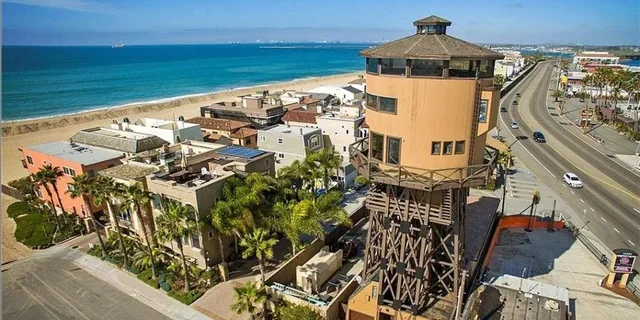
Nestled along the sun-kissed shores of Southern California, Huntington Beach has long been synonymous with its iconic surf culture, pristine beaches, and vibrant community spirit. Often dubbed “Surf City USA,” this coastal gem attracts millions of visitors annually, drawn by its laid-back vibe and endless waves. Yet, beyond the crashing surf and bustling boardwalk lies a deeper layer of history that defines the city’s soul: its downtown properties. These structures, with their architectural elegance and storied pasts, stand as testaments to Huntington Beach’s evolution from a sleepy seaside village to a thriving urban enclave.
Historic preservation in downtown Huntington Beach is more than just a nod to nostalgia; it’s a vital effort to safeguard the cultural, architectural, and economic heritage that makes this area unique. As development pressures mount in one of the most desirable real estate markets in Orange County, the push to preserve these properties has become a rallying cry for residents, historians, and city officials alike. This blog post delves into the rich tapestry of historic preservation efforts in downtown Huntington Beach, exploring key properties, the challenges faced, and the profound benefits that come from protecting our past. Whether you’re a local history buff, a potential homeowner eyeing vintage charm, or simply curious about urban evolution, join me on this journey through time as we uncover the enduring legacy of these downtown treasures.
In an era where modern high-rises and cookie-cutter developments dominate the skyline, the preservation of historic properties serves as a bridge between yesterday and tomorrow. It reminds us that progress need not erase the foundations upon which our communities are built. Downtown Huntington Beach, with its compact grid of streets lined with early 20th-century buildings, exemplifies this balance. From quaint bungalows to grand commercial facades, these properties whisper tales of oil booms, wartime resilience, and post-war prosperity. As we explore this topic, we’ll see how preservation initiatives not only honor the past but also fuel economic vitality and community pride in the present.
A Brief History of Downtown Huntington Beach: Setting the Stage for Preservation
To appreciate the significance of historic preservation, one must first understand the historical context of downtown Huntington Beach. Founded in 1901 as the town of Shell Beach and later renamed in honor of railroad magnate Henry E. Huntington, the area quickly grew around its natural resources—namely, oil discovered in the early 1920s. This black gold rush transformed the sleepy beach town into a bustling hub, attracting workers, entrepreneurs, and families who constructed homes and businesses to support the industry.
The downtown core, centered around Main Street and surrounding blocks, emerged as the commercial heart of the city. By the 1920s and 1930s, a mix of architectural styles flourished here: Craftsman bungalows with their overhanging eaves and exposed beams, Spanish Revival buildings with red-tiled roofs and arched doorways, and modest Art Deco structures featuring geometric motifs and streamlined forms. These properties weren’t just functional; they embodied the optimism of the era, serving as shops, residences, and social gathering spots.
World War II brought temporary slowdowns, but post-war suburbanization and the surf boom of the 1950s and 1960s revitalized the area. However, by the late 20th century, many of these older buildings faced threats from urban renewal projects, neglect, and economic shifts. It was in the 1970s and 1980s that preservation movements gained traction nationwide, influenced by the National Historic Preservation Act of 1966. In Huntington Beach, this led to the establishment of local ordinances and the creation of the Historic Resources Commission in 1989, tasked with identifying, evaluating, and protecting significant sites.
Today, downtown Huntington Beach boasts over 100 properties listed on local historic registries, with several contributing to potential national designations. These efforts reflect a broader commitment to maintaining the area’s small-town feel amid rapid growth. The preservation narrative here is one of resilience: properties that once housed oil workers’ families now serve as trendy cafes, boutique shops, and cozy residences, blending history with contemporary life. Understanding this evolution underscores why preservation is crucial—it’s not about freezing time but adapting the past to enrich the future.
Key Historic Properties: Icons of Downtown Huntington Beach
At the forefront of preservation efforts are several standout properties that capture the essence of downtown Huntington Beach’s heritage. Let’s spotlight a few of these gems, each with its unique story and architectural allure.
One of the most emblematic is the Huntington Beach Club, originally built in 1930 as a private social club. This Spanish Colonial Revival masterpiece, with its stucco walls, wrought-iron balconies, and central courtyard, was designed by architect Paul Revere Williams, the first African American to receive the American Institute of Architects’ fellowship. Once a hub for elite gatherings during the oil boom, it later served as a community center before falling into disrepair. Preservationists rallied in the 1990s to restore it, incorporating modern seismic retrofitting while preserving original tilework and murals. Today, it stands as a multi-use venue hosting events that draw thousands, proving how adaptive reuse can breathe new life into historic structures.
Another cornerstone is the Old World Village, a cluster of German-inspired buildings from the 1920s that evoke a slice of Bavarian charm in sunny California. Constructed during the Prohibition era as a speakeasy and dance hall, these timber-framed edifices with steep gabled roofs and half-timbering have witnessed jazz-age revelry and wartime rationing. Facing demolition in the 1970s due to urban expansion plans, community advocacy led to its designation as a historic district. Restoration efforts focused on authentic materials, like reclaimed oak beams, ensuring the site’s integrity. Now, it houses artisan shops and eateries, serving as a cultural anchor that celebrates immigrant influences in Huntington Beach’s history.
No discussion of downtown preservation would be complete without mentioning the Seacliff Hotel, erected in 1923 as a luxurious seaside resort. This Mission Revival property, with its adobe-style construction, bell tower, and expansive verandas, catered to Hollywood stars escaping the city’s glare. The Great Depression and subsequent fires nearly claimed it, but a 1980s preservation project, funded through public-private partnerships, saved the day. Experts meticulously replicated damaged frescoes and reinforced the foundation against coastal erosion. Reopened as a boutique hotel, it offers guests a taste of vintage glamour while generating revenue that supports further preservation work.
Residential properties also shine in this narrative. The Rubissow House, a 1904 Craftsman bungalow on Palm Avenue, represents early settler life. Built by Russian immigrant Alex Rubissow, a key figure in the town’s founding, this home features built-in cabinetry, a stone fireplace, and a wraparound porch—hallmarks of the style popularized by architects like Greene and Greene. After decades of private ownership, it was acquired by the city in 2005 for use as a museum. Volunteers have cataloged artifacts from its past, from oil-era tools to family heirlooms, turning it into an educational resource that highlights everyday history.
These properties, and others like the 1910s-era Main Street Commercial Block with its ornate cornices and plate-glass windows, illustrate the diversity of downtown’s built environment. Each has undergone rigorous evaluation by the Historic Resources Commission, which applies criteria from the National Register of Historic Places, such as architectural significance, historical associations, and integrity of design. Preservation isn’t just about saving bricks and mortar; it’s about preserving the narratives embedded within them—stories of innovation, struggle, and triumph that define Huntington Beach’s identity.
Preservation Efforts and Initiatives: Safeguarding the Legacy
The mechanics of historic preservation in downtown Huntington Beach are a collaborative symphony involving government, nonprofits, and passionate citizens. At the local level, the city’s Planning Department enforces the Historic Preservation Ordinance, which mandates reviews for any alterations to designated properties. Demolition of historic structures requires a public hearing and demonstration of economic hardship, a high bar that has saved numerous buildings from the wrecking ball.
Key initiatives include the Downtown Historic District Guidelines, adopted in 2012, which provide detailed standards for rehabilitation. These emphasize reversible interventions—like using compatible paint colors and avoiding synthetic materials—to maintain authenticity. The city partners with the California Office of Historic Preservation for grants, such as the Mills Act, which offers property tax reductions in exchange for maintenance commitments. In 2023 alone, this program incentivized over $5 million in restoration projects across downtown.
Nonprofits play a pivotal role too. The Huntington Beach Historical Society, founded in 1965, conducts walking tours, archival research, and advocacy campaigns. Their “Adopt-a-Property” program encourages businesses and residents to sponsor upkeep of facades, fostering a sense of ownership. Similarly, the Surf City Historical Alliance works with architects and engineers to integrate sustainable practices into preservation, such as energy-efficient windows that mimic original designs.
Education is another cornerstone. Annual events like the Historic Home Tour showcase restored residences, drawing crowds and inspiring stewardship. Schools incorporate local history into curricula, teaching young people about the value of their surroundings. Challenges abound, however—rising sea levels threaten coastal properties, while gentrification tempts owners to modernize beyond guidelines. Yet, through adaptive reuse policies, many buildings transition from outdated uses to vibrant ones: a former bank becomes a microbrewery, retaining its vault doors as a quirky feature.
Federal involvement adds another layer. Several downtown properties qualify for the National Register, unlocking tax credits for rehabilitation. The 2018 designation of the Huntington Beach Downtown Historic District expanded protections, covering 50 blocks and ensuring coordinated development. These efforts demonstrate a holistic approach: preservation isn’t punitive but proactive, balancing heritage with economic needs.
Challenges in Historic Preservation: Navigating Modern Realities
Despite successes, preserving downtown Huntington Beach’s historic properties is no easy feat. One major hurdle is financial: restoration costs can soar into the hundreds of thousands, far exceeding what individual owners can afford. For instance, seismic upgrades required by California law often necessitate gutting interiors, clashing with preservation ideals. Low-income owners, particularly in residential zones, may view these mandates as burdensome, leading to neglect or abandonment.
Environmental threats compound the issue. As a coastal city, Huntington Beach grapples with erosion, saltwater intrusion, and intensifying storms exacerbated by climate change. Properties like the Seacliff Hotel require ongoing reinforcements against these forces, demanding innovative engineering solutions that respect historical accuracy. Balancing this with sustainability goals—such as reducing carbon footprints through green retrofits—poses ethical dilemmas. Should solar panels be installed on a 1920s roof, altering its silhouette?
Urban development pressures are relentless. The demand for housing and commercial space in this prime location tempts developers to eye historic sites for teardown and rebuild. In 2022, a proposed mixed-use project threatened a row of 1930s shops, sparking protests that ultimately led to a compromise: partial preservation with new construction behind. Legal battles, like appeals against landmark designations, further strain resources.
Social challenges include equity concerns. Preservation can inadvertently drive up property values, displacing longtime residents and minority communities whose histories are intertwined with these buildings. Efforts to address this include inclusive designation processes that recognize underrepresented stories, such as those of Japanese American fishermen in early downtown.
Despite these obstacles, adaptive strategies emerge. Public-private partnerships pool funds, while digital tools like 3D modeling aid in planning non-invasive repairs. Community engagement—through town halls and volunteer programs—builds consensus, turning potential adversaries into allies. Ultimately, these challenges highlight preservation’s dynamic nature: it’s an ongoing dialogue between past imperatives and future possibilities.
The Benefits of Historic Preservation: A Win for Community and Economy
The rewards of preserving downtown Huntington Beach’s historic properties far outweigh the hurdles, touching every facet of life in the city. Economically, these sites are goldmines. According to a 2021 study by the Historic Preservation League of Orange County, every dollar invested in preservation generates $1.25 in local spending, through tourism, jobs, and property values. Downtown’s historic charm draws 2 million visitors yearly, supporting businesses from antique stores to farm-to-table restaurants housed in restored spaces. Properties like the Old World Village exemplify this, boosting foot traffic and creating a unique shopping district that competitors can’t replicate with new builds.
Culturally, preservation fosters identity and education. These buildings serve as living museums, offering tangible connections to history. Walking Main Street, one can trace the oil industry’s footprint or the surf culture’s roots, enriching residents’ sense of place. Events tied to preserved sites, such as heritage festivals, promote inclusivity and intergenerational dialogue, countering the homogeneity of modern developments.
Architecturally, historic properties inspire innovation. Their timeless designs influence contemporary builds, ensuring downtown retains a cohesive aesthetic. Environmentally, preservation is green: reusing existing structures reduces waste and energy use compared to demolition and new construction. A preserved bungalow requires 30% less materials than a new home, aligning with sustainability mandates.
Socially, these efforts build community resilience. In times of crisis, like the COVID-19 pandemic, historic districts proved adaptable—outdoor markets in preserved plazas kept economies afloat. Moreover, preservation enhances quality of life, with studies showing residents in historic neighborhoods report higher satisfaction due to walkable, character-filled environments.
In Huntington Beach, the ripple effects are evident: preserved properties have stabilized downtown’s real estate market, preventing the boom-bust cycles seen elsewhere. They attract young professionals seeking authentic living spaces, diversifying the demographic. As one local preservationist noted, “These buildings aren’t relics; they’re the heartbeat of our city.” The benefits underscore why investing in history is investing in a prosperous, vibrant future.
Conclusion: Charting a Preserved Path Forward for Huntington Beach
Historic preservation in downtown Huntington Beach properties is a testament to the power of collective will in protecting what makes a place irreplaceable. From the elegant lines of the Huntington Beach Club to the humble resilience of the Rubissow House, these structures weave a narrative of innovation and endurance that defines Surf City. Through dedicated commissions, community initiatives, and adaptive strategies, the city has not only saved its past but enhanced its present, creating a downtown that’s as functional as it is fascinating.
As Huntington Beach continues to grow, the lessons from these preservation efforts will be crucial. Balancing development with heritage ensures that future generations inherit a city rich in character, not just concrete. Whether through policy refinements, increased funding, or grassroots advocacy, the commitment must endure. For residents and visitors alike, downtown’s historic properties offer more than shelter or commerce—they provide a sense of belonging in an ever-changing world.
If you’re inspired to get involved, consider joining a local historical society tour or supporting a preservation fund. In doing so, you’ll contribute to a legacy that waves proudly alongside the surf. Huntington Beach’s history isn’t confined to books or museums; it’s alive in every preserved facade, inviting us to cherish and sustain it for tomorrow.