

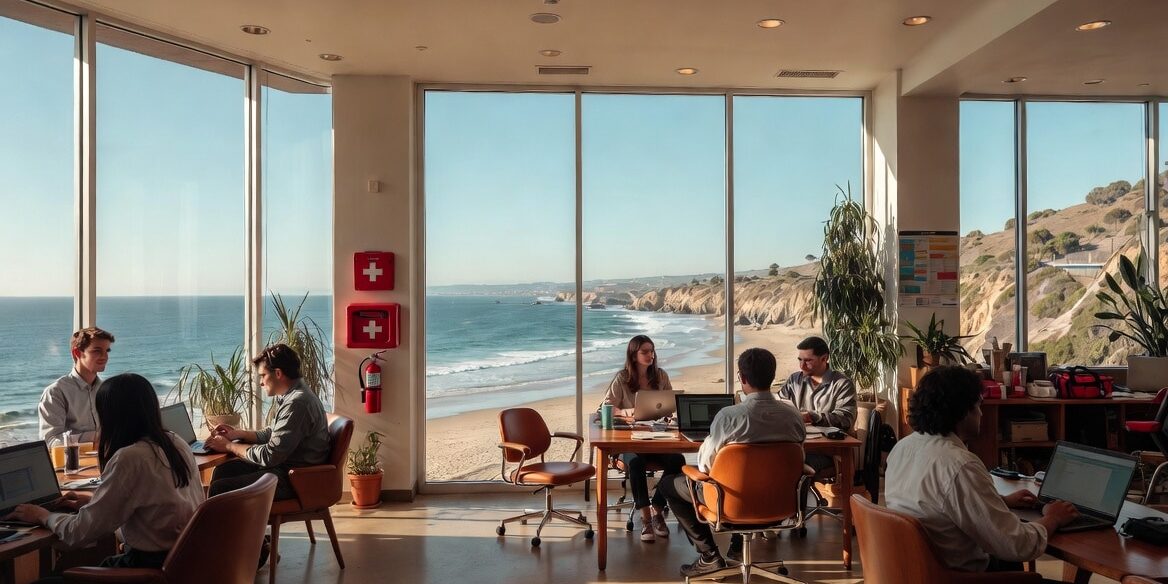
In the sun-drenched coastal enclave of Laguna Beach, Orange County, California, co-working spaces have become more than just trendy workspaces for freelancers, entrepreneurs, and remote professionals. They represent a vibrant ecosystem where innovation meets community in a picturesque setting overlooking the Pacific Ocean. However, beneath the idyllic beaches, art galleries, and upscale cafes lies a region prone to natural and man-made hazards. Earthquakes, wildfires, coastal erosion, and even occasional flooding or power outages from severe weather events pose significant risks. This reality underscores the critical importance of emergency preparedness in co-working spaces throughout Laguna Beach and the broader Orange County area.
This comprehensive exploration delves into how robust emergency preparedness strategies are transforming co-working environments in Laguna Beach. From enhancing occupant safety and business continuity to fostering resilience in the local economy, effective preparedness measures are proving to be indispensable. With over 1,500 words dedicated to this timely topic, we will examine the unique vulnerabilities of the area, the specific challenges faced by co-working operators, successful case studies, best practices, regulatory frameworks, technological innovations, and the long-term socioeconomic impacts.
Understanding the Unique Vulnerabilities of Laguna Beach and Orange County
Laguna Beach, nestled in southern Orange County, is celebrated for its dramatic cliffs, pristine beaches, and vibrant arts scene. Yet, its geography makes it particularly susceptible to emergencies. The region sits near the San Andreas Fault and other active seismic zones, meaning earthquakes are a constant threat. Historical events, such as the 1994 Northridge earthquake and more recent tremors, serve as stark reminders of the potential for widespread disruption.
Wildfires are another major concern. The 2020 Bobcat Fire and other blazes in the surrounding hills have highlighted how dry Santa Ana winds can rapidly turn vegetation into fuel for devastating fires. Coastal properties in Laguna Beach face additional risks from rising sea levels, storm surges, and erosion, which can compromise infrastructure. Power outages, often triggered by high winds or utility company preemptive shutoffs (Public Safety Power Shutoffs or PSPS), further exacerbate vulnerabilities in a digital economy where co-working spaces rely heavily on reliable electricity for Wi-Fi, computers, and climate control.
Orange County as a whole, with its mix of urban, suburban, and coastal communities, experiences these risks collectively. Co-working spaces, which typically house dozens to hundreds of individuals in shared open-plan environments, amplify these challenges. Unlike traditional offices with dedicated corporate emergency teams, co-working facilities often serve a transient population of independent workers who may not be familiar with site-specific protocols.
According to data from the California Emergency Management Agency (Cal EMA) and local Orange County Fire Authority (OCFA) reports, preparedness gaps in commercial spaces can lead to higher injury rates and prolonged recovery times during disasters. In co-working settings, where members come and go, ensuring everyone knows evacuation routes, assembly points, and communication channels becomes paramount.
The Role of Co-Working Spaces in Modern Work Culture
Co-working spaces in Laguna Beach, such as those near the iconic Main Beach or in the Canyon area, have proliferated in recent years. Operators like WeWork-inspired local venues, boutique spaces in converted warehouses, and ocean-view hubs cater to tech startups, digital nomads, creative professionals, and even retirees pursuing passion projects. These spaces offer flexible memberships, high-speed internet, meeting rooms, and networking events that fuel the local economy.
However, their open-layout designs—while great for collaboration—can hinder rapid evacuation or sheltering in place. High occupant density during peak hours increases the stakes. A single emergency event could disrupt not just one business but an entire community of micro-enterprises. This interconnectedness means that poor preparedness in one space can ripple outward, affecting supply chains, client deliverables, and mental well-being across the region.
Emergency preparedness, therefore, is not merely a compliance checkbox but a strategic imperative. It directly impacts member retention, as professionals increasingly prioritize safety when choosing where to work. Surveys from the Global Co-working Survey and local Orange County business associations indicate that safety features rank highly alongside amenities like coffee bars and ergonomic furniture.
Key Components of Effective Emergency Preparedness in Co-Working Spaces
Robust emergency preparedness encompasses several interconnected elements tailored to the Laguna Beach context:
-
Risk Assessment and Planning Every co-working operator should begin with a thorough hazard vulnerability analysis (HVA). This includes mapping seismic risks using USGS data, wildfire threat zones via CAL FIRE maps, and flood-prone areas from NOAA. In Laguna Beach, plans must account for the hilly terrain, narrow canyon roads that can become bottlenecks during evacuations, and the reliance on Pacific Coast Highway (PCH), which is often congested or closed during emergencies.
A comprehensive Emergency Operations Plan (EOP) should outline roles and responsibilities for staff, designate floor wardens, and include procedures for earthquakes (“Drop, Cover, and Hold On”), wildfires (evacuation triggers based on air quality and visibility), and power outages (backup generators or solar integrations).
-
Training and Drills Regular drills are essential. Monthly fire drills, quarterly earthquake simulations, and annual full-scale exercises involving local first responders from the Laguna Beach Police Department and OCFA can save lives. Training must address the diverse membership base—some members may have mobility issues, language barriers, or be unfamiliar with the building. Inclusive approaches, such as multilingual signage and apps with visual guides, enhance accessibility.
Staff training on CPR, AED usage, and basic first aid is equally critical, especially given the potential for injuries from falling debris or smoke inhalation in wildfire scenarios.
-
Infrastructure and Technology Modern co-working spaces in Laguna Beach are investing in resilient infrastructure. This includes earthquake-resistant retrofitting (bolting foundations, securing furniture), fire-resistant building materials, and defensible space landscaping to mitigate wildfire spread. Backup power systems, such as Tesla Powerwalls or diesel generators with sufficient fuel reserves, ensure continuity for critical operations.
Technology plays a transformative role. Smart building systems with seismic sensors can automatically shut off gas lines and elevators. Real-time alert apps integrated with the Wireless Emergency Alerts (WEA) system and local OC Alert platforms keep members informed. Drones for rapid damage assessment and AI-driven predictive analytics for wildfire risk are emerging tools that forward-thinking operators are adopting.
-
Communication and Community Engagement Clear communication channels are vital. Co-working spaces should maintain up-to-date member contact lists, emergency notification trees, and partnerships with neighboring businesses for mutual aid. In Laguna Beach, community-wide initiatives like the city’s CERT (Community Emergency Response Team) program can be leveraged for joint training.
Post-emergency, psychological first aid and mental health resources address the trauma that often follows events like wildfires or major quakes. This holistic approach builds trust and loyalty among members.
-
Supply Kits and Resource Management On-site emergency kits stocked with water, non-perishable food, first aid supplies, flashlights, batteries, and N95 masks (crucial for wildfire smoke) are non-negotiable. For coastal threats, include life vests or flotation devices if near the water. Go-bags for quick evacuation should be encouraged for members.
Case Studies: Success Stories from Laguna Beach and Orange County
While specific proprietary data is limited, several trends and anonymized examples illustrate positive impacts.
Consider a mid-sized co-working space in Laguna Beach’s downtown area that implemented a full preparedness overhaul after the 2018 Woolsey Fire affected regional air quality. By installing advanced air filtration systems, conducting bi-monthly drills, and partnering with local hotels for alternative workspaces during outages, the facility maintained 95% operational continuity during subsequent PSPS events. Member satisfaction scores rose by 30%, and retention improved as word spread about their “disaster-resilient” environment.
In nearby Irvine and Costa Mesa (broader Orange County co-working hubs influencing Laguna trends), spaces have integrated with county-wide resilience programs. One operator reported zero injuries during a moderate earthquake thanks to secured furniture and trained staff guiding members through “Drop, Cover, Hold On.” Business interruption insurance claims were minimized due to pre-arranged remote work protocols and cloud-based data backups.
These examples demonstrate that preparedness translates into tangible benefits: reduced downtime, lower liability risks, and enhanced reputation as a safe haven in an unpredictable environment.
Regulatory Framework and Compliance in California
California’s stringent regulations set the baseline for preparedness. The Occupational Safety and Health Administration (OSHA) requires emergency action plans under 29 CFR 1910.38. For seismic safety, Title 24 of the California Building Code mandates specific standards for new constructions and retrofits.
Orange County and Laguna Beach have local ordinances emphasizing wildfire mitigation (defensible space requirements under PRC 4291) and coastal zone protections. Co-working operators must comply with the Americans with Disabilities Act (ADA) for accessible evacuation routes and the California Fire Code for sprinkler systems and alarm integrations.
Non-compliance can result in fines, shutdowns, or increased insurance premiums. Conversely, exceeding minimum standards—such as achieving LEED or WELL Building certifications with resilience add-ons—can attract eco-conscious members and qualify for grants from FEMA or Cal OES (California Governor’s Office of Emergency Services).
Technological Innovations Driving Preparedness
The intersection of technology and emergency management is revolutionizing co-working in Laguna Beach. IoT devices monitor environmental conditions in real-time, triggering alerts for rising temperatures or seismic activity. Blockchain-based emergency credentialing ensures quick verification of trained personnel during crises.
Virtual reality (VR) training simulations allow members to practice evacuations without disrupting daily operations. Mobile apps with geofencing notify users of nearby hazards and provide personalized evacuation routes based on their location within the building.
Renewable energy integrations, such as rooftop solar paired with battery storage, reduce dependence on the grid vulnerable to PSPS. In wildfire-prone areas, these systems can power essential lighting and communication during extended outages.
Emerging AI tools analyze historical data and weather patterns to predict risk windows, allowing proactive measures like early closures or resource pre-positioning.
Socioeconomic Impacts: Beyond Safety to Resilience and Growth
The impact of emergency preparedness extends far beyond immediate safety. Economically, prepared co-working spaces contribute to a more resilient local economy in Laguna Beach. By minimizing disruptions, they support the gig economy, which forms a significant portion of Orange County’s workforce. Freelancers and small business owners can maintain client commitments, preserving revenue streams that might otherwise be lost during prolonged outages.
Socially, these spaces foster community resilience. Members who feel safe are more likely to engage in local volunteering, networking events, and knowledge-sharing about preparedness. This creates a multiplier effect, where best practices spread from co-working hubs to surrounding residential and commercial areas.
Mental health benefits are profound. Knowing that a workspace has robust plans reduces anxiety, particularly for those with families or pre-existing conditions. In a post-pandemic world where hybrid work blurs boundaries, this sense of security enhances overall well-being and productivity.
From an environmental perspective, preparedness often aligns with sustainability. Wildfire mitigation through native plant landscaping and water conservation measures supports Laguna Beach’s ecological goals, protecting the coastal sage scrub and marine habitats that define the region.
Quantitatively, studies from the National Institute of Building Sciences suggest that every dollar invested in disaster mitigation saves society approximately $6 in future recovery costs. For co-working operators, this ROI manifests in lower insurance deductibles, fewer claims, and higher property values.
Challenges remain. Smaller boutique spaces may lack the capital for extensive retrofits, while the transient nature of membership complicates consistent training. Seasonal tourism spikes in summer can strain resources during peak wildfire season.
Addressing these requires collaborative approaches: public-private partnerships with the City of Laguna Beach, grants for small businesses, and shared resource pools among co-working operators.
Best Practices and Recommendations for Operators
For co-working space managers in Laguna Beach and Orange County, the following actionable steps can elevate preparedness:
- Conduct annual HVAs and update EOPs accordingly.
- Integrate preparedness into membership onboarding with digital modules.
- Partner with local CERT teams and first responders for co-branded training.
- Invest in redundant communication systems (satellite phones, two-way radios).
- Perform post-drill debriefs and continuous improvement cycles.
- Explore insurance incentives for exceeding compliance standards.
- Promote a culture of preparedness through member-led safety committees.
Larger operators might consider third-party audits by firms specializing in California-specific resilience.
The Future of Resilient Co-Working in Laguna Beach
As climate patterns shift and urban development continues, the demand for emergency-prepared co-working spaces will only grow. Laguna Beach’s unique blend of natural beauty and creative energy positions it as a potential model for coastal communities nationwide.
Forward-thinking operators who prioritize preparedness will not only safeguard lives and livelihoods but also differentiate themselves in a competitive market. They will attract talent seeking stability amid uncertainty, contribute to Orange County’s overall resilience, and embody the innovative spirit that defines the region.
In conclusion, the impact of emergency preparedness in Laguna Beach co-working spaces is multifaceted and profound. It enhances safety, ensures business continuity, builds community trust, drives economic stability, and aligns with broader sustainability goals. As hazards become more frequent and intense, investing in preparedness is no longer optional—it is a foundational element of responsible, future-proof workspace design.
By embracing comprehensive planning, cutting-edge technology, rigorous training, and collaborative community efforts, co-working spaces in this beloved Orange County gem can thrive even in the face of adversity. The result is a more secure, productive, and resilient ecosystem that honors Laguna Beach’s vibrant spirit while preparing it for whatever challenges the future may hold.
Members, operators, and local leaders alike have a shared responsibility to champion these efforts. In doing so, they transform potential vulnerabilities into strengths, ensuring that Laguna Beach remains not just a beautiful place to work, but a safe and sustainable one for generations to come.