

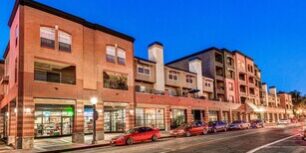
Fullerton is the historic and educational powerhouse of North Orange County. While cities to the south are defined by master-planned corporate parks, Fullerton boasts a gritty, organic, and incredibly lucrative commercial landscape. It is home to California State University, Fullerton (the largest CSU campus by enrollment), a massive heavy-industrial sector, and one of the most famous—and highly regulated—historic downtowns in Southern California.
For commercial property investors, Fullerton offers tremendous yield potential, but it is not a market for absentee landlords. The city’s unique blend of mid-century industrial parks, century-old brick retail, and high-density student housing creates intense operational complexities.
In 2026, the city is undergoing a profound shift. Fueled by State housing mandates and the expansion of the Fullerton Transportation Center, the city is aggressively pushing Transit-Oriented Development (TOD) while simultaneously cracking down on the operational hours of its famous downtown nightlife. Whether you own an aerospace manufacturing facility on Raymond Avenue, a fast-casual retail strip near the university, or a historic restaurant in the SOCO district, here is your definitive guide to maximizing your Net Operating Income (NOI) in Fullerton.
Understanding Fullerton Commercial Zoning (Title 15)
Fullerton’s zoning code (Title 15) is complex, heavily utilizing “Specific Plans” to bypass older, outdated zoning grids and force modernization in key corridors.
-
Downtown Core and Corridors Specific Plan (DCCSP): If you own property anywhere near Harbor Blvd and Commonwealth Ave, you are governed by the DCCSP. This massive 2026-updated plan dictates everything from allowable architectural materials to parking minimums. Its goal is to create a highly walkable, mixed-use urban environment, heavily incentivizing owners to add residential units above ground-floor commercial spaces.
-
The Transit-Oriented Development (TOD) Zone: Concentrated around the Fullerton Train Station, properties in this zone benefit from massive density bonuses and drastically reduced parking requirements. For investors, acquiring aging commercial dirt in this zone is a pure land-value play for future mixed-use redevelopment.
-
C-G (General Commercial) & C-H (Highway Commercial): These govern the heavy arterial retail strips along Orangethorpe and State College Blvd, supporting daily-needs retail, drive-thrus, and automotive services.
-
M-P (Manufacturing Park) & M-G (Manufacturing General): Fullerton retains a massive percentage of OC’s heavy industrial zoning, located primarily in the southern and western portions of the city. These zones protect critical logistics, food processing, and aerospace manufacturing from residential encroachment.
The Core Commercial Districts of Fullerton
Managing a property in Fullerton requires you to understand the specific demographic and municipal pressures of its distinct micro-markets.
1. Historic Downtown Fullerton & SOCO
-
The Vibe: The cultural heart of North OC. It features beautiful 1920s architecture, boutique retail, and a dense, highly active restaurant and nightlife scene (especially in the South of Commonwealth or “SOCO” district).
-
Management Focus: Navigating intense city oversight. Managing property here means dealing with unreinforced masonry (URM) maintenance, extreme parking deficits, and intense alleyway logistics for trash and grease trap pumping.
-
2026 Outlook: The city has taken a strict stance on downtown nightlife to curb police and emergency service costs. Landlords must be hyper-vigilant. If your restaurant/bar tenant violates their Conditional Use Permit (CUP) regarding noise, capacity, or operating hours, the city will move to revoke it, instantly destroying your property’s rental value.
2. The CSUF / State College Corridor
-
The Vibe: A massive economic engine driven by the 40,000+ students and faculty at Cal State Fullerton.
-
Management Focus: High-turnover retail and fast-casual dining. Properties here endure heavy daily foot traffic. Management must execute rapid CAM (Common Area Maintenance) repairs, manage seasonal slumps during summer breaks, and constantly adapt the tenant mix to capture Gen Z consumer trends.
-
2026 Outlook: With the university continuing to expand its footprint, demand for high-density, off-campus student housing with ground-floor commercial space is skyrocketing. Traditional retail strips in this corridor are prime targets for mixed-use conversions.
3. The Industrial West & South (Kimberly Ave / Raymond Ave)
-
The Vibe: Heavy, functional, and highly profitable. This is the domain of CNC machining, aerospace contractors, and massive distribution warehouses.
-
Management Focus: Infrastructure and environmental compliance. Property managers must oversee 3-phase power upgrades, maintain aging flat roofs, and ensure strict compliance with hazardous materials disposal (specifically regarding soil and groundwater runoff).
-
2026 Outlook: Like Lake Forest and Anaheim, Fullerton’s industrial vacancy is incredibly low. Savvy landlords are acquiring older “Class C” manufacturing shells, executing heavy CapEx modernizations (new HVAC, polished floors, upgraded power), and re-tenanting them as high-yield “Flex” spaces.
2026 Market Trends: The “Fox Block” and Urban Infill
Fullerton is actively reshaping its urban core. Investors must align their property strategies with these massive municipal investments.
| The Catalyst | Impact for Commercial Owners |
| The Fox Block Redevelopment | The ongoing revitalization surrounding the historic Fox Theatre is the anchor of downtown’s future. Commercial properties adjacent to this block are seeing increased valuations as the city pours infrastructure dollars into pedestrian safety, lighting, and public parking structures. |
| CUP Crackdowns & “Restaurant-to-Retail” Shifts | Because securing a new entertainment/alcohol CUP in downtown Fullerton is incredibly difficult in 2026, existing properties with grandfathered CUPs are trading at massive premiums. However, landlords with vacant space are increasingly pivoting to high-end experiential retail or “med-spa” tenants to avoid the CUP brain-damage entirely. |
| The Housing Element Upzoning | To meet State housing mandates, Fullerton has rezoned several aging commercial plazas along Orangethorpe Ave to allow for by-right, high-density residential housing. If you own an underperforming retail center, your most profitable exit strategy may be selling to a residential developer. |
Compliance & Historic Realities
Fullerton is one of the oldest cities in Orange County. Managing property here means dealing with the realities of 20th-century construction in a 21st-century regulatory environment.
-
Seismic Retrofitting: If you own a historic brick building downtown, the city strictly enforces state mandates regarding unreinforced masonry. You must ensure your building’s seismic retrofitting is fully permitted and up to 2026 code, or risk massive liability and uninsurability.
-
ADA Upgrades in Historic Spaces: Converting a 1930s retail storefront into a modern restaurant almost always triggers massive Americans with Disabilities Act (ADA) upgrades. Your property manager must know how to navigate the city’s building department to achieve compliance without destroying the historic fabric of the building. (See our Spoke article: [ADA Compliance for Older Commercial Buildings in Orange County] for a deeper dive).
Why Local Fullerton Management is Non-Negotiable
A generic property manager will treat downtown Fullerton like any other outdoor mall. This is a fatal error. They will fail to manage the intense alleyway logistics, they will misunderstand the fragility of a downtown CUP, and they will lack the specialized contractors needed for historic brick preservation.
Partnering with a local Orange County commercial property manager provides:
-
CUP Protection: We strictly enforce lease covenants to ensure your restaurant and entertainment tenants never violate their municipal operating conditions, protecting your building’s most valuable asset: its permitted use.
-
Historic Vendor Networks: Immediate access to specialized contractors who know how to safely rewire a 1920s building, execute structural retrofitting, and navigate the city’s specialized historic permitting process.
-
Industrial Expertise: The operational bandwidth to manage heavy manufacturing infrastructure and complex Triple Net (NNN) reconciliations in the city’s massive southern industrial tracts.
Protect your legacy, capitalize on the TOD and university-driven boom, and maximize your cash flow by partnering with a team that truly understands Fullerton commercial real estate.