

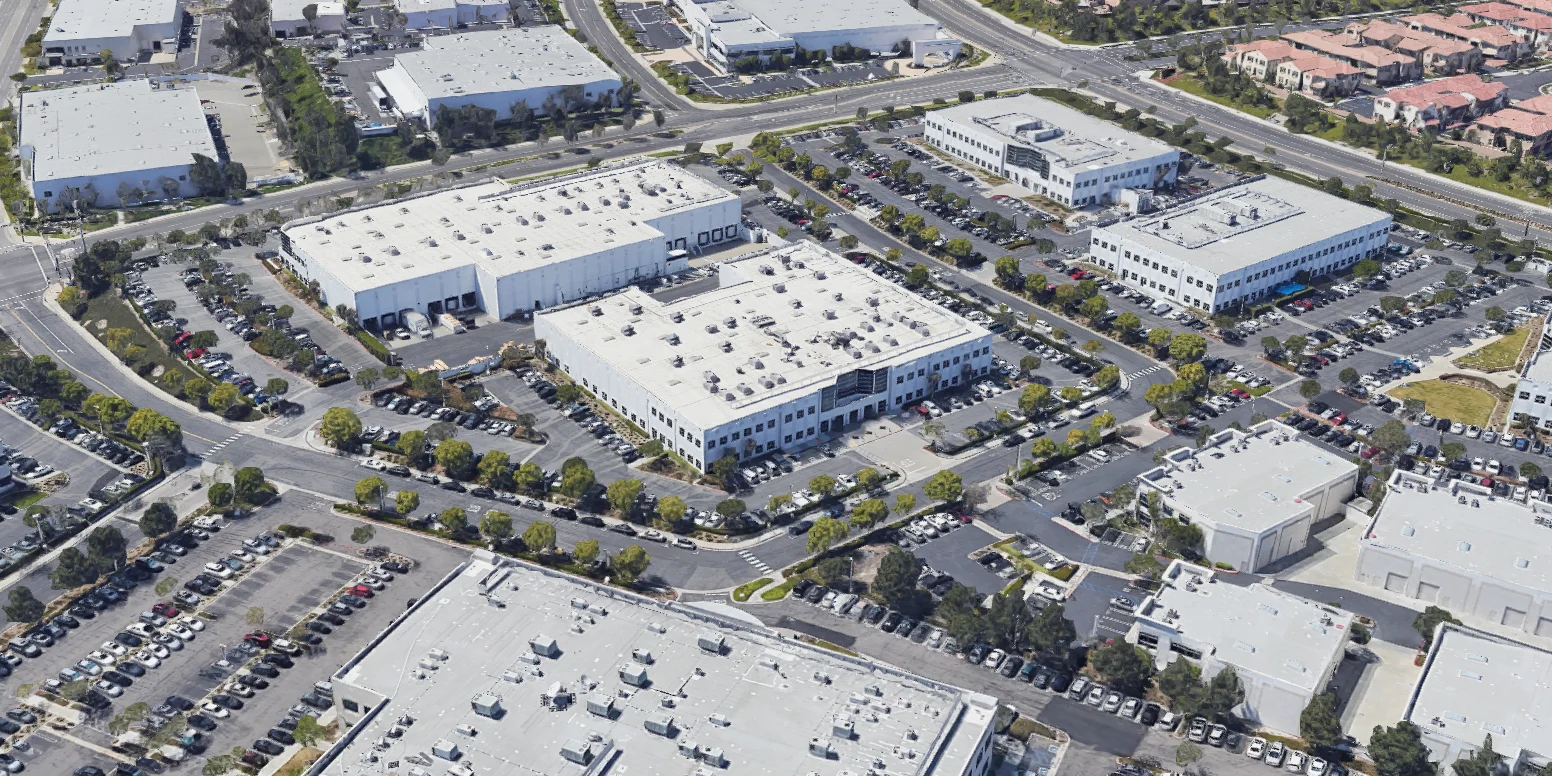
While cities like Newport Beach and Irvine dominate the corporate and luxury headlines, Lake Forest is the quiet, high-yielding industrial engine of South Orange County. Strategically positioned where the 5 Freeway meets the 241 Toll Road, Lake Forest offers unparalleled logistics access without the gridlock of Northern OC.
For commercial property investors in 2026, Lake Forest is the ultimate “flex” market. It has rapidly evolved from a sleepy bedroom community into a powerhouse for advanced manufacturing, e-commerce fulfillment, and life sciences. Recent massive institutional investments—such as Buchanan Street Partners’ $94.3 million acquisition of the Spectrum Centre Business Park—prove that Wall Street views Lake Forest as a premier, long-term industrial haven.
However, managing an asset here is not as simple as leasing a metal warehouse. Lake Forest is heavily master-planned. Properties are governed by strict “Planned Community” (PC) zoning codes that dictate everything from allowable uses to landscaping aesthetics. Whether you own a high-clearance distribution center on Bake Parkway, a Class-A office in Foothill Ranch, or a neighborhood retail strip, here is your definitive guide to maximizing your Net Operating Income (NOI) in Lake Forest.
Understanding Lake Forest Commercial Zoning (Title 9) & Planned Communities
Unlike older cities that rely on a standard grid of commercial zones, Lake Forest’s zoning (Title 9) is heavily reliant on Planned Communities (PCs). When you buy a commercial building here, you are often buying into a highly specific micro-zoning code.
-
The Planned Community (PC) Overlays: Much of the city’s commercial dirt falls under specific PC texts, such as the Foothill Ranch Planned Community, the Pacific Commercentre Planned Community, or the El Toro Planned Community. These texts override standard city zoning. A property manager must read the specific PC document to know if a tenant’s use (e.g., a brewery vs. a machine shop) is legally permitted “by-right.”
-
The 2026 Mixed-Use / High-Density Shift: To meet aggressive State housing mandates, Lake Forest recently updated its Mixed-Use land use categories to allow High-Density Residential uses within commercial areas. If you own an aging, underperforming retail center, the city is now actively incentivizing you to redevelop the parcel into a “live/work/play” mixed-use hub.
-
Urban Activity (UA) & Commercial (C) Districts: These govern the intense retail and daily-needs shopping centers (like those along El Toro Road). They require strict adherence to the city’s updated 2026 noise and signage ordinances to protect the abutting residential neighborhoods.
The Core Commercial Districts of Lake Forest
Lake Forest’s commercial sectors are vast and highly specialized. Managing a property requires understanding the specific demands of these distinct districts.
1. Pacific Commercentre & Bake Parkway (The Industrial Core)
-
The Vibe: This is the heart of South OC’s industrial sector. It is packed with corporate headquarters, heavy manufacturing, and sophisticated R&D flex spaces.
-
Management Focus: High-voltage utility management and supply chain logistics. Tenants here (aerospace, med-tech, and e-commerce) require pristine 3-phase power grids, heavy floor-load capacities, and efficient 18-wheeler truck turning radii.
-
2026 Outlook: Demand for “last-mile” logistics space here is at an all-time high. Landlords are successfully transitioning older industrial leases into aggressive Triple Net (NNN) structures, passing all CAM, roof, and structural maintenance costs directly to the tenant. (See our Spoke article: [Benefits of Outsourcing Industrial Property Management in SoCal] for more on this).
2. Foothill Ranch
-
The Vibe: Annexed into the city in 2000, Foothill Ranch is a master-planned mix of residential hillsides, major big-box retail (Towne Centre), and high-end corporate office parks (historically home to brands like Oakley and Kawasaki).
-
Management Focus: Balancing Class-A office expectations with heavy retail foot traffic. Office landlords must provide hyper-clean, heavily amenitized environments to retain tenants in the post-pandemic “flight to quality,” while retail landlords must manage massive, shared surface parking lots.
-
2026 Outlook: As hybrid work stabilizes, older Class B office spaces in Foothill Ranch are being actively targeted for conversion into specialized medical offices or experiential retail.
3. El Toro Road Corridor (Central Lake Forest)
-
The Vibe: The legacy commercial artery of the city, dominated by neighborhood retail, automotive repair, and fast-casual dining.
-
Management Focus: Code enforcement and aesthetic upgrades. The city is highly focused on revitalizing this older corridor. Property managers must be proactive regarding landscaping maintenance, trash enclosure security, and illegal dumping to avoid municipal fines.
2026 Market Trends: The Industrial Evolution
If you own industrial or flex dirt in Lake Forest, you are holding the winning hand in 2026.
| The Catalyst | Impact for Commercial Owners |
| The “Flex Space” Premium | Traditional warehouses are dead. Today’s tenants want “Flex Space”—a blend of high-end, glass-front creative office space attached to a clean, climate-controlled warehouse. Landlords who invest CapEx to modernize their older Lake Forest warehouses with drop ceilings, polished concrete, and HVAC are commanding massive rent premiums. |
| E-Commerce Automation | New tenants moving into the Bake Parkway area are heavily automating their fulfillment. Property managers must work closely with city inspectors to permit advanced racking systems, localized robotics infrastructure, and upgraded fire-suppression (ESFR) systems. |
| Infrastructure & Traffic Mitigation | The city is continuously executing major road improvements (like the recent Bake and Trabuco intersection overhaul). While this improves long-term value, property managers must aggressively communicate construction schedules to retail and industrial tenants to ensure business continuity and delivery access. |
Compliance & The HOA Reality
Unlike older cities, many of Lake Forest’s commercial and industrial parks operate with active commercial Homeowner Associations (HOAs) and strict Covenants, Conditions, and Restrictions (CC&Rs).
-
Architectural Review: You cannot simply repaint a building in the Pacific Commercentre or Foothill Ranch without approval from the master association’s architectural review committee.
-
Use Restrictions: Even if the City of Lake Forest zones a property for a specific use (like a 24-hour gym), the specific commercial park’s CC&Rs might prohibit it due to parking constraints or noise rules. Your property manager must cross-reference leases against both the city municipal code and the private CC&Rs to prevent devastating legal battles.
Why Local Lake Forest Management is Non-Negotiable
A generic property management firm will treat a Lake Forest industrial park like any other warehouse in the Inland Empire. That is a massive mistake. The affluent demographics, strict master-planned rules, and high-tech tenant base require a surgical approach.
Partnering with a local Orange County commercial property manager provides:
-
Industrial Vendor Networks: Immediate access to specialized contractors who know how to service heavy-duty commercial roll-up doors, maintain complex HVAC systems in tech/R&D suites, and execute industrial roof maintenance.
-
CC&R Navigation: The expertise to seamlessly manage your property’s compliance with both the City of Lake Forest’s code enforcement and your specific commercial park’s association guidelines.
-
Strategic CAM Reconciliations: Because industrial NNN leases are the standard here, your manager must flawlessly execute annual CAM reconciliations to ensure you are maximizing your recoverable expenses without alienating your long-term corporate tenants.
Protect your asset, capitalize on the massive South OC industrial boom, and maximize your cash flow by partnering with a team that truly understands Lake Forest commercial real estate.






