

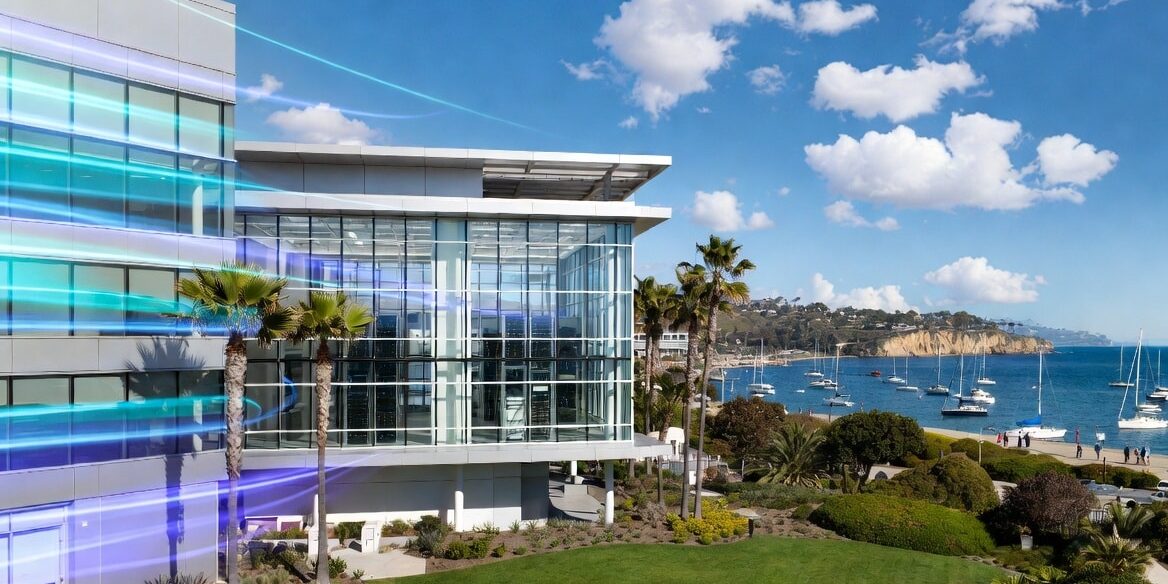
In the heart of Southern California’s booming tech ecosystem, Newport Beach and the broader Orange County region have emerged as prime locations for businesses seeking reliable, high-performance data center space. With its proximity to major hubs like Irvine’s tech corridor, John Wayne Airport (SNA), and the dense population centers of Los Angeles and San Diego, Orange County offers low-latency connectivity, robust fiber infrastructure, and a strategic edge for edge computing, AI workloads, and hybrid cloud strategies. Companies headquartered or operating in Newport Beach—home to Atmosphere Data Centers at 120 Newport Center Drive—benefit from a vibrant business environment that blends coastal lifestyle with cutting-edge infrastructure.
While Newport Beach itself hosts fewer large-scale colocation facilities than neighboring Irvine or Santa Ana, the area is served by top providers including DataBank’s OC1 and SNA2 facilities in Irvine (just 10-15 minutes away), SMS Datacenter in Irvine, and others in Tustin and Santa Ana. These sites tap into Southern California’s growing data center market, where demand for AI-optimized, high-density power continues to surge amid record-low vacancy rates. Leasing space here isn’t just about racks and power—it’s about navigating California’s unique regulatory landscape, seismic risks, energy constraints, and sustainability mandates while maximizing uptime and scalability.
Whether you’re a startup scaling AI models, a healthcare provider handling sensitive PHI, or an enterprise migrating to the cloud, leasing data center space requires careful planning. Building your own facility is often cost-prohibitive and time-consuming, especially with permitting delays and power scarcity in California. Colocation leasing lets you focus on innovation while leveraging professional-grade infrastructure. Below are the top 10 tips tailored specifically for leasing in data centers serving Newport Beach and Orange County. These insights draw from current market realities, provider capabilities, and local regulations to help you secure the best deal and avoid common pitfalls.
1. Research the Local Data Center Landscape and Select Providers with Proven Orange County Presence
Start by mapping providers within a short drive of Newport Beach. Irvine-based facilities like DataBank’s OC1 offer direct access to the county’s fiber-rich tech corridor, while Atmosphere Data Centers’ Newport Beach headquarters signals strong local expertise in AI-optimized, energy-efficient designs. Key players also include SMS Datacenter (2525 Main Street, Irvine) and Evocative in Santa Ana—facilities boasting carrier diversity and proximity to subsea cable landings via the LA ecosystem.
Evaluate each provider’s track record: uptime history, customer testimonials (e.g., DataBank clients praising low-latency performance for SoCal users), and scalability options from single cabinets to private suites. Use tools like Data Center Map or direct quotes to compare pricing, which in Orange County often ranges $125–$145 per kW/month for 1-5 MW deployments. Factor in travel time for your team—Newport Beach’s affluent, low-crime environment makes on-site visits convenient. Skipping this step risks vendor lock-in or suboptimal latency. Thorough research ensures your lease aligns with regional growth drivers like the Olympics-driven connectivity needs and Southern California’s 3+ million tech-savvy residents. (148 words)
2. Prioritize Power Capacity, Redundancy, and Transparent Cost Structures
Power is the lifeblood of any data center lease—and in California, it’s also one of the biggest challenges due to grid constraints and high costs. Demand redundant systems: N+1 or 2N UPS, backup generators compliant with SCAQMD emissions rules, and diverse utility feeds from Southern California Edison. Facilities like DataBank’s Irvine sites support high-density racks (up to 20+ kW per rack) ideal for AI workloads.
Insist on separate metering for power—base rent should exclude electricity, charged at actual usage or a predictable blended rate to avoid surprises. Review power usage effectiveness (PUE) metrics; aim for 1.5 or lower per California’s Title 24 standards. In Orange County, where energy tariffs for loads over 25 MW are evolving under CPUC rules (SB 886), locking in long-term rates protects against volatility. Calculate total cost of ownership (TCO) including potential demand charges. A well-negotiated power clause can save 20-30% annually while ensuring 99.999% uptime during heatwaves or grid strain. Always request a power capacity guarantee tied to your growth projections. (162 words)
3. Evaluate Connectivity, Carrier Neutrality, and Low-Latency Advantages
Orange County’s location delivers unmatched low-latency access to West Coast users and Asia-Pacific markets via LA-area subsea cables. Choose carrier-neutral facilities that allow multiple providers (e.g., direct cloud on-ramps to AWS, Azure, or Google Cloud) without vendor lock-in. DataBank and similar providers offer diverse fiber routes, cross-connects, and meet-me rooms with protected conduits—critical for redundancy against outages.
Assess peering options, bandwidth pricing, and latency to key endpoints like Los Angeles or your end-users in Newport Beach’s financial and professional services sectors. Carrier-neutral models foster competition, often reducing networking costs by 15-25%. For businesses in Newport Beach, this means faster application performance for edge computing, video streaming, or financial trading. Request SLAs guaranteeing sub-10ms latency where possible and include clauses for circuit installation at reasonable rates. In a market with tight capacity, securing diverse paths now future-proofs against congestion. (138 words)
4. Ensure Full Compliance with California and Local Regulations
Newport Beach and Orange County operate under stringent rules that can derail leases if ignored. Zoning falls under Newport Beach Municipal Code Title 20 and Orange County’s light industrial districts; many facilities require conditional use permits (CUPs) and Coastal Development Permits (CDPs) near the coast. California Environmental Quality Act (CEQA) reviews assess traffic, noise, air quality, and water impacts—expect environmental impact reports for larger projects.
Key standards include Title 24 Building Energy Efficiency (2025 updates for coastal zones), CCPA/CPRA for data privacy, HIPAA/PCI DSS for sensitive data, and seismic design per the 2025 California Building Code (Zone 4). Providers like DataBank already meet SSAE 18, SOC 2 Type II, and FedRAMP. Demand proof of compliance certifications and audit rights. Early pre-application meetings with the City of Newport Beach Community Development Department prevent delays. Non-compliance risks fines, shutdowns, or lease invalidation—budget for ongoing reporting on energy, water, and GHG emissions. (152 words)
5. Scrutinize Security Features, Physical Protections, and Certifications
Data breaches cost millions; Newport Beach leases must prioritize layered security. Look for 24/7 on-site staff, biometric access, CCTV with AI monitoring, mantraps, and perimeter controls. Logical security should include encryption, zero-trust architecture, and regular penetration testing.
Certifications like SOC 2, ISO 27001, HIPAA, and PCI DSS are non-negotiable for regulated industries. Facilities in Irvine benefit from Orange County’s low crime rates and proximity to skilled security talent. Request remote hands support for quick incident response and review disaster recovery plans tailored to local risks (earthquakes, wildfires). Include lease clauses for shared responsibility matrices and audit access. Strong security not only protects assets but enhances insurability and customer trust—especially vital for Newport Beach’s finance, healthcare, and tech clients. (132 words)
6. Negotiate Lease Terms, SLAs, and Exit Strategies with Precision
Data center leases are complex; never sign the first draft. Negotiate 99.999% uptime SLAs with meaningful credits for downtime, clear maintenance windows, and remedies for power/cooling failures. Ensure base rent excludes power and telecom; cap increases and define escalation formulas.
Include rights for acceptance testing, alterations (e.g., rack installations), and subleasing/assignment flexibility. Address early termination fees, especially under new CPUC rules for large loads. In Orange County’s competitive yet capacity-constrained market, longer terms (3-5+ years) often yield better rates—balance with growth clauses. Hire legal counsel experienced in California tech leases. Review force majeure for seismic events and include disaster recovery add-ons. Smart negotiation can reduce TCO by 10-20% while adding flexibility. (128 words)
7. Plan for Scalability, Flexibility, and Future-Proof Infrastructure
AI and machine learning are driving rack densities skyward. Lease space that supports modular expansion—cabinets today, cages or suites tomorrow—without costly migrations. DataBank’s scalable models and Atmosphere’s high-efficiency designs exemplify this.
Project 3-5-year needs based on workload forecasts; include options for additional power, cooling, and connectivity at pre-agreed rates. Hybrid cloud readiness and edge capabilities are essential in OC’s performance-sensitive market. Build in decommissioning and e-waste plans compliant with Cal/OSHA and local rules. Flexible terms prevent stranded assets as your business evolves. In a market shifting toward sustainability, prioritize providers investing in liquid cooling or renewable integration. (118 words)
8. Conduct Thorough Due Diligence, Site Visits, and Risk Assessments
Virtual tours aren’t enough. Visit facilities in Irvine or Santa Ana to inspect cooling systems, generator testing, and operations firsthand. Review recent SOC 2 reports, third-party audits, and historical uptime logs.
Assess location-specific risks: seismic retrofits, flood zones (minimal in elevated Irvine sites), and wildfire proximity. Evaluate workforce availability—Orange County’s talent pool from UC Irvine is a plus. Request references from similar Newport Beach-area tenants. Engage independent engineers for infrastructure reviews. Due diligence uncovers hidden costs or weaknesses early, saving headaches later. In California’s regulated environment, verify water-efficient cooling (closed-loop or recycled) to meet scarcity mandates. (112 words)
9. Focus on Sustainability, Energy Efficiency, and Green Initiatives
California leads in environmental standards—Title 24, RPS, and potential SB 57 reporting demand low PUE and renewable procurement. Choose providers using free cooling, high-efficiency HVAC, and on-site solar or green energy credits.
Water scarcity is acute; prioritize air-cooled or hybrid systems. LEED or ISO 14001 certifications signal commitment. Sustainable leasing enhances your ESG profile and may unlock incentives. In Orange County, efficient facilities lower TCO and align with community expectations near Newport Beach’s coastal zones. Track metrics like WUE (water usage effectiveness) in your lease. Future-proof by selecting sites prepared for carbon-free tariffs. (108 words)
10. Partner with Experienced Brokers, Consultants, or Legal Experts
Don’t go it alone. Engage data center brokers familiar with Orange County who can benchmark rates, negotiate anonymously, and access off-market inventory. Consultants help model TCO and compliance roadmaps.
Legal teams versed in California data center legislation (AB 1577 reporting, CEQA) prevent costly oversights. Partnerships accelerate the process in a tight market and often yield better terms. For Newport Beach businesses, local expertise ensures alignment with coastal aesthetics and community standards. The right team turns leasing into a strategic advantage. (98 words)
Leasing data center space in Newport Beach and Orange County positions your organization at the forefront of Southern California’s digital economy. By following these 10 tips—grounded in local market dynamics, regulatory realities, and best practices—you’ll secure resilient, cost-effective, and future-ready infrastructure.
Ready to explore options? Contact reputable providers like DataBank or Atmosphere Data Centers, or reach out to a specialized broker for personalized guidance. The right lease today fuels innovation tomorrow in one of America’s most dynamic regions.