

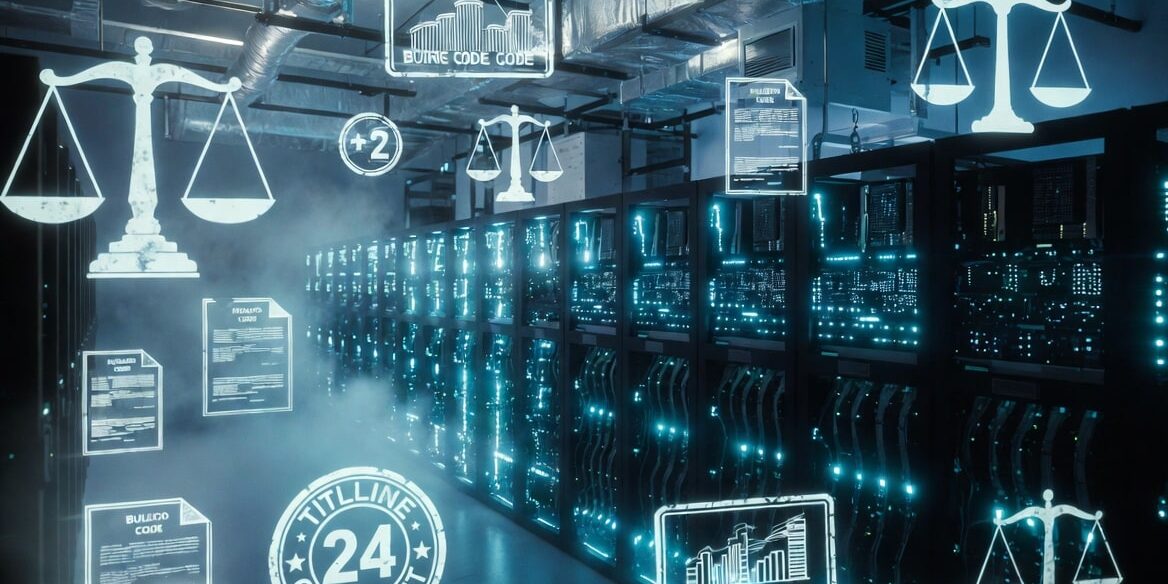
Data centers represent critical infrastructure in the digital economy, powering everything from cloud computing to artificial intelligence applications. In Anaheim, located in Orange County, California, these facilities demand sophisticated Heating, Ventilation, and Air Conditioning (HVAC) systems to maintain precise environmental conditions for sensitive IT equipment. Cooling often accounts for 30-50% of a data center’s total energy consumption, making HVAC not only a technical necessity but also a heavily regulated component subject to overlapping federal, state, and local legal frameworks.
This comprehensive guide explores the key legal aspects of HVAC systems in Anaheim data centers. It covers energy efficiency standards, permitting requirements, environmental regulations, safety and liability considerations, zoning and land use issues, and emerging compliance challenges. Whether you are a developer, operator, engineer, or legal advisor planning or managing a data center in Anaheim, understanding these requirements helps avoid costly delays, fines, or operational disruptions. California’s stringent rules, particularly Title 24, set a national benchmark for energy efficiency, while local Anaheim and Orange County processes add layers of oversight.
1. Overview of Data Centers and HVAC Importance in Anaheim
Anaheim, part of the greater Los Angeles metropolitan area in Orange County, benefits from proximity to major tech and entertainment hubs, including Disneyland and growing digital infrastructure demands. Data centers here must handle high power densities, often exceeding 20 watts per square foot for computer rooms, while contending with Southern California’s Mediterranean climate—mild winters but warm summers that influence cooling loads.
HVAC systems in data centers primarily manage temperature (typically 18-27°C at server inlets per ASHRAE guidelines), humidity, and airflow to prevent equipment failure, downtime, or reduced lifespan. Common designs include Computer Room Air Conditioning (CRAC) units, Computer Room Air Handlers (CRAH), chilled water systems, and increasingly efficient options like economizers, free cooling, and liquid cooling hybrids. Legal compliance ensures these systems not only function reliably but also minimize environmental impact and energy costs.
Non-compliance with HVAC-related regulations can trigger building permit denials, operational shutdowns, civil penalties ranging from hundreds to thousands of dollars per day, or even criminal misdemeanor charges in severe cases under Anaheim municipal codes.
2. Federal Regulations Affecting HVAC in Data Centers
Federal oversight provides a baseline for HVAC design, focusing on energy, environment, and safety:
- ASHRAE Standards: While voluntary in many contexts, ASHRAE TC 9.9 guidelines for thermal environments in data processing environments are widely referenced and often incorporated into state and local codes. Recommended inlet temperatures range from 18-27°C (64-80.6°F), with humidity controls to avoid condensation or static issues. Many California requirements explicitly align with or exceed these.
- EPA Regulations on Refrigerants: The American Innovation and Manufacturing (AIM) Act phases down hydrofluorocarbons (HFCs). For data center cooling equipment (self-contained refrigeration, air conditioning, and IT equipment cooling), a GWP limit of 700 applies starting January 1, 2027. Common refrigerants like R-410A (GWP ~2,088) will be restricted in new installations. Existing systems can continue with proper maintenance, but new builds or major retrofits must transition to lower-GWP alternatives. Violations can lead to EPA enforcement actions, including fines.
- Clean Air Act and Permitting: Large data centers with backup generators or significant combustion equipment may trigger New Source Review (NSR) or Title V operating permits if they qualify as major sources of air pollutants. The EPA’s Clean Air Act resource hub for data centers (launched in 2025) assists with compliance for stationary engines and turbines often paired with HVAC systems.
- OSHA Safety Standards: HVAC installation and maintenance must comply with workplace safety rules, including hazard communication for refrigerants, lockout/tagout for electrical components, and fall protection during rooftop unit work. Data centers must also address confined space entry for ductwork and proper handling of chemicals.
These federal layers intersect with California rules, often making state requirements more prescriptive.
3. California State Regulations: Title 24 and Beyond
California leads in building energy efficiency, with Title 24 (California Building Standards Code) as the cornerstone for HVAC in data centers. Part 6 covers energy efficiency, applying to all new construction, additions, and alterations where permits are filed on or after the effective date (2025 standards apply from January 1, 2026).
Key Title 24 Requirements for Computer Rooms and Data Centers
- Definition and Scope: A “computer room” is defined as a space primarily housing electronic equipment with a design IT equipment power density exceeding 20 W/ft² (215 W/m²). Requirements apply to space-conditioning systems serving these areas.
- Mandatory Measures (Section 120.6(j)):
- No simultaneous heating and cooling (reheat prohibition) in the same zone.
- Adiabatic humidification only; steam or infrared prohibited.
- Variable airflow control for unitary air conditioners >60,000 Btu/hr (or lower thresholds in proposed updates) and chilled water fan systems. Fan power demand must drop to ≤50% at 66% fan speed.
- Fault detection and diagnostics for economizers.
- Prescriptive Requirements (Section 140.9(a)):
- Economizers: Each cooling system serving computer rooms must include an integrated air or water economizer capable of 100% free cooling at specified outdoor conditions (e.g., 65°F dry-bulb for air economizers). Exceptions exist for small loads (<5 tons or <20 tons under certain conditions).
- Fan Power Limits: Total fan power ≤27 W/kBtu·h of net sensible cooling capacity at design conditions.
- Climate zone variations: Anaheim falls in California Climate Zone 9 or 10 (coastal-influenced Southern California), affecting economizer effectiveness and cooling load calculations compared to hotter inland zones.
- 2025/2026 Updates: The 2025 Building Energy Efficiency Standards emphasize heat pumps, higher efficiency ratings, and performance-based compliance options. Data centers must demonstrate compliance via modeling, often using approved software. Prescriptive paths are stricter than ASHRAE 90.1 in many cases, pushing for containment, variable speed drives, and monitoring.
- HERS Verification: For certain HVAC components, third-party Home Energy Rating System (HERS) raters (or equivalent for nonresidential) verify installation, duct leakage, refrigerant charge, and system efficiency.
Non-compliance can result in permit rejection, stop-work orders, or fines. The California Energy Commission (CEC) enforces via local building departments, with penalties up to $2,000 per day per violation category after grace periods.
Other State Laws
- California Environmental Quality Act (CEQA): Data center projects, including those with significant HVAC energy or water use, may require environmental impact reports. Proposed bills like SB 887 (2026) seek to eliminate categorical exemptions for data centers, mandating fuller review. Qualifying “environmental leadership” projects could gain expedited review if they meet criteria like water-efficient cooling and community benefits.
- Water and Energy Reporting: Bills such as AB 1577 and AB 2619 propose mandatory reporting of water and energy consumption, power usage effectiveness (PUE), and indirect water use for electricity generation. Pre-permit disclosures of expected usage may be required. Although some 2025 bills were vetoed or softened, trends point toward increased transparency.
- Greenhouse Gas Disclosure (SB 253 and SB 261): Large operators must report Scope 1, 2, and 3 emissions, including those from HVAC refrigerants and energy use, starting in phases from 2026.
- Refrigerant Management: CARB’s program requires reporting for systems with >200 lbs of high-GWP refrigerant. AB 209 facilitates low-GWP refrigerant use by overriding certain mechanical code restrictions.
- CPU C Studies: Legislation like SB 57 directs studies on data center impacts on ratepayers, potentially leading to special tariffs for large loads (>25-75 MW).
Anaheim, as a charter city in some respects, must still adhere to statewide building standards but can add local enhancements.
4. Local Regulations in Anaheim and Orange County
Anaheim enforces the California Building Code, California Mechanical Code (CMC), and related standards through its Building Division. Permits are mandatory for HVAC installation, replacement, or modification.
- Permitting Process: Submit mechanical and electrical permit applications, often with plans showing HVAC layout, equipment specifications, and Title 24 compliance documentation. For data centers, this includes energy calculations and HERS summaries. Roof-mounted equipment (common for condensers) must be screened from public view per Anaheim Municipal Code §18.38.170—screening must use matching building materials, not lattice, and be maintained. Landscaping can supplement but not solely satisfy screening.
- Anaheim Municipal Code: Zoning (Title 18) and building regulations (Title 15) apply. Mechanical equipment visibility rules emphasize aesthetic integration. High-rise or specific plan areas may have additional life safety or energy rules. Failure to obtain permits constitutes a misdemeanor.
- Orange County Context: While Anaheim is incorporated and handles its own permitting, unincorporated Orange County areas follow county zoning and the 2025 California codes (effective 2026). Orange County recently (as of April 2026) imposed a one-year moratorium on new data centers in unincorporated areas to study definitions, impacts, and updates to the Unified Development Ordinance. This pause affects planning but not necessarily existing Anaheim facilities. Proposals for “Technology” zoning districts elsewhere in the county highlight growing scrutiny of data center land use, including power and cooling demands.
- Local Climate and Zoning: Anaheim’s specific plans (e.g., for certain districts) may influence siting. CEQA review at the local level assesses cumulative impacts on energy grids, water supplies, and noise from HVAC equipment.
Building officials in Anaheim reference the latest adopted codes (2019 or updated triennial cycles aligning with state). Always verify current adoptions via the city’s website or planning department.
5. Safety, Liability, and Operational Compliance
Beyond energy, HVAC systems implicate safety and liability:
- Fire and Life Safety: NFPA standards (often referenced via California codes) address smoke control, fire suppression in plenums, and integration with HVAC for smoke evacuation. Data centers require robust systems to protect against fire while maintaining uptime.
- Liability for Failures: Improper HVAC design or maintenance can lead to equipment damage, data loss, or personal injury, exposing owners to negligence claims. Contracts with HVAC contractors should include compliance warranties, indemnification, and performance bonds. California’s strict liability doctrines in construction may apply.
- Worker Safety: OSHA and Cal/OSHA rules govern installation, with training required for refrigerant handling (EPA Section 608 certification) and electrical work near HVAC.
- Insurance Considerations: Carriers increasingly scrutinize data center HVAC for efficiency and resilience; non-compliant systems may affect coverage or premiums.
Regular audits, maintenance logs, and third-party certifications (e.g., LEED for broader sustainability) help mitigate risks.
6. Zoning, Land Use, and Emerging Challenges
Data centers often locate in industrial or technology-zoned areas. In Anaheim, general plan and specific plan consistency is required. Proposed statewide bills could make approvals discretionary via CEQA, even in “by-right” zones, requiring analysis of HVAC-related water use (e.g., for evaporative cooling) and energy infrastructure strain.
Key challenges include:
- Water Scarcity: Southern California restrictions favor air-cooled or recycled-water systems over once-through cooling.
- Grid Impacts: High HVAC loads contribute to peak demand; special tariffs or studies may allocate costs fairly.
- Noise and Aesthetics: Local codes limit HVAC noise and require screening.
- Moratoriums and Studies: Orange County’s pause signals caution; Anaheim may follow with heightened review.
Developers should engage early with planning departments for conditional use permits or development agreements that can codify HVAC performance metrics.
7. Best Practices for Compliance and Risk Mitigation
To navigate these legal aspects successfully:
- Engage licensed professionals early—mechanical engineers familiar with Title 24, certified energy modelers, and attorneys specializing in construction/regulatory law.
- Use performance-based compliance where possible to optimize HVAC designs (e.g., trading off elements while meeting overall energy budgets).
- Incorporate low-GWP refrigerants, variable speed technology, economizers, and advanced controls from the design phase.
- Budget for permitting, modeling, verification, and potential CEQA studies.
- Monitor legislative developments—data center bills evolve rapidly, with focus on reporting, efficiency, and resource impacts.
- Implement ongoing monitoring for PUE, temperature compliance, and refrigerant leaks to demonstrate due diligence.
- For retrofits or expansions in existing Anaheim facilities, confirm trigger thresholds for Title 24 alterations.
Consult Anaheim’s Building Division for project-specific guidance and the CEC website for current Title 24 manuals and forms.
Conclusion
HVAC systems in Anaheim data centers operate at the intersection of innovation and regulation. California’s Title 24, combined with federal refrigerant rules, local permitting, and evolving land use scrutiny in Orange County, creates a complex but navigable legal landscape. Prioritizing compliance not only avoids penalties and delays but also enhances operational efficiency, reduces environmental footprint, and supports long-term sustainability—critical as AI and digital demands grow.
Data center stakeholders in Anaheim should view legal requirements as opportunities for resilient, future-proof designs. Proactive engagement with regulators, use of advanced technologies, and thorough documentation remain the best defenses against evolving rules. For tailored advice, consult qualified local experts, as regulations can update with each code cycle or legislative session.
This overview provides a foundational understanding; always verify the most current codes and consult professionals for specific projects, as interpretations can vary by jurisdiction and project details.