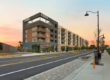
Mission Viejo, a master-planned city in southern Orange County, California, continues to evolve with its blend of suburban tranquility and increasing density through mixed-use developments. These projects integrate residential living with commercial retail, offices, and community amenities, promoting walkability and efficient land use while aligning with regional goals for sustainable growth. As of 2026, developments like those in Rancho Mission Viejo—including the newly launched Gavilán Ridge 55+ village with 326 homes and upcoming amenities—are expanding the area’s appeal, alongside ongoing transformations in nearby areas such as The Village at Laguna Hills.
However, this growth intensifies the need for robust emergency preparedness. Orange County faces diverse hazards: earthquakes from nearby faults, wildfires fueled by dry conditions and Santa Ana winds, flooding from winter storms, extreme heat events, and occasional landslides. The City of Mission Viejo’s 2024 Local Hazard Mitigation Plan (adopted in late 2024) emphasizes mitigation to reduce vulnerability, prioritizing protection of life and property, public awareness, natural system preservation, partnerships, and strengthened emergency services.
Advanced property maintenance is the cornerstone of preparedness in mixed-use settings. It involves proactive, systematic upkeep that integrates risk assessments, preventive technologies, and compliance with codes to ensure buildings and shared spaces withstand or quickly recover from emergencies. In mixed-use environments—where residents, shoppers, employees, and visitors share infrastructure—poor maintenance can lead to rapid escalation of incidents, such as a retail fire spreading to residential floors or seismic damage disrupting shared utilities.
This comprehensive guide explores tailored strategies for property managers, HOAs, developers, and residents in Mission Viejo’s mixed-use contexts, drawing from local hazard data, county plans, and best practices.
Understanding Mixed-Use Developments in Mission Viejo Today
Mixed-use developments combine multiple functions in one area or building, often featuring ground-floor retail or offices topped by apartments, condos, or senior housing. This model supports California’s housing goals while creating vibrant, self-contained communities.
In Mission Viejo and the surrounding areas, key examples include:
- Rancho Mission Viejo’s expansions: The master-planned community is adding thousands of homes, with Gavilán Ridge (opened in early 2026) focusing on 55+ living across five neighborhoods, plus a 5-acre clubhouse featuring pools, fitness centers, and event spaces. The broader plan includes up to 5 million square feet of commercial space, schools, parks, and multi-use trails.
- Nearby transformations: Projects like The Village at Laguna Hills are redeveloping former mall sites into hubs with apartments, retail, offices, hotels, and parks.
- Local proposals: Discussions around redeveloping sites (e.g., former retail centers) into walkable civic cores with entertainment, dining, and services reflect ongoing interest in mixed-use formats.
These developments create complex systems: shared elevators, parking structures, HVAC, fire suppression, electrical grids, and drainage. A single failure—such as clogged drains during a storm—can affect hundreds of occupants across uses. Advanced maintenance must address this interconnectivity to prevent cascading failures during crises.
Key Hazards Facing Mission Viejo and Their Impact on Mixed-Use Properties
The City’s 2024 Local Hazard Mitigation Plan assesses threats like severe weather (windstorms, extreme heat, winter/coastal storms), earthquakes (including liquefaction), wildfires, landslides, and flooding (including dam failure risks). Hazards are scored on probability, severity, warning time, and duration.
- Earthquakes: High probability with significant impact. Shaking can damage structural elements, utilities, and non-structural components like glass facades common in retail areas.
- Wildfires: Moderate to high risk near wildland interfaces. Embers can ignite roofs or landscaping in mixed-use sites.
- Flooding and Storms: Historical events (e.g., 2010-2011 winter storms causing presidential declarations) highlight risks to drainage, basements, and ground-floor commercial spaces.
- Extreme Heat: Occasional but intensifying events strain cooling systems, elevate health risks for residents (especially seniors in 55+ communities), and increase energy demands.
- Windstorms: Frequent high winds can topple trees onto power lines or damage signage/roofs.
Climate trends suggest more intense events, making proactive maintenance essential. In mixed-use buildings, hazards disproportionately affect vulnerable groups—elderly residents, families, or those with limited mobility—emphasizing inclusive strategies.
Core Principles of Advanced Property Maintenance
Advanced maintenance shifts from reactive fixes to predictive, data-informed programs. Key elements include:
- Regular Risk Assessments: Conduct annual or bi-annual evaluations by certified engineers, focusing on seismic retrofits, fire-resistant materials, and flood-proofing. Use tools like infrared scans for electrical issues or drone inspections for roofs.
- Preventive Schedules: Implement CMMS (Computerized Maintenance Management Systems) for tracking tasks like HVAC filter changes, generator testing, and sprinkler inspections—critical for multi-tenant compliance.
- Code Compliance and Upgrades: Align with California Building Code, Fire Code, and Orange County Fire Authority (OCFA) standards. Regular inspections ensure fire lanes, exits, and suppression systems function.
- Technology Integration: Deploy IoT sensors for real-time monitoring of leaks, smoke, temperature, and structural integrity. Smart building systems can automate shutdowns or alerts during emergencies.
- Landscape and Defensible Space: Maintain vegetation per wildfire guidelines—clear 100 feet of defensible space, use fire-resistant plants, and ensure irrigation systems operate reliably.
- Utility Resilience: Regular testing of backup generators, solar integrations, and water storage. In mixed-use sites, coordinate with commercial tenants for shared backup power.
Specific Strategies for Emergency Preparedness
Seismic Preparedness
- Retrofit older structures for base isolation or bracing.
- Secure non-structural elements (shelving, water heaters, heavy fixtures).
- Stockpile emergency supplies in common areas and train staff on shut-off procedures.
Wildfire Mitigation
- Install ember-resistant vents, Class A roofing, and automatic sprinklers.
- Coordinate with OCFA for annual inspections and vegetation management.
- Develop evacuation plans accounting for mixed occupants.
Flood and Storm Protection
- Clear drains, maintain sump pumps, and elevate critical equipment.
- Install flood barriers for ground-floor retail.
- Partner with the county flood control for infrastructure alerts.
Extreme Heat and Power Outages
- Upgrade HVAC with energy-efficient, high-capacity units.
- Ensure backup power for elevators, medical devices, and common cooling areas.
- Create cooling centers in clubhouses or community spaces.
Integrated Emergency Plans
Develop site-specific plans per the County’s Unified Emergency Operations Plan, including:
- Evacuation routes for multi-level buildings.
- Communication protocols via AlertOC mass-notification.
- Coordination with CERT (Community Emergency Response Team) programs.
- Drills involving residents, tenants, and first responders.
For 55+ communities like Gavilán Ridge, prioritize accessibility—ramps, wide paths, and medical alert integrations.
Collaboration and Community Involvement
Success requires partnerships:
- With the City of Mission Viejo Police/Fire for training and inspections.
- Orange County Fire Authority for prevention services.
- HOAs and property management firms for tenant education.
- Residents via programs like Emergency Survival Program (ESP) or Citizen Emergency Preparedness Academy (CEPA).
Encourage registration for AlertOC and building of personal/family kits.
Challenges and Future Outlook
Challenges include high costs, tenant coordination, and regulatory hurdles. However, grants for mitigation (e.g., FEMA-funded) and insurance incentives reward resilient properties.
Looking ahead, as Mission Viejo embraces more mixed-use growth, advanced maintenance will define safe, sustainable communities. Proactive approaches not only protect against hazards but also enhance property values and quality of life.
By investing in advanced property maintenance today, Mission Viejo’s mixed-use developments can withstand tomorrow’s challenges—ensuring residents, businesses, and visitors thrive in a resilient environment.