

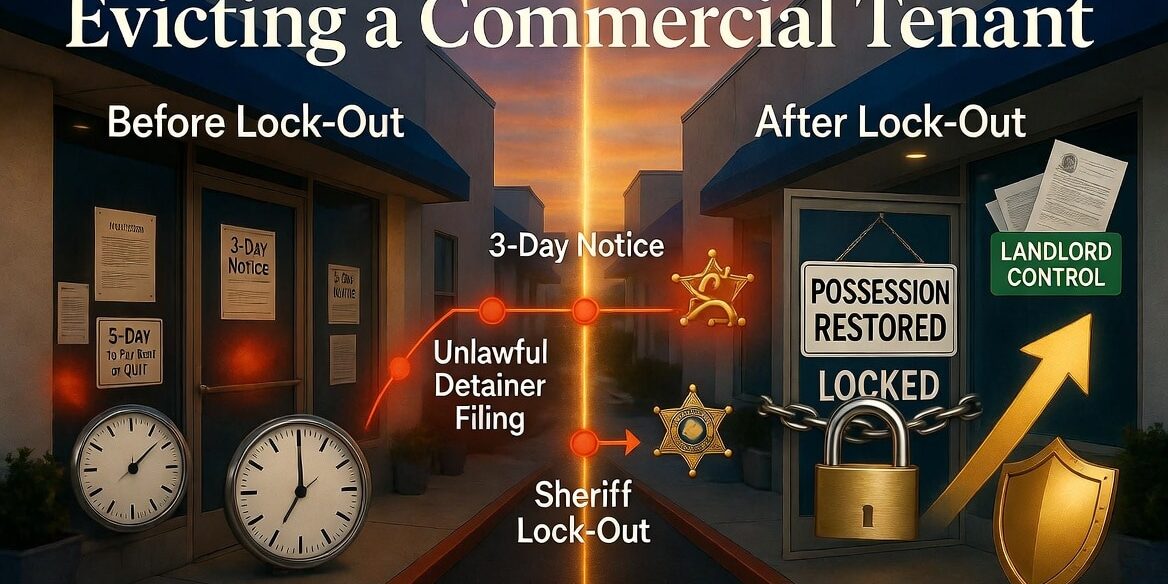
In the highly reactive, top-line-obsessed arena of commercial real estate syndication, the amateur landlord navigates tenant delinquency with a fatal level of emotional empathy. They acquire a premium commercial asset, secure a high-revenue tenant, and blindly assume the relationship is a permanent partnership. When the tenant misses their first rent payment, the amateur landlord listens to the excuses. They grant a verbal extension. They accept a partial payment. They wait 45 days before consulting an attorney, completely failing to realize that every single day they hesitate, the tenant is mathematically vaporizing the building’s Net Operating Income (NOI) while legally establishing an undocumented forbearance agreement.
This is a catastrophic, multi-million-dollar failure of operational enforcement.
In the apex tiers of institutional capital, we do not view a commercial lease as a partnership; we view it as a weaponized, conditional contract. The moment a tenant breaches the financial covenant, they are no longer a client; they are a localized liability actively destroying your capital stack. In the state of California, the commercial eviction process—the Unlawful Detainer—is one of the only legal frameworks heavily weighted in favor of the landlord, provided you execute the timeline with absolute, forensic perfection. A single procedural error, a single accepted partial payment without a non-waiver agreement, resets the entire clock and traps your equity in legal purgatory.
At The Malakai Sparks Group, backed by the institutional framework of L3 Property Management, we do not hope for tenant compliance; we legally enforce it. Executing a commercial lock-out requires the exact same ruthless, fiduciary discipline deployed when steering the La Cuesta Racquet Club board through complex liability assessments and structural overhauls—you strip the emotion from the table, govern the localized risk, and physically enforce the governing documents. You do not survive the daily logistical warfare of this industry by pleading for your rent; you engineer your portfolio with the unyielding physical and mental stamina of an Ironman, and the relentless, compounding structural momentum of a heavy 48KG kettlebell progression—every single mechanical movement, every single legal notice, must be locked out and mechanically flawless to endure the weight of the court system. Just as we relentlessly canvas every microscopic demographic shift across our exact 2,500-home farming route in the Numbered Streets of Huntington Beach to unearth unyielding equity before it hits the open market, we forensically execute the eviction matrix to permanently eradicate the threat to your yield. Here is the definitive, institutional-grade guide to decoding the Unlawful Detainer, surviving the bankruptcy shield, and mathematically reclaiming your dirt.
1. The Mathematics of the Legal Bleed
To successfully reclaim a commercial asset, an investor must completely dismantle the illusion that waiting saves money. The financial damage of a non-paying tenant is compounding and absolute.
Total Eviction Liability = (Daily Rent Days of Delay) + Legal Retainers + Unrecovered CapEx + Future Vacancy Friction
-
The Speed Advantage: Unlike residential evictions, which can drag on for six to twelve months due to draconian tenant protection laws, a flawlessly executed commercial Unlawful Detainer in California can result in a physical lock-out in 45 to 60 days.
-
The Partial Payment Trap: The single most lethal mistake an amateur makes is accepting a 50% rent payment on day 15 of the delinquency. Under California law, accepting a partial payment automatically nullifies your existing 3-Day Notice to Pay or Quit. The judge will throw your lawsuit out, and you must start the entire expensive legal timeline over from day one. Elite operators absolutely refuse partial funds unless accompanied by a heavily weaponized, attorney-drafted “Non-Waiver of Forfeiture” agreement.
2. High-Density Friction vs. Commercial Sovereignty
The legal calculus of eviction shifts violently depending on the asset class, making commercial sovereignty a massive institutional advantage.
-
The Residential Nightmare: When operating massive residential complexes within the transit-oriented commuter grids of Santa Ana: High-Density Multi-Family & The Urban Redevelopment Core or the student-heavy logistical networks of Fullerton: The Northern Logistical & Academic Support Hub, landlords are paralyzed by the Tenant Protection Act (AB 1482) and localized municipal eviction moratoriums. You are heavily restricted from removing a tenant, even for cause.
-
The Commercial Contrast: Commercial dirt is entirely exempt from these consumer protections. Judges view commercial leases as contracts between two sophisticated business entities. If the tenant did not pay, the judge does not care about their operational hardships. The court strictly enforces the contract, allowing institutional landlords to swiftly sever the liability and re-tenant the space.
3. The 3-Day Notice and the Experiential Default
The eviction clock officially begins with the service of the 3-Day Notice to Pay Rent or Quit, and in highly curated retail sectors, the speed of this execution dictates the survival of the asset’s valuation.
-
The Culinary Collapse: When executing heavy adaptive-reuse projects within the hyper-experiential retail grids of Costa Mesa: The Creative Office & High-Volume Experiential Retail Corridor or navigating the fiercely guarded historic preservation overlays of San Juan Capistrano: Historic Professional Office & Boutique Retail Arbitrage, an anchor tenant failing to pay rent usually means the localized business is completely dead.
-
The “Estimated” Notice: In commercial leases, calculating the exact amount owed (Base Rent + NNN + Late Fees) can be complex. California commercial law provides a massive advantage: landlords are legally allowed to use an “Estimated” 3-Day Notice. As long as the estimated demand is within 20% of the actual amount owed, the notice remains legally valid, preventing the tenant’s attorneys from delaying the eviction over minor accounting discrepancies.
4. Industrial Sabotage and the Bankruptcy Shield
In the massive logistical and manufacturing sectors, a failing tenant will frequently deploy the ultimate legal weapon to paralyze the Unlawful Detainer: the Chapter 11 Bankruptcy filing.
-
The Supply Chain Hostage: When managing massive distribution hubs within Anaheim: The Industrial Heart of Orange County or specialized terminal logistics centers in Huntington Beach: Coastal Industrial & The Aerospace/Defense Pivot, a failing defense contractor or logistics firm possesses millions of dollars of heavy machinery bolted to your floor. To stop your eviction, they file for bankruptcy.
-
The Automatic Stay: This instantly triggers a federal “Automatic Stay,” making it a federal crime for the landlord to continue the state-level eviction. Amateur landlords freeze and bleed out for months. Elite institutional operators immediately deploy federal bankruptcy counsel to file a “Motion for Relief from the Automatic Stay.” We legally prove to the federal judge that the tenant has no realistic path to reorganization and that our collateral (the building) is being irreparably harmed. We mathematically force the federal court to lift the shield, allowing us to resume the lock-out.
5. The Lock-Out Matrix and Shielding the Clinical Moats
You won the lawsuit. The judge issued the judgment. Now, the physical reality of the Writ of Possession and the Sheriff’s lock-out dictates the final phase of the operation.
-
The Medical Extraction: If you are reclaiming advanced biomedical footprints within Fountain Valley: The Corporate Flex Corridor & Institutional Healthcare Fortress or cleaning out failed clinical engines in Orange: The Institutional Healthcare & Medical Office Epicenter, you cannot simply change the locks and throw the inventory in a dumpster. Medical evictions involve abandoned bio-hazards, patient records (HIPAA violations), and radiological equipment. The institutional landlord must coordinate with state health agencies to execute a legally compliant, specialized extraction, permanently indemnifying the landlord from federal fines before the new tenant takes possession.
-
The Corporate Abandonment: This same physical protocol applies within the towering corporate bastions of Irvine: The Master-Planned Corporate Juggernaut and the heavily restricted suburban fortresses of Mission Viejo: South County Suburban Retail & High-Yield Healthcare Centers. If the corporate tenant leaves behind worth of server racks and Herman Miller furniture, the landlord must follow strict California Notice of Belief of Abandonment laws, formally auctioning the assets to satisfy the judgment without triggering conversion lawsuits from the tenant’s creditors.
6. The Sovereign Exit: Preserving the “Clean” Rent Roll
The ultimate consequence of an elite, flawlessly executed eviction is realized exclusively upon the terminal disposition of the asset.
-
The Valuation Rescue: When transitioning multi-generational equity into the absolute sovereign wealth vaults of Newport Beach: The Wealth Management & Coastal Capital Center, institutional buyers execute a forensic audit of your rent roll and accounts receivable.
-
The Fiction of the Delinquent Ledger: If an institutional buyer sees a tenant who is 90 days behind on rent but still physically occupying the space, they view your asset as legally contaminated. They will deduct the massive legal cost of the future eviction, deduct the lost rent, and violently compress the Cap Rate. Conversely, if you swiftly executed the lock-out, absorbed the vacancy, and scrubbed the non-performing tenant from the rent roll, the buyer is acquiring a pristine, ready-to-lease shell. The swiftness of the eviction architecture is exactly what preserves the institutional credibility of the asset and justifies the premium exit valuation.
Conclusion: You Do Not Negotiate with a Default, You Eradicate It
In the highly capitalized, completely unforgiving arena of Southern California commercial real estate, relying on a delinquent tenant’s promise to “pay next week” to govern an eight-figure asset is an unforced error of massive proportions.
Amateur commercial brokers sell the illusion of partnership. They push the landlord to offer forbearance to avoid conflict, completely ignore the catastrophic mathematical bleed that occurs while the tenant operates rent-free, and trap their clients inside a legally vulnerable timeline that mathematically detonates their debt service covenants.
Elite commercial advisors are legal engineers and physical enforcers. We serve the 3-Day Notice on day four. We execute the Non-Waiver agreements. We mathematically force the federal bankruptcy lift before the asset is permanently paralyzed. At The Malakai Sparks Group and L3 Property Management, we ensure that when your wealth is deployed into a commercial asset, your lease enforcement is not a negotiation; it is a mathematically bulletproof, institutionally executed, and legally uncompromising timeline engineered to permanently reclaim and defend your legacy.