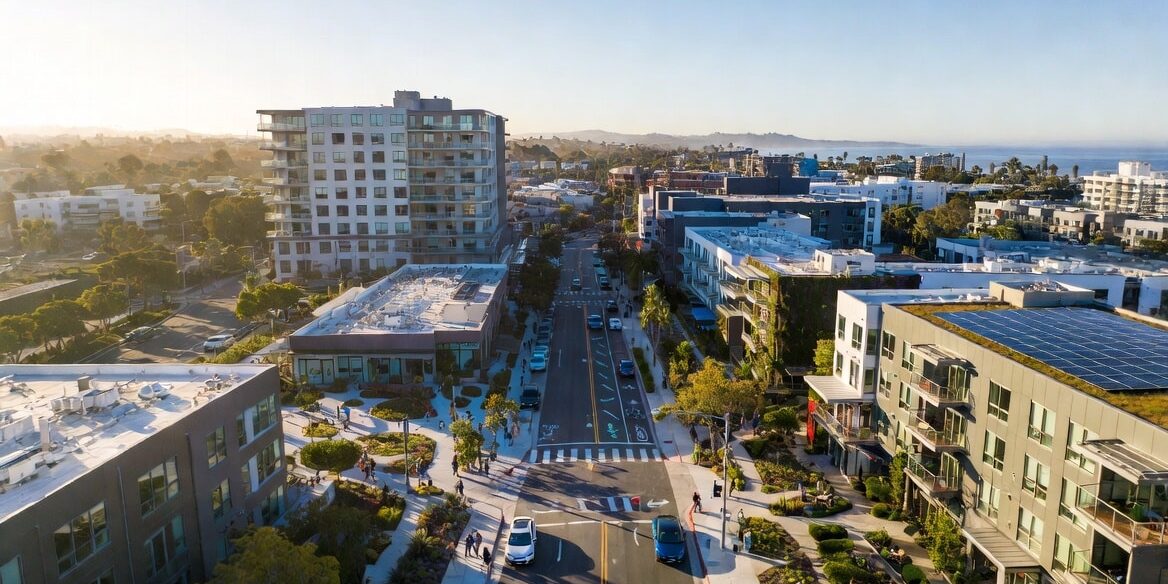
Mixed-use developments—projects that seamlessly integrate residential, commercial, retail, office, and sometimes civic or recreational spaces—represent one of the most promising pathways toward sustainable urban growth in Southern California. In Costa Mesa, a vibrant city in Orange County known for its coastal proximity, diverse neighborhoods, and proximity to major employment centers like South Coast Plaza and John Wayne Airport, these developments offer unique opportunities to reduce environmental impacts while enhancing quality of life.
Costa Mesa’s location in a Mediterranean climate with limited rainfall, vulnerability to drought, and exposure to regional climate risks such as extreme heat and sea-level rise makes sustainability not just an aspiration but a necessity. The city’s ongoing Climate Action and Adaptation Plan (CAAP) serves as a community-driven roadmap to cut greenhouse gas (GHG) emissions, build resilience, improve public health, foster equity, and promote smart growth principles. Mixed-use projects align perfectly with these goals by promoting compact, walkable communities that lower vehicle miles traveled (VMT), optimize resource use, and create inclusive spaces.
This comprehensive guide explores why sustainability matters in Costa Mesa’s mixed-use context, outlines key practices across energy, water, waste, transportation, materials, and social equity, highlights relevant local regulations and certifications, discusses implementation strategies and challenges, and looks toward future trends. Whether you are a developer, planner, architect, policymaker, or resident interested in greener urban living, this resource provides actionable insights tailored to Costa Mesa and broader Orange County dynamics.
Why Mixed-Use Developments Are Key to Sustainability in Costa Mesa
Traditional single-use zoning often leads to sprawl, increased car dependency, higher energy consumption, and fragmented communities. Mixed-use developments counter this by co-locating housing, jobs, shops, and amenities, which can significantly reduce transportation-related emissions—one of the largest GHG sources in California.
In Costa Mesa, the General Plan and Mixed-Use Overlay District explicitly encourage such projects to create housing opportunities, revitalize areas, enhance business vitality, and ensure design excellence without overwhelming transportation infrastructure. Recent approvals, such as live-work developments in the Mesa West Bluffs area and larger proposals like Hive Live (up to 1,050 units with retail and open space), demonstrate the city’s push for infill and redevelopment that balances growth with sustainability.
Benefits specific to Costa Mesa include:
- Reduced VMT and Emissions: Proximity to uses encourages walking, biking, and transit, supporting the Orange County Sustainable Communities Strategy.
- Efficient Resource Use: Shared infrastructure (e.g., parking, utilities) lowers per-unit environmental footprints.
- Economic Vitality: Mixed-use can boost local businesses, create green jobs, and increase property values through desirable, resilient designs.
- Social Equity: Well-designed projects can provide affordable housing options, accessible parks, and community spaces, addressing disparities in disadvantaged neighborhoods identified in the city’s LEED for Cities Gold certification efforts.
- Climate Resilience: Integrated green infrastructure helps manage urban heat, stormwater, and drought in a region prone to water scarcity.
Costa Mesa has achieved LEED Cities Gold status, earning points across categories like natural systems, quality of life, and innovation, including organic waste policies, styrofoam bans, and expanded park access. Mixed-use projects can build on this foundation to exceed baseline performance.
Energy Efficiency and Renewable Integration
Energy use in buildings and transportation accounts for a major share of Costa Mesa’s carbon footprint. Sustainable mixed-use developments prioritize high-performance design to minimize demand and shift to clean sources.
Key Practices:
- Integrated Design and Modeling: Use early-stage energy modeling under California’s Title 24 Building Energy Efficiency Standards. Incorporate passive strategies like optimal orientation, high-performance envelopes (insulation, cool roofs, advanced glazing), and natural ventilation to reduce cooling loads in Costa Mesa’s warm climate.
- Efficient Systems: High-efficiency HVAC, LED lighting with smart controls, and demand-response capabilities. Shared mechanical systems across residential and commercial components optimize loads—offices peak daytime, residences evening.
- On-Site Renewables: Rooftop solar photovoltaic (PV) arrays, especially on parking structures or low-slope commercial roofs. Battery storage and community solar options enhance reliability and support the city’s push for renewables and energy storage.
- Electrification: All-electric designs, including heat pump water heaters and appliances, paired with EV-ready infrastructure. Costa Mesa promotes EV charging stations and zero-emission fleets as part of its sustainability initiatives.
- Community Choice Energy: Participation in programs offering greener electricity portfolios.
In nearby Orange County cities like Irvine and Fullerton, similar mixed-use projects have achieved 20-50% operational cost reductions through these strategies while complying with or exceeding CALGreen and Title 24. Developers in Costa Mesa should aim for performance-based compliance, using tools like integrated project delivery for synergies.
Certification Pathways: Pursue LEED, with credits for Optimize Energy Performance and Renewable Energy Production. Costa Mesa’s past Green Building Program and “Green Team” task force laid groundwork for voluntary sustainable techniques in new construction and retrofits.
Water Conservation and Green Infrastructure
Southern California’s semi-arid climate and periodic droughts make water efficiency critical. Mixed-use developments in Costa Mesa must address both indoor and outdoor use while managing stormwater.
Key Practices:
- Indoor Efficiency: Low-flow fixtures, dual-plumbing for greywater recycling (e.g., for toilet flushing), and high-efficiency appliances. CALGreen mandates baseline water savings.
- Outdoor Landscaping: Drought-tolerant, native, and climate-appropriate plants per the Model Water Efficient Landscape Ordinance (MWELO). Smart irrigation controllers with soil moisture sensors and weather-based adjustments minimize waste. Green infrastructure like bioswales, permeable paving, and rain gardens captures and treats runoff, reducing flood risk and recharging groundwater.
- Water-Energy Nexus: Efficient fixtures reduce the energy needed for water pumping and treatment. Rainwater harvesting systems can supplement irrigation.
- Site-Wide Strategies: Shared systems for irrigation across residential and commercial areas. In Costa Mesa, guidelines emphasize water-efficient landscapes to conserve regional resources.
The city’s sustainability efforts include water use reduction, drought-resistant landscaping, and green infrastructure. Larger projects like those near South Coast Plaza can incorporate expansive open spaces (e.g., 13+ acres in regional proposals) designed with these features for cooling and biodiversity benefits.
Waste Reduction and Circular Economy
Minimizing waste supports Costa Mesa’s goals of resource efficiency and GHG reduction.
Key Practices:
- Construction Phase: Divert at least 75% of construction debris through recycling and salvaging, per CALGreen.
- Operational Phase: On-site composting and organic waste management programs. Easy-access recycling stations for residents and businesses. Shared waste infrastructure reduces collection trips.
- Zero-Waste Design: Choose durable, recyclable materials and design for deconstruction. Educate tenants via programs aligned with the city’s organic waste outreach.
- Policy Alignment: Costa Mesa’s initiatives expand recycling and organics diversion while banning certain single-use items like styrofoam at city facilities.
Mixed-use settings enable convenient shared facilities, fostering higher diversion rates than single-use projects.
Sustainable Transportation and Mobility
Transportation is a prime emissions source; mixed-use developments excel here by design.
Key Practices:
- Walkability and Bikeability: Pedestrian-friendly streetscapes, wide sidewalks, bike lanes, and secure storage. Connect to the Santa Ana River Trail and local paths, as seen in projects like Hive Live.
- Transit-Oriented Development (TOD): Locate near bus routes or future transit enhancements. Reduce parking minimums in favor of shared or unbundled parking to discourage car ownership.
- EV and Alternative Fuels: Ample EV chargers, electric bike/scooter stations, and car-share programs. Support for zero-emission vehicles aligns with city programs.
- Last-Mile Solutions: Micromobility integration and safe multimodal access.
These measures lower VMT, improve air quality, and enhance equity by providing options for all income levels.
Materials, Health, and Indoor Environmental Quality
Sustainable materials and healthy interiors are essential for long-term viability.
Key Practices:
- Low-Impact Materials: Use recycled-content, regionally sourced, or certified sustainable products (e.g., FSC wood, low-VOC paints and adhesives). Prioritize durable facades suited to coastal influences.
- Healthy Buildings: Enhanced ventilation, daylighting, and views to reduce sick building syndrome. Biophilic design elements like indoor plants and green walls.
- Resilience Features: Materials that withstand heat, wind, and potential wildfire smoke. Elevated designs or flood-resistant features where relevant.
LEED credits for Materials and Resources plus Indoor Environmental Quality guide these choices.
Social Equity, Community, and Economic Sustainability
True sustainability encompasses people. Costa Mesa’s CAAP emphasizes equity, inclusion, and green jobs.
Key Practices:
- Affordable and Diverse Housing: Include units for various income levels, including live-work spaces for small businesses.
- Accessible Public Spaces: Generous open areas, parks, and plazas that serve all residents, addressing environmental justice in disadvantaged communities.
- Workforce Development: Partner for green jobs in construction, maintenance, and operations.
- Community Engagement: Involve residents early, as in the city’s workshops on housing and mixed-use.
Projects should mitigate gentrification risks while delivering co-benefits like improved health from cleaner air and active lifestyles.
Regulatory Framework and Certifications in Costa Mesa and Orange County
- Local: Costa Mesa’s Green Building Program, Mixed-Use Overlay, General Plan, and emerging CAAP. Compliance with CALGreen is mandatory.
- State: Title 24 (energy), CALGreen (green building), MWELO (landscaping), and Senate Bill 32/AB 32 climate targets.
- Regional: Orange County Sustainable Communities Strategy promotes mixed-use for VMT reduction.
- Voluntary: LEED (buildings and Cities), with Costa Mesa’s Gold certification as a benchmark. Other systems like BREEAM or TRUE for operations.
Developers should engage early with the city’s Economic and Development Services Department for streamlined approvals on sustainable projects.
Implementation Strategies and Challenges
Strategies for Success:
- Holistic Planning: Assemble multidisciplinary teams (architects, engineers, landscape professionals, sustainability consultants) from concept stage.
- Phased Development: Allow testing of features in early phases.
- Monitoring and Verification: Use post-occupancy evaluations, energy/water dashboards, and third-party commissioning.
- Incentives: Leverage grants, density bonuses for green features, or priority permitting.
- Education: Tenant programs on sustainable living.
Challenges and Solutions:
- Higher Upfront Costs: Offset with long-term savings (20-50% in energy) and higher rents/occupancy for green amenities. Financing tools like green bonds help.
- Regulatory Navigation: Early coordination with city staff mitigates delays.
- Site Constraints: Infill sites require creative retrofits; adaptive reuse of existing structures (e.g., office-to-mixed-use) preserves embodied carbon.
- Climate Risks: Incorporate vulnerability assessments, especially for low-income areas, as supported by Costa Mesa’s SoCalGas-funded efforts.
- Stakeholder Buy-In: Community workshops build support.
Case examples from Orange County, such as LEED-certified projects and energy-efficient infill in Fullerton or Irvine, show that integrated approaches yield measurable results in cost savings, certification success, and alignment with 2030/2050 goals.
Future Trends and Outlook
Looking ahead, Costa Mesa’s mixed-use developments will likely incorporate:
- Smart Technologies: IoT for energy/water optimization, AI parking, and microgrids.
- Net-Zero and Carbon-Negative Goals: Beyond code, aiming for operational net-zero with offsets or sequestration via urban forestry.
- Nature-Based Solutions: Expanded tree canopy, urban food systems, and biodiversity habitats.
- Equity-Focused Resilience: Targeted investments in vulnerable neighborhoods.
- Policy Evolution: As the CAAP finalizes (targeted around 2025), expect stronger mandates or incentives for sustainable mixed-use.
Broader Orange County trends, including large-scale projects near South Coast Plaza, signal a shift toward vibrant, walkable urban villages with substantial open space and multimodal infrastructure.
Conclusion: Building a Sustainable Legacy in Costa Mesa
Sustainability in Costa Mesa’s mixed-use developments is about more than checklists—it’s about creating resilient, equitable, thriving communities that respect the local environment while meeting human needs. By embracing energy efficiency, water stewardship, waste reduction, smart mobility, healthy materials, and inclusive design, developers and the city can lead Orange County toward a lower-carbon, higher-quality future.
Success requires collaboration among city leadership, developers, designers, residents, and businesses. As Costa Mesa advances its CAAP and continues LEED-inspired progress, mixed-use projects offer a powerful vehicle to reduce the carbon footprint, enhance resilience, and foster prosperity for generations.
Start by reviewing the city’s sustainability page and CAAP resources, consulting CALGreen and Title 24, and engaging stakeholders early. The ultimate reward is not just compliant buildings but vibrant neighborhoods where people live, work, and play sustainably—setting a model for Southern California and beyond.
This guide draws on Costa Mesa’s documented initiatives and regional best practices as of 2026. For project-specific advice, consult licensed professionals and current city regulations, as policies evolve.