

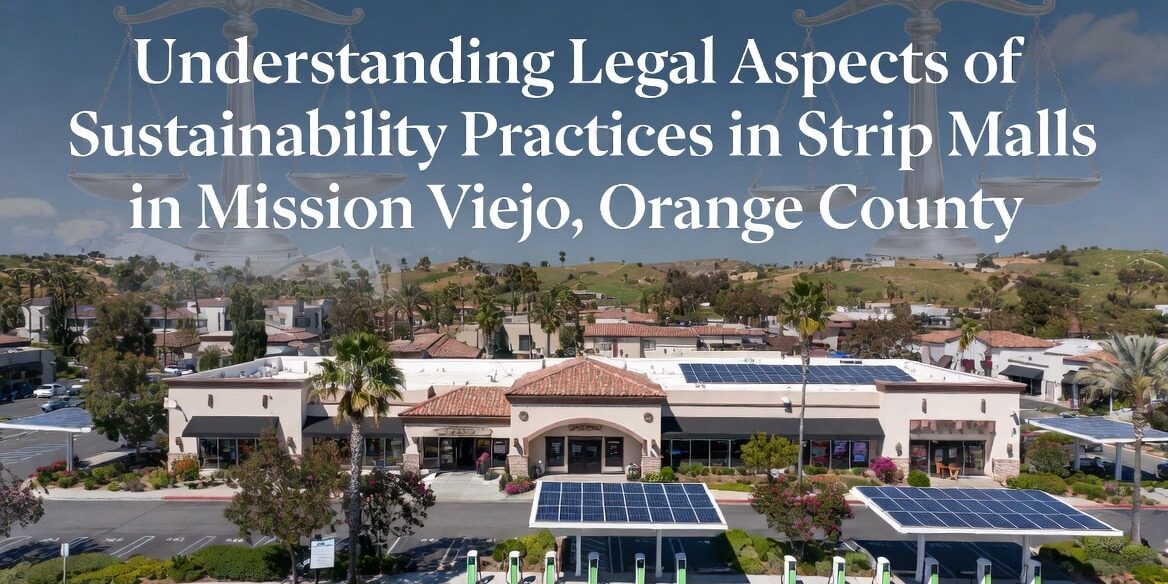
Strip malls—those familiar clusters of retail stores, restaurants, and services lining major thoroughfares—form a backbone of suburban commercial life in Mission Viejo, California. Located in southern Orange County, Mission Viejo blends planned community aesthetics with vibrant retail hubs. As California leads the nation in environmental regulation, property owners, developers, and tenants in these strip malls must navigate a complex web of federal, state, and local laws governing sustainability. This blog post explores these legal dimensions in detail, offering practical insights for compliance, risk mitigation, and long-term viability.
The Regulatory Landscape: Federal, State, and Local Foundations
Sustainability practices in California commercial properties, including strip malls, operate under layered authorities. At the federal level, laws like the Clean Water Act and Energy Policy Act influence stormwater management and energy efficiency, but state and local rules dominate.
California Environmental Quality Act (CEQA) serves as a cornerstone. CEQA requires lead agencies (often cities like Mission Viejo) to evaluate significant environmental impacts of discretionary projects, such as major renovations or expansions of strip malls. For a redevelopment project, this could involve preparing an Environmental Impact Report (EIR) or securing a categorical exemption (e.g., Class 32 for infill development). In Mission Viejo, projects like mixed-use redevelopments or tenant improvements frequently trigger CEQA reviews, addressing issues from traffic and air quality to habitat protection.
Non-compliance or inadequate mitigation can lead to lawsuits, delays, and added costs—often 6-12% of project expenses. Owners should engage early with environmental consultants to streamline processes.
California Green Building Standards Code (CALGreen), Part 11 of Title 24, mandates green practices for all new construction and major alterations. For non-residential (commercial) buildings like strip mall spaces:
- Energy Efficiency: Compliance with Title 24 building energy efficiency standards, including efficient lighting, HVAC, and building envelopes.
- Water Conservation: 20% reduction in indoor water use through low-flow fixtures; outdoor landscaping must use drought-tolerant plants and efficient irrigation.
- Material Conservation and Waste Management: Divert at least 50% of construction and demolition waste from landfills; use of low-VOC (volatile organic compounds) materials for better indoor air quality.
- Commissioning and Verification: For projects over certain sizes (e.g., over 10,000 sq ft), third-party commissioning ensures systems perform as designed.
- Embodied Carbon: Newer updates (effective 2024/2026) require life-cycle assessments for larger buildings to address carbon in materials.
Mission Viejo incorporates CALGreen into its building permits. Renovations in strip malls must meet these for additions or alterations affecting structural, mechanical, or plumbing systems.
Title 24 Energy Standards complement CALGreen, pushing toward net-zero energy goals for new buildings. Commercial properties face strict requirements for solar readiness, efficient envelopes, and demand-response capabilities.
Waste Management and Recycling Mandates: SB 1383, AB 341, and Local Enforcement
Waste diversion ranks among the most immediate legal obligations for strip mall operators in Mission Viejo.
- AB 341 (Mandatory Commercial Recycling, 2011): Businesses generating 4+ cubic yards of solid waste per week must arrange for recycling services. This applies to most strip mall tenants (grocery stores, restaurants, retail).
- AB 1826 (Organics Recycling) and SB 1383 (Short-Lived Climate Pollutants, 2016): These expand requirements. SB 1383 targets a 75% reduction in organic waste disposal by 2025 (from 2014 levels) and 20% recovery of edible food. Businesses must provide separate containers for recyclables, organics (food scraps, yard waste), and trash. Tiered edible food recovery applies to larger generators.
In Orange County, including Mission Viejo, local waste haulers and the city enforce these through franchise agreements. Property owners often coordinate shared bin areas or tenant education programs. Non-compliance risks fines, with escalating penalties under SB 1383. Strip malls should implement clear signage, staff training, and monitoring to achieve diversion rates.
Construction debris during tenant build-outs must also meet CALGreen diversion goals, often 75%+ through on-site sorting or certified recyclers.
Water Conservation and Stormwater Management
California’s chronic drought drives stringent water rules. Mission Viejo and Orange County enforce landscape ordinances favoring native, drought-tolerant plants and smart irrigation controllers. Strip malls with large parking lots and landscaping must comply with Model Water Efficient Landscape Ordinance (MWELO).
Stormwater falls under the National Pollutant Discharge Elimination System (NPDES) and local programs. Impervious surfaces in parking areas require best management practices (BMPs) like bioswales, permeable paving, or retention basins to reduce runoff pollution. Mission Viejo’s Development Code integrates these into site plan approvals.
Energy Benchmarking, ESG Disclosure, and Climate Laws
Larger commercial properties face transparency mandates:
- Building Energy Use Disclosure: Under AB 802 and related rules, owners report energy and water data via ENERGY STAR Portfolio Manager to the California Energy Commission.
- SB 253 and SB 261 (Climate Corporate Accountability): Companies doing business in California with high revenues (> $500M or $1B) must disclose Scope 1, 2, and 3 GHG emissions and climate-related financial risks. While primarily for large corporations, strip mall tenants (e.g., national chains) and property owners may need to provide data for compliance.
These drive voluntary adoption of LEED, ENERGY STAR, or other certifications, which can enhance leasing appeal and property values.
Zoning, Land Use, and Development in Mission Viejo
Mission Viejo’s General Plan and Development Code emphasize community character while incorporating sustainability. Commercial zones (e.g., CR – Commercial Regional) allow retail but impose standards on lighting (energy-efficient, shielded), landscaping, and parking.
- Solar and Renewable Energy: Zoning supports rooftop solar with aesthetic guidelines (flush-mounted, screened equipment).
- Mixed-Use and Redevelopment: State housing laws (e.g., AB 2011) encourage converting underutilized commercial space to mixed-use, potentially including housing on strip mall sites, with streamlined approvals if sustainability criteria are met.
- Parking and EV Infrastructure: Regulations increasingly require EV charging stations in new or renovated lots, aligning with California’s zero-emission vehicle goals.
Conditional Use Permits (CUPs) or Planned Development Permits often mandate green features for larger projects.
Tenant Leases and Shared Responsibilities
Commercial leases in strip malls increasingly include “green clauses.” Landlords may require tenants to:
- Comply with CALGreen and waste laws.
- Participate in building-wide benchmarking.
- Use sustainable fit-outs (low-VOC, recycled materials).
- Report utility data.
Triple-net leases shift many operational costs and compliance burdens to tenants, but owners retain overarching liability. Clear lease language allocating responsibilities prevents disputes.
Penalties, Enforcement, and Risk Management
Violations carry civil penalties, fines (hundreds to thousands per day), permit denials, or lawsuits under CEQA or citizen enforcement provisions. Orange County and Mission Viejo coordinate enforcement through building departments, public works, and health agencies.
Best practices include:
- Conduct regular audits (energy, waste, water).
- Engage experts familiar with local codes.
- Document compliance thoroughly.
- Pursue incentives like tax credits for solar, energy efficiency rebates, or green bonds.
- Monitor evolving laws, such as updates to CALGreen (2025/2026 cycles) or new ESG rules.
Benefits Beyond Compliance
Sustainable practices lower operating costs (energy/water savings), attract eco-conscious tenants and customers, boost property values, and future-proof against stricter regulations. In Mission Viejo’s competitive retail market, green strip malls stand out.
Conclusion: Proactive Stewardship for a Sustainable Future
Navigating sustainability laws in Mission Viejo strip malls demands diligence but offers significant rewards. From CALGreen and SB 1383 waste rules to CEQA reviews and zoning standards, the legal framework pushes toward resource efficiency and climate resilience. Property owners and managers who integrate these requirements holistically—through design, operations, and leasing—position their assets for success in California’s evolving regulatory environment.
Consult local experts, attorneys, and the City of Mission Viejo’s Community Development Department for project-specific guidance. Sustainability is not just legal compliance; it is smart business in 21st-century California.