

The commercial real estate industry has historically been a slow adopter of technology. For decades, multi-million-dollar assets in Orange County were managed using fragmented spreadsheets, overflowing filing cabinets, and reactive, “break-fix” maintenance strategies.
In 2026, that analog approach is no longer just inefficient—it is a massive financial liability.
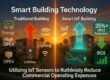
With operating expenses, insurance premiums, and labor costs reaching historic highs in Southern California, landlords are facing unprecedented margin compression. To protect and grow Net Operating Income (NOI) in this environment, elite property management firms have fully integrated PropTech (Property Technology) and Artificial Intelligence (AI) into their daily operations.
From predictive maintenance algorithms that prevent catastrophic HVAC failures to AI-driven dynamic pricing models that maximize lease renewals, technology is separating the institutional-grade operators from the outdated generalists.
Whether you own a high-tech corporate campus in Irvine or a bustling experiential retail plaza in Costa Mesa, here is the definitive guide to how PropTech and AI are revolutionizing commercial property management in Orange County.
1. AI-Driven Leasing and Dynamic Market Pricing
The traditional method of setting a commercial lease rate involved pulling a few outdated “comps” from the MLS and guessing what a tenant might be willing to pay. In the hyper-competitive 2026 market, leaving your pricing strategy to human guesswork guarantees you will leave money on the table.
The AI Pricing Revolution:
Modern PropTech platforms utilize machine learning algorithms to execute Dynamic Pricing. These systems ingest millions of real-time data points that a human broker simply cannot process simultaneously.
-
Micro-Market Analysis: The AI analyzes current absorption rates, hyper-local cellular foot traffic data, and shifting zoning overlays in specific corridors. If you are leasing a warehouse in Anaheim, the algorithm cross-references real-time logistics demand at the Ports of Long Beach to recommend the absolute peak price per square foot.
-
Predictive Tenant Churn: AI doesn’t just price empty units; it predicts which of your current tenants are likely to leave. By analyzing subtle patterns—such as a tenant in a Fullerton office building submitting fewer maintenance requests or paying rent a few days later than their historical average—the software flags the account as a “flight risk.” This allows the property manager to proactively initiate a mid-lease retention strategy months before the tenant officially gives notice.
2. The Internet of Things (IoT) and Predictive Maintenance
The most expensive words in commercial real estate are, “We have an emergency.” For decades, property managers operated reactively: a pipe bursts, a tenant calls, and a vendor is dispatched at emergency “double-time” rates. Today, the Internet of Things (IoT) has transformed buildings from static concrete structures into intelligent, communicative assets.
The Sensor Network Strategy:
Institutional-grade managers deploy networks of inexpensive, wireless IoT sensors throughout the property to monitor the health of the building’s critical capital systems in real time.
| IoT Sensor Type | The 2026 Commercial Application | Real-World ROI |
| Vibration/Acoustic | Attached to commercial HVAC Rooftop Units (RTUs). | Detects microscopic changes in motor bearings weeks before a failure. Allows a $400 preventative fix rather than a $25,000 emergency compressor replacement during a heatwave in Yorba Linda. |
| Water Flow & Leak | Installed near main water lines, boiler rooms, and sub-meters. | Instantly shuts off the main valve and sends an alert to the manager’s smartphone the second anomalous water flow is detected, preventing a catastrophic midnight flood in a Newport Beach retail center. |
| Occupancy/Thermal | Placed in office building zones and common areas. | Integrates with the Building Management System (BMS) to automatically power down lighting and HVAC in unoccupied zones, slashing utility costs for landlords in Aliso Viejo. |
This transition from reactive repair to predictive maintenance fundamentally protects the landlord’s capitalization rate and extends the lifespan of the asset by years.
3. The Frictionless Tenant Experience (TX)
In 2026, the “consumerization of B2B real estate” is complete. Commercial tenants—whether they are operating a sleek med-spa in Laguna Hills or a logistics firm in Cypress—expect the same frictionless, app-based experience from their property manager that they get from Uber or Amazon.
If a tenant is forced to mail a paper check or leave a voicemail to request a lightbulb change, they view the management (and by extension, the building) as obsolete.
The PropTech Portal:
A modern property management firm operates through centralized, cloud-based tenant portals.
-
Automated Ticketing: Tenants submit maintenance requests via a smartphone app, attaching photos or videos of the issue. The AI routes the ticket directly to the appropriate, pre-vetted local vendor, significantly reducing dispatch times.
-
Digital Financials: Rent, Common Area Maintenance (CAM) charges, and late fees are paid via automated ACH transfers. This drastically improves the landlord’s cash flow consistency and eliminates the “check is in the mail” excuse.
-
Cloud-Based Access Control: Physical keys are a severe security liability. We utilize smartphone-enabled access control systems (like Openpath or Brivo). If a corporate tenant in Irvine hires a new employee, access to the building is granted instantly over the air. If an employee is terminated, their access is revoked in seconds, securing the facility without the need to re-key the entire building.
4. Automated Financials and Flawless NNN Audits
Commercial real estate is fundamentally a high-stakes accounting operation. For landlords utilizing Triple Net (NNN) or Modified Gross leases, the annual reconciliation of CAM, property taxes, and insurance is the most critical financial event of the year.
Manual data entry is the enemy of NOI. If a property manager uses Excel to track utility bills across a 15-tenant retail plaza in San Juan Capistrano, human error is inevitable. This results in “expense leakage”—where the landlord inadvertently absorbs thousands of dollars in reimbursable costs.
AI-Powered Accounting:
Modern management firms utilize enterprise software (like AppFolio or Yardi) integrated with Optical Character Recognition (OCR) AI.
-
Invoice Ingestion: When a vendor submits an invoice for parking lot sweeping in Huntington Beach, the AI automatically reads the PDF, categorizes the expense strictly according to the specific General Ledger (GL) code, and flags any duplicate billing attempts.
-
Precision Pass-Throughs: During the year-end audit, the software automatically references each individual tenant’s lease to calculate their exact pro-rata share, factoring in complex “Cap Clauses” or base-year stops. It generates flawless, mathematically perfect CAM reconciliation statements, eliminating tenant disputes and ensuring the landlord recovers 100% of their legally owed capital.
5. Computer Vision and Advanced Premise Security
Security in commercial real estate has evolved far beyond a passive security guard checking doors at midnight. In densely populated urban corridors like Santa Ana or Garden Grove, the liability associated with vagrancy, illegal dumping, and property damage requires a proactive, tech-driven defense.
AI Computer Vision:
Standard security cameras are reactive; they only show you a crime after it has happened. PropTech integrates “Computer Vision” AI directly into the camera network.
-
Behavioral Flagging: The AI is trained to distinguish between a customer walking toward a retail storefront and an individual loitering near a rear dumpster enclosure at 2:00 AM. When anomalous behavior is detected, the system instantly alerts a remote monitoring center, which can trigger on-site strobe lights, two-way audio warnings, or dispatch local law enforcement before a break-in occurs.
-
Automated License Plate Readers (ALPR): For Class-A office buildings and high-end medical plazas, ALPR technology integrates with the parking gates. Approved tenant vehicles are granted frictionless entry, while unauthorized vehicles are logged and tracked, drastically reducing liability and unauthorized parking abuse.
Conclusion: Technology is the Ultimate Fiduciary
In the complex, hyper-competitive 2026 Orange County market, technology is not just a luxury amenity—it is the ultimate fiduciary safeguard.
A discount property manager who refuses to adopt modern PropTech is inherently costing you money. They are missing predictive maintenance windows, leaking CAM expenses through poor accounting, and driving high-credit tenants away with a frustrating, analog customer experience.
At L3 Real Estate, our operational architecture is built on the cutting edge of property technology. We leverage AI, IoT networks, and seamless digital portals to eliminate inefficiencies, shield you from liability, and transform your building into a high-performing, optimized asset.
Are you tired of opaque financial reporting and reactive maintenance bills, or are you looking to upgrade the operational efficiency of your portfolio? Contact our expert team today to discover how our tech-enabled Orange commercial strategies and Lake Forest property management can definitively maximize your Net Operating Income.