

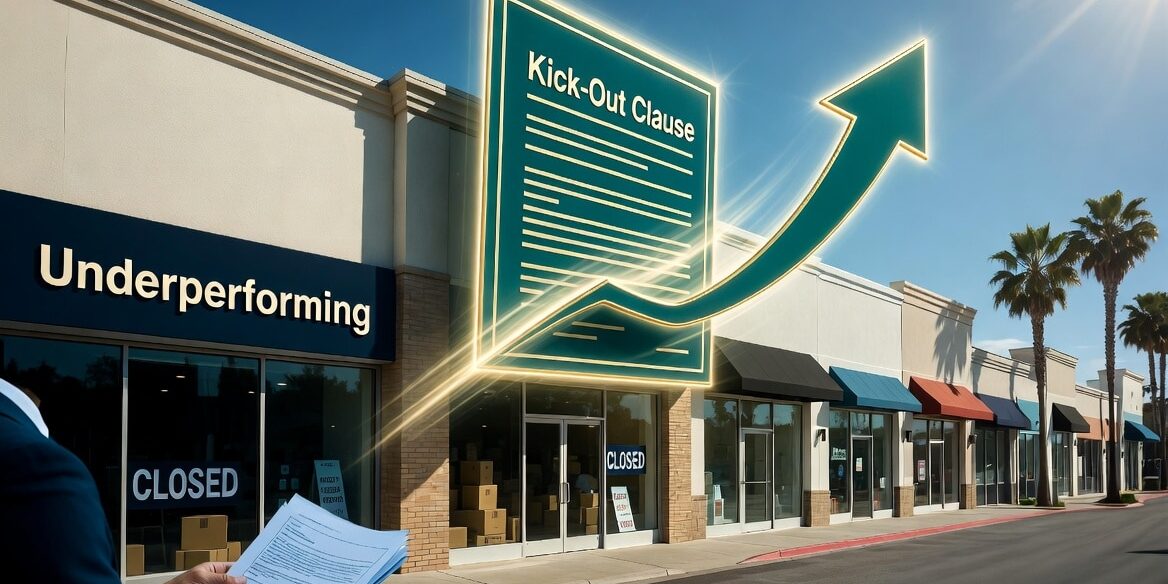
In the highly curated ecosystem of an Orange County retail center, the success of your property is entirely dependent on foot traffic. When you lease a premier suite in Newport Beach or Costa Mesa to a new boutique fitness concept or a trendy fast-casual restaurant, you are not just hoping they pay their rent; you are relying on them to draw hundreds of daily consumers to your property.
But what happens when the tenant’s business model completely flops?
What happens when they open their doors in your Irvine plaza, and nobody shows up? The tenant might have enough venture capital to keep paying their monthly Base Rent, but their suite is practically a ghost town.
To an amateur landlord, a paying tenant is a good tenant. To an institutional asset manager, an empty storefront—even a paying one—is a “Zombie Tenant.” They drag down the energy of the entire center, they hurt the sales of your adjacent inline tenants, and they completely destroy your ability to collect lucrative Percentage Rent.
If you signed a standard 10-year lease, you are legally trapped with this dead weight for a decade. However, elite property managers deploy a highly aggressive, specialized legal mechanism to solve this exact problem: The Gross Sales Kick-Out Clause. Here is the definitive guide to understanding the Kick-Out clause, auditing your tenants’ performance, and legally reclaiming your Orange County real estate from an underperforming business.
1. The Danger of the “Zombie Tenant”
To understand why a Kick-Out clause is necessary, you must understand the financial structure of a premier commercial retail lease.
In high-traffic centers in hubs like Huntington Beach, landlords frequently execute leases that include Percentage Rent. The tenant pays a slightly lower fixed Base Rent, but they agree to pay the landlord a percentage of their gross sales (e.g., 6%) once their revenue crosses a certain threshold (the “natural breakpoint”).
-
The Financial Trap: If the tenant’s business is failing and they never hit that breakpoint, the landlord never collects the percentage rent. You are stuck collecting a below-market Base Rent while a prime piece of your real estate is wasted on a failing concept.
-
The Synergistic Bleed: Furthermore, adjacent businesses (like the coffee shop next door) rely on the cross-traffic generated by their neighbors. A dark, empty Zombie Tenant creates a black hole in your center, actively hurting the sales of your healthy tenants and dragging down the overall Capitalization Rate of the asset.
2. The Mechanics of the “Kick-Out” Clause
A Kick-Out clause is a highly negotiated provision that allows the landlord to unilaterally terminate the lease if the tenant fails to achieve a specific, pre-agreed gross sales target within a specific timeframe.
How the Math Works: When drafting the lease for a new restaurant in your Fullerton property, L3 Real Estate inserts a performance metric.
-
We state that by the end of Year 2, the tenant must generate a minimum of $1.5 million in gross annual sales.
-
If the tenant hits $1.5 million, the lease continues normally.
-
If the tenant only generates $800,000, the Kick-Out clause is triggered. The landlord now possesses the absolute legal right to serve the tenant a 60-day or 90-day notice of termination, effectively evicting them without the tenant ever actually defaulting on their rent.
This clause forces the tenant to prove their concept works. If it doesn’t, the landlord gets their dirt back.
3. The “Mutual” Kick-Out (The Illusion of Concession)
When you introduce a Kick-Out clause to a corporate tenant’s attorney, they will violently push back. To get the deal done, they will almost always demand that the clause be made Mutual.
A mutual clause states that if the tenant fails to hit the $1.5 million sales target, the tenant also has the right to terminate the lease and walk away without owing the remaining eight years of rent.
Amateur landlords fight this, thinking they are giving the tenant an easy escape hatch. Elite operators gladly accept it.
-
The Strategic Reality: If a tenant is failing so miserably in your Brea center that they want to trigger the mutual kick-out and leave, let them leave. You do not want to force a dying, cash-poor business to stay in your building until they inevitably declare Chapter 11 bankruptcy, stick you with massive legal fees, and tie up the suite in federal bankruptcy court for a year.
-
A mutual kick-out provides a clean, fast, out-of-court separation, allowing you to immediately scrub the suite and lease it to a stronger, higher-yielding operator.
4. The Enforcement Mechanism: Auditing the Books
A Kick-Out clause is completely worthless if you cannot mathematically prove the tenant failed to hit their target. Unsurprisingly, failing tenants will frequently lie about their gross sales to avoid being evicted from a premier San Clemente location.
You cannot rely on the honor system.
The L3 Reporting Mandate: We draft aggressive financial reporting mandates directly into the lease.
-
The tenant is legally required to submit a certified statement of gross sales every single month, followed by an annual sales report certified by an independent CPA.
-
Most importantly, we insert a Landlord Audit Right. If we suspect the tenant is cooking the books to artificially inflate their numbers past the Kick-Out threshold, we reserve the right to deploy our own forensic accountants to audit their point-of-sale (POS) systems and state sales tax returns.
-
If our audit reveals a discrepancy of more than 3%, the tenant is forced to pay for the entire cost of the audit, and the Kick-Out clause is instantly triggered.
5. Execution: Recapturing the Cap Rate
If Year 2 ends and the financial reporting proves the tenant in your Anaheim center missed their target, the operational pivot must be flawless.
We do not trigger the Kick-Out blindly. Before serving the 90-day termination notice, we immediately take the space to market as a “quiet listing.” Because we already have the existing tenant’s high-end, second-generation restaurant build-out in place, the suite is incredibly valuable.
We identify a replacement tenant, negotiate the new Letter of Intent (LOI), and then we drop the termination notice on the failing tenant. We orchestrate a seamless transition—extracting the Zombie Tenant and plugging in a proven, high-credit operator with zero dark time. This maneuver instantly restores the foot traffic, restarts the Percentage Rent cash flow, and permanently compresses the capitalization rate of your asset.
Conclusion: Curate Your Rent Roll, Don’t Just Collect Rent
In commercial real estate, a lease should not be a static 10-year prison sentence; it should be a dynamic performance contract. If you are handing over prime Orange County real estate to an unproven concept without a legal mechanism to reclaim your dirt if they fail, you are actively gambling with your generational wealth.
Over 14 years in the trenches, managing a portfolio of more than 350 properties, we have seen countless retail centers destroyed by passive landlords who tolerate underperforming tenants.
At L3 Real Estate, we operate as ruthless curators of your property’s financial ecosystem. We draft the Kick-Out clauses, we relentlessly audit the gross sales reports, and we execute the strategic extractions required to keep your rent roll highly profitable. We ensure that every single square foot of your Orange County portfolio is actively working to maximize your Net Operating Income.
Are you currently dealing with a “Zombie Tenant” dragging down your retail center, or are you preparing to sign a lease with an unproven business concept? Contact our expert team today to discover how our high-level Lake Forest property management and Orange commercial strategies can definitively protect your asset.