Industrial warehouses in Anaheim, Orange County, serve as critical hubs for manufacturing, distribution, and logistics in one of Southern California’s most dynamic economic regions. With its strategic location near major ports, freeways like the 5, 57, and 91, and proximity to Los Angeles, Anaheim attracts a wide array of businesses—from electronics and aerospace suppliers to food processing and e-commerce fulfillment centers. However, this bustling activity generates substantial waste streams, including cardboard, plastics, metals, hazardous materials, organic waste, and general refuse. Effective waste management is not just a regulatory requirement; it’s essential for cost control, environmental stewardship, operational efficiency, and maintaining compliance with local, state, and federal laws.
Anaheim and Orange County enforce strict waste management standards through agencies like the Orange County Waste & Recycling Department, the California Department of Resources Recycling and Recovery (CalRecycle), and the U.S. Environmental Protection Agency (EPA). Businesses face potential fines for improper disposal, especially concerning hazardous waste under the Resource Conservation and Recovery Act (RCRA). Moreover, with California’s ambitious goals for zero waste by 2025 and beyond, warehouses must adopt proactive strategies to divert materials from landfills. Poor waste management can lead to increased disposal costs, health and safety risks, pest infestations, and even operational downtime.
This comprehensive guide outlines the Top 10 Tips for Waste Management in Industrial Warehouses in Anaheim, Orange County. Each tip is designed to help warehouse operators, facility managers, and business owners implement practical, scalable solutions that reduce waste, lower expenses, and enhance sustainability. Whether you’re running a small distribution center in the Anaheim Canyon area or a large manufacturing facility near Angel Stadium, these strategies can be tailored to your specific operations. Implementing them can result in significant savings—some warehouses report reducing waste disposal costs by 30-50% through better practices—while positioning your business as a responsible corporate citizen in the community.
Tip 1: Conduct a Comprehensive Waste Audit
The foundation of any successful waste management program is understanding your current waste profile. In Anaheim’s industrial zones, warehouses often deal with mixed waste streams that vary by industry. Start by performing a thorough waste audit, which involves tracking the types, volumes, and sources of waste generated over a representative period, such as one to two weeks.
Engage your team to sort and weigh waste from different departments—receiving, production, packaging, shipping, and maintenance. Use tools like waste tracking software or simple spreadsheets to categorize materials: recyclables (cardboard, paper, plastics), organics (if applicable for food-related warehouses), hazardous waste (batteries, solvents, oils), and non-recyclables. In Orange County, partnering with local haulers like CR&R Environmental Services or Waste Management can provide audit support or data analytics.
Key benefits include identifying “hot spots” of waste generation, such as excessive packaging from suppliers or inefficient processes leading to scrap. For example, an electronics warehouse in Anaheim might discover that 40% of its waste is recyclable cardboard from inbound shipments. Audits also help establish baseline metrics for measuring future improvements and ensure compliance with Anaheim’s commercial waste reporting requirements. Aim to conduct audits annually or after significant operational changes, like new product lines or increased throughput. This data-driven approach prevents overpaying for unnecessary dumpster services and uncovers opportunities for source reduction.
Tip 2: Implement Source Reduction Strategies
Preventing waste at the source is far more effective and cost-efficient than managing it after generation. In Anaheim’s competitive industrial landscape, where space is at a premium and operational margins are tight, source reduction directly impacts the bottom line.
Review your supply chain for opportunities to minimize packaging. Negotiate with vendors to use returnable containers, bulk shipments, or minimalistic packaging designs. For instance, switch from single-use plastic wraps to reusable stretch films or encourage suppliers to adopt standardized pallets that reduce dunnage waste. In manufacturing warehouses, optimize cutting and assembly processes to reduce scrap materials—software like nesting algorithms can maximize material usage in metal or fabric operations.
Train employees on lean principles to avoid over-ordering supplies that expire or become obsolete. Implement just-in-time inventory to reduce spoilage in warehouses handling perishable goods. Orange County businesses can leverage resources from the California Material Exchange (CalMAX) to find markets for byproducts that would otherwise be waste. By focusing on source reduction, warehouses in Anaheim have successfully cut waste volumes by 20-40%, lowering hauling fees and freeing up valuable floor space previously occupied by waste accumulation areas.
Tip 3: Establish Robust Recycling Programs
Recycling is a cornerstone of waste management in California, where state mandates require businesses to divert at least 50% of waste from landfills, with higher targets for certain materials. Anaheim warehouses benefit from well-developed recycling infrastructure provided by local franchised haulers.
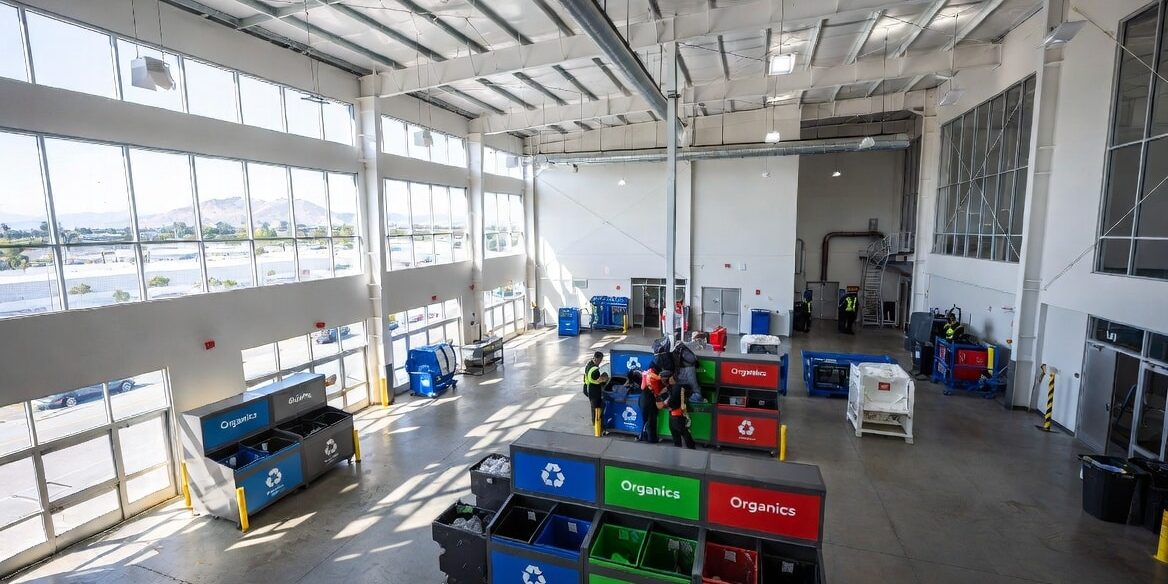
Set up clearly labeled, color-coded bins for common recyclables: blue for paper and cardboard, green for organics (where available), and separate containers for plastics, metals, and glass. Position bins strategically near generation points—near unpacking stations for cardboard or maintenance areas for used oils. For high-volume operations, invest in balers or compactors for cardboard and plastics to reduce collection frequency and costs.
Partner with certified recyclers familiar with Anaheim’s programs. Many offer zero-sort or single-stream recycling, simplifying operations. Track recycling rates monthly and celebrate milestones with your team to maintain engagement. In Orange County, programs like the Recycle Orange County initiative provide educational resources and potential rebates for high performers. Effective recycling not only complies with AB 341 (California’s Mandatory Commercial Recycling law) but can generate revenue through the sale of baled materials, turning waste into a profit center.
Tip 4: Manage Hazardous Waste Properly
Industrial warehouses in Anaheim often handle hazardous materials, such as paints, solvents, batteries, fluorescent lights, and electronic waste (e-waste), which require special handling under strict regulations. Non-compliance can result in hefty fines from the Orange County Health Care Agency or EPA, not to mention liability risks.
Develop a Hazardous Waste Management Plan that includes proper labeling, storage in designated areas with secondary containment, and regular pickup by licensed transporters. Use manifests to track waste from “cradle to grave.” For e-waste, which is common in tech warehouses, utilize certified recyclers participating in California’s e-waste program.
Train designated staff on hazardous waste identification and handling, including spill response protocols. In Anaheim, facilities must register with the local Certified Unified Program Agency (CUPA) if generating certain quantities. Consider substituting hazardous materials with less toxic alternatives where possible, such as water-based cleaners instead of solvent-based ones. Proper management minimizes environmental impact on nearby sensitive areas like the Santa Ana River watershed and protects worker safety in high-density warehouse environments.
Tip 5: Optimize Composting and Organic Waste Diversion
For warehouses involved in food distribution, processing, or those with landscaping and cafeteria operations, organic waste represents a significant portion of the waste stream. California’s SB 1383 mandates organics recycling for businesses generating more than a certain threshold of organic waste.
In Anaheim, explore composting options through local providers or on-site systems if space allows. Partner with haulers offering green waste or food scrap collection services. Even non-food warehouses can divert landscape trimmings or wooden pallets (after chipping) into mulch programs.
Implement employee education on what constitutes organic waste and provide dedicated bins. Benefits extend beyond compliance: compost can be used for local landscaping projects or sold, while reducing methane emissions from landfills—a key climate goal in Orange County. Warehouses near agricultural areas in southern Orange County may find synergy with farms seeking compost inputs. Tracking diversion rates helps demonstrate progress toward zero-waste targets.
Tip 6: Invest in Employee Training and Engagement
Waste management success depends heavily on human behavior. In busy Anaheim warehouses with shift workers and high turnover, consistent training is crucial.
Develop a comprehensive training program covering waste sorting, recycling guidelines, hazardous material handling, and the “why” behind sustainable practices—linking them to cost savings, regulatory compliance, and environmental benefits. Use visual aids, posters, and digital modules tailored to warehouse operations. Conduct regular refresher sessions and incorporate waste management into new hire orientations.
Foster engagement through incentive programs, such as team competitions for the cleanest department or recognition for waste reduction ideas. Appoint “Green Champions” from different shifts to monitor compliance and suggest improvements. In Orange County’s diverse workforce, provide materials in multiple languages, including Spanish and Vietnamese, common in Anaheim’s industrial areas. Engaged employees reduce contamination in recycling streams, which can otherwise lead to entire loads being landfilled, and promote a culture of accountability and pride in sustainable operations.
Tip 7: Choose the Right Waste Hauling and Service Providers
Selecting reliable, compliant waste service providers is vital for Anaheim warehouses. Orange County operates under exclusive franchised hauling zones, meaning businesses must use designated haulers for certain services, but options exist for specialized recycling or hazardous waste.
Evaluate providers based on their service frequency, container sizes, reporting capabilities, and sustainability offerings. Look for haulers with advanced tracking technology that provides detailed diversion reports—essential for compliance documentation. Negotiate contracts that align with your audited waste volumes to avoid overpaying for underutilized dumpsters.
Local players like Waste Management, Republic Services, or regional firms offer tailored industrial packages, including on-call pickups for peak seasons. Consider providers with LEED or other green certifications. Regularly review service levels against your needs; seasonal adjustments can save money during slower periods. Building strong relationships with your hauler can also unlock access to grants or pilot programs for innovative waste technologies.
Tip 8: Leverage Technology and Smart Waste Solutions
Modern technology transforms waste management from a reactive chore into a proactive, data-driven system. In Anaheim’s tech-savvy industrial sector, warehouses can benefit from IoT-enabled bins that monitor fill levels and optimize collection routes, reducing unnecessary trips and associated emissions.
Implement waste management software for tracking, reporting, and analytics. Platforms integrate with inventory systems to predict waste generation based on production schedules. For large facilities, automated sorting lines or AI-powered vision systems can improve recycling accuracy.
Explore solar-powered compactors or vacuum waste collection systems for space-constrained warehouses. In Orange County, initiatives supported by the South Coast Air Quality Management District (SCAQMD) may offer incentives for technologies that reduce truck traffic and improve air quality. Technology investments pay off through lower labor costs for waste handling, better compliance documentation, and real-time insights that prevent overflow issues, which can disrupt operations or violate city codes.
Tip 9: Ensure Regulatory Compliance and Documentation
Staying ahead of regulations is non-negotiable in California’s stringent environmental landscape. Anaheim warehouses must comply with local ordinances, Cal/OSHA safety standards, stormwater permits (under the Industrial General Permit), and federal rules like RCRA and the Clean Water Act.
Maintain meticulous records of waste manifests, recycling reports, training logs, and audit results. Designate a compliance officer responsible for staying updated on changes, such as updates to SB 1383 organics requirements or Anaheimspecific business waste reduction goals. Conduct periodic internal audits or hire third-party consultants for gap analyses.
Participate in voluntary programs like the EPA’s WasteWise or California’s Green Business Program, which provide recognition and resources. In Orange County, collaboration with the Orange County Sanitation District or local chambers of commerce can offer compliance workshops. Proactive compliance avoids costly penalties—fines for hazardous waste violations can exceed $50,000 per day—and builds resilience against future regulatory tightening as California pursues its circular economy vision.
Tip 10: Monitor, Measure, and Continuously Improve
Waste management is an ongoing journey, not a one-time initiative. Establish key performance indicators (KPIs) such as waste diversion rate, cost per ton, recycling percentage, and landfill dependency. Use dashboards to visualize progress and share with leadership and staff.
Schedule regular reviews—quarterly at minimum—to analyze data, solicit feedback, and adjust strategies. Celebrate successes and address shortfalls with root-cause analysis. Benchmark against industry standards or similar Anaheim warehouses through networking at events hosted by the Anaheim Chamber of Commerce or Orange County Business Council.
Embrace innovation, such as piloting new materials or processes, and stay informed about emerging technologies like chemical recycling or advanced biodegradation. In the dynamic Orange County economy, continuous improvement ensures your warehouse remains competitive, sustainable, and prepared for evolving customer demands for green supply chains. Many facilities achieve 70-90% diversion rates through persistent efforts, significantly reducing their environmental footprint while enhancing profitability.
Conclusion: Building a Sustainable Future for Anaheim Warehouses
Implementing these Top 10 Tips for Waste Management in Industrial Warehouses in Anaheim, Orange County, requires commitment but delivers substantial returns. From cost savings and regulatory peace of mind to improved employee morale and enhanced corporate reputation, effective waste practices contribute to long-term business success in a region known for innovation and environmental leadership.
Start small by conducting a waste audit and building from there. Collaborate with local resources, including the City of Anaheim’s environmental services, Orange County recycling programs, and industry associations. As California advances toward a more circular economy, warehouses that prioritize waste reduction will not only thrive but also play a vital role in preserving the quality of life that makes Orange County special.
By adopting source reduction, robust recycling, proper hazardous waste handling, and continuous monitoring, your Anaheim warehouse can minimize its impact on landfills, reduce operational expenses, and set a positive example for the industrial community. The journey toward zero waste is achievable—one well-managed bin at a time.
For personalized advice tailored to your specific warehouse operations in Anaheim or elsewhere in Orange County, consider consulting with local waste management experts or sustainability consultants. Taking action today will position your business for a cleaner, more efficient, and compliant tomorrow.