
In Orange County commercial real estate, looking in the rearview mirror is a guaranteed way to lose your equity. The strategies that built multi-million-dollar fortunes in the 1990s and 2000s are fundamentally obsolete today.
If you are acquiring properties, negotiating leases, or executing CapEx based on the old rules of retail and office space, you are playing a game that ended half a decade ago.
We are standing on the precipice of a massive wealth transfer. Over the next five to ten years, the Orange County commercial landscape will be violently reshaped by shifting demographics, remote-work permanence, and the relentless demand for last-mile logistics. Those who cling to legacy assets will watch their Capitalization Rates expand and their Net Operating Income (NOI) bleed out. Those who proactively reposition their dirt will secure generational wealth.
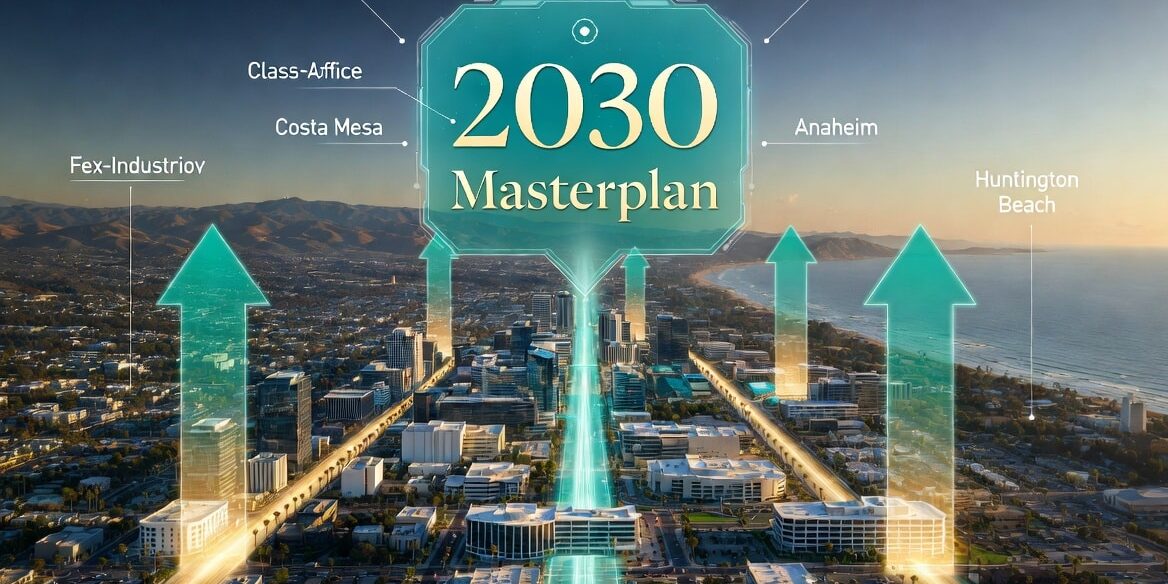
Here is the definitive L3 Real Estate 2030 Masterplan: the four macroeconomic pillars that will dictate commercial real estate valuations over the next decade, and exactly how to position your portfolio to capture the upside.
1. The “Med-Tail” Takeover (Monetizing the Silver Tsunami)
The narrative that “retail is dead” is fundamentally false. Retail is not dead; the inventory has simply changed. Consumers no longer drive to a shopping center to buy things they can order on their phones. They drive to shopping centers to acquire services they must experience in person.
The most powerful demographic force in Southern California is the aging Baby Boomer population. As this massive, high-net-worth cohort requires increasing levels of specialized care, the medical industry is decentralizing. Major hospital networks are pushing their services out of massive, sterile corporate campuses and directly into high-visibility retail centers in Costa Mesa and Huntington Beach.
The 2030 Playbook: Over the next decade, the most lucrative repositioning strategy will be the Med-Tail Conversion. Elite investors will acquire struggling, e-commerce-gutted strip malls and aggressively convert the empty video stores and discount clothing shops into high-end Urgent Cares, Boutique Med-Spas, and specialized outpatient clinics. These medical tenants inject recession-proof, internet-proof stability into the asset, signing 10-year guarantees and driving massive cross-traffic to the adjacent food and beverage tenants.
2. The Micro-Fulfillment Squeeze (Small-Bay Dominance)
The era of the 500,000-square-foot mega-warehouse is reserved for institutional Wall Street REITs. For the independent, high-net-worth investor in Orange County, the true gold rush is happening in the Small-Bay Flex-Industrial sector.
Consumer expectation has compressed from “two-day shipping” to “same-day delivery.” To execute this, e-commerce brands, specialized manufacturers, and third-party logistics (3PL) companies desperately need “last-mile” micro-fulfillment centers. They need 3,000 to 5,000 square feet of functional concrete and roll-up doors directly adjacent to the affluent populations of Irvine and Newport Beach.
The 2030 Playbook: Because Orange County land is far too expensive to justify building new small-bay industrial parks, the supply of this specific asset class is permanently capped. Demand will continue to heavily outstrip supply. Elite operators will aggressively acquire legacy, 1980s concrete tilt-ups in Anaheim and Fullerton, injecting the heavy 3-Phase power and high-speed fiber optics required to attract tech-enabled logistics tenants, driving rental rates to unprecedented highs.
3. The Office Bifurcation (Trophy vs. Tragedy)
The commercial office sector is not experiencing a temporary dip; it is undergoing a permanent, violent bifurcation. The “Flight to Quality” is the new law of gravity.
If an employer wants their top-tier talent to willingly commute, the physical office must offer a hospitality-driven experience that cannot be replicated in a home office.
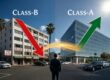
The 2030 Playbook: The middle class of office real estate is dead. Standard, un-amenitized Class-B buildings in Brea or Lake Forest will become functionally obsolete, eventually requiring complete demolition or complex residential/medical conversions.
Conversely, Class-A “Trophy” assets—featuring resort-style fitness centers, outdoor collaborative terraces, and flawless PropTech integration—will command fierce bidding wars. Corporate tenants will continue to execute the “Shrink and Upgrade” maneuver, leasing smaller footprints but paying massive, top-of-market premiums to secure elite environments. The winners will be the landlords who successfully “hotelify” their property management operations.
4. The Era of the Ground Lease (Monetizing the Dirt)
As the cost of construction materials, labor, and municipal entitlements continues to skyrocket in California, the risk profile of ground-up vertical development is becoming heavily constrained.
Savvy, generational investors are realizing that their greatest asset is not the aging building sitting on their property; it is the raw dirt underneath it.
The 2030 Playbook: The next decade will see a massive surge in Pad-Crashing and Commercial Ground Leases. Landlords will stop pouring massive CapEx into aging structures. Instead, they will carve out their underutilized San Clemente parking lots and execute Absolute NNN ground leases with Fortune 500 Quick Service Restaurants (QSRs) and national pharmacy chains. The corporate tenant will pay millions to build their own structure, while the landlord collects a massive, risk-free, inflation-adjusted yield simply for owning the earth.
Conclusion: Partner with the Vanguard
In commercial real estate, hope is not an investment strategy. You cannot hold onto an obsolete asset, ignore the macroeconomic shifts, and simply hope the market bails you out. Wealth is generated by those who see the horizon and ruthlessly position their capital to intercept it.
The next ten years in Southern California will be incredibly lucrative for the operators who understand the nuance of modern lease structures, the CapEx requirements of PropTech, and the defensive legal warfare required to protect NOI.
Over 14 years in the trenches, engineering the operational and financial success of more than 350 properties across Orange County, we have never simply managed buildings; we have managed wealth. At L3 Real Estate, we are the architects of the 2030 masterplan. We audit the rent rolls, we execute the Med-Tail conversions, and we secure the institutional ground leases. We ensure that your portfolio is not just protected from the future, but engineered to dominate it.
Are you ready to audit your portfolio and position your assets for the next decade of commercial growth? Contact our expert team today to discover how our specialized Mission Viejo property management and Orange commercial strategies can definitively forge your legacy.